The glamorous life: crispy potatoes, sticky wings, and then… the basket
#I love my air fryer in a slightly embarrassing way. Like, if it broke tomorrow, I’d stand in the kitchen staring at the empty counter like someone had moved away without saying goodbye. It has made me emergency halloumi fries at 10:30 at night, revived soggy takeaway chips, crisped salmon skin better than I deserved, and done that magical thing with frozen dumplings where they go blistered and crunchy without me babysitting a pan. But the cleaning part? Oof. Nobody posts the after photo, do they? You get the golden chicken thighs, the glossy buffalo cauliflower, the sweet potato wedges with paprika dust… and then underneath is this weird sticky layer of grease that smells like last Tuesday’s garlic bread had a fight with fish fingers.
So this is my very real, slightly obsessive, food-lover method for how to clean an air fryer basket, deal with baked-on grease, and get rid of those stubborn odours that make your next batch of cinnamon churro bites taste faintly like onion rings. Been there. Hated it. Ate them anyway, obviously.
First, don’t start cleaning while dinner is still chaos
#This is the bit I used to mess up. I’d pull out the basket, see the crusty crumbs, panic-clean while the fries were still on plates and the leftover chicken was sitting there getting sad. Now I do a tiny reset first. Food gets served, leftovers get sorted, and then the air fryer gets attention. If you’ve cooked a big batch and need to stash some away, it’s worth doing it properly, especially with meat or rice dishes. I like this guide on How to Cool Cooked Food Quickly Before Refrigerating because it explains the boring-but-important bit without making you feel like you need a clipboard in your kitchen.
Once the food is handled, unplug the air fryer. Not optional. I know, I know, it sounds like the kind of thing printed in tiny letters in the manual that nobody reads, but hot appliances plus wet cloths is not the vibe. Let it cool until the basket is warm, not scorching. Warm grease is easier to shift, but if you’re doing that little fingertip tap and immediately regretting your life choices, wait longer. I usually give mine 10 to 20 minutes while I wipe the counter, finish my drink, or stand in front of the fridge pretending I’m not going back for more potato wedges.
My basic after-dinner air fryer clean, the one I actually do
#I have a deep-clean method too, but the daily clean is what saves you. Truly. Air fryer grease gets worse when you ignore it, like emails and laundry and all the other adult nonsense. If you wash the basket and tray after most uses, you don’t end up chiseling a mysterious brown varnish off the corners three weeks later. Ask me how I know. Actually don’t, it involved sticky teriyaki tofu and a sponge I had to throw away.
- Pull out the basket and crisper tray or rack. Shake loose crumbs into the bin, not down the sink if they’re chunky and greasy. I learned that after a very stupid drain moment.
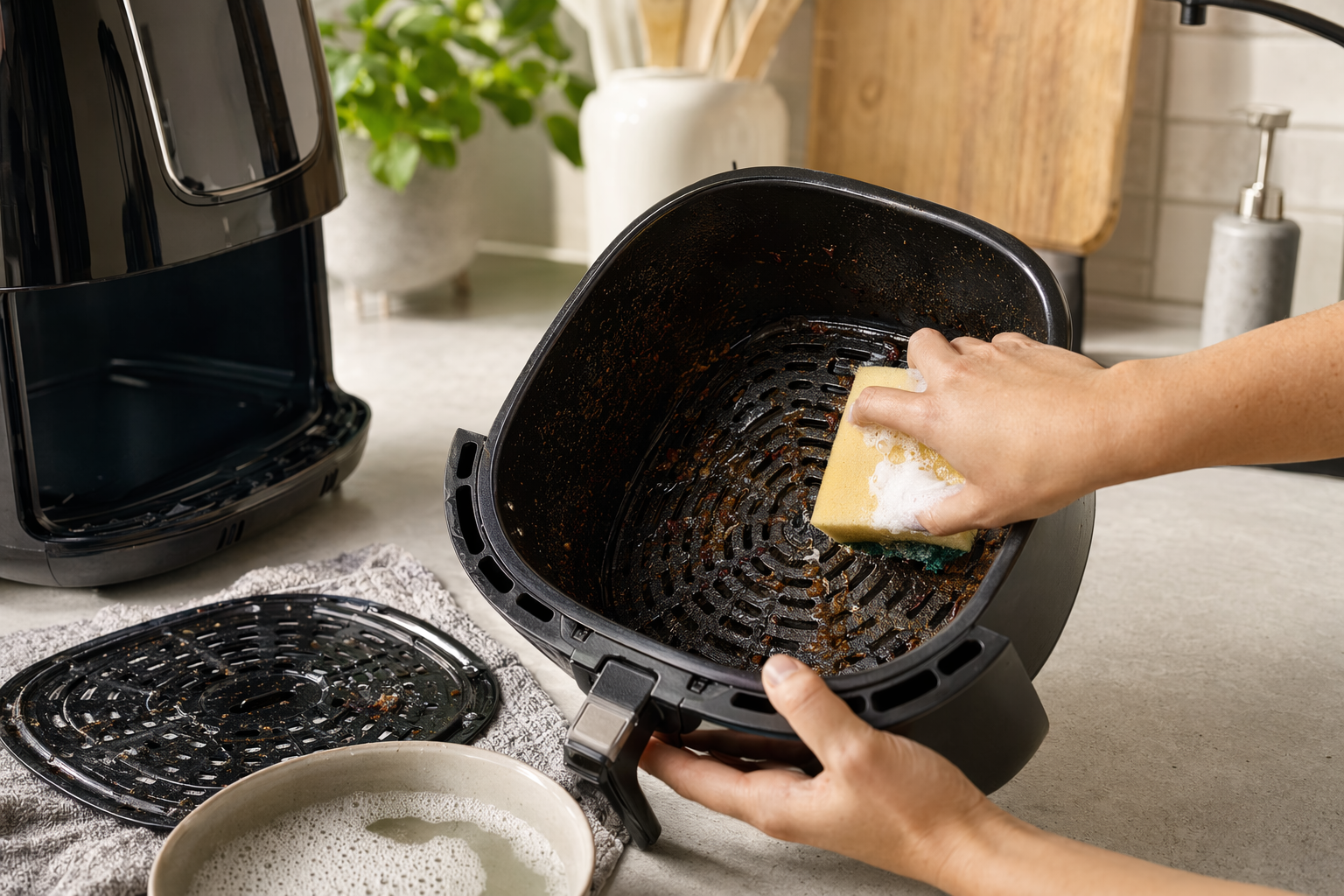
- Fill the sink or the basket itself with hot water and a squirt of ordinary dish soap. Let it sit 10 minutes if there’s grease. Longer if you made something saucy like Korean-style wings or honey mustard sausages.
- Use a soft sponge or dish brush. Nothing metal, nothing scratchy, unless your manufacturer specifically says it’s fine. Most baskets have a nonstick coating and once that starts flaking, it’s just depressing.
- Rinse really well. Soap trapped in the little corners can make the next batch smell weird, and no one wants lemony dish-soap fries.
- Dry it properly before sliding it back in. I use a tea towel, then leave it open a bit so air can move around. Moisture hiding under the tray is how things start smelling musty.
If your basket is dishwasher-safe, that’s great, but I still don’t put mine in every time. The manual for your specific model wins here, not some random person’s confidence online, including mine. Dishwashers can be rough on coatings over time, and honestly, a hot soapy soak is usually faster than rearranging the whole bottom rack like kitchen Tetris.
Basket grease: the sticky villain of weeknight cooking
#Air fryer grease is sneaky because it doesn’t always look dramatic at first. You make chicken thighs, the skin spits a little fat, then some breadcrumbs fall in, then you do frozen spring rolls the next night, and suddenly the bottom corners have this amber sticky film that laughs at your sponge. It’s not just gross-looking either. Old grease smokes. It smells stale. It can make delicate foods taste off. I once made beautiful little courgette fritters after a batch of spicy chorizo potatoes and they tasted like they had been stored inside a pub carpet. Not my finest lunch.
For baked-on grease, I go slow instead of aggressive. Hot water, dish soap, patience. If it’s still clinging on, sprinkle baking soda over the greasy spots and add just enough water to make a paste. Not soup, paste. Smear it around with your fingers or a soft sponge and let it sit for 15 to 20 minutes. Baking soda is mildly abrasive, which means it helps lift gunk without attacking the surface like steel wool would. Then scrub gently. The word gently matters. We are cleaning a basket, not sanding a deck.
If there are stubborn bits around the little holes in the crisper plate, I use a soft toothbrush that lives in my cleaning caddy and absolutely nowhere near my actual teeth. It gets into those corners beautifully. A wooden toothpick can help too, but don’t go stabbing at the coating like you’re excavating fossils. I’ve seen people recommend knives for scraping. Please don’t. That way lies scratches, sadness, and eventually food sticking so badly that every batch of chips leaves half itself behind.
The smell problem, aka why my breakfast toast smelled like garlic shrimp
#Odours are the bit that really bother me. Grease I can see. Crumbs I can shake out. But that lingering smell? It haunts. Fish, garlic, onion, smoky marinades, curry spices, even some frozen foods with that fake buttery coating… they all hang around if the air fryer isn’t cleaned properly. I’m not even against strong food smells. I adore them. There’s a tiny Lebanese place near me that does grilled chicken with toum so punchy you can smell it on your jacket later, and I mean that as a compliment. But I don’t want my next batch of apple turnovers tasting like garlic sauce. Boundaries.
For odours, start with the boring truth: remove the grease first. You can’t perfume your way out of old oil. Wash the basket and tray with hot soapy water, rinse, then smell them when dry. If the smell is still there, do a baking soda soak. I add a tablespoon or two of baking soda to warm water in the basket, let it sit for half an hour, then wash again. Sometimes I’ll wipe the inside walls of the drawer cavity with a damp cloth and a tiny dot of dish soap, then wipe again with clean water. Don’t flood the appliance, obviously. The main unit is electrical, not a soup pot.
A lot of people do the lemon trick: a little bowl of water with lemon slices, run the air fryer briefly, steam things up, smells better. I’ve done it. It’s lovely in a fresh-kitchen kind of way, but I treat it as a finishing move, not the actual cleaning. Same with vinegar. A diluted vinegar wipe can help with smells, but don’t soak parts in strong vinegar unless your manual says the materials can handle it. Also, vinegar plus old fish grease is a scent journey I cannot recommend. It’s like a seaside chip shop got into a fight with a salad dressing.
Cleaning the inside without ruining anything
#This is where I get a bit fussy. The basket is easy because it comes out. The inside of the air fryer, the drawer cavity and upper area near the heating element, needs more care. Unplug it. Let it cool. Remove the basket. Then use a damp cloth to wipe the interior walls. If there are splatters, warm water and a tiny bit of dish soap on the cloth is fine for most messes, followed by another cloth with plain water. The cloth should be damp, not dripping. If water is running down inside the appliance, you’ve gone too far. I say this with love and also mild fear.
For the heating element area, check your model’s manual because designs vary a lot. Some basket-style air fryers let you carefully turn the unit or angle it to see the element, while oven-style ones are different beasts with doors, racks, trays, and sometimes crumb trays. I use a soft dry brush or barely damp cloth for cooled grease specks near the top, and I never spray cleaner directly into the machine. Sprays go everywhere. They mist into places you cannot reach, and then next time it heats up you get mystery chemical smell. No thanks. My food already has enough personality.
My rule is simple: if the part has wires, vents, buttons, or a plug attached to it, it does not get dunked, soaked, sprayed, or treated like a roasting tin.
Clean versus sanitize, because apparently I had this wrong for years
#Here’s the thing I wish someone had told me when I was younger and living on bargain chicken nuggets and optimism: cleaning and sanitizing are not the same. Cleaning removes grease, crumbs, sauce, and food residue. Sanitizing reduces germs on a surface after it’s already clean. You can’t really sanitize through a layer of sticky oil, which sounds obvious now, but I spent a long time thinking a quick wipe with something strong fixed everything. It doesn’t. If you want the proper kitchen-safety breakdown, Clean vs Sanitize in the Kitchen: What Matters is a helpful read and pairs nicely with this whole air fryer situation.
For most home air fryer baskets, hot soapy washing is the big daily win. If you’ve had raw chicken juices or a marinade spill into removable parts, wash thoroughly first, then follow your appliance manual for any sanitizing-safe steps. Some removable accessories can handle dishwasher heat, some can’t. Some coatings hate harsh chemicals. And please don’t use bleach inside the air fryer cavity unless the manufacturer explicitly says how, which I’ve basically never seen for normal home cleaning. Food appliances need food-safe common sense. Stronger is not always better, which is annoying but true.
Oven-style air fryers: crumb trays, racks, and the little door streaks
#If you have an air fryer oven instead of the pull-out basket kind, the cleaning is the same idea but more bits. Remove the racks, mesh trays, drip pan, rotisserie forks if you’re fancy like that, and wash them separately. Mesh trays are brilliant for crisping but they hold onto crumbs like they’re being paid. Soak them flat if your sink allows it. If not, I put them in a roasting tray with hot soapy water, which is not elegant but works.
The door gets greasy too, especially if you cook bacon or anything marinated with sugar. Wipe it when warm, again not hot. For brown streaks on glass, I use baking soda paste and patience. Let it soften. Wipe gently. Repeat if needed. Oven-style machines often have a crumb tray at the bottom, and if you ignore it, it becomes a tiny museum of every snack you’ve made since spring. Empty it often. I find old crumbs are one of the biggest causes of random burning smells, especially after breaded foods. One rogue crumb can smoke like it’s auditioning for a disaster movie.
Things I don’t put in my air fryer anymore, because cleanup taught me
#Cleaning has changed how I cook, honestly. I still make messy food because I’m not a monk, but I think ahead now. Wet batters? Not usually. They drip through the basket, weld themselves to the bottom, and the final food is often disappointing unless you’ve adapted the recipe properly. Very cheesy fillings without a liner or tray? Dangerous. I once made jalapeño popper wontons that exploded molten cream cheese into every hole of the crisper plate. Delicious, yes. Worth the cleanup? I’m still processing.
- Sugary marinades need watching because they caramelize fast and can turn into black sticky lacquer. I still love honey-soy chicken, but I brush some sauce on later instead of drowning it from the start.
- Very fatty sausages or bacon can smoke if the grease collects and overheats. I use a drip tray if my model allows it, and I clean straight after.
- Loose dry spices can blow around and stick near the element. Toss spices with a little oil so they cling to the food instead of becoming paprika dust in the machine.
- Parchment liners are handy, but only when weighed down with food. Never preheat with loose paper in there. It can lift into the element, and then your snack becomes a small panic.
My little anti-odour routine after strong foods
#When I cook fish, lamb kofta, garlicky mushrooms, or anything involving cumin and chilli oil, I do an extra minute of care. Not a full spa day, just enough that tomorrow’s food doesn’t inherit today’s perfume. After washing and drying the basket, I wipe the drawer cavity, then leave the basket out for a while. Air helps more than people think. Trapping everything closed while it’s still damp and warm is how you get that stale takeaway-container smell.
If it still smells, I leave a little open dish of baking soda near the machine overnight, not inside the plugged-in appliance, just nearby or in the cooled basket if it’s fully dry and unplugged. It’s not magic, but it helps. Coffee grounds can absorb smells too, though then everything smells faintly like coffee, which I personally don’t mind unless I’m about to make fish tacos. Lemon peel rubbed lightly on the cleaned basket can be nice, but rinse after. Citrus oil sitting on coatings forever isn’t something I’d make a habit of.
The deep clean I do when I’ve been lazy, which happens
#Every few weeks, or after a truly dramatic cooking session, I do the bigger clean. I unplug the machine, pull out every removable part, and soak what can be soaked. Basket, tray, racks, drip pan. Hot water, dish soap, baking soda if needed. While that sits, I wipe the exterior because somehow the handle always has fingerprints and flour dust and a little smear of sauce from who knows when. Then I clean the inside cavity with a damp cloth, paying attention to the corners where grease likes to hide.
Then I inspect. Very glamorous. I look at the tray holes, the rails, the bottom edges, and the top area near the element. If there’s stuck grease, I soften it rather than attack it. Damp warm cloth held against the spot for a minute. Soft brush. Repeat. It’s not exciting, but it works. After everything is rinsed and dried, I run the empty air fryer for a few minutes if the manual allows, just to drive off moisture and check there’s no soap smell. If it smells like soap, I wash again. I have served enough weirdly perfumed chips in my life, thanks.
Quick troubleshooting, because air fryers have moods
#If your air fryer smokes, first check for grease pooling or crumbs burning. Also check whether the food is too fatty or the temperature too high. Some people add a small amount of water to the drawer under the basket for fatty foods, but only if the manual says that’s okay for your model. Don’t assume. Appliances are weirdly specific. If food sticks, the basket may not be clean enough, the coating may be worn, or the food needed a light oiling. If everything tastes stale, old grease is usually hiding somewhere, often under the crisper tray or in the drawer corners.
If the basket looks dull or tacky even after washing, that’s often polymerized oil, basically oil that’s been heated again and again until it becomes a stubborn film. Baking soda paste helps, but sometimes you need repeated gentle cleans. Don’t jump to harsh oven cleaner. Most air fryer manufacturers warn against abrasive cleaners, scouring pads, and anything that can damage nonstick or electrical parts. The manual may be boring, but it is annoyingly useful. I keep mine in a drawer under the tea towels like a responsible adult, except I only remember it exists when something smells burnt.
A tiny cleaning habit that makes the food better
#This is the part I care about most, because I’m not cleaning for the joy of cleaning. I’m cleaning because food tastes better when your tools aren’t carrying old flavours. Clean basket, better browning. Clean tray holes, better airflow. No burnt crumbs, no bitter smoke. You know those air fryer potatoes with the shattery edges and fluffy middles? They happen more reliably when air can actually move around the food. Same for cauliflower wings, tofu cubes, breaded fish, frozen croissants, all of it. The machine is simple, really: heat, fan, space, and a clean path for air.
And there’s a comfort to it, too. I like ending the night with the basket clean and drying beside the sink. It feels like closing the kitchen properly, even if the rest of my life is a pile of unread messages and mismatched socks. Tomorrow I can make breakfast potatoes without smelling last night’s salmon. Or reheat pizza. Or crisp leftover pakoras, which may be the air fryer’s highest calling, if we’re being honest.
My no-fuss air fryer cleaning cheat sheet
#- Unplug first, always. Let it cool until warm, not hot enough to burn you.
- Wash removable parts with hot water and dish soap after most uses. Soak greasy bits before scrubbing.
- Use soft sponges, soft brushes, baking soda paste, and patience. Skip metal scrubbers and knives.
- Wipe the inside with a damp cloth, never soak the main unit, and don’t spray cleaner into vents or near the element.
- For smells, remove grease first, then try baking soda, airing out, or a light lemon finish after cleaning.
- Dry everything well before putting it back together. Damp closed spaces get funky fast.
Honestly, cleaning an air fryer isn’t hard, it’s just one of those jobs that becomes horrible if you keep postponing it. A little soapy water after dinner saves you from the greasy archaeology later. And if you’re a food person like me, the reward is immediate: cleaner flavours, crispier edges, less smoke, and no surprise garlic aroma in your sweet snacks. That’s worth a few minutes at the sink. Anyway, I’m off to make potato wedges now, because writing about a clean air fryer has obviously made me hungry. If you like this kind of chatty kitchen stuff, I’ve found plenty more food rabbit holes and practical cooking reads over on AllBlogs.in.