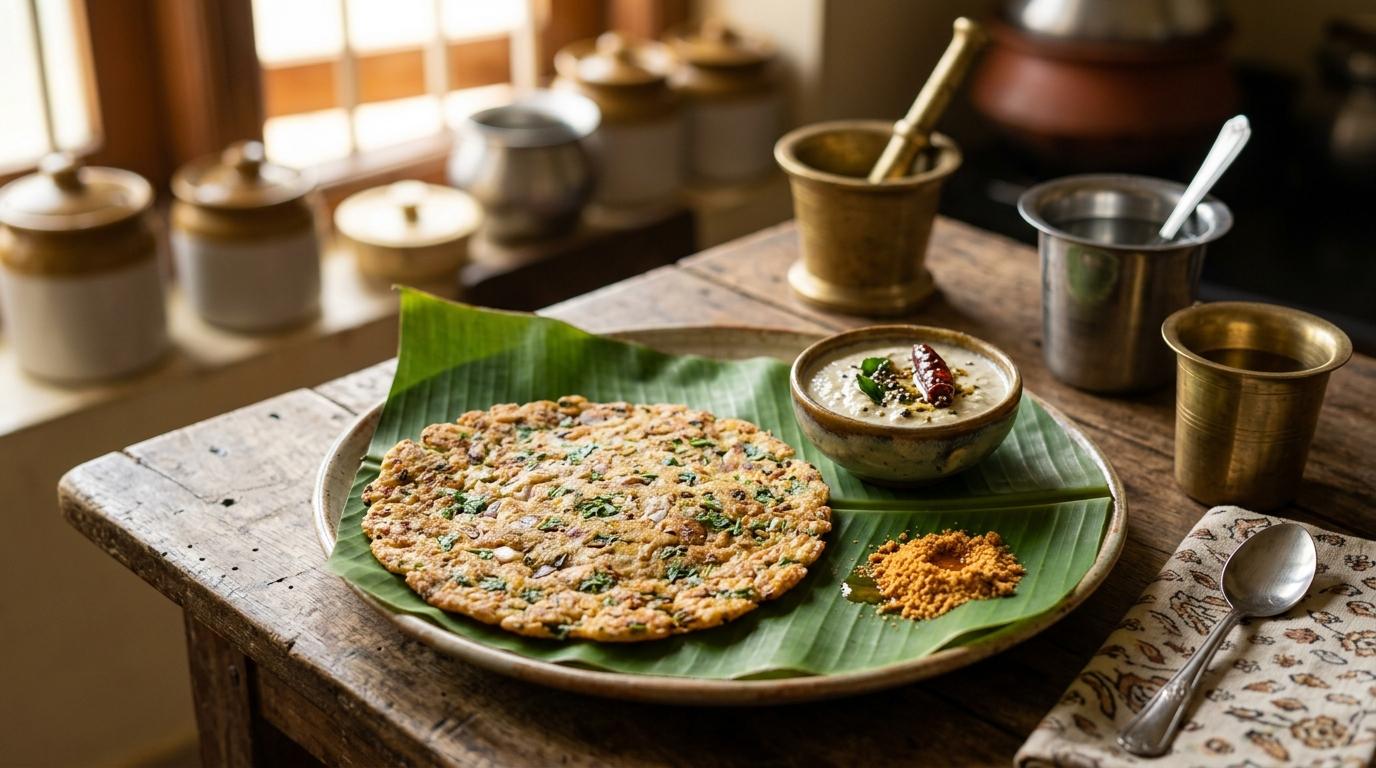
Akki rotti is one of those breakfasts that feels very simple until you actually start making it.
The ingredients are basic: rice flour, onion, coriander, green chilli, cumin, salt and water. But the magic is in the handling. The dough should be soft enough to pat without cracking. The rotti should cook through without becoming hard. The edges should turn golden and crisp, while the centre stays soft and comforting.
That is the version most of us want at home.
AllBlogs already has a travel-style Akki Rotti Breakfast Guide for Karnataka Trips, which is useful if you are eating your way through Karnataka and want to know when, where and how to order it. This recipe is more about making akki rotti in your own kitchen: how the dough should feel, how to press it, what to do if it cracks, and how to stop it from sticking to the tawa.
If this is your first time, don’t worry about getting perfect circles. Akki rotti is very forgiving once you understand the dough.
Quick Answer
#Akki rotti is a traditional Karnataka-style flatbread made with rice flour. In Kannada, “akki” means rice and “rotti” means flatbread.
Unlike chapati, akki rotti is not rolled with a rolling pin. Rice flour has no gluten, so the dough does not stretch or behave like wheat dough. Instead, it is patted by hand on an oiled cold tawa, banana leaf, or parchment paper.
A basic homemade akki rotti is usually made with:
- Rice flour
- Finely chopped onion
- Fresh coriander
- Green chilli
- Cumin seeds
- Salt
- Warm water
- A little oil for cooking
Fresh grated coconut is optional, but it adds a lovely texture and flavour.
Recipe Details
#Dough Texture
#The dough is the most important part of this recipe.
Rice flour dough is very different from wheat flour dough. It does not become stretchy, and kneading it for a long time will not make it elastic like chapati dough. So don’t try to force it.
What you need is the right amount of moisture.
Add warm water slowly and mix until the dough feels soft, moist and easy to press. It should not be dry and crumbly, but it should not be loose like dosa batter either.
A good akki rotti dough should feel:
- Soft enough to spread with wet fingers
- Moist enough that the edges do not crack badly
- Firm enough to hold its shape
- Slightly softer than regular chapati dough
If the dough cracks while pressing, it needs more water. Add warm water one spoon at a time and mix again.
If the dough feels too sticky, add a small spoon of rice flour and bring it together gently.
After mixing, let the dough rest for about 5 minutes. This short rest gives the rice flour time to absorb the water.
How to Press Akki Rotti
#Akki rotti is usually patted by hand, not rolled. A rolling pin is not very useful here because the dough does not have gluten.
You can use any of these three methods.
1. Direct Cold Tawa Method
#This is the easiest method if you are making akki rotti for the first time.
Grease a cold tawa with a few drops of oil. Place one dough ball on it and pat it into a thin round using wet fingers. Then place the tawa on the stove and cook.
The only catch is that the tawa must cool down before you press the next rotti. If you are making several, use two tawas or wait for the same tawa to cool before pressing again.
It is a little slow, but it works very well.
2. Banana Leaf Method
#Lightly grease a banana leaf. Place the dough on it and pat it into a round. Then place the banana leaf dough-side down on a hot tawa. Once the rotti begins to set, gently peel away the leaf.
This is a very traditional and practical method. The rotti transfers neatly, and the banana leaf also gives it a lovely feel.
3. Parchment Paper Method
#If you don’t have banana leaves, parchment paper works well.
Grease the parchment lightly, pat the dough on it, then invert it onto the hot tawa. Once the dough touches the pan and starts setting, peel the paper away carefully.
This is a good everyday kitchen method, especially if you don’t want to press the dough directly on the tawa.
Step-by-Step Recipe
#Step 1: Mix the Flour and Flavourings
#In a wide bowl, add the rice flour, cumin seeds, salt, finely chopped onion, coriander leaves, green chillies and grated coconut, if using.
Mix everything with your fingers. Gently rub the onion into the flour. The onion will release a little moisture, which helps the dough come together.
Step 2: Add Warm Water
#Add warm water little by little. Don’t pour too much at once, because rice flour can go from dry to sticky very quickly.
Mix as you add water until the flour comes together into a soft dough. It should feel moist and easy to handle, not runny.
If it feels dry, add one or two more spoons of warm water.
Do not over-knead. Just mix until the dough is smooth enough to press.
Step 3: Rest the Dough
#Cover the bowl and let the dough rest for about 5 minutes.
After resting, check the texture again. If it feels dry, wet your fingers and knead it lightly. If needed, add a tiny splash of warm water.
Step 4: Divide the Dough
#Divide the dough into 4 medium balls.
Keep the remaining dough covered while you work. Rice flour dough dries out quickly when left open.
Step 5: Grease the Surface
#Choose your pressing method.
If using the direct tawa method, grease a cold tawa.
If using banana leaf or parchment paper, grease the leaf or paper lightly.
Keep a small bowl of water nearby. Wet fingers make pressing much easier and stop the dough from sticking to your hand.
Step 6: Pat the Rotti
#Place one dough ball on the greased surface.
Using damp fingers, press it gently from the centre outward. Keep spreading it into a thin, even round.
Don’t worry if it is not perfectly round. Homemade akki rotti rarely looks like a perfect circle, and that is completely fine. Even thickness matters more than shape.
Make 3 or 4 small holes in the rotti with your finger. These holes help the oil reach the centre while cooking.
Step 7: Cook on Medium Heat
#If you pressed the dough directly on a cold tawa, place the tawa on the stove now and turn the heat to medium.
If you used banana leaf or parchment paper, heat the tawa first, place the rotti on it, then peel away the leaf or paper carefully.
Drizzle a little oil around the edges and into the holes.
Cover and cook for 1 to 2 minutes, until the top looks set and opaque.
Step 8: Flip and Roast
#Remove the lid.
Flip the rotti using a flat spatula. Cook the other side on medium heat until golden spots appear and the edges become crisp.
If you like crispier akki rotti, cook it a little longer without the lid. Add a few extra drops of oil around the edges if needed.
Serve it hot, straight from the tawa.
Common Mistakes and Easy Fixes
#Dough Is Too Dry
#Dry dough cracks while pressing and can break on the tawa.
Add warm water one spoon at a time and mix gently until the dough becomes soft and easy to press.
Dough Is Too Sticky
#Too much water makes the dough difficult to handle. The rotti may also become dense.
Add a small spoon of rice flour, mix lightly and rest the dough for a minute before pressing again.
Onion Pieces Are Too Big
#Large onion pieces tear the dough and make the rotti uneven.
Chop onion as finely as you can. Do the same with green chillies and thick coriander stems.
Tawa Is Too Hot While Pressing
#If you press the dough directly on a hot tawa, it will stick, cook unevenly and may burn your fingers.
For the direct tawa method, always press on a cold or cooled tawa.
Heat Is Too High
#High heat browns the outside too quickly while the centre stays undercooked.
Medium heat is best. Covering the rotti for the first minute or two helps the rice flour cook properly.
Rotti Is Too Thick
#A thick rotti can stay doughy in the middle.
Press it evenly and keep it moderately thin. It does not have to be paper-thin, but it should not be thick like a stuffed paratha.
Serving Suggestions
#Akki rotti tastes best hot. The edges are crispest right after it comes off the tawa, so serve each one as soon as it is ready.
It goes well with:
- Coconut chutney
- Tomato onion chutney
- A small pat of butter
- Plain curd
- Mango pickle
- Stuffed brinjal curry, if you want a fuller meal
Akki rotti is not the best make-ahead flatbread if you want crisp edges. It tastes nicest fresh. For travel-friendly Indian snacks and flatbreads that store better, you can also read AllBlogs' guide on Thepla vs Khakhra vs Handvo for Travel.
For more regional breakfast ideas, explore 12 South Indian Millet Breakfasts for Weight Loss.