Tbilisi can seem tricky at first if you do not eat meat.
A lot of Georgian food content online shows grilled meats, meat khinkali, rich broths, huge supra tables and plates piled high with kebabs. That side of Georgian food absolutely exists. But it is only one part of the story.
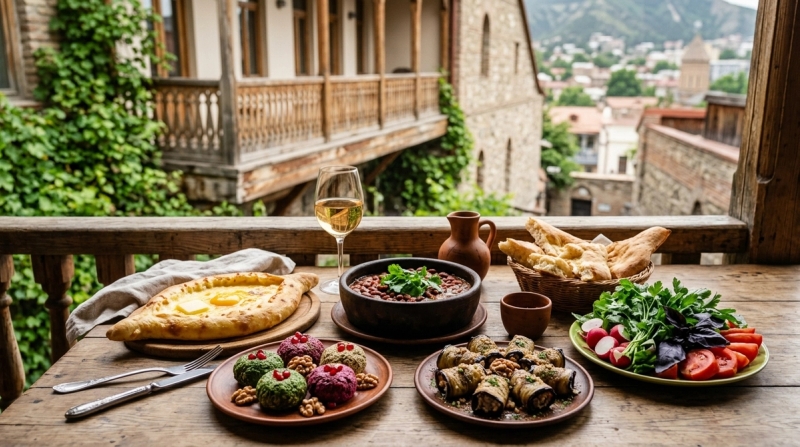
Georgia also has a beautiful meat-free food culture built around beans, walnuts, eggplant, herbs, fresh bread, cheese, pickles, mushrooms and seasonal vegetables. Once you know what to order, Tbilisi becomes much easier than it may look before you arrive.
This Tbilisi vegetarian food guide is written for actual travel days, not just for reading a menu of pretty dish names. It covers what vegetarian Georgian dishes to try, what hidden ingredients to ask about, and how bakeries, markets and supermarkets can save you when you are tired, hungry, on a budget, or just not in the mood to decode another restaurant menu.
It is especially useful if you are an Indian vegetarian, a budget traveler, a vegan who needs to ask careful questions, or someone who does not want every meal to depend on finding a fully vegetarian restaurant.
Why Georgian food works surprisingly well for vegetarians
#Georgian food has a meat-heavy reputation, and that reputation is not completely wrong. Many famous dishes include pork, beef, lamb, chicken or meat broth. Classic khinkali are usually filled with meat. Traditional feast tables can come with a lot of grilled meat.
But Georgian food also has a strong fasting tradition connected to Orthodox Christianity. During fasting periods, many people avoid animal products. Because of that, Georgian cuisine has a whole world of bean, vegetable, walnut, mushroom and bread-based dishes that existed long before vegetarian travel became common.
This helps a lot when you are ordering.
You may see or hear the word samarkhvo, which refers to fasting food. These dishes are generally made without meat, dairy and eggs. That can be helpful for vegans too, but do not treat it as a perfect guarantee. If you have allergies, follow a Jain diet, avoid cross-contamination, or need strict vegan preparation, ask specific questions.
For most vegetarians, though, Tbilisi is a generous city. You are not limited to fries and a sad plain salad. You can eat proper Georgian food, enjoy local flavors, and still avoid meat.
Georgian vegetarian dishes to order in Tbilisi
#Here are the dishes to look for when searching for vegetarian food in Tbilisi.
Khachapuri: Georgia’s famous cheese bread
#Let’s start with the obvious one.
Khachapuri is one of Georgia’s most famous foods, and for many vegetarian travelers it quickly becomes the easy comfort order.
So, is khachapuri vegetarian? In the basic sense, yes. It is meat-free. It is bread filled or topped with Georgian cheese.
But strict vegetarians should read the rennet section later in this guide, because traditional Georgian cheeses may be made with animal rennet.
Common types of khachapuri you may see in Tbilisi include:
Imeruli khachapuri
#This is the everyday round cheese bread. It is usually flat, simple and filled with salty Imeretian cheese.
If you want a filling bakery meal without sitting down for a long lunch, Imeruli khachapuri is one of the easiest choices.
Megruli khachapuri
#Megruli is similar to Imeruli, but with extra cheese on top.
It is richer, heavier and more indulgent. Best shared, unless you are extremely hungry.
Acharuli khachapuri
#This is the boat-shaped khachapuri from Adjara. It arrives filled with hot melted cheese and is usually topped with egg and butter. You mix everything together, then tear off the bread edges and dip them into the cheese.
For vegetarians who eat eggs and dairy, it is a classic Tbilisi food experience. For vegans, it is not suitable unless a restaurant specifically offers a vegan version. If you do not eat eggs, you can ask for it without the egg, though the cheese and butter will usually still be there.
Lobio: bean stew that can be a full meal
#Lobio is one of the most useful Georgian dishes for vegetarian travelers.
It is a bean dish, often made with red kidney beans, herbs, garlic, coriander and spices. In Tbilisi restaurants, it may come bubbling hot in a clay pot. It is hearty, filling and especially good on a cold or rainy day.
Lobio is often served with mchadi, a dense Georgian cornbread, and pickled vegetables. Together, this can easily become a full vegetarian meal.
But lobio comes with one important warning: some versions may include ham, pork fat or meat flavoring. If you see something like Rachuli lobio, be extra careful, because some regional versions include pork.
When ordering lobio in Tbilisi, ask if it is made without meat, pork fat or meat stock.
A simple question in English is:
“Is the lobio cooked with meat, pork fat or meat broth?”
Many servers in central Tbilisi are used to dietary questions from travelers. The key is to be polite and specific.
Pkhali: walnut and vegetable starters
#If there is one group of dishes that makes Georgian food for vegetarians feel genuinely exciting, it is pkhali.
Pkhali are vegetable and walnut spreads or patties, usually served cold as appetizers. They are made with finely chopped vegetables, ground walnuts, garlic, herbs, vinegar and Georgian spices. The texture is soft and rich, and they are often served in colorful little portions with pomegranate seeds on top.
Common types include:
- Spinach pkhali
- Beetroot pkhali
- Green bean pkhali
- Leek pkhali
- Cabbage or mixed vegetable pkhali
Pkhali is usually vegetarian and often vegan, but recipes vary. If you are strict, ask whether any dairy, egg or meat stock is used.
For Indian vegetarians, pkhali is often an easy dish to enjoy. The flavors are not Indian, of course, but the combination of coriander, garlic, nuts, spice and acidity may feel familiar in a comforting way.
Badrijani nigvzit: eggplant with walnut paste
#Badrijani nigvzit is one of the best vegetarian Georgian dishes to order in Tbilisi.
Long slices of eggplant are cooked until soft, then filled or spread with walnut paste, garlic, herbs and vinegar. They are often rolled up and served cold with pomegranate seeds.
The dish is rich, slightly tangy and satisfying without being as heavy as cheese bread. It also works beautifully as part of a shared meal with pkhali, salad, bread and beans.
Badrijani nigvzit is generally meat-free and often vegan. If you avoid shared frying oil or need strict vegan preparation, ask how the eggplant is cooked.
Mushroom or potato khinkali
#Khinkali are Georgia’s famous dumplings.
The classic version is filled with meat and broth, but many restaurants in Tbilisi also offer vegetarian khinkali.
Look for:
- Soko khinkali, mushroom dumplings
- Kartopili khinkali, potato dumplings
- Sometimes cheese khinkali
The filling is only part of the question, though. You may also want to ask whether vegetarian khinkali are boiled separately or cooked in the same pot as meat dumplings.
If you are a relaxed vegetarian, this may not bother you. If you are strict, it matters.
Also check the filling. Potato khinkali may include butter or cheese. Mushroom khinkali may be more suitable for vegans, but only after confirming the dough, filling and boiling method.
Lobiani: bean bread for bakery meals
#Lobiani is bread stuffed with beans, and it is one of the best budget foods for vegetarians in Tbilisi.
You will find it in bakeries, casual counters and sometimes restaurants. It is filling, easy to carry and usually cheaper than a sit-down meal.
As with lobio, ask if it contains pork fat, butter or egg wash if that matters to you. Some versions are simple and plant-based. Others are not.
Ajapsandali: vegetable stew
#Ajapsandali is a vegetable dish usually made with eggplant, tomato, peppers, herbs and spices.
It is a good choice when you want something warmer than a salad but lighter than khachapuri. It is usually vegetarian and often vegan, though strict travelers should still check for broth or shared preparation.
Salads, pickles and walnut sauces
#Georgian salads can be excellent, especially tomato and cucumber salad with walnut dressing.
Pickles are also a big part of Georgian meals. You may see pickled cucumbers, green tomatoes, garlic, peppers and jonjoli.
Sauces are usually worth checking. Many are vegetable, herb or walnut-based, but some restaurant sauces or gravies may use meat juices or broth. If a sauce comes with a dish and you are unsure, ask what it is made from.
Hidden ingredients vegetarians should check in Tbilisi
#Tbilisi is vegetarian-friendly, but not every kitchen will define vegetarian food the same way you do. A dish may look meat-free and still include something you would not expect.
Here are the main things to watch for.
Meat stock and broth
#The biggest hidden issue is broth.
A dish can look completely vegetarian but still be cooked with meat stock.
Check for broth in:
- Soups
- Lobio
- Mushroom dishes
- Sauces
- Dumplings
- Rice or grain dishes
- Stews
Ask:
“Is this made with meat broth or only water?”
For khinkali, ask whether the vegetarian dumplings are boiled separately from meat dumplings. If the answer is unclear and you are strict, choose something else.
Cheese and rennet
#Khachapuri is meat-free, but the cheese question can be more complicated.
Traditional Georgian cheeses such as Sulguni and Imeretian may be made with animal rennet. Rennet is used in cheesemaking, and strict vegetarians who avoid animal-derived rennet should be aware of this.
Some modern producers may use non-animal alternatives, but you should not assume a restaurant or bakery can confirm the source. If rennet matters to you, traditional khachapuri may not be a safe choice unless the place clearly understands the question and can confirm the cheese.
For many lacto-vegetarians, khachapuri will feel acceptable. For rennet-conscious vegetarians, it requires caution.
Dumpling fillings
#Do not assume all dumplings are vegetarian just because the menu has one meat-free option.
Georgian khinkali are commonly meat-filled, and mixed batches may be handled together.
Check:
- What is inside the dumpling
- Whether the dough contains egg or dairy
- Whether it is boiled with meat dumplings
- Whether the topping or sauce includes broth, butter or meat juices
Mushroom and potato khinkali are common vegetarian choices, but the details matter.
Pork fat in beans and breads
#Pork fat may be used for flavor in some traditional dishes, especially bean dishes and regional preparations.
The main dishes to check are:
- Lobio
- Lobiani
- Some regional bean dishes
Ask for no meat, no pork fat and no meat broth. If you are vegan, also ask for no butter, egg or dairy.
Shared prep, fryers and grills
#Some travelers are fine as long as there are no visible meat pieces in the dish. Others need separate utensils, pans, fryers or grills.
Traditional restaurants may not think of shared preparation as a dietary issue unless you explain it clearly. This is especially important for vegans, Jain travelers and people with allergies.
If shared prep matters to you, it is often easier to use dedicated vegetarian or vegan restaurants, or to rely on market and supermarket meals where you can control the ingredients yourself.
Vegetarian vs vegan in Tbilisi
#Vegetarian and vegan travel are not quite the same in Georgia.
Vegetarians who eat dairy and eggs will find Tbilisi much easier. Khachapuri, cheese, yogurt-based dishes, egg dishes, breads, beans, vegetables and walnut starters create plenty of options.
Vegans can also eat well, but they need to ask more carefully.
The Orthodox fasting tradition helps because samarkhvo dishes are generally animal-free. Still, fasting food is a religious category, not always a modern vegan standard. It may not cover cross-contamination, shared utensils or every hidden ingredient.
Vegan travelers should be extra careful with:
- Butter in breads or cooked dishes
- Egg wash on pastries
- Cheese in potato khinkali or breads
- Dairy in sauces
- Honey in sweets
- Shared cooking surfaces
- Broth in soups and stews
If a restaurant has a fasting menu, that is a good start. If you need strict vegan preparation, ask directly or choose places that clearly label vegan dishes.
Tbilisi bakeries: the best budget backup
#When you do not want a full restaurant meal, Tbilisi bakeries are your best friend.
They are quick, practical and usually easy to find in both central streets and residential neighborhoods. They are also a lifesaver when you are hungry now and do not want to sit down, translate a menu or spend much money.
Shoti bread from a tone bakery
#A tone is a traditional clay oven, similar in spirit to a tandoor. Shoti is the long, canoe-shaped Georgian bread baked against the hot inner wall of the oven.
Fresh shoti is one of the simplest vegetarian foods in Tbilisi. It is warm, chewy, fragrant and very easy to love.
Pair it with cheese, tomatoes, fruit, pickles, beans or nuts from a market and you have a simple budget meal.
If you are vegan, shoti is usually a good option, but if you are very strict, ask whether any dairy, egg or animal fat is used. Basic shoti is normally just bread, but bakery recipes can vary.
Khachapuri from bakeries
#Bakery khachapuri is filling, fast and widely available.
Imeruli khachapuri is especially practical because it is easy to carry and eat on the go. It can be breakfast, lunch, a bus snack or an emergency dinner when you are too tired to go out properly.
The main things to check are cheese rennet, egg wash and butter, depending on your diet.
Lobiani from bakeries
#Lobiani is an excellent backup when you want something filling but not cheese-heavy.
It is especially useful for travelers who get tired of eating dairy at every meal. Ask whether it contains pork fat, butter or egg wash.
If the bakery is busy and communication is difficult, relaxed vegetarians may still find it workable. Strict vegans may prefer supermarkets or clearly labeled cafes.
Markets in Tbilisi: easy vegetarian self-catering
#Markets are a very useful part of any Tbilisi vegetarian food guide because they make you less dependent on restaurants.
They are also great if you are traveling on a budget, staying in a hostel, planning a picnic, or managing strict dietary needs.
Dezerter Bazaar
#Dezerter Bazaar is one of Tbilisi’s best-known food markets and a strong backup for vegetarian travelers.
It is a good place to build a picnic or stock up on simple ingredients.
Look for:
- Fresh fruit and vegetables
- Walnuts and hazelnuts
- Georgian spices
- Pickled vegetables
- Fresh herbs
- Churchkhela
- Cheese, if you eat dairy
- Bread from nearby bakeries
Churchkhela is a classic Georgian snack made by dipping strings of nuts into thickened grape juice. It is sweet, chewy and easy to carry around. It is generally plant-based, though strict vegans can still ask if anything else has been added.
Markets are especially helpful for Indian vegetarians who want fruit, nuts, yogurt, bread and simple snack combinations between restaurant meals.
Supermarket backups in Tbilisi
#Supermarkets are not glamorous, but they are extremely useful.
In Tbilisi, modern supermarkets can help you find:
- Fresh produce
- Bread
- Cheese and yogurt
- Nuts and dried fruit
- Lentils, beans and grains
- Hummus or spreads
- Plant milks or imported vegan items in some stores
- Simple snacks for day trips
If you are staying somewhere with a kitchen, supermarkets make vegetarian travel much easier. Even without a kitchen, you can put together a basic meal from bread, fruit, nuts, cheese, salads and spreads.
This is also a good strategy when you are tired of explaining your diet, or when restaurant menus feel uncertain.
Vegetarian restaurants in Tbilisi: useful, but not your only option
#There are vegetarian restaurants in Tbilisi, along with many regular restaurants that have vegetarian options. They can be very helpful, especially for vegans and strict vegetarians.
But you do not need to depend only on dedicated vegetarian places.
Traditional Georgian restaurants often have enough meat-free dishes for a full meal if you know what to order.
A balanced approach works best:
- Use traditional restaurants for pkhali, badrijani, lobio, khachapuri and mushroom khinkali
- Use bakeries for shoti, khachapuri and lobiani
- Use markets for fruit, nuts, pickles and picnic food
- Use supermarkets when you need control over ingredients
- Use dedicated vegetarian or vegan restaurants when cross-contamination matters
That mix gives you flexibility. It also lets you eat locally without making every meal stressful.
Tips for Indian vegetarian and Jain travelers
#For many Indian travelers, food confidence is a big part of trip planning.
Georgia can feel unfamiliar at first, but Tbilisi is manageable for Indian vegetarians because many Georgian dishes are naturally meat-free.
Vegetarian Indian travelers will likely find comfort in ingredients such as beans, eggplant, spinach, coriander, fenugreek, garlic, walnuts, bread and pickles. The flavors are not Indian, but they are often bold, herby and satisfying rather than plain.
Good Georgian dishes for Indian vegetarians include:
- Lobio, after checking for pork fat or meat broth
- Pkhali
- Badrijani nigvzit
- Khachapuri, if dairy and rennet are acceptable
- Mushroom khinkali, after checking broth and boiling method
- Ajapsandali
- Shoti bread with cheese, vegetables or pickles
For Jain travelers, Tbilisi requires more planning.
Onion, garlic and root vegetables are common in Georgian cooking. Many pkhali, lobio and vegetable dishes use garlic and onion as core flavors.
Practical Jain-friendly strategies include:
- Use markets for fruit, nuts and simple snacks
- Choose plain bread where ingredients are clear
- Use supermarkets for packaged or self-catered food
- Contact Indian restaurants in advance and ask if they can prepare Jain food
- Do not assume a “vegetarian” dish is Jain-friendly
- Write down your restrictions clearly before ordering
If you follow a strict Jain diet, do not rely only on walk-in ordering at traditional Georgian restaurants. Plan a few backup meals each day. It makes the trip much calmer.
Simple ordering checklist
#Before ordering, decide how strict you are. Then ask based on your needs.
For general vegetarians:
- Does this contain meat?
- Is it cooked with meat broth?
- Is there pork fat in it?
- Are the dumplings vegetarian inside?
For strict vegetarians:
- Is the cheese made with animal rennet?
- Is it cooked in the same broth as meat?
- Is the same fryer or pan used for meat?
For vegans:
- Is there dairy, egg, butter or cheese?
- Is there meat stock or broth?
- Is there egg wash on the bread?
- Is it from the fasting menu?
- Is it cooked separately?
For Jain travelers:
- Does it contain onion, garlic or potato?
- Can it be made without root vegetables?
- Can it be prepared separately?
- Can the restaurant confirm all ingredients?
Short, specific questions work better than long explanations. If the answer is uncertain, choose a simpler dish.
Final thoughts
#Tbilisi is a rewarding city for vegetarian travelers once you understand the menu a little.
You can eat deeply local food without making every meal depend on a restaurant labeled vegetarian. Order pkhali, badrijani, lobio, khachapuri and mushroom khinkali. Use bakeries when you need something quick. Use markets and supermarkets when you need control, savings, or just a break from restaurant food.
Most importantly, ask about broth, pork fat, cheese rennet, dumpling fillings, sauces and shared prep when those things matter to you.
That small bit of caution turns Tbilisi from confusing to genuinely easy, and lets you enjoy Georgian food with much more confidence.