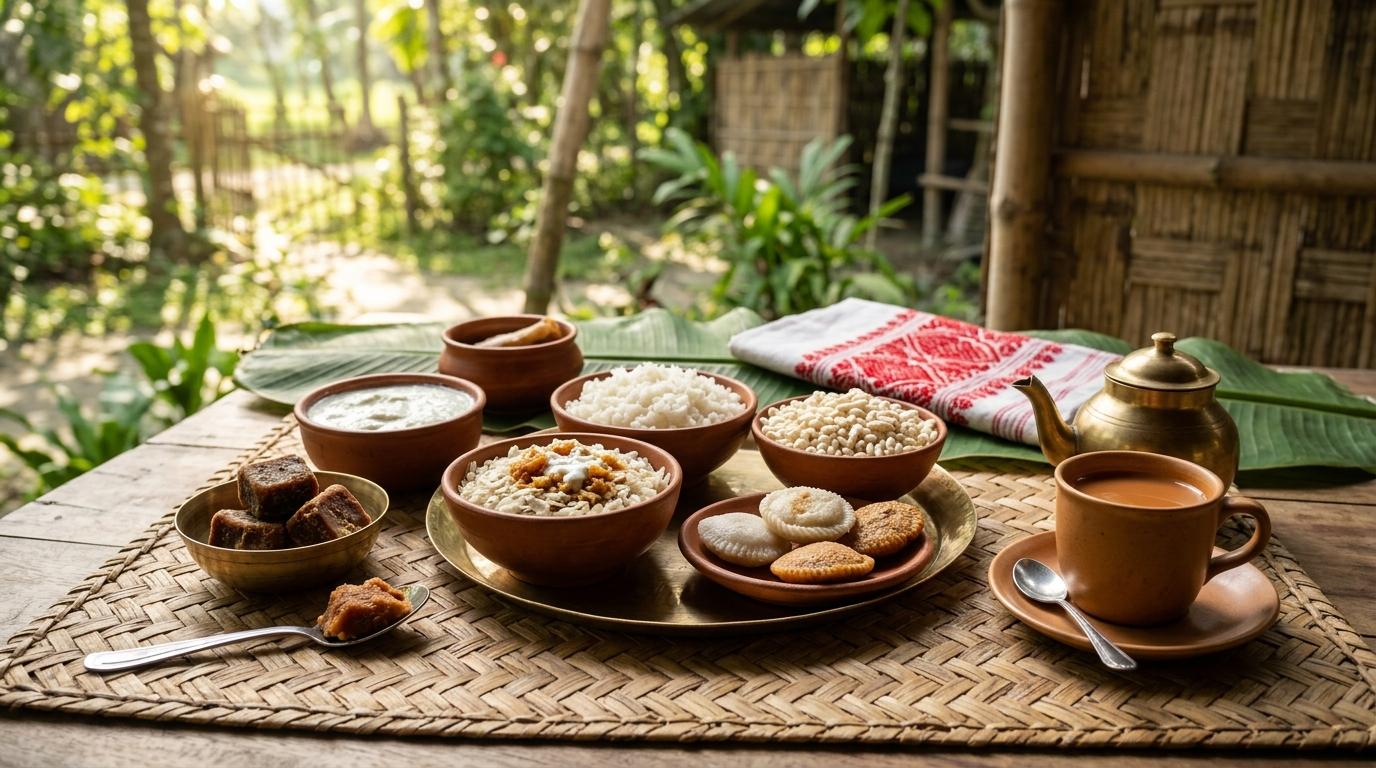
If you’re planning to eat your way through Assam, you might already be thinking about thalis, khaar, tenga, fish curries, leafy greens, rice, and all the lovely fermented things that show up on the Assamese table.
But breakfast in Assam has its own quiet charm.
This Assamese jolpan breakfast guide is for travelers who want to understand the morning meal: what to order, what the main ingredients are, and how to enjoy it without feeling lost. Jolpan is simple, comforting, and deeply tied to rice. You’ll see rice in many forms: chira, muri, komal saul, xandoh, and pitha, often served with doi, gur, and a cup of strong Assam tea.
It’s not a heavy breakfast. It’s not flashy. But when it’s fresh and well served, it can be one of the most memorable food experiences in Assam.
Quick Answer: What Is Assamese Jolpan?
#Jolpan is a traditional Assamese breakfast or light snack, usually built around rice in different textures.
A typical jolpan spread may include:
- Chira, flattened or beaten rice
- Muri, puffed rice
- Komal saul, a special soft rice soaked before eating
- Xandoh, roasted and ground rice
- Doi, curd or yogurt
- Gur, jaggery
- Pitha, traditional rice cakes or rice-based sweets
- Assam tea, usually strong, brisk, and perfect in the morning
If it’s your first time, order something simple:
Chira or komal saul with doi and gur, one fresh pitha, and Assam tea.
That gives you the heart of jolpan in Assam without needing to know every local variation right away.
What Jolpan Means in Assam
#In Assamese food culture, jolpan means a light meal, breakfast, or snack. It’s especially associated with mornings, but you may also find it during festivals, weddings, family gatherings, and community events.
The important thing to know is that jolpan is not one fixed dish.
It’s more like a style of eating.
There is usually a rice base. Then come the accompaniments: curd, milk, cream, jaggery, sometimes banana, and often pitha on the side. What you get depends on the home, region, season, and occasion.
One homestay may serve you chira doi gur. Another may offer komal saul with milk and jaggery. A traditional restaurant might give you a fuller plate with pitha and tea. During festivals, the spread can be much more generous.
The feeling stays the same: rice, dairy or liquid, sweetness, texture, and tea.
Why Jolpan Feels So Different From Other Indian Breakfasts
#Many Indian breakfasts are hot, savory, and cooked just before serving. Think paratha, dosa, idli, poha, puri, or upma.
Assamese jolpan is gentler.
It often depends on soaking, roasting, puffing, grinding, mixing, and sweetening rather than frying or heavy spicing. The flavors are usually soft and calm: creamy curd, earthy rice, deep jaggery, and the malty strength of Assam tea.
That’s why an Assamese thali guide won’t really explain breakfast. A thali helps you understand lunch or dinner. Jolpan helps you understand the Assamese morning.
For travelers, it’s also a beautiful introduction to Assam’s rice culture. You’re not just eating “rice for breakfast”. You’re tasting rice flattened, puffed, roasted, ground, soaked, softened, and turned into cakes.
The Main Parts of Assamese Jolpan
#1. Chira: Flattened Rice
#Chira is flattened or beaten rice. If you know poha, it may look familiar, but in jolpan it’s usually eaten in a simpler, sweeter way.
It may be served with:
- Doi and gur
- Milk and jaggery
- Cream in richer home-style versions
- Sometimes banana or other local additions
For first-time visitors, chira doi gur is one of the easiest jolpan combinations to enjoy. The rice softens slightly in the curd but still keeps a little bite.
Traveler tip: Ask for the gur on the side if you don’t want your breakfast too sweet.
2. Muri: Puffed Rice
#Muri is puffed rice. It brings crunch to the breakfast table.
With curd and jaggery, it starts out light and airy, then slowly becomes more filling. Because muri can lose its crispness in humid weather, freshness really matters. Good muri should taste clean and crisp, not stale, damp, or musty.
Traveler tip: During rainy or very humid weather, choose busy places where food moves quickly. If the muri tastes flat or damp, leave it and enjoy the other items instead.
3. Komal Saul: Soft Soaked Rice
#Komal saul is one of the most interesting parts of Assamese jolpan. It’s a special rice variety that becomes soft enough to eat after soaking, without needing to be fully boiled like regular rice.
For many travelers, this feels especially unique to Assam. It’s mild, soft, and comforting, especially with curd, milk, or jaggery.
Water tip: Since komal saul is soaked before eating, it’s fine to politely ask whether filtered, boiled, or safe drinking water was used. This is especially worth doing if you have a sensitive stomach while traveling.
4. Xandoh: Roasted and Ground Rice
#Xandoh is roasted and ground rice. It has a nutty, earthy taste and a texture that may be new if you usually prefer soft breakfasts.
It can be eaten with milk, curd, or jaggery, depending on how it’s served. If you’re curious but unsure, try a small portion first.
Traveler tip: If several rice bases are offered, take a little xandoh along with something more familiar, like chira.
5. Doi: Curd or Yogurt
#Doi is curd, often thick and slightly tangy. In jolpan, it softens the rice and balances the sweetness of the gur.
Freshness matters. Good curd should smell clean and pleasantly sour, not harsh or unpleasant. If you don’t do well with dairy while traveling, ask whether the rice can be served with warm water, boiled milk, or simply jaggery.
Dairy tip: Avoid dairy that looks poorly stored, smells odd, or has been sitting uncovered for too long. If milk is offered and you’re cautious, ask for boiled milk.
6. Gur: Jaggery
#Gur is jaggery. In Assamese jolpan, it may come as a soft sweetener, a syrupy liquid, or in another local form depending on where you are.
It gives jolpan its warm, deep sweetness. Compared with white sugar, it tastes earthier and more rounded.
Traveler tip: Ask for gur separately. Add a little first, taste, and then add more if you want. Jolpan can become very sweet very quickly.
7. Pitha: Rice Cakes and Rice-Based Sweets
#Pitha is a broad family of traditional rice cakes and rice-based sweets. Some are steamed, some are roasted, and some are fried. Many have fillings such as coconut, sesame, or jaggery.
If pitha is available at breakfast, try at least one kind.
It gives you another side of Assamese rice culture. Where chira and doi are soft and bowl-like, pitha gives you something to hold, bite into, and enjoy with tea.
Freshness tip: Fresh pitha should taste clean and pleasant. It should not smell sour, taste stale, or feel overly oily. In small shops, look for places where items are being made or sold regularly.
Assam Tea With Jolpan
#An Assam tea breakfast is one of the simplest pleasures of traveling in the state.
Assam tea is known for being strong, brisk, and malty. With jolpan, that strength works beautifully. It cuts through the creaminess of doi, balances the sweetness of gur, and gives the whole breakfast a warm finish.
Depending on where you are, you may be served milk tea with sugar or black tea. If you have a preference, say it clearly.
Useful phrases when ordering:
- “Tea without sugar, please.”
- “Less sugar, please.”
- “Black tea, if available.”
- “Milk tea, less sweet.”
If your jolpan already has a generous amount of gur, less-sweet tea usually feels better.
What to Order the First Time
#If you’re new to Assamese breakfast, don’t try to order everything at once. Jolpan can look light, but it becomes filling once you add curd, milk, jaggery, and pitha.
A good first order is:
- Chira with doi and gur
- One type of pitha
- Assam tea
If komal saul is available, try it instead of chira, or ask for a small portion alongside it.
If you want crunch, add muri. If you want something more traditional and earthy, ask if xandoh is available.
Easy Traveler Order
#You can simply say:
“Can I have chira or komal saul with doi and gur, pitha, and tea?”
That’s enough. You don’t need to sound like an expert. Most hosts, homestays, and local eateries will understand what you’re looking for.
If You Prefer Less Sweet Food
#Ask for:
- Gur on the side
- Tea with less sugar
- More curd and less jaggery
If You Avoid Dairy
#Ask whether the rice can be served with:
- Warm water
- Jaggery only
- Boiled milk, if milk is okay for you
Also, don’t assume every pitha is dairy-free. Ask before ordering if you need to avoid dairy completely.
How to Eat Jolpan
#Jolpan is relaxed food. There’s no complicated etiquette to worry about.
Take a small portion first. Add curd. Add a little gur. Mix gently. If the rice needs a moment to soften, let it sit briefly. Taste, then adjust.
In homes, some people may eat with the right hand. In restaurants, spoons are common and completely fine. If you’re unsure, follow your host or just ask.
Try not to fill your bowl too much at the beginning, especially if several items are being served. Jolpan can surprise you. It looks simple, but it fills you up.
And if you’re staying at a homestay, show interest. Ask the name of the rice. Ask which pitha they’ve served. A simple compliment or question can turn breakfast into a warm conversation.
Freshness, Dairy, Water, and Monsoon Hygiene Tips
#Food travel should be joyful, but a little care helps, especially with breakfast foods that involve water, dairy, and humidity.
These are general travel tips, not medical advice.
Check the Dairy
#With doi, milk, or cream, trust your senses.
Avoid dairy that:
- Smells unpleasant or unusually sharp
- Looks strangely separated
- Has been sitting uncovered
- Feels warm when it should be cool or freshly served
Curd is common in jolpan, but if your stomach is sensitive, start with a small amount.
Ask About Water for Soaked Rice
#For komal saul, water matters because the rice is soaked before eating.
At a homestay or restaurant, it’s reasonable to ask:
“Was this soaked in filtered or boiled water?”
If you’re unsure, choose chira, muri, pitha, and tea instead.
Be More Careful in Humid or Monsoon Weather
#Assam can be very humid, especially during the monsoon. Dry items can absorb moisture quickly.
For muri, chira, and pitha, choose places where food moves quickly and is not sitting uncovered for long. Busy breakfast counters, trusted homestays, and traditional restaurants with steady local customers are usually safer bets than quiet stalls with old-looking stock.
Choose Fresh Pitha
#Fresh pitha is wonderful. Stale pitha is not.
Look for items that seem recently made, properly stored, and not too oily or dried out. If something smells off, skip it.
Go Easy With the Gur
#Gur is delicious, but it can make breakfast very sweet. If you have a long day of sightseeing or road travel ahead, add it slowly and taste as you go.
Food Travel Notes for Assam Visitors
#For anyone exploring Northeast Indian food, jolpan is worth seeking out because it shows a quieter, more everyday side of Assamese cuisine.
It isn’t a restaurant showpiece. It isn’t a heavy feast. It isn’t a thali.
It’s a morning habit built from rice, curd, jaggery, tea, and hospitality.
You may find jolpan at traditional Assamese restaurants, local breakfast places, sweet shops, and homestays. It may also appear during festivals and family occasions. In standard hotels, breakfast may lean more toward pan-Indian options, so ask specifically if Assamese jolpan is available.
The best approach is to stay flexible. Instead of asking for one fixed “authentic” plate, ask what local breakfast is available that day. Jolpan changes from place to place, and that variation is part of the pleasure.
Best First Jolpan Plate for Travelers
#If you only have one morning to try jolpan in Assam, choose this:
- Chira or komal saul
- Doi
- Gur on the side
- One fresh pitha
- Assam tea, preferably less sweet if your jolpan is already sweet
This gives you softness, sweetness, tang, rice flavor, and tea in one balanced breakfast.
It’s simple, local, easy to order, and deeply memorable.