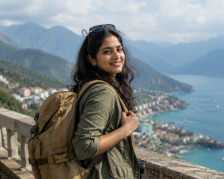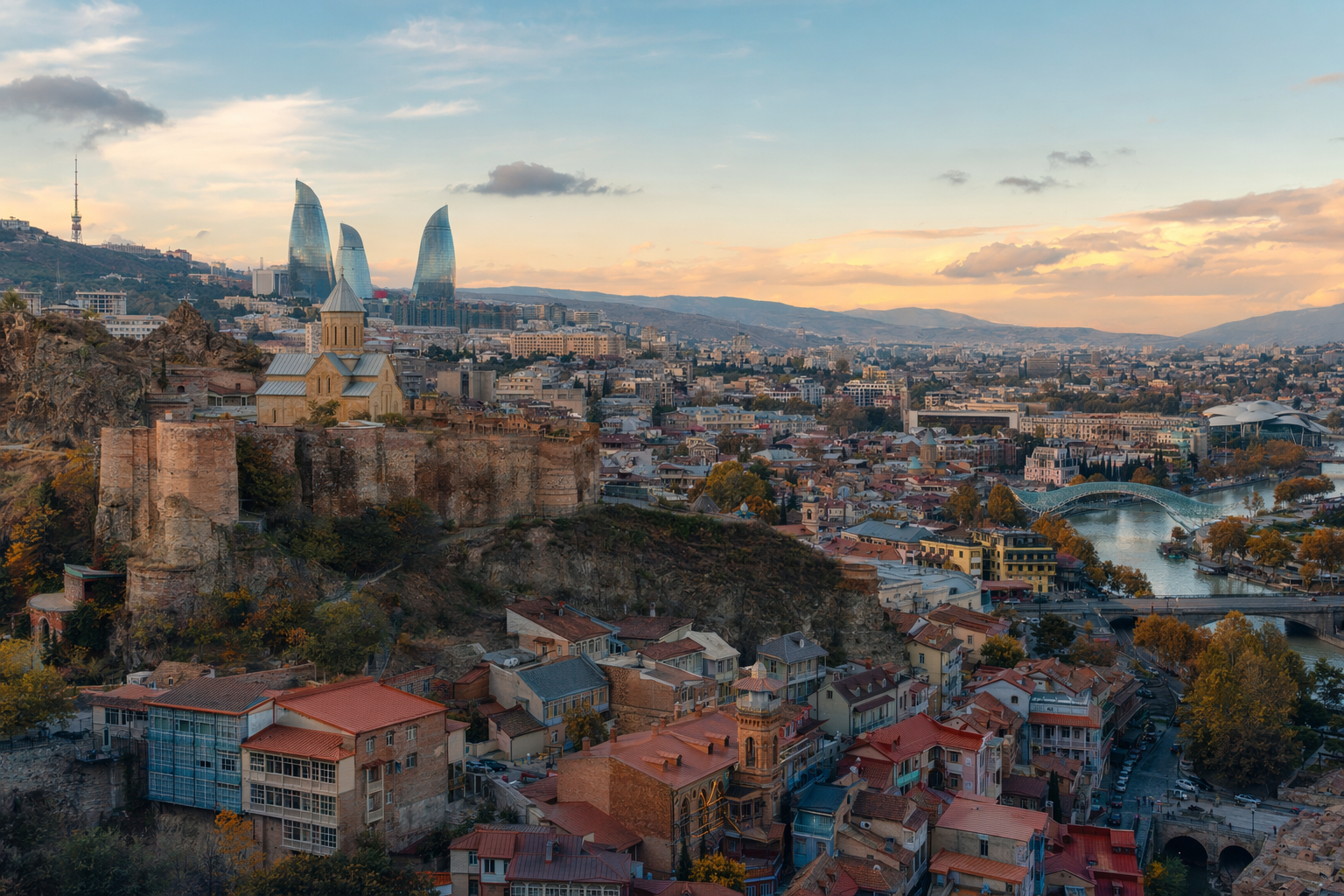
The honest answer: I’d pick Tbilisi first… but Baku surprised me badly
#If you’re sitting in India comparing Baku vs Tbilisi for your first Caucasus trip, I get the confusion. Both look close on the map, both sound exotic but not too far, both have old towns, mountains nearby, good food, affordable-ish stays, and that “not Europe, not Asia, something in between” feeling. I did this same overthinking before going. Like proper Indian traveller style — 17 tabs open, flight prices changing every 10 minutes, YouTube videos playing in background, and my family asking, “Georgia safe hai na?” every second day.
My short answer? For most Indian travellers, Tbilisi is the better first Caucasus city trip. It’s easier to feel at home, cheaper in many ways, more walkable, and the day trips are honestly superb. But Baku is not second-rate. Not at all. Baku feels richer, cleaner, more polished, and more dramatic, especially if you like architecture, seaside promenades, and that Dubai-meets-Europe-but-with-Soviet-corners vibe. I didn’t expect to like Baku as much as I did. Actually, I thought it might be too shiny and formal. It wasn’t. It had mood.
So this is not a “one is good, one is bad” thing. It’s more like choosing your first base. The way I’d compare it is similar to how I think about Balkan city choices too — where you stay changes everything: day trips, food comfort, transport headache, your budget, even how tired you feel by Day 3. If you enjoy these destination-vs-destination decisions, my notes on Kotor vs Budva for Indian Travelers: Best Montenegro Base follow the same kind of thinking, just in the Balkans.
First impression: Tbilisi feels lived-in, Baku feels designed
#Tbilisi hit me first with balconies. Those wooden carved balconies hanging over lanes, old staircases, wine bars tucked into basements, random cats behaving like they own the city, and the smell of fresh bread from bakeries. It’s slightly messy in a charming way. Some buildings are gorgeous, some are crumbling, some are both. Coming from India, that didn’t bother me. In fact, it made the city feel real. Like Mumbai’s old buildings or parts of Kolkata, where beauty and peeling paint are best friends.
Baku, on the other hand, made me stand straighter somehow. The airport road, the Flame Towers, the wide Boulevard by the Caspian Sea, the stone Old City walls, the boutiques around Nizami Street — everything felt more manicured. Even the wind has attitude there. They don’t call it the City of Winds for fun. My hair was doing full Bollywood climax scene near the waterfront.
But the funny thing is, Baku’s old and new clash is more cinematic. One minute you are walking inside Icherisheher, the UNESCO-listed Old City, with narrow lanes and stone houses. Then you look up and see glass towers shaped like flames glowing above you. Tbilisi has contrast too, like the Peace Bridge, Soviet blocks, old churches, and artsy cafes, but Baku’s contrast is more polished and showy. Tbilisi whispers. Baku poses.
Quick comparison for Indian travellers
#| Category | Tbilisi | Baku |
|---|---|---|
| Best for first-time Caucasus trip | More forgiving, cheaper, easier day trips | Great if you like clean cities, architecture, seaside walks |
| Visa comfort for Indians | Indian passport holders usually need e-visa unless eligible through certain valid visas or residence permits. Always check before booking | Azerbaijan has ASAN e-visa for many Indian travellers, usually straightforward but check official rules |
| Food comfort | Good veg options, Indian restaurants, bakeries, khachapuri, lobio | Halal-friendly, kebabs, qutab, plov, also Indian restaurants in central areas |
| Budget | Generally better for backpackers and mid-budget travellers | Can be affordable, but central hotels and taxis can feel pricier |
| Day trips | Kazbegi, Mtskheta, Kakheti, Uplistsikhe, Gudauri | Gobustan, mud volcanoes, Ateshgah, Yanar Dag, Absheron villages |
| Nightlife | Wine bars, cafes, techno clubs, cosy old town vibe | More lounge-style, waterfront walks, classy restaurants |
| Best months | April-June and September-October are lovely | April-June and September-October are also safest weather bets, summer can be hot |
| Overall feel | Bohemian, old-world, emotional | Modern, grand, windy, elegant |
Visa and entry stuff Indians should not ignore
#Okay, boring but important. For Indian passport holders, both Georgia and Azerbaijan need proper visa checking before you book non-refundable flights. Georgia’s rules can be a little confusing because some travellers can enter visa-free if they hold valid visas or residence permits from certain countries, while others need a Georgia e-visa. Don’t depend on one random reel. Check the official portal, and also check your airline’s rules because airline staff at check-in can be very strict.
Azerbaijan is usually more straightforward for Indians because of the ASAN e-visa system. Many travellers apply online and recieve the visa electronically, often in a few working days depending on service type. Still, names, passport number, hotel address — fill everything carefully. One tiny spelling mistake can become drama at the airport, and who wants that.
One practical update many people miss: don’t casually plan to enter Azerbaijan by land unless you have verified the latest border status. Azerbaijan’s land border restrictions, introduced during the pandemic period, have continued for a long time in different forms, while flying in and out has remained the normal route for most tourists. Georgia, meanwhile, works better for overland routes with Armenia or Turkey if you are building a longer Caucasus trip. Also avoid sensitive border areas around Armenia-Azerbaijan tensions unless you know exactly what you’re doing. Normal city tourism in Baku and Tbilisi feels safe, but borders are not picnic spots.
Flights from India: neither is exactly “easy”, but both are doable
#From India, most people reach Tbilisi or Baku via Dubai, Sharjah, Abu Dhabi, Doha, Istanbul, or sometimes other Middle East connections depending on airline schedules. Direct options can change, seasonal routes come and go, and prices jump during holidays. I found Baku sometimes cheaper on certain dates, then Tbilisi cheaper the next week. It’s annoying. Use flexible dates if you can.
For a 5 to 7 day first trip, I’d not try to combine both unless the flight route is really convenient. On the map Baku and Tbilisi look close, but the practical movement is not always smooth, especially with land border and visa rules. Better to do one city properly than spend half the trip in airports and immigration lines. Indians have this habit, no? “Since we are going till there, let’s cover 4 countries.” I am also guilty. But the Caucasus rewards slow travel.
If you’re comparing it with Balkans because both regions feel like cheaper alternatives to Western Europe, then route planning becomes even more important. I wrote about that kind of practical visa-and-transport thinking in Balkans Without Schengen for Indians: Route Planner, and honestly the same lesson applies here: the cheapest flight is not always the cheapest trip.
Safety: what it felt like on the ground
#As an Indian traveller, I felt safe in both Baku and Tbilisi in the main tourist areas. Like, normal city common sense safe. Keep your phone close, don’t wave cash around, don’t get into shady taxis without checking price, avoid drunk arguments at night. Same things we already know from Delhi, Mumbai, Bengaluru, wherever.
Tbilisi felt more relaxed but also more politically expressive. Protests and gatherings can happen around Rustaveli Avenue and near Parliament, and even if they are peaceful, tourists should avoid them. Not because everyone is dangerous, but because you don’t understand the situation properly and things can change quickly. I passed one gathering from a distance and just took the metro another way. Simple.
Baku felt very controlled and orderly. Police presence was visible in central areas, streets were clean, and tourist zones like Nizami Street, Old City, and Boulevard felt comfortable even after dark. But I would still avoid isolated waterfront stretches late night if alone. For women travellers, both cities can be fine, but Tbilisi’s late-night party areas may have more drunk crowd energy, while Baku can feel quieter and more formal. Dress-wise, Tbilisi is casual-European. Baku is stylish but not restrictive in tourist areas. Carry a shawl if visiting religious places. Basic respect, yaar.
Accommodation: where to stay and what you’ll probably pay
#In Tbilisi, I’d stay around Old Tbilisi, Sololaki, Vera, or near Freedom Square if it’s your first time. Old Tbilisi is scenic and walkable, but some lanes are steep, so don’t book a “cute heritage stay” without checking stairs if you have heavy luggage. Vera is calmer, with cafes and a more local feel. Freedom Square is practical, especially for metro and pickups for day tours.
Typical Tbilisi prices vary a lot by season, but hostels can be around USD 10-20 for dorms, guesthouses around USD 25-50, and comfortable boutique or mid-range hotels around USD 50-100 per night. Nice apartments are common too, though check reviews for heating and hot water. Winters can be cold inside old buildings, not just outside. I learnt this the hard way in one Caucasus stay where the bathroom felt like Shimla in January.
In Baku, best first-time areas are Icherisheher, Nizami Street, Fountain Square, and near the Boulevard. Old City stays are atmospheric but sometimes expensive or in older buildings. Fountain Square/Nizami is better if you want restaurants, shops, and evening walks. Boulevard hotels can be smart and sea-facing, but check walking distance because Baku roads can be wide and crossings are not always where you want them.
Baku dorms can start around USD 10-20, simple hotels around USD 35-60, and mid-range central hotels often sit around USD 60-120, more during big events. If there is Formula 1 weekend, a major conference, or national holidays, prices can go mad. Book earlier. Also read recent reviews, not just ratings. Some hotels look fancy in photos but have tired rooms, slow elevators, or breakfast that is basically bread and sadness.
Food: Georgia wins for comfort, Azerbaijan wins for meat and tea culture
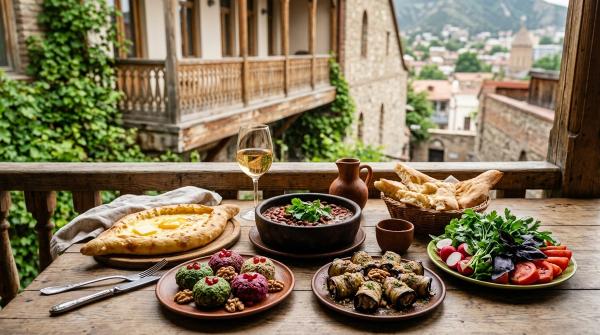
#Food is where Tbilisi became dangerous for my self-control. Khachapuri is not a snack, it is a full emotional commitment. The Adjarian one with egg and butter in the middle looks cute until you realise you need a nap after. Khinkali are dumplings, usually filled with meat, but you get mushroom and potato versions too. Don’t eat them with fork like a confused tourist if you can avoid it — hold the top, bite, sip the broth, then eat. The top knot is usually left behind. I messed up first time, obviously.
For vegetarians from India, Tbilisi is surprisingly manageable. Lobio, which is bean stew, is filling. Badrijani nigvzit, eggplant with walnut paste, is lovely. Pkhali, mushrooms, salads, breads, cheese-heavy dishes — you won’t starve. Vegan travellers need to ask more carefully because cheese and walnut are everywhere. Indian restaurants exist in Tbilisi too, especially around tourist-heavy parts, but I’d say use them as backup, not daily routine. Georgian food has enough flavour if you choose right.
Baku’s food felt more familiar in a different way. Because Azerbaijan is Muslim-majority, halal meat is easier to find, and kebabs, grilled fish, dolma, plov, piti, and qutab are everywhere. Qutab reminded me a little of stuffed paratha, not same taste but same comfort zone. Tea comes with jam, sweets, nuts, and that slow sitting culture. I loved that. It felt like chai time upgraded to royal level.
Vegetarians in Baku can manage but need more planning. Qutab with greens, lentil soup, salads, breads, eggplant dishes, and some Georgian/Turkish restaurants help. Indian restaurants are available in central Baku, and honestly after a few days of bread and cheese or meat-heavy meals, dal-chawal cravings are real. No shame. I always carry thepla or ready poha packets for emergencies. Don’t judge.
Things to do in Tbilisi if it’s your first Caucasus trip
#Start with the old town, but don’t rush it like a checklist. Walk from Freedom Square into Sololaki, go towards Narikala Fortress, take the cable car if weather is good, and look down at the city from above. The sulphur baths in Abanotubani are famous, and yes, they are touristy, but still worth trying if you like spa-type experiences. Book a private room if you want comfort. Public baths are cheaper, but not everyone will be okay with the setup.
The Holy Trinity Cathedral is huge and peaceful. Dry Bridge Market is fun for Soviet-era antiques, old cameras, paintings, random medals, and things you don’t need but suddenly want. Fabrika is a hostel-cafe-creative courtyard space where young travellers hang out, eat, work, and pretend they are not tired. It’s a good place if you like urban culture more than museum culture.
Day trips are the real reason Tbilisi wins for me. Mtskheta is close and easy, good for ancient churches and river views. Kazbegi, now officially Stepantsminda, gives you those dramatic mountain views and the famous Gergeti Trinity Church. The road via Gudauri is stunning, but weather can affect it badly in winter. Kakheti is wine country, especially lovely around harvest season in early autumn. Uplistsikhe cave town is also interesting if you like history and slightly dusty old places, which I do.
Things to do in Baku without rushing like a tour bus uncle
#Baku’s Old City deserves a slow morning. Maiden Tower, Palace of the Shirvanshahs, tiny lanes, souvenir shops, carpets, stone walls — yes, it’s popular, but still atmospheric. Go early before groups arrive. Then walk to Nizami Street and Fountain Square for cafes, shopping, and people watching. At night, the Boulevard is beautiful. The Caspian Sea is technically a lake, but your brain will call it sea anyway, so let it.
The Heydar Aliyev Center is one of those buildings that makes even non-architecture people take 84 photos. The curves, the white surface, the way it sits like a spaceship landed gently — very impressive. Flame Towers are best seen from outside and at night when they light up. Highland Park gives the classic view over the city and sea. If you go around sunset, it’s genuinely lovely, though windy enough to make you question your life choices.
For day trips, Gobustan is a must if you enjoy ancient rock carvings and weird landscapes. The mud volcanoes nearby are strange and fun, like nature doing slow-motion burps. Ateshgah Fire Temple and Yanar Dag, the burning mountain, are part of the Absheron Peninsula circuit. Some people find them underwhelming, but I liked the overall desert-meets-fire history vibe. Just don’t expect giant flames like a movie scene. Keep expectations normal and you’ll enjoy it.
Transport inside the cities: Tbilisi is charming chaos, Baku is cleaner and wider
#Tbilisi has metro, buses, taxis, and lots of walking if your knees agree. The metro is useful and cheap, though not as extensive as Delhi Metro, obviously. Taxis through apps are common and affordable, but traffic can be annoying. Walking is best in the old areas, but the city has hills. Wear proper shoes. I saw people doing cobbled lanes in stylish boots and suffering silently.
Baku also has metro and app taxis, and roads are generally wider and more planned. Distances can feel deceptive because everything looks walkable on the map but then you find a huge road, underpass, wind, and suddenly your 15-minute walk becomes a mini expedition. App taxis are helpful, though drivers may not speak much English. Keep destination ready in map. Same in Tbilisi, actually. English is okay in tourist areas but not universal in either city.
For airport transfers, pre-booking or app taxis are better than bargaining after landing when you’re tired and currency-confused. In both places, local currency cash is useful for small shops, markets, and some taxis, but cards work widely in central restaurants and hotels. I still carried some USD as backup, because Indian debit cards sometimes behave like moody relatives abroad.
Culture shock moments only Indians will understand
#In Georgia, wine is not just alcohol. It is culture, history, hospitality, identity, everything. Even if you don’t drink, you’ll see how important it is. Traditional qvevri wine, made in clay vessels, is a big thing. Supra, the Georgian feast, has toasts led by a tamada, and people take it seriously. Like family function speeches but with better wine and more poetry.
Azerbaijan felt closer to parts of Turkey, Iran, and Central Asia mixed together. The tea culture, carpets, fire symbolism, and music gave it a softer side than the glossy skyline suggests. People were polite, sometimes reserved at first, but helpful when needed. In Tbilisi, people felt more expressive, sometimes warm, sometimes blunt. Don’t mistake bluntness for rudeness. Different communication style only.
One thing I noticed as an Indian traveller: people may ask where you’re from, and when you say India, reactions are usually positive. Bollywood comes up. Shah Rukh Khan still has international diplomacy power, I swear. In Baku, I had one shopkeeper mention old Indian films. In Tbilisi, a taxi driver asked if Indian weddings really last many days. I said yes, and mentally apologised to my bank account.
Budget reality: where your rupees stretch more
#Tbilisi is usually better for budget travellers. You can eat decently, stay centrally, take day tours, and still not feel like every choice is attacking your wallet. Local bakeries are cheap and filling. Wine bars can be expensive or affordable depending where you sit. Day tours from Tbilisi are competitive because so many travellers use them, so you’ll find plenty of options to Kazbegi, Kakheti, Mtskheta, and other places.
Baku can be budget-friendly if you use metros, choose simple eateries, and avoid very central luxury spots. But it has more of that polished capital city pricing in places. Coffee near fancy streets, boutique hotels, rooftop restaurants — it adds up. The city feels wealthier, and sometimes your bill reflects that. Not always, but enough to notice.
For a comfortable mid-budget Indian trip, excluding flights, I’d roughly keep USD 45-70 per day for Tbilisi if sharing rooms or staying in guesthouses, and USD 60-90 per day for Baku if you want central comfort. You can do both cheaper, and you can obviously spend much more. Prices shift by season, exchange rates, and your food habits. If you need Indian food daily, budget extra because those meals are usually not the cheapest option.
Best season: don’t underestimate weather in the Caucasus
#Spring and autumn are the best for both cities. April to June is lovely, with flowers, outdoor cafes, and not-too-crazy temperatures. September to October is also excellent, especially for Georgia’s wine region and mountain views. Summer can be hot, especially in Baku where the sun and wind team up in strange ways. Tbilisi also gets hot and dry, and old town walking becomes less romantic when you are sweating like you’re in Jaipur in May.
Winter is a different trip. Tbilisi itself may be cold but manageable, and Gudauri becomes popular for snow and skiing. Kazbegi access depends on weather. Baku winters can be windy and chilly, not snowy-fairytale usually, but the wind makes it feel colder. Pack layers, not just one bulky jacket. Indians always under-pack for wind because our winter reference is mostly temperature, but wind chill is a real villain.
Popular cultural timings? Georgia’s wine harvest season around early autumn is special in Kakheti. Tbilisoba, Tbilisi’s city festival, is usually in autumn, with food, music, and public events. Azerbaijan’s Novruz celebrations around March are beautiful if you can time it, with sweets, fire traditions, and festive energy. For Baku, also check if Formula 1 is happening, because the city changes and hotel prices go up.
Which city is better for different Indian travellers?
#- First international trip outside typical Dubai/Singapore/Thailand routes: Tbilisi. It is easier to enjoy without feeling too formal or expensive.
- Couples wanting pretty streets, wine bars, mountain day trips, and cosy cafes: Tbilisi again, especially if you like slow evenings.
- Families who want clean streets, easy taxis, seaside walks, and less chaotic sightseeing: Baku can be very comfortable.
- Vegetarian travellers: Tbilisi is slightly easier, though both need some planning.
- Halal food preference: Baku is easier overall.
- Architecture lovers: Baku has the stronger wow factor with Flame Towers, Heydar Aliyev Center, Old City, and Boulevard.
- Mountain lovers: Tbilisi wins because Kazbegi and Gudauri are iconic and easy to arrange.
If you’re the kind of traveller who enjoys comparing regions before committing money, you might also like my Albania vs Montenegro for Indian Travelers: Which Balkan Trip Is Better? piece. Different region, same Indian traveller brain: visa, cost, food, transport, and “will my parents panic if I go there?” kind of questions.
My suggested itineraries: simple and not overstuffed
#5 days in Tbilisi
#- Day 1: Arrive, stay near Old Tbilisi or Freedom Square, evening walk in Sololaki and old town.
- Day 2: Narikala Fortress, cable car, sulphur baths, Dry Bridge Market, dinner in a Georgian restaurant.
- Day 3: Mtskheta half-day, then cafes or Fabrika in evening.
- Day 4: Kazbegi/Gudauri full-day trip. Long day, but worth it if weather is clear.
- Day 5: Slow morning, maybe museum or shopping, fly out. Or add Kakheti if you have one more day.
5 days in Baku
#- Day 1: Arrive, check in near Fountain Square or Old City, evening on Nizami Street.
- Day 2: Old City, Maiden Tower area, Palace of the Shirvanshahs, Boulevard at sunset.
- Day 3: Heydar Aliyev Center, Highland Park, Flame Towers view at night.
- Day 4: Gobustan and mud volcanoes, or combine with Absheron fire temple route if you don’t mind a packed day.
- Day 5: Slow breakfast, local market or carpet museum, last Caspian walk, airport.
If you have 7 days, Tbilisi benefits more from extra time because day trip options keep expanding. Baku with 7 days can include slower cafe time and maybe nearby towns, but for a first trip I felt 4-5 days was enough unless you really love the city’s vibe.
So, Baku or Tbilisi for your first Caucasus city trip?
#Pick Tbilisi if you want the classic first Caucasus feeling: old streets, mountains nearby, wine culture, affordable guesthouses, strong cafe life, and that slightly imperfect charm that stays with you. It’s the city I’d recommend to most Indian travellers because it gives you more variety with less pressure. You can be lazy, you can be active, you can eat cheap, you can take a mountain day trip, you can just sit with coffee and watch the city breathe.
Pick Baku if you want something cleaner, grander, more architectural, and slightly luxurious without going full Dubai. It’s great for couples, families, and travellers who like modern city breaks with historical pockets. Also if halal food matters, Baku is naturally more comfortable. And the Caspian waterfront at night is genuinely special, even if the wind tries to steal your jacket.
My personal vote: Tbilisi first, Baku second. But if your flight deal to Baku is excellent, don’t feel like you’re compromising. You’re not. You’re just starting the Caucasus from the glossier side.
Honestly, both cities gave me that rare feeling of being somewhere familiar and unfamiliar at the same time. Not Europe exactly, not Middle East exactly, not Central Asia exactly. For Indians, the Caucasus is still underrated, and maybe that’s why it feels exciting. Go with open expectations, check visa rules properly, don’t overpack your itinerary, and leave space for random walks. That’s where these cities actually open up. And if you want more such practical, slightly opinionated travel notes from an Indian point of view, I keep finding and sharing good stuff around AllBlogs.in — worth browsing before your next trip.