Planning a trip to Japan comes with one big problem: almost every travel guide tells you the exact same thing. They tell you to visit in April for cherry blossoms or November for colorful leaves.
What they usually forget to mention is that during peak cherry blossom week, hotel prices in Kyoto double, train stations feel like packed commuter trains at rush hour, and you will wait forty minutes just to take a photo at an iconic temple gate.
The real answer to when you should visit Japan depends entirely on what matters most to you. Do you care more about perfect weather, seeing the blossoms, keeping your accommodation costs low, or walking through temple grounds without bumping into hundreds of tour groups?
Here is an honest, data-backed guide to visiting Japan across all twelve months, along with the newly updated 2026 tourist rules that every international traveler needs to know before boarding their flight.
The Quick Verdict: When Should You Go?
#If you want a straightforward answer without reading through twelve months of weather reports right now, here is how the timing breaks down by priority:
- For the best overall weather: October and November. You get clear blue skies, mild daytime temperatures between 16°C and 22°C (61°F to 72°F), very low rainfall, and vibrant autumn foliage across central Honshu.
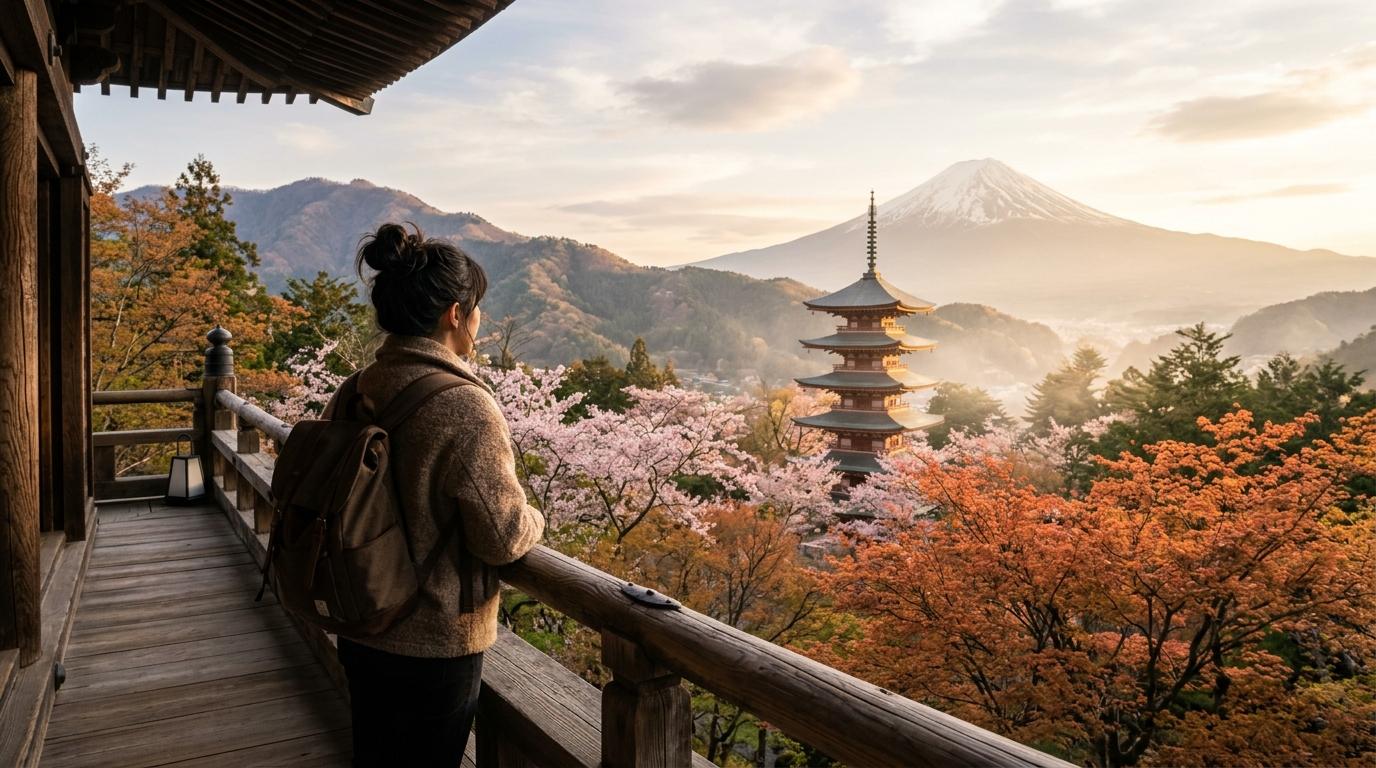
- For cherry blossoms (sakura): Late March to early April. Expect breathtaking views, but also expect peak accommodation rates and maximum crowd density along the Tokyo-Kyoto-Osaka corridor.
- For the lowest prices and budget travel: Mid-January to late February. Flights and hotels are at their cheapest of the year, popular cities are delightfully quiet, and winter skies in Tokyo are crisp, clear, and sunny.
- For great weather without crowds: Mid-to-late May. The massive domestic holiday rush of Golden Week clears out immediately after May 6, leaving two weeks of warm spring weather and quiet attractions before the rainy season begins.
- For skiing and powder snow: January and February. Hokkaido (especially Niseko and Rusutsu) and the northern Japan Alps (Nagano and Niigata) offer some of the most reliable powder snow on the planet.
What Changed in 2026: Crucial Rules Every Traveler Must Know
#Japan has seen unprecedented inbound tourism in recent years. To manage overcrowding, protect historic sites, and maintain local infrastructure, the Japanese government introduced significant policy changes that directly affect international travelers.
Make sure you factor these four updates into your itinerary and trip budget:
1. The Sayonara Tourist Departure Tax Has Tripled
#Since 2019, Japan has collected an International Tourist Departure Tax (colloquially known as the Sayonara Tax) of 1,000 JPY from every traveler leaving the country.
Effective July 1, 2026, this departure tax officially increased to 3,000 JPY (approximately $20 USD / €18 EUR) per person. 
You do not need to stand in a line at the airport to pay this fee. It is automatically added to the taxes and carrier surcharges on your outbound international flight or cruise ticket when you book your travel. However, if you are traveling with a family of four, keep in mind that 12,000 JPY will be incorporated directly into your ticket costs.
2. Major Overhaul of Tax-Free Shopping
#If you shopped in Japan previously, you will remember receiving an instant 10% consumption tax deduction at the store register whenever you spent over 5,000 JPY and showed your passport.
As of November 1, 2026, that instant in-store deduction system has officially ended nationwide. 
Under the new system designed to combat fraudulent domestic reselling, all foreign tourists must pay the standard 10% Japanese consumption tax upfront at the cash register. To receive your tax refund, you must scan your purchased items and your digital passport QR code (generated via the official Visit Japan Web platform) at dedicated self-service tax refund kiosks located at international departure airports and ferry terminals.
The positive trade-off for travelers is that the annoying rule requiring consumable goods (such as cosmetics, snacks, and whiskey) to be sealed in tamper-proof plastic bags has been removed, and the former 500,000 JPY daily purchase limit has been eliminated. 
Plan to arrive at your departure airport at least 45 minutes earlier than usual if you have substantial tax-free purchases to process at the refund terminals before clearing security.
3. Revised Tourist Visa Fee Brackets
#For passport holders from countries that require a pre-arranged tourist visa to enter Japan, visa processing fees increased substantially on July 1, 2026. Single-entry visa fees rose to 15,000 JPY, and multiple-entry visas rose to 30,000 JPY. 
If your passport allows visa-free entry (such as US, Canadian, UK, EU, Australian, or Singaporean passports for stays up to 90 days), this change does not impact you. However, you must still complete your digital customs and immigration declarations on Visit Japan Web prior to arrival to pass through automated airport biometric gates smoothly.
4. Trail Quotas and Dual-Pricing at Overcrowded Landmarks
#To combat trail congestion and dangerous night climbing, Mount Fuji's popular Yoshida Trail now enforces a strict cap of 4,000 climbers per day during the summer hiking season, alongside a mandatory 2,000 JPY climbing conservation fee. You must reserve your trail pass online before arriving at the 5th Station.
Similarly, iconic heritage sites like Himeji Castle have introduced tiered ticketing structures, charging non-resident international visitors higher admission fees (2,500 JPY) than local residents to fund ongoing architectural restoration and manage visitor flow.
Japan's Four Distinct Travel Seasons
#Japan experiences four remarkably defined seasons, each creating a completely different travel experience:
Spring (March to May)
#Spring is the postcard image of Japan. Temperatures rise steadily from a cool 13°C (55°F) in March to a pleasant 23°C (73°F) in May. 
The star attraction is cherry blossom season (sakura), which sweeps north across the archipelago from late March into mid-April. Spring brings vibrant park picnics (hanami), bustling food stalls, and active street life. 
The downside is extreme demand. Hotels along the central Golden Route (Tokyo, Hakone, Kyoto, Osaka) book out months in advance and charge peak pricing.
Summer (June to August)
#Summer in central and southern Japan is hot, humid, and energetic. June kicks off with the rainy season (tsuyu), bringing overcast days and regular rain showers across Honshu and Kyushu. 
By late July and August, the rain clears, giving way to intense heat with temperatures frequently exceeding 35°C (95°F) and humidity hovering around 80%. 
Despite the heat, summer is famous for unforgettable cultural spectacles: evening street festivals (matsuri), massive outdoor fireworks displays (hanabi taikai), beer gardens on department store rooftops, and the opening of alpine hiking trails. Northern Hokkaido escapes both the rainy season and the brutal heat, making it an ideal summer destination.
Autumn (September to November)
#Autumn is widely considered by experienced travelers to be the finest time to explore Japan. 
Early September can still feel quite hot and marks the peak of the Pacific typhoon season, but by October, the air turns crisp, dry, and invigorating. 
From late October through late November, maples and ginkgo trees transform parks, temple gardens, and mountain valleys into rich shades of red, orange, and gold (koyo). Temperatures are ideal for walking 15,000 to 20,000 steps a day, and rainfall is minimal.
Winter (December to February)
#Winter brings cold, crisp weather to the main island of Honshu, with daytime highs around 8°C to 12°C (46°F to 54°F) and chilly nights dipping near freezing. 
Tokyo, Kyoto, and Osaka rarely receive substantial snowfall; instead, they enjoy dry, sunny winter days with crystal-clear skies that offer spectacular views of Mount Fuji. 
Meanwhile, northern Japan and the western coast receive legendary Siberian snowfall, turning Hokkaido, Nagano, and Niigata into world-class destinations for skiing, snowboarding, and soaking in steaming geothermal hot spring baths (onsen).
Month-by-Month Breakdown: Weather, Crowds, and Costs
#To help you compare the entire year at a glance, here is how each month stacks up across Tokyo, Kyoto, and the central Golden Route:
| Month | Avg Temp (Tokyo/Kyoto) | Rainfall | Crowd Level | Cost Profile | Best Known For |
|---|---|---|---|---|---|
| January | 5°C to 10°C (41°F to 50°F) | Low (50 mm) | Low (Post-Jan 3) | Lowest of year | Clear Fuji views, ski resorts, steaming onsens, quiet temples |
| February | 6°C to 11°C (43°F to 52°F) | Low (60 mm) | Low to Moderate | Low / Budget-friendly | Plum blossoms (ume), Sapporo Snow Festival, budget shopping |
| March | 9°C to 15°C (48°F to 59°F) | Moderate (110 mm) | Moderate to High | Moderate (Spikes late Mar) | Early cherry blossoms late month, pleasant walking weather |
| April | 14°C to 20°C (57°F to 68°F) | Moderate (130 mm) | Very High (Peak) | Highest of year | Peak cherry blossoms early April, spring festivals |
| May | 18°C to 24°C (64°F to 75°F) | Moderate (140 mm) | High (Golden Wk) then Low | Moderate (Great post-May 6) | Lush green foliage, pleasant outdoor cafes, calm late May |
| June | 22°C to 26°C (72°F to 79°F) | High (170 mm - Tsuyu) | Moderate | Low to Moderate | Hydrangeas, quiet Kyoto temples, dry travel in Hokkaido |
| July | 25°C to 31°C (77°F to 88°F) | High (150 mm) | High | High (School holidays) | Gion Matsuri in Kyoto, Mount Fuji hiking trails open, fireworks |
| August | 27°C to 34°C (81°F to 93°F) | Moderate (160 mm) | High (Obon peak) | High | Traditional summer matsuri, mountain escapes, vibrant nightlife |
| September | 23°C to 28°C (73°F to 82°F) | High (210 mm - Typhoons) | Moderate | Moderate | Late summer warmth, Tokyo Game Show, autumn seasonal foods |
| October | 17°C to 22°C (63°F to 72°F) | Moderate (180 mm) | High | Moderate to High | Comfortable dry weather, early autumn colors in north, food festivals |
| November | 12°C to 17°C (54°F to 63°F) | Low (90 mm) | Very High (Kyoto peak) | High | Vibrant red maple leaves, dry skies, crisp evening illuminations |
| December | 7°C to 12°C (45°F to 54°F) | Low (55 mm) | Low (Rushes Dec 29+) | Moderate (Low early Dec) | Winter light illuminations, clear sunny days, quiet sightseeing |
Detailed Monthly Profiles
#January: The Quiet Winter Reset
#January begins with Japan's most revered holiday period, Shogatsu (New Year), running from January 1 to January 3. During these three days, millions of Japanese visit shrines for the first prayer of the year (Hatsumode), while many independent businesses and restaurants close.
Once the holiday period concludes on January 4, central Japan enters its quietest, most peaceful travel window. 
Tokyo and Kyoto experience crisp, dry, sunny winter days with minimal rainfall. Visibility is at its annual peak, making January the most reliable month of the year to see Mount Fuji clearly from Tokyo observation decks, Hakone, or Lake Kawaguchiko.
Accommodation rates drop to rock-bottom levels, and you can visit world-famous landmarks like Kyoto's Fushimi Inari Shrine or Kiyomizu-dera without wading through crowds. If you enjoy winter sports, Hokkaido's ski resorts are in prime condition with deep, dry powder.
February: Plum Blossoms and Snow Festivals
#February remains cold, but it offers exceptional value for travelers who do not mind wearing a warm winter coat. 
While cherry blossoms are still weeks away, late February marks the blooming of fragrant Japanese plum blossoms (ume). Shrines such as Kitano Tenmangu in Kyoto and Yushima Tenmangu in Tokyo host lively plum blossom festivals that offer beautiful flower viewing without the frantic madness of sakura season.
In northern Japan, early February hosts the world-famous Sapporo Snow Festival in Hokkaido, showcasing massive, illuminated ice and snow sculptures. Sapporo itself gets very busy and expensive during festival week, but the rest of mainland Japan remains uncrowded and affordable.
March: The Spring Transition
#March is a month of dramatic transformation. Early March feels distinctly wintery and cool, with light crowds and reasonable hotel pricing. 
By the third week of March, daily temperatures climb to comfortable levels, and nationwide attention shifts entirely to the official Japan Meteorological Corporation cherry blossom forecasts.
In typical years, the first cherry blossoms (kaika) open in Tokyo, Fukuoka, and Kyoto between March 20 and March 25, reaching full bloom (mankai) approximately seven to ten days later. 
If you plan to visit in late March, prepare for accommodation rates to surge rapidly. Book your hotels at least four to five months ahead if you want to stay in central neighborhoods.
April: Peak Cherry Blossoms and Spring Vibrancy
#April is Japan's most visually celebrated month. During the first two weeks, cherry trees across Tokyo, Kyoto, Osaka, and Hiroshima display full, billowy canopies of pale pink petals.
Parks like Shinjuku Gyoen and Ueno Park in Tokyo or Maruyama Park in Kyoto fill with locals and travelers enjoying lively outdoor picnics under the trees.
The reality of April is that it demands patience. Popular sights are crowded from morning until dusk, reservations for popular restaurants and attractions (like the Ghibli Museum or teamLab) sell out within minutes of release, and bullet train luggage spaces fill up fast. 
The crowd situation temporarily settles around mid-April after the blossoms fall, before ramping back up toward the end of the month as Golden Week approaches.
May: Golden Week Rush Followed by Spring Perfection
#May contains one of the biggest contrasts in the entire travel calendar. 
The first week of May is dominated by Golden Week (running from approximately April 29 to May 5 or 6). Golden Week is a cluster of four national holidays that prompts tens of millions of Japanese citizens to travel simultaneously. Bullet trains are fully booked, domestic flights surge, and highways experience massive traffic jams. International visitors should strictly avoid moving between major cities during these holiday dates.
However, if you arrive immediately after Golden Week—around May 8 through May 31—you will be rewarded with what many travel insiders consider the single best window of the year. 
The weather is delightfully warm (averaging 22°C / 72°F), trees are covered in vibrant fresh green leaves (shinryoku), hotel prices drop back to reasonable shoulder-season rates, and popular attractions are peaceful.
June: Tsuyu Rainy Season and Hydrangeas
#In early June, the seasonal rain front known as tsuyu settles over Honshu, Kyushu, and Shikoku, lasting until mid-July. 
June is not characterized by constant monsoonal deluges, but rather by overcast skies, frequent light rain showers, and rising humidity. 
If you do not mind carrying a compact umbrella, June has genuine charm. Kyoto's temple moss gardens, bamboo groves, and stone pathways look strikingly luminous in the rain, and colorful hydrangeas (ajisai) bloom across temple hillsides like Meigetsu-in in Kamakura. 
Even better, international tour crowds thin out considerably. If you want dry, sunny weather in June, simply head north: Hokkaido sits entirely outside the tsuyu rain belt and enjoys bright, dry days with pleasant 20°C (68°F) temperatures.
July: Summer Festivals and Mount Fuji Hiking
#July brings full summer heat and humidity to central Japan, with daytime temperatures routinely reaching 31°C to 33°C (88°F to 91°F). 
Despite the sticky weather, July is an exhilarating month for experiencing traditional Japanese culture. Kyoto hosts its legendary Gion Matsuri, which lasts the entire month of July and features massive, hand-carved festival floats (yamaboko) parading through the historic center.
July 1 officially marks the opening of the Mount Fuji climbing season, which runs through early September. 
Remember that under 2026 safety rules, anyone climbing the popular Yoshida Trail on Mount Fuji must secure an advance reservation online to comply with the daily 4,000-climber cap and pay the 2,000 JPY trail conservation fee.
August: Sizzling Temperatures, Obon, and Fireworks
#August is Japan's hottest and most humid month. In cities like Tokyo, Kyoto, and Osaka, heat indexes can easily surpass 38°C (100°F). Outdoor sightseeing during midday can be exhausting, requiring frequent breaks in air-conditioned cafes and convenience stores.
The middle of the month brings Obon (typically August 11 to August 16), a Buddhist holiday honoring ancestral spirits. Like Golden Week, Obon is a major domestic travel holiday. While government offices remain open, intercity trains and domestic flights are packed as residents travel to their ancestral hometowns.
The bright side of August is the evening atmosphere. Cities across the country host spectacular riverside fireworks displays (hanabi), with thousands of locals wearing lightweight cotton kimonos (yukata). 
If you travel to Japan in August, consider spending your time in higher-altitude regions like the Japan Alps (Kamikochi, Takayama, Hakuba) or the cooler northern island of Hokkaido.
September: Typhoon Season and Calmer Weather
#September begins as an extension of summer, with hot early-month temperatures that gradually moderate into comfortable autumn breezes by late September.
The primary factor to watch in September is weather volatility. September is the peak of the Pacific typhoon season in Japan. 
While modern Japanese infrastructure is exceptionally resilient against severe storms, typhoons can cause bullet train lines to suspend operations for half a day and lead to flight cancellations. When traveling in September, keep your itinerary flexible and avoid scheduling tightly connecting train trips on days with active weather warnings.
October: The Autumn Sweet Spot
#October is easily one of the two best months to visit Japan. 
Typhoon frequency drops dramatically, humidity vanishes, and central Japan enjoys weeks of mild, comfortable weather averaging 19°C to 22°C (66°F to 72°F). It is the ideal climate for walking through bustling neighborhoods, exploring historic castle grounds, and hiking mountain paths.
While central cities like Tokyo and Kyoto remain lush and green throughout October, autumn foliage begins turning vibrant shades of red and gold in northern Tohoku and high-altitude areas like Nikko and the Japan Alps. 
Because October weather is so dependable, it is a popular month for international travelers, but crowd levels remain far more manageable than during April cherry blossoms.
November: Peak Autumn Leaves (Koyo)
#If you love crisp autumn air and dramatic landscapes, November is unbeatable. 
During the first half of November, autumn foliage sweeps into the foothills and gardens of Tokyo. By mid-to-late November, Kyoto's ancient temple gardens reach their absolute peak of crimson and fiery orange maple leaves (momiji).
Temples like Eikan-do and Tofuku-ji in Kyoto stage stunning evening illuminations, lighting up autumn trees against dark wooden temple architecture. 
Daytime temperatures are cool and invigorating (around 14°C to 16°C / 57°F to 61°F), and rainfall is remarkably low. 
Be aware that Kyoto becomes exceptionally crowded during the final two weeks of November; you will want to visit popular temple gardens right at opening time (8:30 AM or 9:00 AM) to experience them peacefully.
December: Festive Illuminations and Sunny Winter Days
#December is an underrated, high-value month to explore Japan. 
The first three weeks of December bring crisp, sunny weather to central Honshu with daytime highs around 10°C to 13°C (50°F to 55°F). Late-season autumn foliage often lingers in Tokyo parks through the first week of December, while city centers transform with extravagant winter LED light displays (such as Roppongi Hills and Marunouchi in Tokyo or Midosuji in Osaka).
Accommodation rates during early-to-mid December are very reasonable, and sightseeing crowds are minimal. 
The quiet atmosphere changes abruptly around December 28, when the year-end travel rush begins as families prepare for New Year celebrations.
When to Go If You Want to Avoid Crowds
#Overtourism is a genuine concern in Japan's most famous destinations. If your priority is experiencing serene temple gardens, uncrowded train cars, and short lines at restaurants, target these specific travel windows:
- Mid-January to Mid-February: The post-holiday winter lull. Outside of ski resorts and the Sapporo Snow Festival week, international tourism is at its annual low. Historic sites in Kyoto, Nara, and Kamakura are remarkably calm.
- Mid-to-Late May: The two to three weeks directly following Golden Week offer gorgeous weather, long daylight hours, and very manageable crowd levels.
- June (The Tsuyu Window): While it rains frequently, crowds at major sights drop noticeably compared to spring and autumn. If you want zero rain, spend June exploring Hokkaido.
- Early December (December 1 to December 20): Crisp blue skies, festive evening lights, and minimal tourist congestion before the holiday rush starts.
Three Rules for Dodging Daily Crowds
#Regardless of which month you travel, your daily habits make a huge difference in avoiding crowd fatigue:
- Embrace Early Mornings: Iconic sights like Fushimi Inari Taisha (Kyoto) and Meiji Jingu (Tokyo) are open 24 hours or from dawn. Arriving at 7:00 AM gives you an almost empty temple complex; by 9:30 AM, the tour buses arrive.
- Explore Beyond the Golden Route: Instead of spending your entire trip between Tokyo, Kyoto, and Osaka, take the train to less crowded regional gems like Kanazawa (historic samurai and geisha districts), the Kii Peninsula (Kumano Kodo pilgrimage trails), Shikoku, or Tohoku.
- Avoid Key Attraction Days on Weekends: Never visit Kyoto's Arashiyama Bamboo Grove or Tokyo's Senso-ji temple on a sunny Saturday afternoon. Schedule popular landmarks for Tuesday through Thursday mornings.
The Cheapest Times to Visit Japan
#Traveling to Japan does not have to drain your bank account. Timing your flight and hotel bookings correctly can cut your overall trip expenses by 30% to 50%.
- The Absolute Cheapest Window: Mid-January through February (excluding New Year week). Airlines offer their lowest international airfares to Tokyo and Osaka, and three-star to four-star business hotels frequently drop rates by 40% compared to April.
- The Rainy Season Discount: June brings lower accommodation prices across Honshu as hotels compete for guests during the rainy season.
- The Summer Shoulder: Late August to early September often sees temporary price dips on airfares right before the autumn rush.
Months With Highest Expenses
#Conversely, expect to pay the highest rates for flights and accommodations during:
- Late March to mid-April (Sakura season)
- Golden Week (Late April to May 5/6)
- Obon Week (Mid-August)
- Mid-to-late November (Peak Kyoto autumn leaves)
- New Year week (December 29 to January 3)
National Holidays and Peak Windows to Strictly Avoid
#If there is one piece of logistical advice that saves trips from disaster, it is knowing Japan's domestic holiday calendar. 
During these three major windows, domestic travel explodes. Shinkansen bullet trains run at 100% capacity, popular highway buses sell out weeks in advance, and domestic hotel prices triple:
- Golden Week (Late April to May 5/6): Four national holidays packed into seven days. If you are already in Japan during Golden Week, pick one base city and stay put rather than attempting intercity travel.
- Obon (August 11 to August 16): The traditional ancestral festival causes a massive exodus from Tokyo and Osaka toward rural prefectures, followed by a reverse rush at the end of the week.
- New Year / Shogatsu (December 29 to January 3): Trains are crowded, but the bigger issue is that many independent restaurants, ramen shops, neighborhood markets, and cultural museums shut down completely for several consecutive days.
Navigating Transport and Budget: Shinkansen, Passes, and City Logistics
#Getting around Japan is straightforward once you understand how the train networks operate, but several pricing assumptions from older travel blogs are no longer accurate:
The Reality of the Japan Rail (JR) Pass
#In late 2023, the nationwide Japan Rail (JR) Group implemented a massive 65% to 70% price increase on the regular 7-day, 14-day, and 21-day nationwide rail passes. 
Under the current pricing, the nationwide JR Pass is rarely cost-effective for ordinary tourist itineraries. If you are flying into Tokyo, taking a round-trip Shinkansen to Kyoto and Osaka, and flying home from Tokyo, buying individual point-to-point bullet train tickets is substantially cheaper than purchasing a 7-day nationwide JR Pass.
Instead, look into regional passes (such as the JR Kansai WIDE Area Pass or JR East Tohoku Pass) if you plan to explore a specific geographic zone, or simply purchase individual Shinkansen tickets via official reservation apps like SmartEX.
Getting a Transit IC Card
#For daily subway, city bus, and convenience store payments in Tokyo, Kyoto, and Osaka, you need a rechargeable contactless IC card (such as Suica, Pasmo, or ICOCA). 
If you use an iPhone, you can instantly add a digital Suica or Pasmo card to your Apple Wallet without buying a physical card or paying a deposit. If you use an Android device purchased outside Japan, mobile IC cards are generally unsupported due to hardware differences; you can purchase a physical "Welcome Suica" or physical tourist IC card at major Tokyo airport train stations.
Frequently Asked Questions
#Is Japan worth visiting during the rainy season in June?
#Yes, provided you plan with flexibility. While central Honshu experiences cloudy skies and regular rain showers from early June to mid-July, it rarely rains continuously all day. Temple gardens in Kyoto and Kamakura look remarkably vibrant in the rain, and hydrangeas (ajisai) reach peak bloom. Furthermore, northern Hokkaido is completely free from the tsuyu rain belt and enjoys sunny, dry summer weather.
Can you see cherry blossoms in autumn or winter?
#Standard spring cherry blossoms (Somei Yoshino) only bloom between late March and mid-April. However, Japan has unique winter-blooming varieties such as Fuyuzakura (winter cherry) and Jyugatsuzakura (autumn cherry) that bloom with delicate pink flowers in locations like Gunma and Saitama between October and December. In subtropical southern Okinawa, early cherry blossoms (Kanhizakura) bloom in mid-January.
Why are businesses and museums closed around New Year in Japan?
#New Year (Shogatsu) is Japan's most sacred family holiday. From December 29 through January 3, government offices, commercial banks, post offices, small family-run restaurants, and many national museums close so employees can spend time with family and visit local shrines. Major convenience stores, chain department stores, and public transit continue operating, but you must check opening hours for specific historical sights in advance.
Do you need advance reservations to climb Mount Fuji?
#Yes. Mount Fuji is only open for climbing during the official summer season from July 1 to early September. Under 2026 regulations implemented to prevent dangerous trail overcrowding and unregistered overnight climbing, the popular Yoshida Trail enforces a strict daily limit of 4,000 hikers, a mandatory 2,000 JPY conservation fee, and a mandatory online reservation system required before passing the 5th Station trail gates.