The Quick Verdict: Which City Fits Your Travel Style?
#If you want fairy-tale modernist architecture, sea breezes, lively Mediterranean beaches, and quirky neighborhoods you can explore on foot, choose Barcelona. Antoni Gaudí’s surreal masterpieces like the Sagrada Família and Park Güell give Barcelona an unmistakable visual identity that feels unlike anywhere else in Europe.
If you want grand imperial boulevards, world-class classical art museums, legendary late-night tapas culture, and day trips to medieval walled cities like Toledo and Segovia, choose Madrid. Spain’s capital feels authentically Spanish, runs at a proud local pace, and offers better value for food and accommodation with far less over-tourism friction.
Both cities sit just two and a half hours apart by high-speed AVE train. 
Yet they represent two fundamentally different sides of Spain. Barcelona is Catalan, coastal, and internationally bohemian. Madrid is Castilian, central, stately, and deeply traditional.
If you only have 4 to 5 days for your first trip to Spain, picking the right base is essential. Here is the direct breakdown of sights, food, costs, safety, and atmosphere to help you make the right choice.
City Character and Atmosphere: Coastal Energy vs Grand Imperial Sophistication
#How each city feels as you walk its streets is the first thing you will notice.
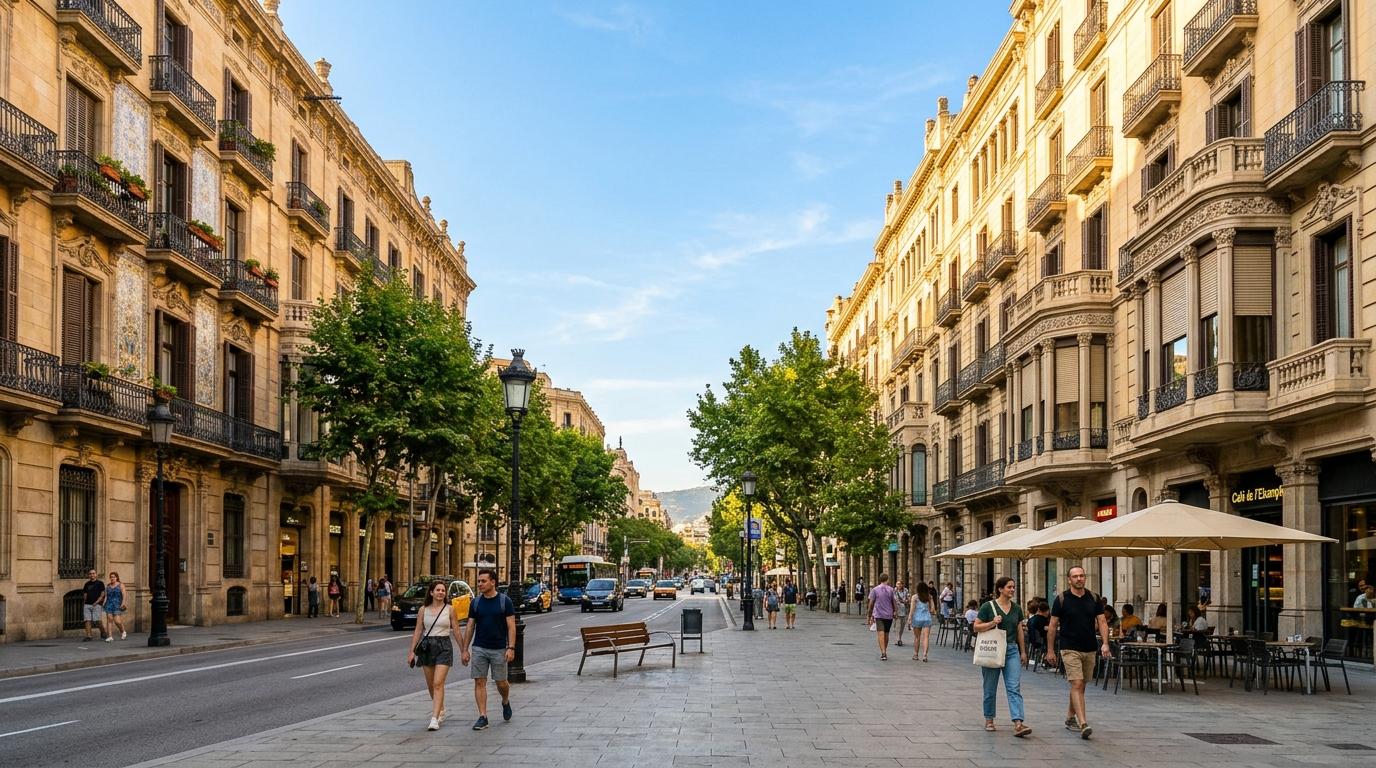
Barcelona has the breezy, energetic pulse of a Mediterranean port city. 
The city is hemmed in between the Collserola hills and the sea, which gives its urban core a dense, walkable layout. You can wander through narrow medieval stone alleys in the Gothic Quarter in the morning, browse designer boutiques along the wide grid of the Eixample in the afternoon, and eat grilled sardines at a seaside chiringuito on Barceloneta beach by sunset. The atmosphere is casual, creative, and cosmopolitan, filled with street performers, cyclists, and international travelers.
Madrid feels like a monumental, self-assured European capital. 
Its broad avenues, ornate Belle Époque facades, massive public plazas like the Plaza Mayor, and leafy parks like El Retiro project imperial scale and elegance. Madrid does not rush to impress foreign visitors; it lives for its own residents. 
Locals fill the outdoor cafe terraces from noon until well past midnight, sipping vermouth on tap, reading newspapers, and chatting with neighbors. There is an unpretentious warmth to Madrid that makes you feel like an honorary local within 48 hours.
If you want vibrant beachside flair and whimsical visual surprises, Barcelona wins. If you love stately historic architecture, vast public plazas, and authentic everyday Spanish life, Madrid wins.
Sights and Architecture: Gaudí's Whimsy vs Madrid's Royal Grandeur
#The architectural landscape of each city tells a completely different historical story.
Barcelona is defined by Catalan Modernisme, dominated by the visionary works of Antoni Gaudí. 
The crowning jewel is the Basílica de la Sagrada Família. Stepping inside and watching sunlight stream through massive stained-glass windows, turning the soaring tree-like stone columns into a forest of vibrant reds, greens, and blues, is a genuinely breathtaking experience. 
Beyond the basilica, Barcelona is packed with architectural marvels:
- Casa Batlló and Casa Milà (La Pedrera) along the Passeig de Gràcia, with their undulating stone balconies and fantastical dragon-scale roofs.
- Park Güell, offering colorful mosaic-tiled terraces overlooking the entire city and the sea.
- The Gothic Quarter (Barri Gòtic), featuring the 14th-century Barcelona Cathedral, ancient Roman wall ruins, and secluded cobblestone squares.
Madrid’s architecture is monumental, regal, and classical. 
Because Madrid became the official royal court of the Spanish Empire under King Philip II in the 16th century, its architecture reflects royal power and Bourbon ambition. 
Top landmarks in Madrid include:
- The Royal Palace of Madrid (Palacio Real): The largest functioning royal palace in Western Europe, featuring over 3,400 rooms, gilded banquet halls, the Royal Armory, and masterwork frescoes.
- Plaza Mayor: A grand 17th-century enclosed stone square framed by uniform red-brick porticos and slate spires, perfect for people-watching.
- Puerta del Sol: The lively geographic and symbolic center of Spain, marking Kilometer Zero for the national highway network.
- Gran Vía: Madrid’s famous bustling Broadway, lined with grand early 20th-century cinemas, theaters, and ornate stone buildings crowned with winged statues.
For first-timers who want visually striking landmarks that look like nothing else on earth, Barcelona’s Gaudí trail is unmatched. For travelers who appreciate classical European royal history and grand imperial avenues, Madrid delivers grandeur.
Art and Museums: Modern Masters vs The Golden Triangle
#If you are an art lover, the museum offerings between the two cities are sharply distinct.
Madrid is undeniably the fine art capital of Spain and one of the premier museum cities in the world. 
The city’s famous "Golden Triangle of Art" concentrates three world-class museums within a 15-minute walk along the leafy Paseo del Prado:
- The Museo del Prado: Home to the finest collection of European classical art on earth, featuring legendary masterpieces by Diego Velázquez (including Las Meninas), Francisco Goya, El Greco, Titian, and Hieronymus Bosch (The Garden of Earthly Delights).
- The Reina Sofía Museum: Spain’s premier national museum for 20th-century modern art, famously housing Pablo Picasso’s monumental anti-war masterpiece, Guernica, alongside extensive works by Salvador Dalí and Joan Miró.
- The Thyssen-Bornemisza National Museum: A vast private collection bridging the gap between classical and modern art, tracing movements from Italian Renaissance masters to French Impressionism and American pop art.
Barcelona focuses on modern art and specific master retrospectives. 
Rather than one massive encyclopedic art museum, Barcelona celebrates the avant-garde geniuses who lived and worked in Catalonia:
- The Picasso Museum: Tucked inside five adjoining medieval stone palaces in the Born district, focusing heavily on Picasso’s formative early years in Barcelona and his Blue Period.
- Fundació Joan Miró: Perched on Montjuïc hill, showcasing Miró’s colorful abstract sculptures, tapestries, and surrealist paintings in a bright, purpose-built modernist gallery.
- The National Art Museum of Catalonia (MNAC): Located inside the monumental Palau Nacional on Montjuïc, housing the world’s most significant collection of 11th-to-13th-century Romanesque church frescoes.
If visiting world-famous classical art galleries is a core priority of your trip, Madrid is leagues ahead of Barcelona. If you prefer focused modern art and specific artist retrospectives, Barcelona will delight you.
Food and Tapas Culture: Pintxo Bars and Paella vs Late-Night Tapeo
#Both cities are culinary paradises, but their dining habits and specialties reflect their regional roots.
Madrid has arguably the best casual street-tapas culture in Europe. 
In Madrid, going for tapas is not just a meal; it is a social ritual known as the tapeo. You move from one bustling neighborhood bar to the next, standing shoulder-to-shoulder with locals at zinc counters, drinking a small draft beer (una caña) or a local vermut, and receiving a complimentary small plate of food with every drink. 
Madrid’s classic dishes are hearty, comforting, and deeply rooted in central Spanish tradition:
- Bocadillo de calamares: Crispy fried calamari rings stuffed into a crusty baguette, best enjoyed around the Plaza Mayor.
- Tortilla de patatas: Runny, velvety Spanish potato omelet cooked to golden perfection at spots like Casa Dani.
- Cocido Madrileño: A rich, slow-simmered three-course chickpea, pork, and chorizo stew that warms you up on crisp days.
- Churros con chocolate: Crisp, golden fried pastry loops dipped into thick, bittersweet molten dark chocolate at Chocolatería San Ginés.
Barcelona offers sophisticated seafood, Catalan market dining, and Basque-style pintxo crawls. 
Because Barcelona sits right on the sea, fresh seafood takes center stage. 
Culinary highlights in Barcelona include:
- Mercat de la Boqueria and Santa Caterina: Bustling historic food markets where you can sit at market counters (like El Quim de la Boqueria) and eat baby squid with fried eggs or garlic prawns prepared right in front of you.
- Fideuà: A delicious Catalan cousin to paella made with short toasted noodles cooked in rich shellfish broth and topped with garlicky allioli.
- Carrer de Blai pintxo crawl: A pedestrian street in the Poble-sec neighborhood lined with buzzing Basque tapas bars where every skewered pintxo costs just 1.50 to 2.50 euros.
- Paella by the sea: While paella originally hails from Valencia, eating a rich seafood paella along the Barceloneta harbor is a quintessential Barcelona experience.
Both cities eat late. Do not expect restaurants to fill up before 9:00 PM in Barcelona or 9:30 PM in Madrid.
Day Trips: Montserrat and Girona vs Toledo and Segovia
#One of the greatest advantages of both cities is how easy it is to take day trips by train.
Madrid is the undisputed king of high-speed historical day trips. 
Because Madrid sits at the geographic center of the Iberian Peninsula, Spain’s high-speed train network (Avant and AVE) lets you reach stunning UNESCO World Heritage cities in under an hour:
- Toledo (33 minutes by high-speed train): A dramatic hilltop medieval city surrounded on three sides by the Tagus River, famous as the City of Three Cultures where Christians, Muslims, and Jews lived together for centuries. Its soaring Gothic cathedral and El Greco paintings are extraordinary.
- Segovia (28 minutes by high-speed train): Renowned for its towering 2,000-year-old Roman aqueduct built without mortar, its fairy-tale turreted Alcázar castle that inspired Disney, and crispy roast suckling pig (cochinillo).
- Ávila (1.5 hours by train): Completely enclosed by an imposing 11th-century medieval granite wall with 88 semi-circular watchtowers.
Barcelona offers dramatic mountain monasteries and coastal medieval towns. 
Top day trips from Barcelona include:
- Montserrat (1 hour by regional R5 train + cable car): A spectacular, saw-toothed mountain range housing a 1,000-year-old Benedictine monastery, hermit walking trails, and sweeping views across Catalonia.
- Girona (38 minutes by high-speed train): A gorgeous medieval city featuring a massive Gothic cathedral, colorful houses hanging over the Onyar River, and one of the best-preserved Jewish Quarters in Europe (famously used as a filming location for Game of Thrones).
- Sitges (35 minutes by coastal commuter train): A charming Mediterranean coastal town with sandy beaches, whitewashed cobblestone lanes, and lively beachfront promenade cafes.
If checking off ancient Roman ruins and medieval fortress castles is high on your wish list, Madrid’s day trips are simply unbeatable. If you prefer mountain hikes and coastal towns, Barcelona has great choices.
Daily Costs, Lodging, and Value: Mediterranean Tourist Tax vs Central Spain Pricing
#Your travel budget will generally stretch further in Madrid than in Barcelona.
Barcelona has experienced intense over-tourism over the past decade, leading to steeper accommodation prices and additional local tourist taxes. 
- Hotel rooms in central Barcelona (Eixample, Gothic Quarter, El Born) average $160 to $280 USD per night for standard 3-star and 4-star properties during peak season (April through October).
- Barcelona levies both a regional Catalan tourist tax and a city surcharge on hotel stays, adding several euros per person per night to your bill.
- Major sights like the Sagrada Família, Casa Batlló, and Park Güell carry steep admission fees (often $25 to $40 USD per ticket) and strictly require advance booking with timed-entry slots.
Madrid offers noticeably better everyday value. 
- Comfortable, stylish boutique hotels in top central neighborhoods (Chueca, Malasaña, Barrio de las Letras) average $120 to $200 USD per night.
- Madrid currently does not levy a regional municipal tourist tax on hotel guests.
- Daily food and drink costs are lower. A caña of beer often costs just 2 to 3 euros and comes with free olives or crisps, and fixed-price weekday lunch menus (menú del día) offering three courses with bread and wine average 13 to 18 euros.
- Top museums like the Prado and Reina Sofía offer generous free-entry hours every single evening (e.g., the Prado is free Monday through Saturday from 6:00 PM to 8:00 PM).
Overall, Madrid delivers 15% to 25% better value across hotels, food, and cultural sightseeing.
Safety, Crowds, and Over-Tourism: Managing Pickpockets and Queues
#Neither Barcelona nor Madrid is a violent city; violent crime rates are exceptionally low compared to major American cities. However, petty theft requires attention.
Barcelona has an unfortunate international reputation for skilled pickpocketing. 
Organized petty thieves operate heavily in high-density tourist choke points, specifically along La Rambla, in the narrow alleys of the Gothic Quarter, on Barceloneta beach, and inside crowded metro stations (especially Sagrada Família and Espanya). 
They work in teams, using distraction tactics like spilling water, asking for directions with large paper maps, or bumping into you on metro escalators. You must keep your phone in a secure front pocket, never hang a bag over the back of an outdoor chair, and avoid leaving phones or wallets on cafe tables.
Madrid is significantly calmer when it comes to pickpocketing. 
While you still need ordinary street smarts in crowded transit hubs like Sol or the Sunday El Rastro flea market, Madrid does not suffer from the same aggressive, relentless pickpocket syndicates found in Barcelona. You can generally walk around central Madrid at night feeling very relaxed and safe.
Regarding crowds, Barcelona can feel overwhelmed by cruise-ship passengers and tour groups from May through September. Madrid absorbs its visitors much more naturally into its wide boulevards and residential neighborhoods.
Summary Comparison Table: Barcelona vs Madrid
#| Factor | Barcelona | Madrid |
|---|---|---|
| Primary Vibe | Coastal, Mediterranean, bohemian, vibrant | Grand, stately, imperial, authentically Spanish |
| Signature Architecture | Gaudí’s Modernisme & medieval Gothic alleys | Neoclassical royal palaces, grand plazas, Belle Époque |
| Museum Strengths | Picasso Museum, Joan Miró, MNAC frescoes | The Prado, Reina Sofía (Guernica), Thyssen-Bornemisza |
| Dining Style | Fresh seafood, fideuà, market stalls, pintxos | Traditional tapeo crawls, bocadillos, churros, vermut |
| Best Day Trips | Montserrat mountain monastery, Girona, Sitges | Toledo (medieval fortress), Segovia (Roman aqueduct) |
| Daily Budget | Moderate to high ($150–$280 USD per day) | Budget-friendly to moderate ($110–$210 USD per day) |
| Pickpocket Risk | High in tourist corridors; constant vigilance needed | Low to moderate; standard urban awareness |
| Best For | Beach lovers, architecture buffs, photographers | Art lovers, history enthusiasts, foodies, value |
Final Recommendation: How to Choose or Combine Both via High-Speed Rail
#Choose Barcelona if this is your very first trip to Spain and you want iconic, jaw-dropping visual sights. Walking through the Sagrada Família, wandering the Gothic Quarter, and ending your evening with tapas and sea breezes is an unforgettable introduction to Spain that appeals to travelers of all ages.
Choose Madrid if you are a traveler who prefers authentic local atmosphere over tourist spectacles, loves spending hours in legendary classical art museums, enjoys hopping between lively local bars on a tapeo crawl, and wants to explore world-famous medieval cities like Toledo and Segovia just 30 minutes away by train.
If you have at least 7 to 8 days, you do not need to choose. Renfe’s high-speed AVE train connects Madrid-Atocha and Barcelona-Sants in just 2 hours and 30 minutes, running dozens of times daily. Fly into Madrid for 4 days, take the sleek high-speed train across the scenic Spanish plains, and spend 4 days in Barcelona before flying home. That way, you experience both the imperial heart and the vibrant Mediterranean soul of Spain in a single seamless journey.