Understanding Cinque Terre: The 5 Villages and How to Plan
#The Italian Riviera's Cinque Terre is one of the most beautiful coastlines in the world, but it is also one of the easiest trips to ruin if you plan poorly.
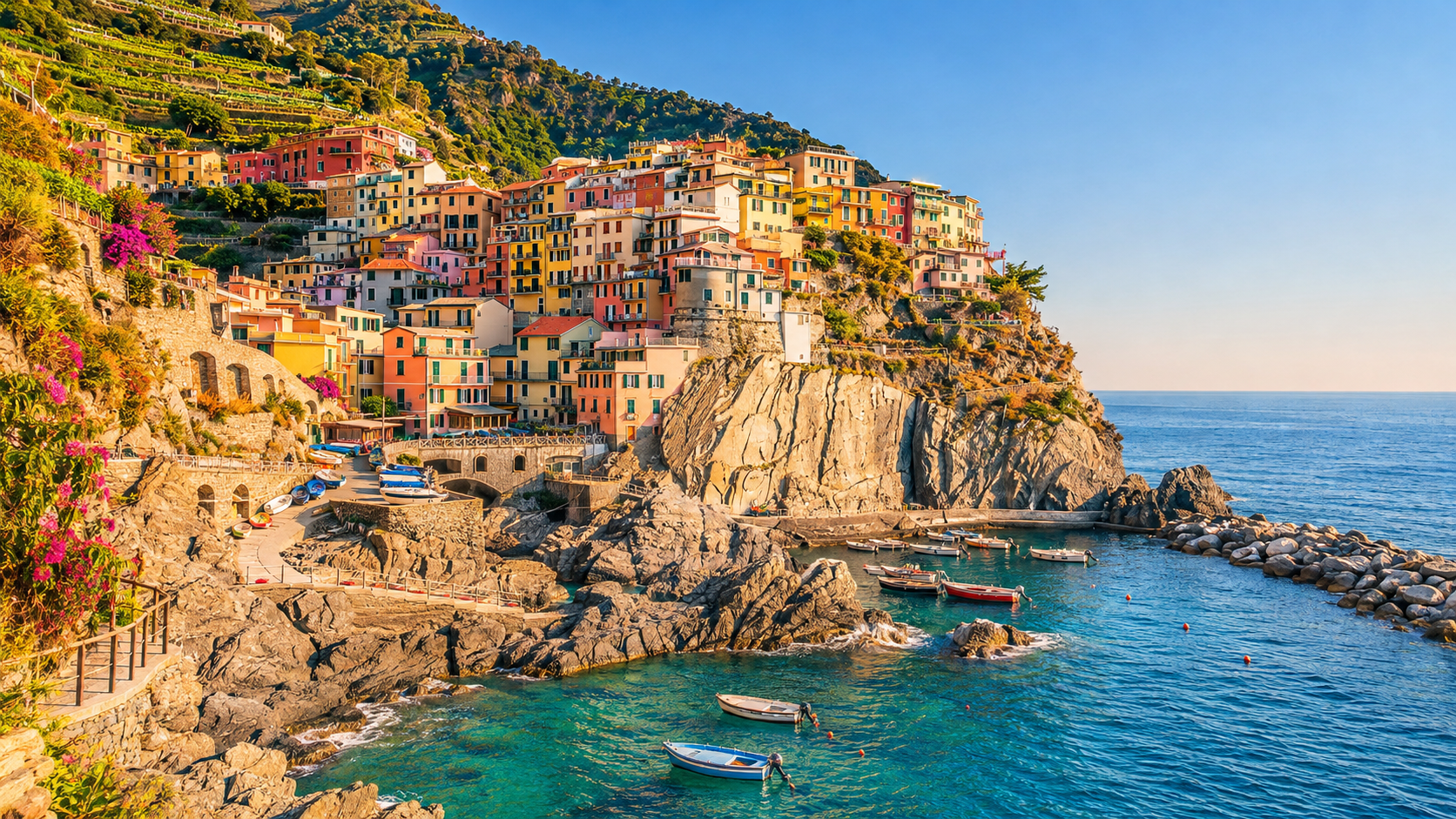
Cinque Terre is not a single town. It is a rugged national park consisting of five pastel-colored fishing villages clinging to steep sea cliffs along the Ligurian coast: Monterosso al Mare, Vernazza, Corniglia, Manarola, and Riomaggiore. 
Between 10:30 AM and 4:30 PM every summer day, thousands of cruise ship passengers and day-trippers pour into the narrow village alleyways from massive tour buses and regional trains. If you try to visit all five villages in a single afternoon like a tour group, you will spend your entire vacation packed shoulder-to-shoulder in train station tunnels.
The secret to loving Cinque Terre is giving yourself three full days. 
With three days, you can hike the cliffside trails in the cool early mornings before the crowds arrive, relax by the water during the midday heat, and have the cobblestone streets and seafood trattorias practically to yourself once the last day-trip trains leave in the evening.
Here is a practical, step-by-step 3-day itinerary covering hiking trails, train cards, luggage survival, and the best viewpoints across all five villages.
Where to Base Yourself: La Spezia vs. Inside the Villages
#Before booking your accommodations, you need to make an honest decision about luggage and budget.
Cars are strictly banned from the historic centers of all five villages. There is no roadside parking, no ride-share services, and no street-level luggage drop-offs. Once the train drops you off at a village platform, you must physically carry your bags to your hotel or Airbnb.
Option 1: Staying in La Spezia (The Smart, Practical Choice)
#La Spezia is a medium-sized naval city located immediately south of Cinque Terre, outside the national park boundaries.
- Logistics: Streets around the central train station (La Spezia Centrale) are flat, smooth, and easy to navigate with rolling luggage.
- Train Access: The Cinque Terre Express train leaves La Spezia Centrale every 15 to 20 minutes throughout the day, reaching the first village (Riomaggiore) in exactly eight minutes.
- Cost: Hotels, apartments, and restaurants in La Spezia cost roughly 40 to 60 percent less than inside the villages for the exact same quality.
- Best for: Anyone with large rolling suitcases, families with strollers, or travelers on a moderate budget.
Option 2: Staying Inside the Villages (The Romantic Choice)
#Staying inside one of the five villages allows you to step directly into the fairytale atmosphere early in the morning and late at night.
- Monterosso al Mare: The largest village and the only one with a flat beachfront and smooth seaside promenade. It is the easiest village inside the park for luggage.
- Manarola or Vernazza: Incredibly picturesque, but built on steep cliff faces. Getting from the train station to your room often requires carrying 20-kilogram bags up 150 to 250 ancient, uneven stone steps.
- Corniglia: Perched on a 100-meter cliff high above the sea. From the train station, you must either wait in a long queue for a tiny shuttle bus or climb the Lardarina—a grueling brick staircase with 382 steps and 33 flights.
- Best for: Travelers packing ultra-light (a single 35-liter backpack) who prioritize sunset views over convenience.
The Cinque Terre Treno Card: Costs, Perks, and Rules
#You do not need to buy individual point-to-point train tickets every time you move between villages. Doing so is expensive and wastes hours standing in line at ticket machines.
Instead, buy the Cinque Terre Treno MS Card from any station ticket counter or online through the national park portal.
What the Card Includes
#- Unlimited rides on the Cinque Terre Express regional trains between La Spezia Centrale, Riomaggiore, Manarola, Corniglia, Vernazza, Monterosso, and Levanto.
- Full access to all open paid hiking sections of the coastal Sentiero Azzurro (Blue Trail).
- Free use of the village electric shuttle buses (especially helpful for climbing up to Corniglia).
- Free access to public restrooms at all train stations (which otherwise cost €1 to €1.50 per visit).
The Validation Rule That Saves You a €100 Fine
#This is a critical rule that catches hundreds of international tourists every single week.
If you purchase a physical paper train ticket or a paper Cinque Terre Treno Card from a station counter, that ticket is not valid until you physically stamp it in one of the small green-and-white electronic validation machines located along the station walls and platform tunnels.
You must insert your paper ticket into the slot until you hear a mechanical stamp sound that prints the date and time on the cardboard. 
If you board an Italian train with an unstamped paper ticket, Italian railway conductors (Trenitalia) will not accept excuses about being a tourist. They will issue an immediate on-the-spot fine between €50 and €200 per passenger. 
If you purchase an electronic card online on your smartphone, make sure your phone battery is charged, as you must present the live QR code upon inspection.
Day 1: Riomaggiore, Manarola, and Sunset Over the Water
#Your first day is dedicated to settling in, understanding the train rhythm, and exploring the two dramatic southern villages: Riomaggiore and Manarola.
Morning: Arriving in Riomaggiore
#Take the train from your base in La Spezia to Riomaggiore. The train runs entirely through mountain tunnels cut through the coastal rock; when you burst out of the tunnel into the station platform, the blue Ligurian Sea opens up directly beneath you.
Walk out of the station and head into the pedestrian tunnel lined with blue mosaics that leads into the heart of town. 
Riomaggiore is built along a steep ravine. Walk down the main street (Via Colombo) past colorful fruit stands and bakeries until you reach the tiny fishing harbor at the bottom. The harbor is bordered by tall, narrow, pastel-painted tower houses (case-torri) painted in terracotta orange, golden yellow, and deep rose.
Walk out onto the giant black sea boulders on the left side of the harbor. Look back toward the village for the classic postcard view of fishing dinghies pulled up on the ramp and colorful laundry fluttering between bedroom windows.
Afternoon: The Short Hop to Manarola
#Head back up the hill to the Riomaggiore train station and hop on the train to Manarola. The ride takes less than three minutes.
Manarola is widely considered the most picturesque village in the park. The town center spills down a steep rocky headland surrounded by ancient stone agricultural terraces growing sweet Vermentino and Bosco grapes.
Walk down toward the rocky harbor where local teenagers leap from high sea rocks into the deep turquoise water. Follow the paved coastal promenade (Via Renato Birolli) that wraps around the northern cliff face toward the cemetery viewpoint (Punta Bonfiglio).
This cliffside path gives you the ultimate vantage point of Manarola: the entire pastel village stacked against the sheer rock face with the sea crashing below.
Evening: Sunset Aperitivo with Local Wine
#By 5:30 PM, the big day-trip crowds start thinning out as tour buses head back toward Florence and Milan. 
Head to a cliffside cafe or grab a spot along the stone harbor walls. Order a glass of crisp, chilled Cinque Terre DOC—a dry, mineral-rich white wine made from the terraced vineyards right above your head—and a warm slab of traditional Ligurian focaccia glistening with extra virgin olive oil and flaky sea salt.
Watch the sunset turn the pastel buildings a glowing shade of amber and gold as the village lights flicker on in the twilight.
Day 2: Hiking the Sentiero Azzurro from Corniglia to Monterosso
#Day two is your big hiking day. The Sentiero Azzurro (Trail #2 or the Blue Trail) is the historic coastal footpath that connected the five villages for centuries before the railway was carved through the cliffs in the 1870s.
Morning: Corniglia to Vernazza (3.2 km, Approx. 90 Minutes)
#Get an early start to beat the midday heat. Aim to catch the train to Corniglia by 8:00 AM.
Corniglia is the middle village and the only one that does not touch the sea. It sits perched on a rocky cliff 100 meters above the water. When you exit the train station, you can either take the free national park shuttle bus (included with your Cinque Terre Card) or climb the 382 brick steps of the Lardarina staircase.
Spend 20 minutes walking through Corniglia's quiet, shaded alleyways before heading to the national park checkpoint at the start of the trail. Show your Cinque Terre Treno Card to the park ranger.
The trail to Vernazza starts with a steady climb through ancient olive groves, fig trees, and terraced vineyards. The path is narrow and rocky, with wooden fences overlooking dizzying coastal drops. 
About an hour into the hike, you will pass through the tiny hamlet of Prevo, where you can buy fresh-squeezed citrus juice from local farmers. 
The highlight of this section comes as you begin your descent toward Vernazza: the trail rounds a rocky corner, and suddenly the entire harbor of Vernazza, its medieval Doria castle tower, and its octagonal church tower open up beneath you like a painting. Take your time descending the steep stone steps into town.
Midday: Lunch in Vernazza
#You will emerge directly into Vernazza's bustling main square (Piazza Marconi), which opens right onto a sandy fishing harbor.
Find a local trattoria and order a plate of trofie al pesto. Liguria is the birthplace of basil pesto. Authentic Genoese pesto here is made with tender baby basil leaves, pine nuts, garlic, Parmigiano-Reggiano, and rich Ligurian olive oil, tossed with twisted trofie pasta and boiled potato cubes.
If you prefer a quick lunch, visit a street-side friggitoria and grab a paper cone loaded with hot, crisp fried calamari and fresh anchovies to eat by the water.
Afternoon: Vernazza to Monterosso (3.6 km, Approx. 2 Hours)
#This is the most strenuous and rewarding section of the Blue Trail.
The climb out of Vernazza begins immediately with a relentless series of steep, uneven stone steps that will get your heart pumping within five minutes. Take frequent breaks and look back at the dramatic aerial views of the harbor below.
The trail snakes through dense Mediterranean scrub, crossing small wooden footbridges over mountain streams and traversing narrow clifftop ridges with panoramic sea views.
After about 90 minutes of undulating hiking, you will reach the final descent into Monterosso al Mare. The trail leads down through lemon orchards into Monterosso's historic Old Town. 
Walk through the pedestrian tunnel to Fegina beach, kick off your hiking boots, and reward your tired legs with a refreshing swim in the crystal-clear waters of the Ligurian Sea.
Day 3: Coastal Ferry Cruise, Monterosso Beach, and Wine Terraces
#After a strenuous day on the mountain trails, day three is about seeing the coastline from a completely different perspective: from the open water.
Morning: The Public Passenger Ferry
#While the train is fast and efficient, it travels almost entirely inside dark tunnels through the mountain. You cannot see the landscape from the train window.
To truly understand how dramatic Cinque Terre is, you must see the villages from the sea.
Head to the passenger ferry pier in Monterosso (or Riomaggiore, depending on your base). Regional passenger ferries run regularly between all villages except Corniglia (which has no sea dock). 
Buy a one-way ferry ticket and grab an outdoor seat on the top deck. 
As the boat pulls out into open water, the entire scale of the landscape reveals itself: sheer 700-foot coastal cliffs plunging straight into the ocean, medieval watchtowers perched on distant peaks, and thousands of miles of dry-stone vineyard terraces carved into impossibly steep slopes by hand over a thousand years.
Watching the pastel houses of Vernazza and Manarola grow closer as the boat glides into each tiny harbor is an unforgettable experience.
Afternoon: Monterosso Old Town and Fegina Beach
#Disembark in Monterosso al Mare to explore both halves of the town.
Monterosso is divided into two distinct sections separated by a rocky promontory and a medieval tunnel:
- The Old Town (Paese Vecchio): Filled with narrow medieval streets, ancient wine bars, and the striking black-and-white striped facade of the 14th-century Church of San Giovanni Battista. This is the best village in the park for purchasing artisanal gifts, including local lemon liqueur (limoncino), extra virgin olive oil, and dried Ligurian herbs.
- Fegina (The New Town): Home to the main train station and the long sandy beach lined with colorful beach umbrellas and sun loungers. At the far end of the beach sits the famous Il Gigante—a colossal 45-foot concrete sculpture of Neptune carved directly into the cliff in 1910.
Rent an umbrella and lounger for a couple of hours or relax on the free public beach section near the station.
Evening: The Peaceful Vineyard Terraces Above Manarola
#For your final evening, escape the coastal crowds entirely by heading into the hills above Manarola.
While the lower harbor gets crowded at sunset, the ancient terraced vineyards rising directly behind the village remain quiet and serene. Follow the trail signs toward the church of San Lorenzo in upper Manarola. 
From here, narrow stone pathways wind through the grapevines and lemon groves, offering peaceful sunset views overlooking the rooftops of Manarola and the vast Mediterranean horizon without another tourist in sight.
Footwear Regulations and Park Safety Rules
#Hiking in Cinque Terre is not a casual stroll through a park. The trails are steep, rugged, and full of loose gravel, exposed tree roots, and uneven stone steps with 300-foot cliff drops on one side.
Because so many tourists previously attempted these mountain hikes in fashion sandals and suffered broken ankles, the Parco Nazionale delle Cinque Terre strictly enforces footwear laws.
- What Is Forbidden: Park rangers stationed at trail checkpoints will turn away anyone wearing flip-flops, slide sandals, smooth-soled city dress shoes, platform shoes, or ballet flats. If you slip past a checkpoint in improper footwear, rangers can fine you up to €2,500 by law.
- What Is Allowed: Sturdy trail running shoes with deep rubber lug treads, or dedicated low-cut or mid-cut hiking boots.
- Water and Sun: There is zero shade on most of the clifftop trails. Always carry at least 1.5 liters of water per person. You can refill your water bottle for free at public drinking fountains located in the main squares of all five villages.
Luggage Survival Guide: Avoiding the Stairway Nightmare
#If there is one memory that haunts unprepared travelers in Cinque Terre, it is dragging a 50-pound hard-shell rolling suitcase up three flights of ancient stone steps in 30-degree summer heat.
The villages were built in the Middle Ages for defense against pirate raids. They were designed with steep, narrow alleyways, dead ends, and endless staircases rather than roads. There are no elevators, no ramps, and no porters at the train stations.
How to Handle Your Bags
#- Pack Light: If you are staying inside the villages, try to travel with a single 35-liter to 40-liter carry-on backpack that you can easily carry on your shoulders.
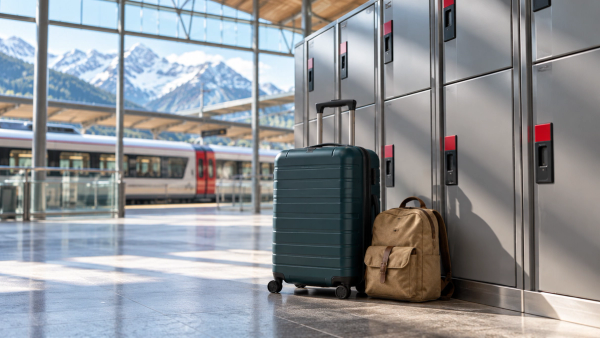
- Use Station Luggage Storage: If you are visiting Cinque Terre for the day on your way between Rome, Florence, or Milan, leave your large suitcases at the staffed left-luggage facility (Deposito Bagagli) inside the La Spezia Centrale train station or at the storage shop near the Monterosso station. Pay a few euros per bag, take a small daypack into the villages, and save your back.
With sensible footwear, the right train card, and an early morning start, your three days in Cinque Terre will be an unforgettable Italian Riviera adventure.