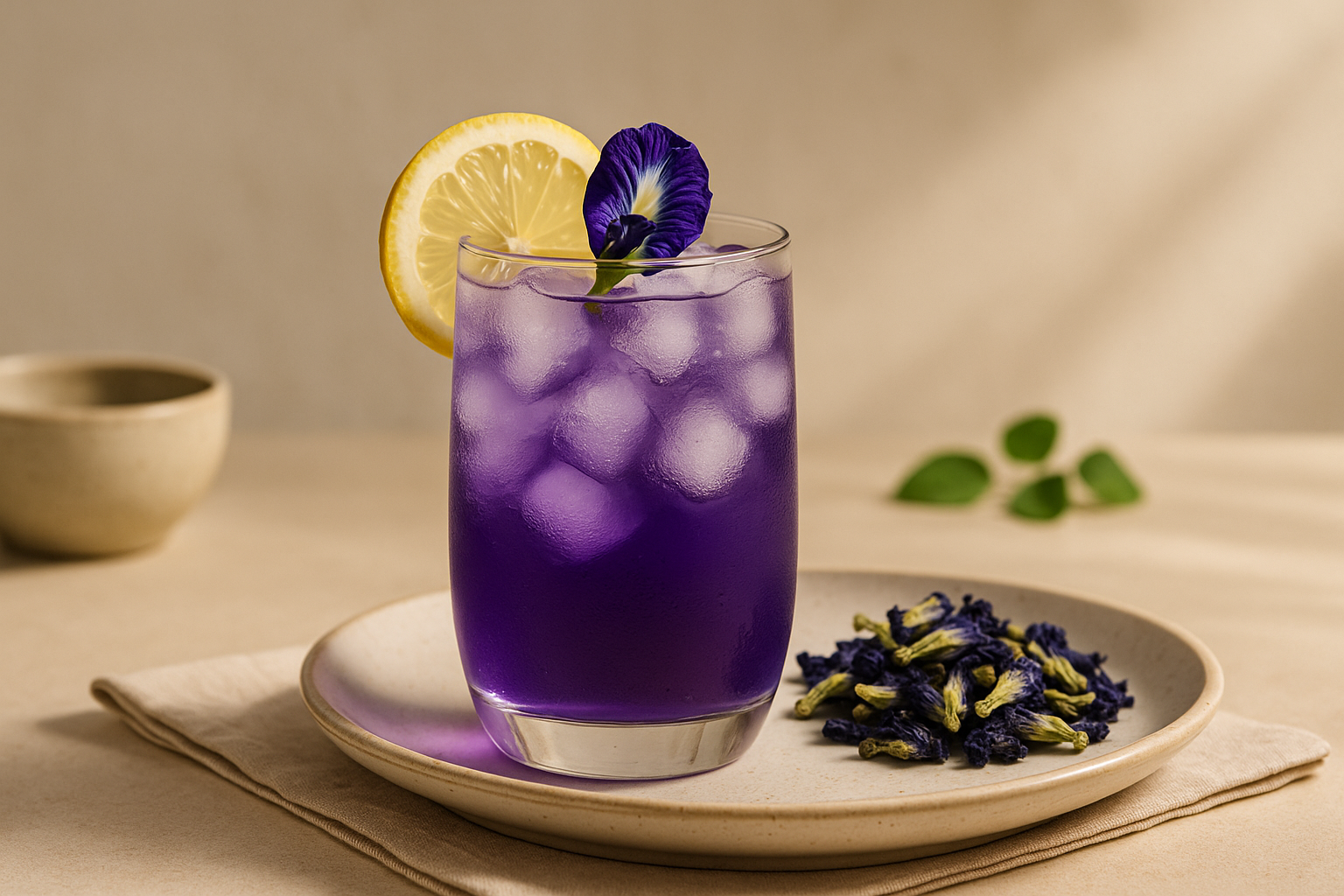
Butterfly Pea Flower Mocktails: Recipes, Color Magic, and the Ayurvedic Side of This Whole Blue-Drink Obsession
#I didn't mean to become the person who gets weirdly emotional about a blue drink, but, well... here we are. The first time I saw a butterfly pea flower mocktail change from deep indigo to purple right in front of me, I actually gasped. Like a child. It was at a small Southeast Asian cafe years ago, and the server squeezed fresh lime over the glass and the whole thing shifted colors like some edible science experiment. Since then I've made them at home for dinner parties, baby showers, one extremely chaotic summer picnic, and honestly just random Tuesday afternoons when life felt a bit too beige.
And lately these drinks are everywhere again. Not just in wellness cafes, but on zero-proof tasting menus, at boutique hotels, and all over social feeds where people are clearly very, very into botanical drinks in 2026. The bigger trend right now is layered, low-sugar, no-alcohol drinks that still feel fancy, with adaptogenic herbs, floral infusions, prebiotic sodas, and color-changing elements doing the heavy lifting. Butterfly pea flower fits into that world perfectly. It's dramatic without being gimmicky, actually tastes nice if you treat it right, and in Ayurveda-adjacent wellness circles people keep talking about it for calming, cooling vibes. Some of that is tradition, some of it is modern wellness marketing, and the truth is probably somewhere in the messy middle.
What butterfly pea flower actually is, in case you've only seen it on Instagram
#Butterfly pea flower comes from Clitoria ternatea, a climbing plant with vivid blue petals that are used fresh or dried, especially across Thailand, Malaysia, Vietnam, Bali, and parts of India. The petals steep into this insanely blue tea because of anthocyanins, the same family of plant pigments you get in blueberries and purple cabbage. Add something acidic like lemon or lime, and the pH changes the color from blue to violet or magenta-ish. It's real, not food coloring, which still blows my mind a little even though I know the chemistry.
Flavor-wise? People oversell it. It's not some huge punchy floral bomb. To me it tastes very mild, earthy, a little woody, almost like green tea met chamomile and then decided to whisper instead of talk. That's actually why it works in mocktails. It gives color and this soft herbal backbone without taking over everything. If you expect it to taste like hibiscus or lavender you'll be dissapointed. If you use it as a canvas, it's kind of wonderful.
A butterfly pea mocktail isn't amazing because it's blue. It's amazing when the blue is backed up by acid, sweetness, aroma, and a little texture. Otherwise, sorry, it's just pretty water.
Why it's having such a big mocktail moment in 2026
#So, yes, the color helps. Obviously. But the reason it keeps showing up now is bigger than aesthetics. The 2026 drinks scene is obsessed with zero-proof beverages that feel chef-y and layered, not like an afterthought for the one person not drinking. Menus are using tea reductions, saline, shrubs, ferments, coconut water, herbs from the savory side of the kitchen, and all these playful table-side finishes. I've noticed newer bar programs leaning into mood-based drinks too, not medical claims exactly, more like calm, bright, grounding, uplift, that kind of language. Butterfly pea flower slots neatly into that because it already has this wellness halo around it.
I've also seen more restaurants pairing blue tea with yuzu, calamansi, pandan, shiso, green mango, and even nonalcoholic sparkling sake. A couple newer openings in big cities have really pushed that visual drama angle with clarified citrus and transparent ice, and honestly, while some of it is a bit extra, I kinda love extra. Food should be fun sometimes. Not every drink has to be beige and sensible.
A quick, honest note on Ayurvedic benefits before we all get carried away
#Okay. This part matters. Butterfly pea flower, called aparajita in some Indian traditions, does have a place in Ayurveda and folk herbal use. It's often talked about as medhya, meaning supportive for the mind, memory, and mental clarity, and it's also sometimes described as cooling. People use the flowers in teas and herbal blends for stress support, skin and hair rituals, and general balance. Modern nutrition people also point to the antioxidant compounds, mainly those anthocyanins I mentioned. There are early lab and animal studies around antioxidant activity and possible cognitive or anti-inflammatory potential, which is interesting... but not the same thing as robust human clinical proof.
So my take is this. Enjoy the ritual. Appreciate the traditional knowledge. Respect that Ayurveda is a whole system, not just one trendy ingredient in a mason jar. And don't pretend a blue mocktail is a miracle cure. I drink these because they make me slow down, because the herbs and citrus smell beautiful, because they feel cooling in hot weather, and because serving one to a friend somehow makes the whole evening feel more special. That's a benefit too, honestly.
- Ayurveda-linked reputation: calming, cooling, supportive for focus and memory
- Modern nutrition angle: rich in anthocyanin pigments with antioxidant activity
- Real-life benefit in my house: makes people say 'wait, how did you DO that?' and gather in the kitchen
How I brew it so it tastes good, not muddy
#This took me a few bad pitchers to figure out. The biggest mistake is over-steeping. Dried butterfly pea flowers look harmless, but leave them in hot water forever and the drink can go flat and woody. I use about 1 heaped tablespoon dried flowers per 1 cup hot water, just under boiling, and steep 5 to 7 minutes. That's enough for strong color. Then strain and cool. If I'm making mocktails for a group, I brew a concentrate and keep it in the fridge. It usually stays lovely for around 2 days, maybe 3, though the flavor is brightest earlier.
Sweetness matters too. Plain sugar works, but I really prefer honey syrup, palm sugar syrup, or a light jaggery syrup when I'm leaning into the Ayurvedic-ish home-spa mood. Coconut water is great if you want softness and body. Citrus should usually be added at the end if you want that dramatic color shift in the glass. Learned that the hard way after pre-mixing an entire pitcher and ending up with a sort of gray-purple situation that looked, uh, not delicious.
Recipe 1: My go-to Butterfly Pea Flower Lime Fizz
#This is the easiest one and the version I make most often when friends come over and I need something low effort that still looks like I tried very hard. Brew 1 cup strong butterfly pea tea and chill it. In a glass, add ice, 2 teaspoons honey syrup, and about 1 tablespoon fresh lime juice. Top with sparkling water, then slowly pour 1/3 to 1/2 cup blue tea over the back of a spoon for a layered effect. Stir at the table if you want the color-change moment. Tiny pinch of sea salt helps more than you'd think.
If you like things more tart, use more lime. If you want it sweeter, use simple syrup instead of honey because it keeps the flavors cleaner. I sometimes toss in a bruised basil leaf or two. My niece calls this 'mermaid soda' which is honestly a better name than anything I've come up with.
Recipe 2: Coconut-Pandan Butterfly Pea Cooler, which tastes like vacation
#I made this after eating one of those pandan desserts that makes you immediately start planning another trip. It feels a little tropical, a little creamy, not too rich. Mix 1/2 cup chilled butterfly pea tea with 1/2 cup coconut water and 1 to 2 tablespoons pandan syrup. Add lots of ice, a squeeze of calamansi or lime, and finish with a splash of soda for lift. If you're extra, float a thin strip of cucumber in there. If you're me, you'll do that for guests and then drink yours from a chipped glass in the kitchen while standing up.
This one is really lovely with Thai or Malay food, especially spicy stuff. The cooling effect feels real, not medical-real maybe, but sensory-real. Chili, coconut, herbs, cold glass, done. Also, if you can find fresh pandan, blend a bit into syrup at home. Store-bought works, but homemade smells way greener and less candy-ish.
Recipe 3: Sparkling Jamun-Ginger Butterfly Pea Smash
#This one came from me trying to bridge Indian flavors with the Southeast Asian blue tea thing, and somehow it totally works. Muddle a few jamun if they're in season, or use 1 tablespoon unsweetened jamun concentrate. Add 1/2 teaspoon grated fresh ginger, 1 tablespoon lemon juice, and 1 tablespoon jaggery syrup. Shake or stir with ice, strain into a glass, then pour over chilled butterfly pea tea and top with sparkling water. It goes this moody violet color that's almost too pretty.
Is it traditional? No, not really. Is it tasty? Very. Ginger gives it a bit of heat, jamun brings tart depth, and the butterfly pea softens the edges. I served this with pani puri one time and everybody went quiet for a minute, which is maybe my favorite kind of compliment.
Recipe 4: Butterfly Pea Rose Lemon Sharbat for hot, sticky afternoons
#Steep your blue tea, cool it down, then mix 1/2 cup of it with 3/4 cup cold water, 1 tablespoon rose syrup, 1 to 1 1/2 tablespoons lemon juice, and crushed ice. Add soaked basil seeds if you like that texture, which I do, though I know some people think it feels odd. Garnish with dried rose petals if you're having a main-character day. This is the one I reach for in peak summer when even thinking feels sweaty.
A little warning though, rose syrup brands are wildly different. Some taste perfumey in a bad way. Start small. You can always add more, but once the drink tastes like your auntie's potpourri bowl, there's no going back.
Recipe 5: The dinner-party one with cucumber, mint, and black salt
#I almost didn't include this because it sounds too simple, but every single time I make it people ask for the recipe. Muddle 3 cucumber slices and 5 mint leaves very gently. Add 1 tablespoon lime juice, 2 teaspoons sugar syrup, a tiny pinch of black salt, and ice. Pour in 1/3 cup butterfly pea tea and top with tonic or sparkling water. The black salt sounds strange if you've never tried it in drinks, but that sulphury tang does something magic with cucumber and mint. Very savory-refreshing. Very snackable, if a drink can be snackable.
Little pairing ideas, because drinks never live alone in my house
#Butterfly pea mocktails are best with food that either echoes the botanicals or contrasts with spice. I love them with crispy things especially. Pakoras, rice paper rolls, grilled pineapple chaat, sesame crackers, prawnless vegan cakes, even good old salted peanuts. If you're making the coconut-pandan cooler, pair it with lemongrass skewers or a cucumber salad. The jamun-ginger one goes weirdly well with bhel-ish crunchy snacks. And the rose lemon version belongs next to fruit, falooda-inspired desserts, or cardamom shortbread. I know mocktail pairings can sound a bit try-hard, but when they work, they really work.
A couple common mistakes people make, me included
#- Using bottled lemon juice. Please don't. Fresh citrus is the whole point.
- Making it too sweet because the color tricks you into thinking it should taste like candy
- Adding dairy. I've seen this online and, um, no. Acid plus tea plus milk can get weird fast
- Forgetting aroma. A bruised herb leaf, a citrus peel, even one crack of black pepper can wake the whole drink up
Also, buy decent dried flowers. They should be vibrant blue, not grayish and dusty. If they smell stale, they probably are. I order small quantities more often rather than a huge bag that sits around forever in the back of the pantry next to mystery lentils and three kinds of half-used seeds.
My slightly opinionated final thoughts
#Butterfly pea flower mocktails are one of those trends that could've stayed shallow and photogenic, but luckily they can be genuinely delicious too. That's why I still care about them. They let you play with color, yes, but also texture, acidity, herbs, sweetness, and this whole idea of drinking something that feels a bit restorative without being boring. The Ayurvedic angle is meaningful when approached with respect, not as a cheap wellness label slapped onto a pretty drink. Make it because you like ritual. Make it because summer is brutal and you want something cooling. Make it because your friends deserve something more exciting than plain soda with lime. Whatever gets you there.
Anyway, if you try one, start with the lime fizz. It's almost impossible to mess up, and the color shift still gets me every time. And if you go down the rabbit hole like I did... well, don't say I didn't warn you. For more food rambles, home-kitchen experiments, and the occassional overexcited drink obsession, go wander around AllBlogs.in.