That first Indore morning, with steam in my face and jalebi syrup on my fingers
#I reached Indore half-sleepy, mildly grumpy, and honestly not in the mood to be impressed. It was one of those early arrivals where the train pulls in before your brain has accepted that the day has started. My backpack strap was digging into my shoulder, my phone battery was acting dramatic, and I had that weird travel hunger where you want something comforting but also local, because why come all the way and eat toast, right?
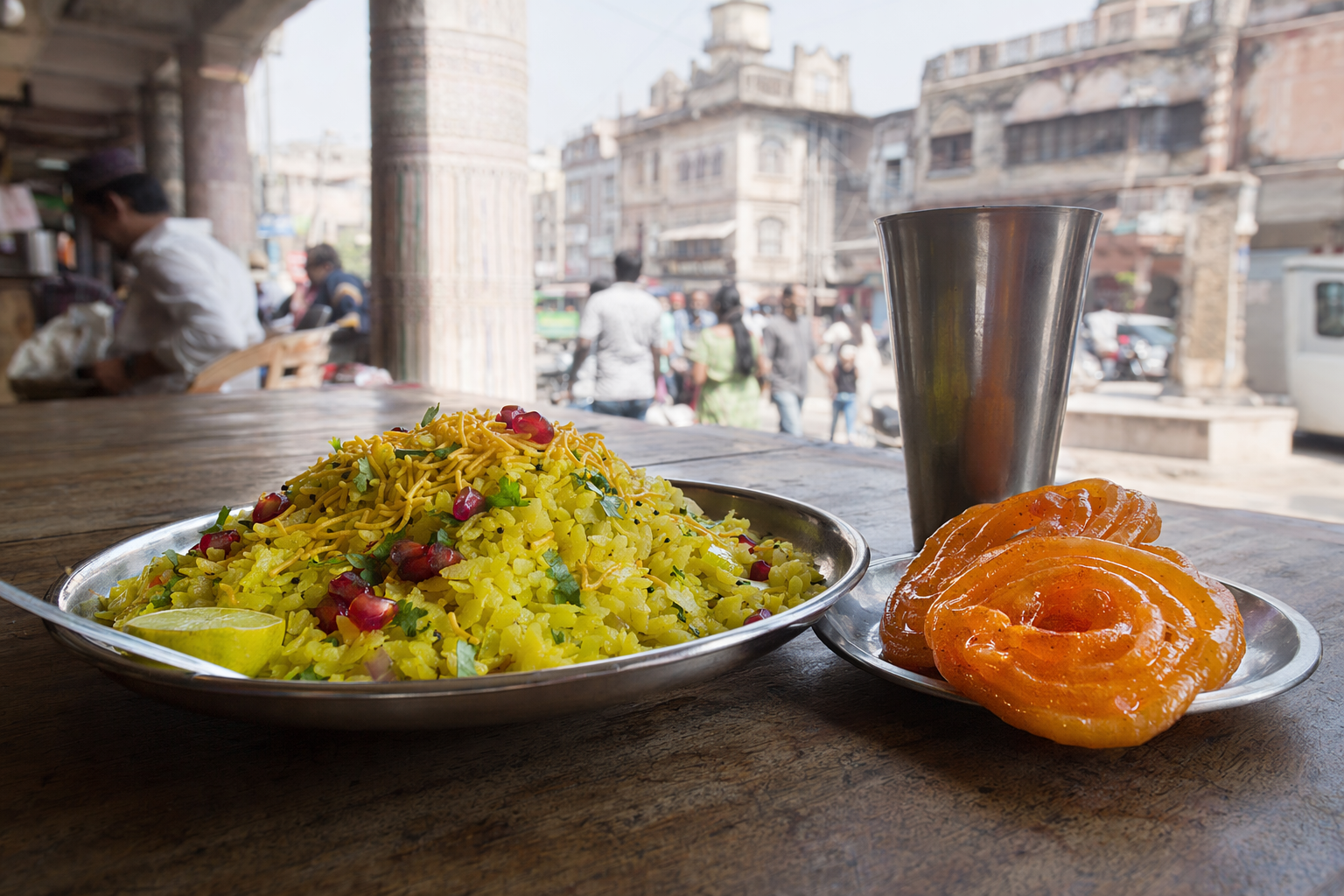
Then I saw it. A crowd around a small breakfast counter, everyone standing with those shallow paper plates of yellow poha, the kind that looks simple until you take the first bite and realize, ohhh, this city knows exactly what it is doing. There was sev on top, chopped onion, coriander, a squeeze of lemon, and that magical Indori jeeravan masala dusted like the vendor was blessing the plate. Next to it, jalebis were being lifted out of hot oil, curled and orange and shiny, dropped into sugar syrup, then handed over still crackling at the edges. I forgot my tiredness in like 4 seconds.
Indore’s poha-jalebi breakfast is not just a meal. It’s a morning ritual, a local personality trait, and, if you ask me, one of the easiest ways for travelers to understand the city without doing any museum-level homework. You stand there, eat what everyone else is eating, listen to scooters honking, watch office-goers, students, uncles with newspapers, aunties ordering extra sev, and suddenly you’re in the rhythm of the place. Not visiting. Actually in it.
Why poha-jalebi works so well for travelers, even nervous ones
#Poha is flattened rice, usually cooked lightly with turmeric, mustard seeds, curry leaves, green chilli, maybe peanuts, and a tiny bit of sweetness depending on the cook. In Indore it tends to be soft, fluffy, not greasy, and dressed up at the end with crunchy things. Sev is non-negotiable, at least emotionally. Jeeravan masala is the real Indori wink. It’s tangy, spicy, cumin-y, and if you’ve never had it before, you’ll probably spend the rest of the trip asking why your hometown breakfast is so boring.
Jalebi, on the other hand, is the sweet chaos partner. Batter piped into hot oil in spirals, fried crisp, dunked in syrup. It sounds like dessert, and technically it is, but Indore has no patience for such labels in the morning. Hot jalebi with poha makes sense after you try it. The poha is light and savory, the jalebi is sticky and loud, and together they do that salty-sweet thing that fancy restaurants keep pretending they invented.
If you’re new to Indian breakfasts, poha is also a gentle entry point compared to heavier fried snacks. It’s filling but not brick-in-your-stomach filling. I’ve traveled with people who get scared of street food very quickly, and even they relaxed with poha because it’s cooked fresh in big batches and moves fast at busy stalls. For broader first-timer breakfast tips, especially hygiene and how to read freshness, I’d point travelers to this Indian Breakfast Guide for Foreign Tourists: Idli, Dosa, Poha & Safety, because it covers the kind of small checks that save your morning.
Where I went first, and why I still think about that plate
#My first proper plate was near a busy market lane, not some famous place I had bookmarked. I wish I could say I researched deeply and followed a perfect food map, but no. I followed smell, crowd density, and one elderly man who looked like he had been eating breakfast there since before I was born. Usually a good sign.
The vendor scooped poha from a wide steamer, tapped the spoon twice, added sev like he was not paying for it, then onion, coriander, a lemon wedge, and a pinch of jeeravan. I asked for jalebi too, obviously. He gave me two pieces and said something like, “Garam hai, dhyaan se,” meaning it’s hot, be careful. I did not be careful. Burnt my tongue slightly. Worth it.
What surprised me was the texture. A lot of bad poha outside Madhya Pradesh becomes dry, clumpy, or sad. Indore poha, when it’s good, is moist without being soggy. The grains stay separate but soft. It has this faint sweetness that doesn’t announce itself, and then the masala and lemon wake it up. The sev gives crunch. The jalebi comes in with drama. I stood beside a scooter, plate in one hand, tea in the other, and had one of those travel moments where you don’t take a photo because you are too busy being happy. Then you regret not taking a photo. Then you order another jalebi.
The Indore breakfast map, but not too neat because mornings are messy
#Travel guides love neat lists. I love them too, when I’m lost. But Indore’s breakfast scene is better approached like a loose treasure hunt. There are famous zones, old market corners, sweet shops, namkeen places, and everyday stalls that don’t care about Instagram but will feed you beautifully. The city is known across India for its food culture, especially street food around Sarafa Bazaar at night and Chappan Dukan through the day, but breakfast belongs to many small corners too.
Chappan Dukan, the easy first stop
#Chappan Dukan, literally “56 shops,” is one of the most traveler-friendly food stretches in Indore. It’s clean, busy, and easier to navigate if you’re new to the city. You’ll find poha, jalebi, kachori, samosa, sweets, coffee, sandwiches, and all sorts of snacks that are not breakfast but somehow become breakfast because you’re on holiday. Some visitors find it slightly polished compared to old market stalls, and yeah, maybe it is. But polished is not always bad. When you’ve just arrived, you want food, toilets nearby, and less confusion. Chappan gives you that.
I had poha there on my second morning, and while it wasn’t the most emotional plate of my trip, it was dependable. Good sev. Fresh lemon. Jalebi hot enough. Also good for groups because someone will want poha, someone else will want dosa, one person will ask for cold coffee at 8:30 in the morning because there is always that person. Maybe it’s me sometimes.
Rajwada side, old-city energy and better people-watching
#The Rajwada area is where I like eating more, even if it’s a little more chaotic. You get the old Indore feel here, with heritage buildings, tiny lanes, vendors opening shutters, and breakfast counters doing serious business before the sun gets too aggressive. It’s not always the most relaxed place to stand with luggage, so drop your bags if you can. But if you want that “I am really in the city” feeling, go early and walk.
Around Rajwada and nearby bazaar lanes, I found the poha more old-school. Less curated, more instinctive. Vendors knew regular customers by order, not name. One man came, didn’t say anything, and a plate appeared with extra onions and no jalebi. That sort of thing makes me weirdly emotional. Food memory is community memory, no? Or maybe I was just hungry again.
Sarafa Bazaar is famous at night, but don’t ignore nearby mornings
#Most people hear Sarafa Bazaar and think night food market, and fair enough. At night, the jewellery market transforms into a street food carnival with bhutte ka kees, garadu, malpua, rabdi, dahi vada, and more things than your stomach can responsibly manage. But staying near this area also puts you close to morning breakfast action. The lanes around old markets wake up with tea, poha, jalebi, and namkeen shops doing their first sales.
I wouldn’t tell you to do a giant Sarafa night crawl and then attack poha at 7 am unless you are built different. I tried something close to that and, um, my stomach filed a formal complaint. Better plan: Sarafa night one day, slow breakfast the next. Or share everything. Travelers always say they’ll share and then suddenly everyone is guarding their plate like it’s family property.
What to order with poha, because the extras matter
#A basic Indori poha plate is lovely, but the add-ons are what turn it into an experience. Ask for sev. Most places add it by default, but still. Sev is the crunchy gram flour noodle topping and in Indore it shows up everywhere like a beloved cousin. Then there’s jeeravan masala, which you may see sprinkled from a steel shaker. Don’t underestimate it. Too much can make things salty-spicy, but a little makes the poha sing.
- Lemon: squeeze it fresh, not too much at first. It brightens everything.
- Onion: great crunch, but skip if you’re sensitive or traveling before a meeting. Been there, smelled like breakfast all day.
- Coriander: small thing, big freshness.
- Peanuts: some vendors include them, some don’t. I like them because texture.
- Jalebi: order it hot. If it has been sitting too long, it turns chewy and sad, and nobody came to Indore for sad jalebi.
Some stalls offer tarri or a spicy gravy on the side, more common with other snacks but you may encounter spicy additions depending where you eat. If you are unsure about chilli heat, just say “mirchi kam” or “less spicy, please.” I’ve used this phrase all over India, sometimes badly pronounced, and people still understood. For travelers who get nervous ordering spice levels, this guide on How to Ask for Less Spicy Food in India is actually useful, especially when your mouth is brave but your stomach is not.
Timing is everything, and I learned that by showing up late like a fool
#Indore breakfast is best early. I’d say aim for 7 to 9:30 am if you want the good rhythm. Some places keep serving later, of course, but the mood changes. Early morning poha is fresh, crowds are local, jalebis are turning fast, and tea is flowing. By late morning, you may still get food, but it’s not the same. It’s like arriving at a party after the best songs already played.
One morning I got lazy because the hotel bed was too comfortable, and I reached a stall around 11. The vendor still had poha, but the jalebi batch looked tired. I ate it anyway because I am not a quitter, but yeah, it didn’t have that glassy crispness. Lesson learnt. If a food city tells you to wake up, wake up.
Also, Sundays are fun but busier. Families come out, students gather, and popular spots can feel like everyone in Indore had the same idea at once. I enjoy that, but if you hate crowds, go on a weekday morning. Stand slightly away after getting your plate. Don’t block the counter. Indian breakfast counters have their own traffic rules, invisible but very real.
How to judge a good poha-jalebi stall without being too precious about it
#I don’t believe street food needs to look fancy. Some of the best things I’ve eaten came from places where the signboard was older than me and the menu was just a man shouting items. But you still want to be sensible, especially while traveling. Look for turnover. If locals are buying fast and the vendor is refilling fresh poha, that’s a good sign. If jalebis are being fried right there, even better. If oil smells burnt from three lanes away, maybe don’t.
Watch the serving style. Are plates clean or disposable and kept covered? Is the vendor handling money and food with the same hand constantly? Sometimes unavoidable, but you can choose places where one person serves and another collects cash. Carry sanitizer, but don’t act like you’re entering a biohazard zone. That energy is rude and also unnecessary.
For water, I stick to sealed bottled water when traveling. With tea, I’m more relaxed because it’s boiled. Chai with poha-jalebi is fantastic, by the way. The tannic hot tea cuts the sweetness of jalebi and makes you feel like you can walk the whole city after. You cannot, but you will believe it for 20 minutes.
My mini morning food walk plan for first-time visitors
#If you’ve got only one morning in Indore, don’t overcomplicate it. Pick one area, eat slowly, then walk. The biggest mistake food travelers make is trying to “cover” too much, like breakfast is an exam. It’s not. Let your first plate be your anchor.
- Start around 7:30 am near Chappan Dukan if you want an easy, comfortable introduction. Order poha, jalebi, and chai. Watch the crowd before choosing the stall.
- If you prefer old-city atmosphere, head toward Rajwada early, but keep your bag light and your patience large. Eat standing, then wander through the lanes as shops open.
- Try a namkeen shop after breakfast. Indore is famous for namkeen, and buying a small packet of sev or mixture is the edible souvenir that actually gets finished.
- Do not stack too many heavy snacks immediately. Poha feels light, jalebi lies, and then kachori will look at you from a counter and ruin your plans.
This style of morning food walk reminded me a little of Amritsar, where breakfast has that same “wake up and commit” energy, though the food is much heavier there. If you’re into iconic Indian morning eating, the Amritsar Morning Food Walk Safety: Kulcha & Lassi Tips is a nice related read, especially for timing and not overdoing sweet plus fried stuff too early.
The poha itself: what makes Indori style different
#People argue about poha styles, and I respect that. Maharashtra has kanda poha, Gujarat has its own sweeter versions, and many homes across India make poha differently depending on what’s in the kitchen. Indore’s version, to me, is special because of balance and toppings. The poha is usually steamed or gently cooked so it stays fluffy. It’s lightly seasoned, not overloaded. Then the final toppings do the fun part.
Jeeravan is key. It’s a spice mix associated strongly with Indore’s snack culture, and it goes on poha, fruit, sandwiches, chaats, honestly whatever people feel like improving. The sev also matters because Indore’s namkeen tradition is serious. This is a city where crunchy snacks are not an afterthought. They are part of identity. A plain poha can be good, sure, but Indori poha with the right sev and masala becomes layered, crunchy, soft, tangy, sweet, spicy, all before 8 am. Bit unfair to other breakfasts.
And then there’s that faint sweetness. Some people love it, some complain. I love it when it’s subtle. If it becomes sugary, I’m out. But a whisper of sweetness with lemon and sev? Perfect. It makes the jalebi pairing less weird because your taste buds are already walking in that direction.
Jalebi: hot, sticky, and absolutely not optional in my opinion
#I know some travelers say, “I don’t eat sweet in the morning.” Fine. Live your truth. But at least try one hot jalebi in Indore. Not a cold one sitting in a glass case since yesterday. A hot one. The difference is massive. Fresh jalebi has a crisp shell, a syrupy inside, and that slight fermented tang in the batter if it’s done well. Cold jalebi is still edible, because sugar is sugar, but it doesn’t have the same joy.
My favorite jalebi moment was actually not at a famous shop. It was from a little breakfast cart where the cook was making small batches. He poured the batter into the oil with this casual wrist movement that looked easy until I imagined trying it and creating a fried shoelace. The jalebis came out uneven, which I liked. Perfect circles are overrated. I ate them with poha and got syrup on my fingers, my phone, and possibly my scarf. Travel glamour.
If you’re sharing, order jalebi in small rounds rather than buying a heap. Freshness drops fast. Also, jalebi is heavier than it looks. Two pieces can feel innocent, four pieces can change the direction of your whole day.
What else to eat after breakfast, if your appetite is ambitious
#Indore does not stop feeding you after poha-jalebi. That’s the danger. You think breakfast is done, then someone mentions kachori, samosa, khopra patties, bhutte ka kees, shikanji, rabdi, dahi vada, garadu in season, and suddenly your itinerary is just digestion breaks.
Bhutte ka kees is one of my favorite Indore snacks, made with grated corn cooked with milk, spices, and often garnished with coconut and coriander. It’s soft, sweet-savory, and comforting. Garadu, a winter favorite, is fried yam tossed with spices and lemon. Sarafa Bazaar at night is the classic place to try many of these, but don’t go without a plan unless you’re okay with chaos. Delicious chaos, but still.
I also bought namkeen to take home, and it lasted exactly two days. I had imagined gifting it to friends. Instead I became the friend who says “just one handful” twelve times. Indori sev is dangerous like that.
A few travel notes nobody told me clearly enough
#Indore is a practical city for food travelers. The airport is not far from the city compared to many Indian metros, railway connectivity is good, and getting around by auto or app cab is usually manageable. Traffic exists, obviously, because India, but it didn’t exhaust me the way some larger cities do. The city is also widely known for cleanliness rankings in India, and while that doesn’t mean every lane sparkles, many food areas felt easier to navigate than I expected.
Stay central if food is your priority. Somewhere with easy access to Chappan Dukan, Rajwada, or Sarafa makes life simpler. If you stay far out to save a little money, you may spend the savings on rides and lose the joy of spontaneous snacking. I made this mistake in another city and regretted it every single morning.
Carry cash in small notes. Many vendors accept digital payments, but small cash still saves time when networks act up. Wear comfortable shoes because food walks always become longer than planned. And don’t plan a tight museum visit immediately after a heavy breakfast. You’ll want to stroll, sit, sip tea, maybe question your life choices after the second jalebi.
My honest do’s and don’ts for poha-jalebi mornings
#- Do eat where the food is moving fast. A busy stall is often your best freshness indicator.
- Do ask for less chilli if you need it. Nobody wins a prize for suffering through breakfast.
- Do try the classic combo at least once before improvising with other snacks.
- Don’t judge the stall only by looks. Some humble places are brilliant.
- Don’t arrive too late and then complain the jalebi isn’t crisp. That one is on you, friend.
- Don’t eat like you have four stomachs on day one. Indore rewards repeat visits, not panic ordering.
Also, talk to people if you can. Ask “yahan ka best kya hai?” meaning what’s best here. People will tell you. Sometimes three people will tell you three different things and then argue lovingly. That’s part of the fun. Food cities are not quiet about opinions.
Why this breakfast stayed with me more than fancy meals
#I’ve eaten at beautiful restaurants where the plates looked like art and the bill made me sit silently for a while. I enjoy that too. But the meals that stay in my bones are often the simple ones eaten standing up, slightly uncomfortable, surrounded by a city waking up. Indore poha-jalebi is exactly that kind of memory.
It’s not rare ingredients. It’s not complicated technique in a show-off way. It’s repetition, community, speed, comfort, and local pride. The vendor knows the morning rush. The customer knows how much sev they want. The jalebi guy knows when the oil is right by looking, not measuring. Everyone knows the rhythm except you, the traveler, and then for one plate, you get to borrow it.
That’s why I think travelers should take breakfast seriously. Dinner gets all the attention, but breakfast tells you how a city actually lives. In Indore, it tells you people like flavor early, they like crunch, they like sweet with savory, and they do not see any reason to be boring before noon. Respect.
Final bite: go early, order both, and don’t pretend you’re above extra sev
#If you’re heading to Indore, give poha-jalebi a proper morning. Not a rushed bite between hotel checkout and airport cab. Wake up early, go where locals are eating, order poha with sev and lemon, get hot jalebi, add chai, and just stand there for a bit. Watch the city move. Let your fingers get sticky. Let the jeeravan hit your nose. Let breakfast be the sightseeing.
Would I travel back to Indore just for this breakfast? Honestly, yes. Maybe that sounds dramatic, but food people understand. Some cities have monuments, some have landscapes, and some have a plate of poha that makes you start checking train tickets again. Indore has plenty more than breakfast, of course, but breakfast is the door I’d enter from every time.
And if you’re the sort of traveler who plans trips around what to eat first, same here, we are the same species. I keep collecting these little food trails and messy notes, and when I want more ideas or just want to fall into another food-travel rabbit hole, I usually end up browsing AllBlogs.in with chai nearby and snacks I absolutely did not need.