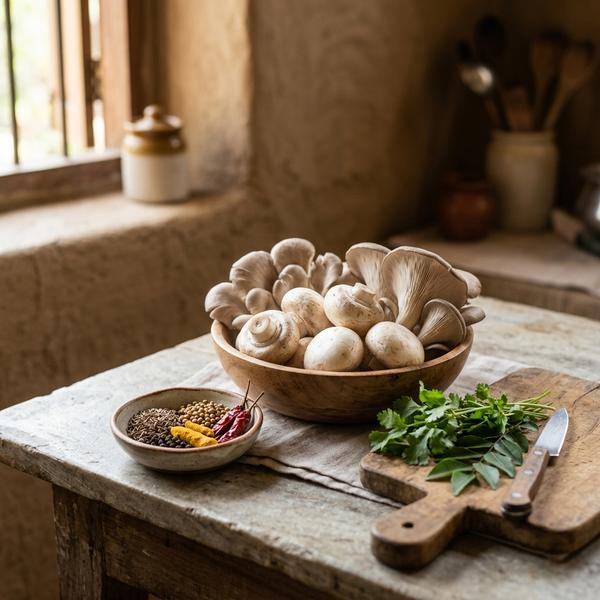
Tofu looks like one of those foods that should behave politely in a lunchbox. It is firm, not too oily, not very smelly, and easier to carry than paneer curry. But in Indian summer, especially when a tiffin sits in a warm office bag, school bag, train berth, scooter dicky, or parked car, tofu needs the same careful treatment as other moist protein foods.
Quick answer: cooked tofu should not be treated as a full-day no-fridge food in hot weather. If it has been cooked, opened, mixed with sauce, packed with rice, or kept in a warm box, aim to eat it within about 2 hours at room temperature. If the lunchbox may sit in very hot conditions, especially above roughly 32°C / 90°F, keep the safe window closer to 1 hour unless you use a proper insulated bag with ice packs. Unopened shelf-stable tofu is different: it can stay in the pantry until opened, but once opened it needs refrigeration.
This does not mean tofu is “unsafe” as a food. It means tofu is not a magic shelf-stable protein once opened or cooked. Handle it like a perishable tiffin item.
Why tofu spoils faster than it looks
#The confusing part is that tofu often looks calm even when it is no longer a good idea to eat. A dry sabzi may smell sour quickly. Milk curdles. Cut fruit gets watery. Tofu can be more subtle.
Most regular tofu sold in supermarkets is packed in water and stored chilled. Once you open it, you have exposed a moist, protein-rich food to air, hands, knives, chopping boards, lunchbox lids, and kitchen temperature. That is enough reason to stop thinking of it as a dry snack.
Three things make tofu tricky in summer:
- Moisture: tofu holds water, and wet foods are generally more sensitive than dry snacks.
- Protein: cooked protein foods need time-temperature control.
- Mild smell: tofu may not shout “spoiled” until it is clearly off.
So if you are packing tofu for lunch, the real question is not “does tofu look okay?” It is: how long has it been warm, and how was it packed?
The practical summer rule: 2 hours, or 1 hour in high heat
#For perishable foods, food-safety guidance commonly uses the 2-hour rule: do not leave perishable food at room temperature for more than 2 hours. In hotter conditions, around 90°F / 32°C or above, the window is shortened to 1 hour. This is the same logic you should apply to tofu tiffins, tofu rice bowls, tofu sandwiches, tofu bhurji, and tofu stir-fries.
In an Indian summer, “room temperature” is not always a gentle room. Your lunch may travel through:
- a hot kitchen after cooking,
- a closed backpack,
- a school bus,
- a two-wheeler ride,
- a train platform,
- an office desk far from AC,
- a parked car,
- or a warm hostel room.
That means a tofu lunch packed at 7:30 AM and eaten at 1:30 PM without cooling is not a safe bet. It might look fine. It might even smell fine. But it has spent too long in the danger zone.
What about shelf-stable tofu?
#Shelf-stable tofu is the exception people often miss. Some tofu comes in aseptic packs and can sit unopened in a pantry. This is not the same as the refrigerated tub of tofu packed in water.
Use this simple split:
- Unopened shelf-stable tofu: okay in the pantry until its date, if stored as directed.
- Opened shelf-stable tofu: treat like perishable tofu; refrigerate quickly.
- Unopened refrigerated tofu: keep refrigerated until use.
- Opened refrigerated tofu: keep cold and use within a few days, following the pack instructions.
- Cooked tofu: cool, refrigerate, and pack cold if you are not eating soon.
If your plan is to carry tofu on a train or bus without a fridge, unopened shelf-stable tofu may be useful for later cooking at your stay. But once you open it, it becomes a fresh-food problem again.
Can cooked tofu go in an Indian office tiffin?
#Yes, but only if the timing works.
A tofu tiffin is most sensible when:
- you cook it in the morning,
- cool it slightly but do not leave it sitting around,
- pack it in a clean, dry box,
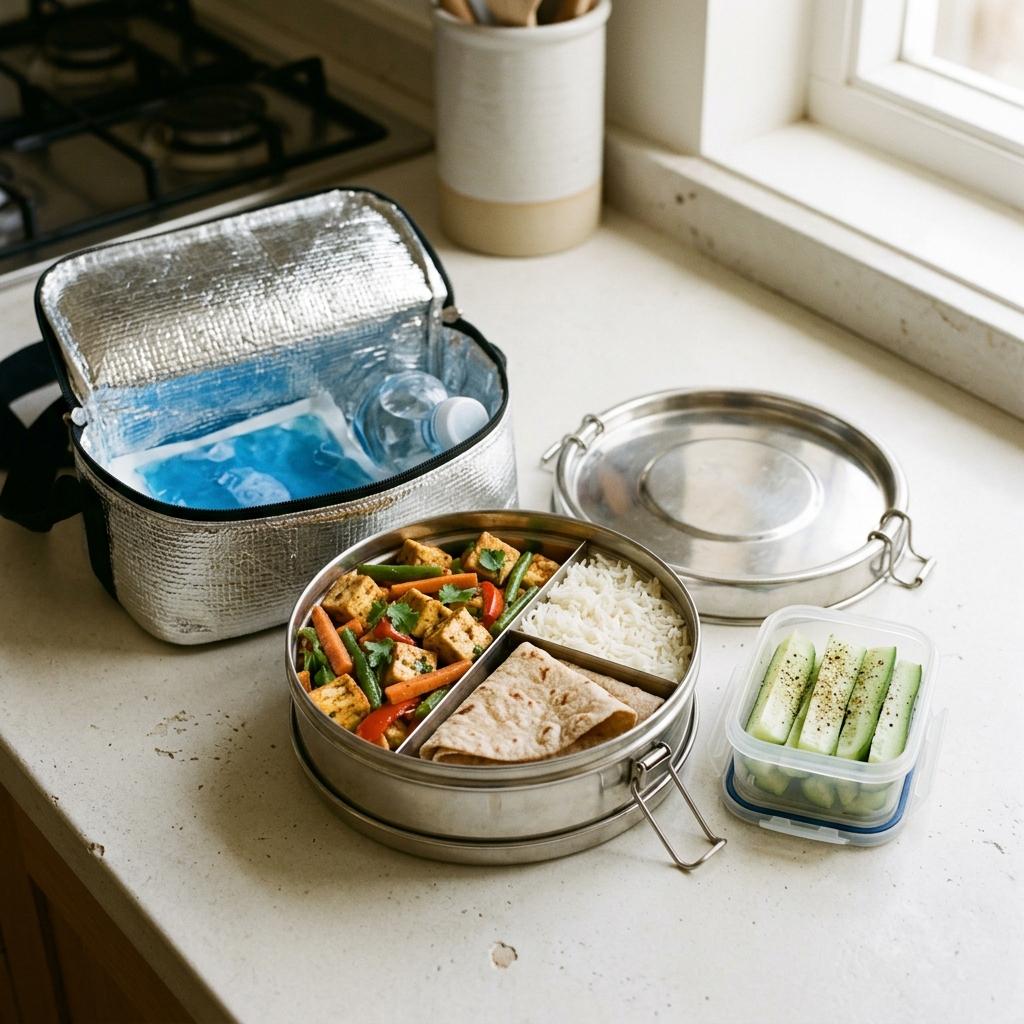
- carry it in an insulated lunch bag,
- add an ice pack if lunch is more than 2 hours away,
- and eat it as early as possible.
It is less sensible when:
- you cook it at night and leave it cooling outside,
- pack it hot and trap steam inside the box for hours,
- mix it with mayo, cream, coconut chutney, or wet gravy,
- keep it in a non-AC room until late afternoon,
- or carry it in a car during peak summer.
If your office has a fridge, use it. If there is no fridge but the office is air-conditioned and you eat early, tofu may still be manageable with an insulated bag. If you eat late, choose a safer protein for that day.
Best tofu dishes for summer tiffins
#Not all tofu dishes travel equally well. For hot-weather packing, drier and simpler is better.
Better choices
#1. Dry tofu stir-fry
Pan-seared tofu with beans, capsicum, carrots, cabbage, or spinach is usually easier to pack than a wet curry. Keep the oil moderate and avoid too much sauce.
2. Tofu bhurji without too much tomato
Tofu bhurji can work if it is cooked dry. Do not leave it watery. Too much tomato, onion moisture, or cream makes it less lunchbox-friendly.
3. Tofu with roti instead of wet rice bowls
A dry tofu sabzi with roti is usually easier than tofu mixed into warm rice. Rice holds heat and moisture, so a tofu rice bowl needs better cooling and packing.
4. Baked or pan-crisped tofu cubes
Firm tofu cubes that are pressed, seasoned, and cooked until the surface is dry are better than soft tofu floating in sauce.
Riskier choices
#Be more careful with:
- tofu mayo sandwiches,
- tofu in coconut-based gravies,
- tofu salad with cut cucumber and tomato,
- tofu curd bowls,
- tofu with leftover rice,
- tofu rolls with wet chutney,
- tofu in creamy sauces,
- and tofu packed in a box that remains warm for hours.
This is not about making food boring. It is about choosing the version that survives your actual day.
Should tofu be packed hot or cold?
#This is where many tiffins go wrong.
If you pack tofu piping hot and close the lid immediately, steam condenses inside. The box becomes wet, warm, and closed. That is not ideal for a lunch that will sit for several hours.
A better method:
- Cook tofu fully.
- Spread it in a shallow plate for a short time so excess steam escapes.
- Do not leave it out for long.
- Pack it once it is no longer steaming.
- If lunch is later, refrigerate it first and carry it cold with an ice pack.
If you made tofu the previous night, do not leave it on the counter to cool overnight. Refrigerate it in a shallow container once the steam has reduced.
How to pack tofu safely for office, school, train, and road trips
#For office lunch
#If your commute is short and lunch is early, a dry tofu sabzi can work. Use an insulated lunch bag if possible. If your lunch sits until 2 PM or 3 PM, use the office fridge or skip tofu that day.
A good office combo:
- dry tofu capsicum sabzi,
- roti or paratha,
- whole fruit,
- roasted chana or nuts,
- and a separate dry chutney podi if needed.
Avoid packing tofu with wet chutney, cut fruit, and curd in the same box.
For school tiffin
#For children, be stricter. School bags sit in buses, corridors, and warm classrooms. If the school does not have cooling and the tiffin will be eaten late, tofu is not the best protein choice.
If you pack it, keep it dry, small-portioned, and early-lunch friendly. Avoid tofu mayo sandwiches or soft tofu salads.
For train travel
#A tofu dish packed in the morning for a long train journey is not a whole-day food. If you are eating within a short window, carry it in an insulated bag. For longer journeys, choose shelf-stable snacks, freshly cooked station meals from busy counters, or dry travel foods instead.
For more general no-fridge travel ideas, see AllBlogs’ guide on no-fridge travel food for Indian summers.
For road trips
#The biggest risk is the parked car. A car can become much hotter than outside air, especially in afternoon sun. Do not leave tofu tiffins in the car while you stop for sightseeing, shopping, or darshan.
If tofu is part of the plan, keep it in a cooler bag with ice packs and eat it early. Otherwise, pack dry snacks and buy fresh hot food on the route.
Tofu vs paneer in summer tiffins
#Many Indian households compare tofu with paneer because both are used in bhurji, rolls, salads, and curries. From a lunchbox-safety point of view, both need care. Paneer is dairy-based and often spoils obviously. Tofu is soy-based but still moist and perishable once opened or cooked.
So the safer question is not “tofu or paneer?” It is:
- Which one was cooked fresher?
- Which one is drier?
- Which one will be eaten sooner?
- Which one can stay cold until lunch?
If you are choosing between paneer and tofu for a hot, no-fridge day, tofu does not automatically win. It may feel lighter, but it still needs time control.
If paneer is your usual lunchbox protein, you may also find these AllBlogs guides useful: Can Paneer Stay Outside in Summer? and Can You Carry Paneer Sandwiches Without a Fridge in Summer?.
Spoilage signs: when to throw tofu away
#Throw tofu away if you notice:
- sour, fermented, or unpleasant smell,
- slimy surface,
- unusual stickiness,
- puffed packaging,
- grey or yellowish discoloration that was not there before,
- fizzy or bubbling liquid,
- bitter or odd taste,
- or a lunchbox that stayed warm for too long.
One important point: do not rely only on smell. Food can become risky before it smells terrible. If the tofu has crossed the time limit, especially in heat, do not try to “fix” it by reheating.
Can reheating make old tofu safe again?
#Reheating can make food hot, but it does not reset a bad storage history. If cooked tofu sat in a hot lunchbox for half a day, reheating it later is not a smart rescue plan.
Use reheating for food that was cooled and refrigerated properly. Do not use reheating as permission to ignore the time window.
A realistic tofu tiffin checklist
#Before packing tofu in summer, ask these quick questions:
- Will it be eaten within 2 hours?
- Is the weather extremely hot?
- Will the bag sit in a bus, car, or non-AC room?
- Is the tofu dish dry rather than saucy?
- Was it cooked fresh or stored properly overnight?
- Is there an ice pack or fridge available?
- Is it for a child, elderly person, pregnant person, or someone with a sensitive stomach?
If several answers worry you, choose a safer tiffin.
Safer swaps for very hot days
#When there is no fridge and lunch is late, consider:
- thepla or khakhra,
- roasted chana,
- peanut chikki,
- whole fruit that is washed and uncut,
- dry poha chivda,
- lemon rice only when packed and eaten within a safe window,
- dry paratha with pickle in a separate leakproof container,
- nut-and-seed mix,
- or fresh hot food bought close to mealtime.
For broader Indian office-lunch safety rules, read Office Lunch in Indian Heat: Safe Foods and Tiffin Rules.
Food safety basis checked
#This guide follows conservative time-temperature advice used by food-safety authorities such as USDA FSIS, FDA, CDC, and university extension guidance for tofu storage. The practical takeaway is simple: once tofu is opened or cooked, treat it as perishable and keep it cold if it will not be eaten soon.
Simple answer: when is tofu okay, and when should you skip it?
#Pack tofu when it is freshly cooked, fairly dry, eaten early, and carried cool.
Skip tofu when it will sit for half a day without cooling, travel in a hot car, remain in a school bag until afternoon, or mix with wet sauces and cut vegetables.
Tofu is a useful, flexible protein. Just do not give it the treatment you would give khakhra or roasted makhana. In Indian summer, tofu belongs in the “fresh and perishable” category, not the “pack and forget” category.