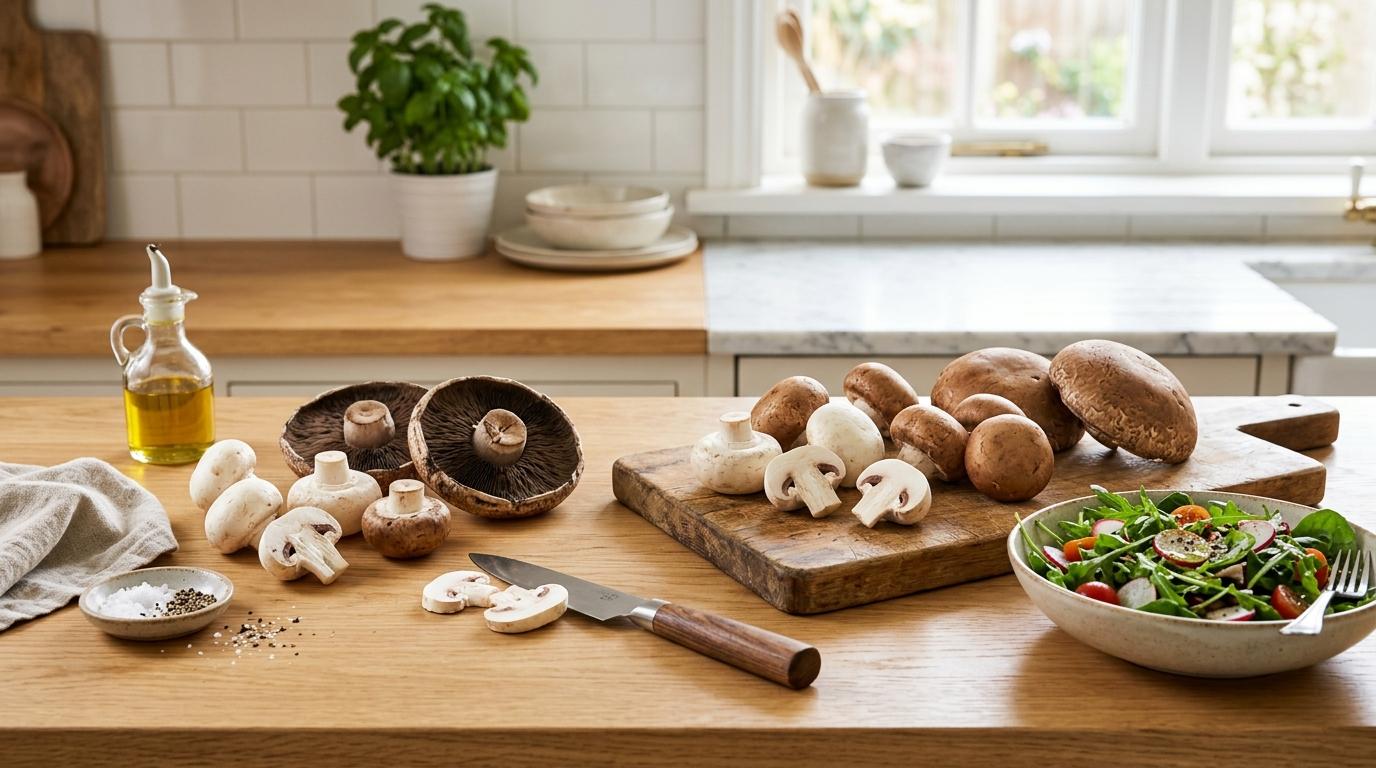
If you’ve ever paused at a salad bar and wondered, “Can you eat raw mushrooms?”, you’re not being overly cautious.
Those thin mushroom slices are often sitting right next to lettuce, cucumbers, tomatoes, and carrots, so it’s easy to think of them as just another raw salad topping. But mushrooms are a little different. They’re fungi, they spoil quickly, and some types are much better cooked than raw.
The short answer: yes, some mushrooms can be eaten raw in small amounts, but cooked mushrooms are usually the safer and easier-to-digest choice.
Here’s what to know before adding raw mushrooms to your salad.
Quick answer
#Yes, you can eat certain common grocery store mushrooms raw, especially:
- White button mushrooms
- Cremini mushrooms
- Thin slices of portobello mushrooms
But they need to be fresh, clean, and properly stored.
A few thin slices of fresh raw mushroom in a salad are usually fine for many healthy adults. But eating a large amount of raw mushrooms, eating mushrooms that are old or slimy, or eating wild mushrooms raw is not a good idea.
For everyday meals, cooking is the better option. It improves texture, makes mushrooms easier to digest, and adds an extra layer of food-safety protection.
If you are pregnant, immunocompromised, prone to stomach issues, or sensitive to mushrooms, it’s better to skip raw mushrooms and eat them cooked.
Raw vs cooked mushrooms
#The main difference between raw and cooked mushrooms is how your body handles them.
Mushrooms contain chitin, a tough material found in their cell walls. Humans do not digest chitin very well. That’s one reason raw mushrooms can feel rubbery, chewy, or heavy in the stomach.
Cooking helps break down that tough texture. It softens mushrooms, removes some of their moisture, and makes them easier to chew and digest.
Cooking also helps with food safety. Like other fresh produce, mushrooms can pick up dirt and microbes while they are grown, harvested, packed, shipped, or stored. Washing helps, but heat gives extra protection.
Then there’s the taste. Raw mushrooms can be earthy, dry, or slightly spongy. Cooked mushrooms become softer, richer, and more savory. Sautéed mushrooms, roasted mushrooms, grilled mushrooms, or mushrooms simmered in soup usually taste much better than raw ones.
So the raw vs cooked mushroom question is not only about flavor. It’s also about comfort, digestion, and safety.
Raw mushrooms can be okay sometimes. Cooked mushrooms are the safer default.
Which mushrooms should never be eaten raw
#Some mushrooms should not be eaten raw at all.
The most important rule is this:
Never eat wild-foraged mushrooms raw.
In fact, do not eat wild mushrooms at all unless they have been identified by someone with real mushroom-foraging expertise. Mushroom identification can be risky, and some poisonous mushrooms look very similar to edible ones.
Cooking does not make a poisonous mushroom safe.
Even edible wild mushrooms are usually cooked because they may contain dirt, insects, microbes, or natural compounds that can irritate the stomach.
Some cultivated mushrooms are also better cooked. Shiitake mushrooms, for example, are generally eaten cooked because raw or undercooked shiitake can cause an unpleasant reaction in some people. Other specialty mushrooms may be too tough, bitter, or difficult to digest when raw.
Here’s a simple guide:
- White button mushrooms: Can be eaten raw in small amounts if fresh and washed, but cooked is better.
- Cremini mushrooms: Similar to white button mushrooms. Raw may be okay for many people, but cooking is safer.
- Portobello mushrooms: Usually cooked because they are large, chewy, and stronger in flavor. Thin raw slices are sometimes used.
- Shiitake mushrooms: Best cooked.
- Wild mushrooms: Do not eat raw. Do not eat at all unless expertly identified as edible.
Some people should be extra careful with all raw mushrooms, even the regular store-bought kind.
Avoid raw mushrooms if you are:
- Pregnant
- Immunocompromised
- Easily affected by stomach upset
- Allergic or sensitive to mushrooms
- Serving food to young children or older adults
This does not mean mushrooms are dangerous. They’re a great food. They just need a little care.
How to clean mushrooms before eating raw
#If you plan to eat mushrooms raw, freshness and cleaning matter.
There’s an old kitchen myth that mushrooms should never be washed because they absorb water like sponges. In reality, if you’re eating mushrooms raw, they should be rinsed just like other fresh produce.
Here’s how to wash mushrooms before eating:
- Check them first. Do not use mushrooms that are slimy, sour-smelling, moldy, or covered in dark wet spots.
- Rinse under cool running water. Keep it brief, but make sure you remove visible dirt.
- Rub gently. Use clean fingers or a soft brush.
- Do not use soap. Soap, detergent, or household cleaners should never be used on food.
- Dry them right away. Pat them dry with a clean towel or paper towel.
For salads, slice mushrooms thinly. Thin slices are easier to chew and usually sit better in the stomach than thick raw chunks.
Add raw mushrooms close to serving time. Don’t let them sit too long in dressing, especially if the salad will be out at room temperature.
If you’re serving mushrooms to guests, it may also help to explain what they are. Mushrooms can confuse people because they are fungi, not vegetables in the usual sense. For more context, AllBlogs has a helpful guide on whether mushrooms are considered veg or non-veg.
How to tell if mushrooms are no longer safe
#Mushrooms spoil faster than many vegetables, so don’t take chances with old ones, especially if you plan to eat them raw.
Avoid eating mushrooms if you notice:
- Slimy or sticky texture
- Sour, musty, or fishy smell
- Dark wet spots
- Wrinkled or shriveled surfaces
- Extra liquid in the package
- Mold
When in doubt, throw them out.
This is especially important with raw mushrooms because cooking is not being used as an extra safety step.
Store mushrooms in a way that limits moisture buildup. Too much trapped moisture makes them spoil faster. If mushrooms go bad quickly in warm weather, this AllBlogs storage guide may help: mushrooms in summer storage tips.
Best ways to cook mushrooms
#Cooking mushrooms does not need to be complicated.
You can:
- Sauté them in a pan
- Roast them in the oven
- Grill them
- Add them to soups or stews
- Stir-fry them with vegetables
- Cook them into sauces, pasta, rice, or eggs
Cook mushrooms until they soften, release moisture, shrink slightly, and are no longer raw or rubbery. They should be hot all the way through.
A little oil, butter, garlic, salt, pepper, or herbs is usually enough to make mushrooms taste great.
Simple rules to remember
#If you want the safest approach, follow these basic rules:
- Eat raw mushrooms only if they are common grocery store mushrooms.
- Make sure they are fresh, clean, and sliced thin.
- Do not eat wild mushrooms raw.
- Do not eat unknown mushrooms at all.
- Do not rely on cooking to make poisonous mushrooms safe.
- Cook mushrooms for pregnant people, children, older adults, immunocompromised people, and anyone with digestive sensitivity.
- Skip mushrooms that are slimy, smelly, wrinkled, moldy, or wet.
- Wash mushrooms before eating them raw.
- When unsure, cook them.
Mushrooms are delicious and useful in everyday meals, but they need a little more attention than some other salad ingredients.
So, can you eat raw mushrooms?
Yes, sometimes. But for most people and most meals, cooked mushrooms are the better choice.