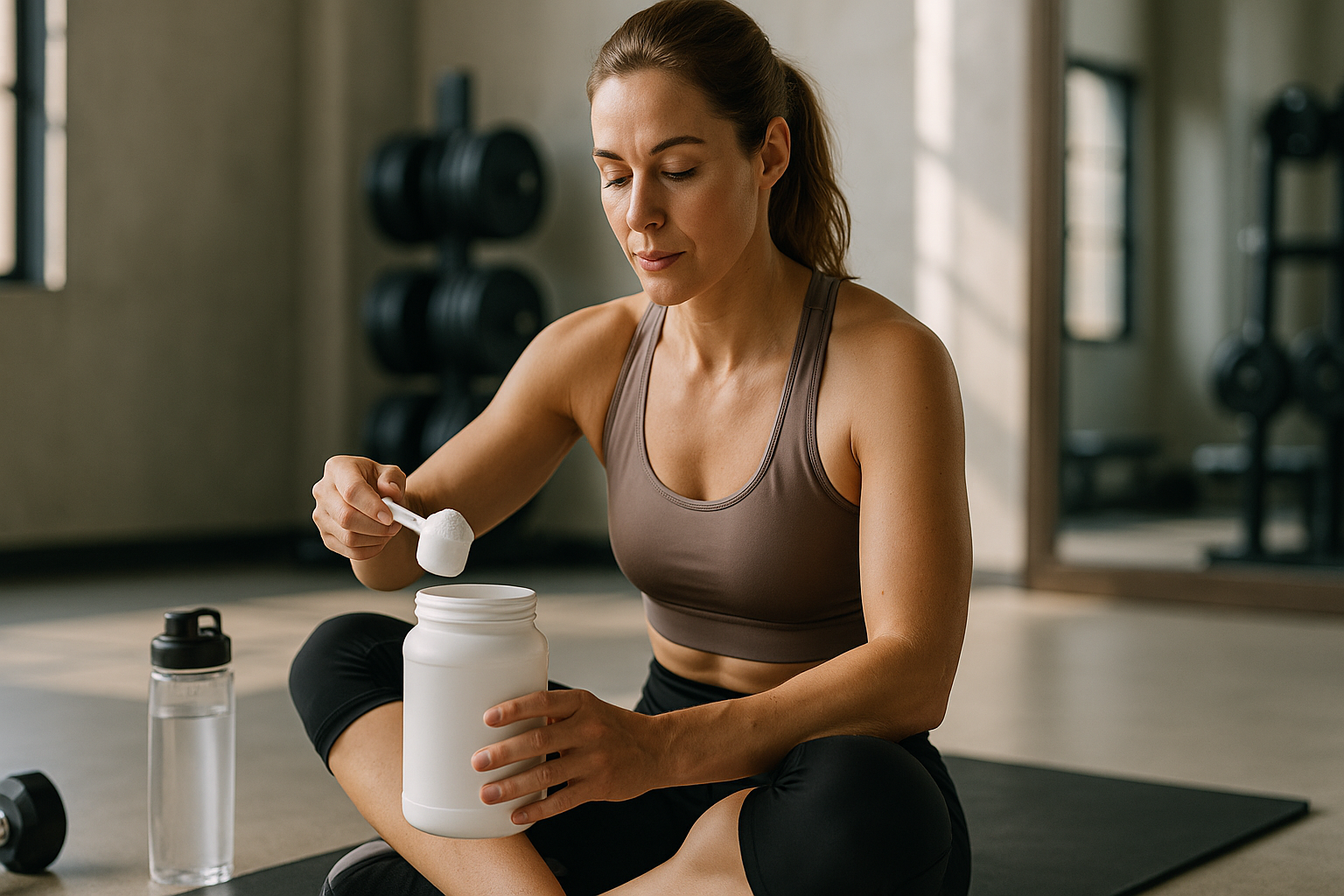
I’m gonna be honest, I used to think creatine was for 22-year-old gym bros in stringer tanks talking about "gains" way too loudly. Like... not for me. Not for women, not for women over 30, and def not for someone who mostly wanted better workouts, better energy, less brain fog, and maybe a tiny bit of help hanging onto muscle while life got busier and hormones got a little more... dramatic. But the more I read, and the more dietitians, sports nutrition people, and women’s health folks started talking about it, the more I realized I’d bought into some super outdated myths.
So this post is basically what I wish someone had explained to me in plain English. Not in scary supplement-bro language. Just real-life stuff. What creatine does, why women over 30 might actually benefit a lot, how much to take, whether it makes you "puffy," and what the latest research is saying now. And yes, I’ll also tell you what happened when I started taking it because that’s probly the part people care about most.
First, what creatine actually is — because I low-key had this wrong
#Creatine is a compound your body naturally makes from amino acids, mainly in the liver, kidneys, and pancreas. You also get some from foods like red meat and fish. It gets stored mostly in your muscles as phosphocreatine, where it helps regenerate ATP, which is basically quick-use cellular energy. That sounds very science-class, I know, but in practical terms it means creatine can help with short bursts of effort, strength, power output, and recovery from repeated exercise.
What surprised me is that creatine is not just a muscle thing. Researchers have also been looking at how it may support cognitive function, especially during stress, sleep deprivation, mentally demanding tasks, and maybe certain life stages when energy demands shift. That’s one reason it’s become a bigger conversation in women’s wellness circles in 2025 and now 2026. It’s not just a sports supplement anymore, it’s turning into more of a "performance and resilience" supplement. Which, honestly, feels more relevant to women over 30 than the old bodybuilder image ever did.
Why women over 30 are suddenly talking about it in 2026
#A few reasons. One, more women are strength training now than even a few years ago, which I love. Two, there’s more discussion around perimenopause, muscle preservation, bone health, recovery, and not waiting until 50+ to care about that stuff. Three, a lot of women are under-eating protein, overdoing cardio, sleeping badly, and wondering why they feel soft-tired all the time. Been there. Creatine doesn’t magically fix all that, obviously, but it can support the whole picture when paired with resistance training, enough food, and decent sleep.
Current sports nutrition guidance still considers creatine monohydrate the most studied and best-supported form. That part hasn’t changed, despite the endless influencer hype around fancy buffered, gummy, liquid, or "for-her" blends. Honestly some of those are just expensive branding. Most experts still point to plain creatine monohydrate as the gold standard because it’s effective, well studied, and usually the most affordable. Kinda boring, yes. But useful.
The most annoying wellness truth is that the stuff that works is often the least sexy. Creatine monohydrate is a perfect example of that.
What I noticed personally after taking it
#My experience was not dramatic at first. No movie montage. No sudden abs, lol. I started with 3 to 5 grams a day, no loading phase, just mixed into water or a smoothie. For the first couple weeks I mostly noticed... nothing? Maybe slightly fuller muscles in the gym, maybe. But around the 3 to 5 week mark I realized I was squeezing out an extra rep here and there, recovering a bit better between sets, and feeling less wiped after harder sessions. The biggest surprise was mental. I felt a little less foggy on days when my sleep was trash. Not miracle-level, just a subtle "oh, I’m coping better" feeling.
Also, yes, the scale ticked up a bit. This freaks people out, so let me say it clearly: creatine can increase intracellular water in muscle. That’s not the same as getting fat. It’s not "bloating" in the way people usually mean where you feel puffy and gross. Some people do feel a little off at first, but for most healthy adults the small weight increase is just part of muscles storing more water. I wish someone had told me that before I had my tiny overreaction in week two.
The real benefits for women over 30, not the exaggerated internet version
#- Better support for strength and power output, especially if you lift, sprint, do HIIT, or anything with repeated efforts
- May help preserve or build lean mass when combined with resistance training
- Can improve training quality, which over time matters a lot more than one perfect workout
- May support recovery between repeated bouts of intense exercise
- Potential cognitive benefits, especially under stress, mental fatigue, or sleep loss
- Possibly helpful during perimenopause and menopause conversations around muscle and function, though this area is still growing and not every claim is proven yet
That last point is where wellness media sometimes gets ahead of itself. There is legit interest in creatine for women in perimenopause because estrogen changes can affect muscle, recovery, and maybe even how women respond to training. But I don’t wanna oversell it. Creatine is promising, not magical. It works best as part of a bigger strategy — lift weights, eat enough protein, manage stress at least a little, and don’t expect one scoop of powder to undo years of chaos.
Dosage: the simple version most people actually need
#For most women over 30, the standard evidence-based dose is 3 to 5 grams of creatine monohydrate per day. Every day, not just workout days. Consistency matters more than timing. You can take it in the morning, after training, with lunch, whatever makes you remember. If taking it on an empty stomach bothers you, have it with food. That solved it for me.
There’s also the optional loading method, usually around 20 grams a day split into 4 doses for 5 to 7 days, then a maintenance dose of 3 to 5 grams daily. Loading can saturate muscle stores faster, but it’s not necessary. I skipped it because I didn’t care about speed and I wanted to avoid stomach weirdness. A lot of women do just fine with the slow-and-steady route.
| Goal or situation | Typical approach | What I’d tell a friend |
|---|---|---|
| General wellness + training support | 3–5 g daily | Probably the easiest and most realistic option |
| Want faster saturation | 20 g daily for 5–7 days, split doses, then 3–5 g daily | Works, but can cause GI discomfort for some people |
| Sensitive stomach | 3 g daily with food | Totally valid, slower is still effective |
| Vegetarian or low meat intake | Usually 3–5 g daily | May notice more benefit since baseline intake may be lower |
Big myths that seriously need to die already
#Myth one: creatine makes women bulky. Nope. Creatine itself does not build huge muscles out of nowhere. Muscle growth takes training, time, food, genetics, and usually more patience than any of us would prefer. Creatine may help you train better and support lean mass, but it does not turn you into a bodybuilder by accident. I promise. If that were possible, every woman in the weight room would be accidentally jacked and, uh, that is not how life works.
Myth two: creatine is bad for your kidneys. This one gets repeated constantly. In healthy people, standard-dose creatine monohydrate has a strong safety record in research. It can raise creatinine on lab tests, which is a breakdown marker related to creatine metabolism, but that does not automatically mean kidney damage. That said, if you have kidney disease, a history of kidney issues, or you’re under medical care for anything involving renal function, talk to your clinician before taking it. Responsible advice matters more than supplement hype.
Myth three: you have to cycle it. Most evidence says no, not really. Cycling is usually not necessary for healthy adults using standard doses. Myth four: only athletes need it. Also no. While athletes benefit, active adults, older adults, and women focused on strength, function, and healthy aging may also benefit. Myth five: expensive forms are better. Usually... not. Creatine monohydrate keeps winning because the data behind it is stronger than the marketing behind the trendy versions.
What the more recent research is pointing toward
#The current conversation in 2026 is less "does creatine work at all" and more "who benefits most, under what conditions, and are there unique considerations for women?" That’s actually a much better question. Recent reviews and position statements continue to support creatine monohydrate as effective for improving high-intensity exercise capacity and helping lean mass gains when paired with training. There’s also ongoing interest in cognition, mood, concussion recovery, aging, and female-specific physiology, though some of those areas need more large, women-focused trials before anyone should make huge claims.
One thing I find encouraging is that women are finally not being treated like tiny men in sports nutrition research. Slow progress, but still. Researchers are paying more attention to menstrual cycle phases, hormonal contraception, perimenopause, and baseline dietary patterns. Also, women often consume less dietary creatine than men simply because many eat less total food or less red meat, so supplementation may be more relevant than people used to think. That doesn’t mean every woman needs it, but it does mean the old dismissal was kinda lazy.
Who might want to be extra cautious or check with a doctor first
#If you’re pregnant, trying to conceive, breastfeeding, have kidney disease, take medications that affect kidney function, or have a complex medical history, this is one of those "please ask your doctor or registered dietitian" moments. There’s exciting research happening in a lot of areas, but personal medical guidance matters more than broad internet advice. Same if you have unexplained swelling, recurrent GI issues, or anything else that makes supplementation feel iffy.
And please, for the love of all things wellness, buy supplements from reputable brands that do third-party testing. In 2026 people are way more aware of contamination and sketchy label claims than they used to be, and good. Powders are not all equal. Look for brands tested by groups like NSF Certified for Sport, Informed Sport, or USP-style quality standards when available. Boring adult advice, I know, but it matters.
A few practical tips that made it easier for me to actually stick with it
#- I kept the tub next to my protein powder because if I put it in a cabinet I’d forget it existed.
- I stopped overthinking timing. Daily consistency beat my weird attempt to find the perfect anabolic minute.
- I drank enough water, not gallons and gallons, just normal grown-up hydration.
- I paired it with strength training 3 to 4 times a week, because taking creatine while never challenging your muscles is kind of missing the point.
- I gave it at least a month before deciding whether it was helping. Supplements are not instant coffee.
Also, if you’re someone who gets caught in the wellness trap of starting eight things at once, um, same. Try not to. If you begin creatine, a new lifting program, magnesium, electrolytes, higher protein, and better sleep all in the same week, you won’t know what’s doing what. I say this as a person who has absolutely done that and then acted confused.
Is creatine worth it if you don’t care about aesthetics?
#Honestly yes, maybe even more so. One of the biggest mindset shifts I’ve had in my 30s is caring less about being smaller and more about being capable. I want to feel strong carrying groceries, stable hiking downhill, less achey getting up off the floor, more resilient when work stress is nuts. That sounds unsexy compared to before-and-after photos, but it’s real life. Creatine fits into that better-aging, higher-function picture really well.
There’s also this cultural thing where women are encouraged to focus on weight, not performance. I think that screws us over. Muscle is protective. Strength matters. Power matters. Bone-loading exercise matters. Feeling physically competent matters. Creatine isn’t required for that, but it can be a useful tool. And I kinda wish more women over 30 heard that message earlier, before metabolism panic and anti-aging nonsense drowned everything else out.
My bottom-line take, after all the reading and trying it myself
#If you’re a woman over 30 who strength trains, wants to start strength training, eats little meat, feels curious about performance and recovery, or is thinking more seriously about healthy aging, creatine monohydrate is one of the few supplements that I think earns its hype. Not all of it, because the internet always gets weird, but a fair amount. It’s relatively inexpensive, well studied, and usually easy to use at 3 to 5 grams a day.
It’s not mandatory. It’s not magic. It won’t replace lifting, protein, sleep, or actual meals. But it may help you do those training sessions a bit better, recover a bit better, and maybe think a bit clearer when life is chaotic. For me, that made it worth keeping in the routine. And if you try it and hate it, that’s okay too. Wellness doesn’t have to be a religion, you know?
Anyway, that’s my very human, slightly obsessive take on creatine for women over 30. If you’re supplement-curious, start simple, keep your expectations normal, and check with a healthcare pro if you’ve got medical stuff going on. And if you like reading wellness posts that sound like a person actually wrote them, not a robot in activewear, you can poke around AllBlogs.in too.