So, um… summer 2026 is already doing the MOST where I live. Like the kind of hot where your brain feels slightly toasted and you start making bad choices—iced coffee at 6pm, random “detox” gummies from the internet (don’t), and skipping real meals because “it’s too hot to eat”. Me and my stomach? Not friends on those days.
Anyway, I’ve been on this whole functional beverage kick lately. Not in a preachy way, more like… I just want a drink that tastes good AND doesn’t leave me feeling like I swallowed a sugar bomb. And also, if it helps my gut and energy, cool, thanks.
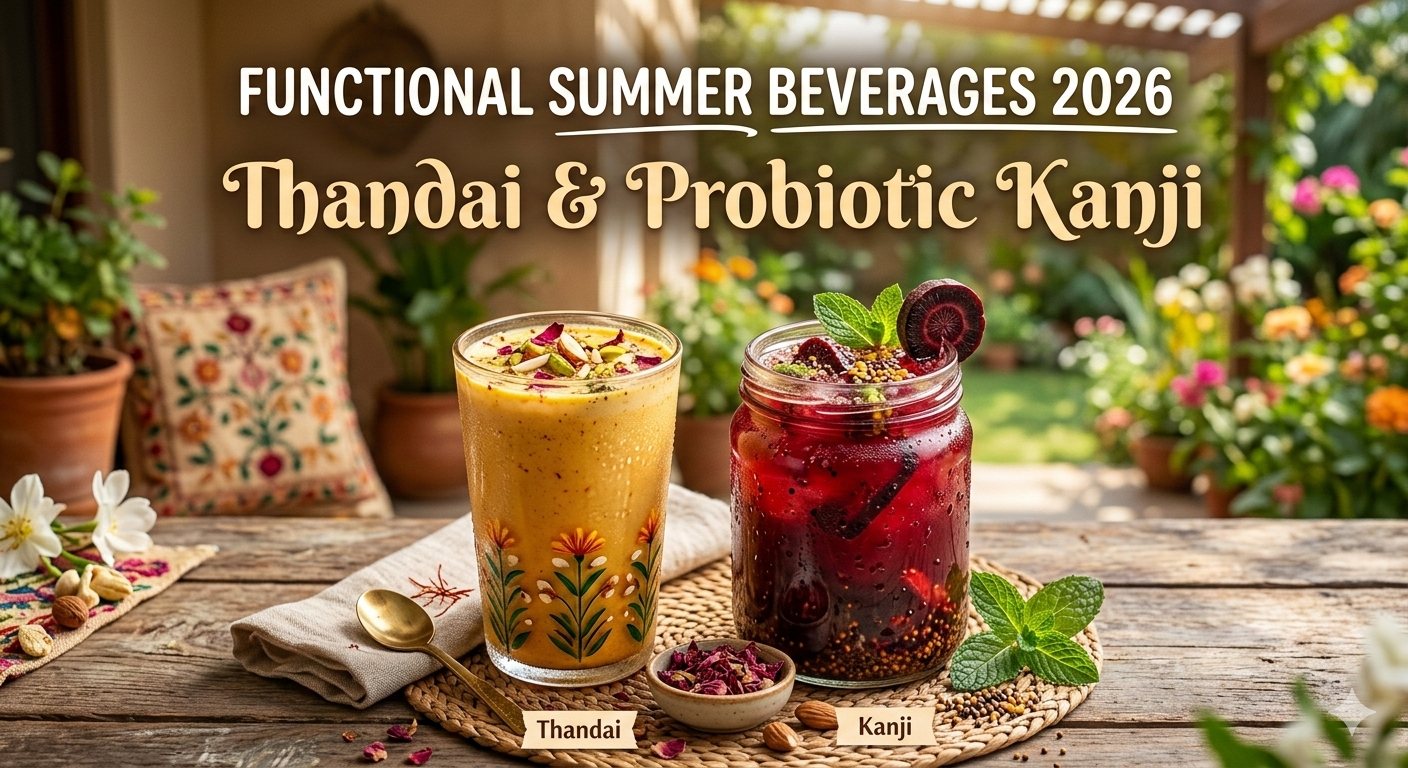
Two drinks I keep coming back to are thandai (but like, a modern lighter version) and probiotic kanji (that tangy fermented carrot/beet drink that lowkey looks like pink science). I’m gonna share how I make them, what I’ve learned (including a couple mistakes, lol), and the health stuff that’s actually legit without turning into a boring lecture.
Why “functional beverages” are everywhere in 2026 (and why I kinda get it, even if it’s annoying)
#If you’ve opened Instagram or walked into a grocery store lately, you’ve seen it: “gut soda”, “prebiotic sparkle water”, “adaptogen lemonade”, “protein cold brew”, “electrolyte mocktail” etc etc. And some of it is honestly marketing fluff. But also… some of it is responding to real stuff people care about now.
A few 2026 trends I keep hearing from dietitian content (the good ones, not the fear-mongery ones):
- Gut health is still huge, but it’s shifted from “take a random probiotic” to “feed your microbiome with fiber + fermented foods”
- Lower sugar is the vibe, because people are kinda tired of feeling jittery-crashy
- Hydration isn’t just water anymore. People talk about electrolytes, sodium, potassium… especially with hotter summers and more outdoor workouts
- There’s more focus on polyphenols and spices (like cinnamon, saffron, cardamom) because they’re linked with inflammation pathways and metabolic health in research
Also, some newer research threads that pop up a lot: fermented foods supporting microbiome diversity and possibly immune/metabolic markers, and the general idea that dietary patterns matter more than one “magic” drink. Which is annoying because we all want the magic drink. But yeah.
Quick safety note before we get into the fun drinks
#I’m not a doctor. I’m just a person with a sensitive-ish stomach who reads way too much nutrition stuff at night.
If you’re pregnant, immunocompromised, have kidney issues (electrolytes), uncontrolled diabetes (sweetened drinks), histamine intolerance (ferments can be a problem), or you’re on meds that interact with herbs/spices… please check with your clinician.
Also fermentation = food safety matters. If it smells rotten, fuzzy, or “off”, don’t be brave. Throw it out. Your gut will not thank you for being adventurous.
Thandai in 2026: still iconic, just… less sugar and more “my body can handle this”
#I grew up thinking thandai was basically a festival drink. Holi = thandai, plus that one auntie who makes it so thick you could eat it with a spoon. Delicious, yes. But my adult stomach after a heavy sugary dairy drink in peak heat? Not always a win.
This year I started making a lighter thandai that still tastes like the real thing. For me the magic is the spice-nut blend (badam, saunf, elaichi, pepper, rose, sometimes saffron) but the base can change depending on what you tolerate.
And honestly, the flavor makes me feel emotionally better. Like… it’s calming? Cardamom and rose just does something to my brain. Not scientific, but I swear it’s real.
What makes thandai “functional” (without pretending it’s medicine)
#Thandai is basically a spice + nut drink, usually milk-based. Functionally, what I like about it:
- It can be a real snack drink: fat + a bit of protein = more stable energy than just fruit juice
- Spices like fennel and ginger are traditionally used for digestion (and some evidence supports GI comfort for certain spices, though it’s not like a cure)
- Saffron has some interesting mood research (small-ish studies, but promising) and rose can feel soothing
- If you keep sugar reasonable, it’s not that “drink dessert, crash later” situation
But also: if you make it super sweet and heavy, it can be… just a dessert. Which is fine! Just call it what it is.
My “lighter thandai” recipe (I mess this up sometimes, so here’s the version that actually works)
#I make a thandai paste and keep it in the fridge for like 4–5 days. Then I just stir into whatever base.
Thandai paste (makes ~8 servings depending on how strong you like it):
- 1/3 cup almonds (soaked if you remember… I often forget)
- 1.5 tbsp fennel seeds
- 1 tbsp melon seeds (optional, but adds body)
- 6–8 green cardamom pods (seeds only)
- 8–10 black peppercorns (yes pepper, trust)
- 1–2 tbsp dried rose petals OR 1 tsp rose water later
- Pinch of saffron (if you’re fancy or someone gifted it)
- 1–2 tbsp poppy seeds (optional, also check if it’s legal/available where you live)
Grind with a little water to a smooth-ish paste.
To serve:
- 1–2 tbsp paste
- 250–300 ml chilled milk OR lactose-free milk OR unsweetened soy milk (works surprisingly good)
- Sweetener: I do 1 tsp jaggery or honey sometimes, or just… none. Depends.
- Ice
If you’re adding honey, don’t add it to hot milk. (Not because of “toxins”, more like… it changes flavor and texture and I don’t like it.)
My personal hack: a tiny pinch of salt. Makes it taste more “complete”.
My body’s rule is basically: if a drink tastes amazing but makes me sleepy + bloated after, it’s probably a ‘sometimes’ drink. Lighter thandai is a ‘more often’ drink.
Thandai add-ons people are doing in 2026 (some are good, some are… eh)
#I’ve seen “protein thandai” all over reels this year. Like adding unflavored whey or plant protein. I tried it. It was… not terrible, but you gotta blend it well or you get those sad protein clumps. Also the spice can mask the protein taste, which is nice.
Other add-ons I’ve seen:
- Creatine (very 2026 gym trend): It’s stable, but I personally don’t add it to thandai because I forget doses and then I’m like “did I have it today??”
- Collagen: if you use it, fine, but it’s not a complete protein, and it’s not vegan. Also it can slightly change mouthfeel
- “Adaptogens” like ashwagandha: this is where I’m cautious. Ashwagandha can interact with thyroid meds and other stuff, and some people feel weird on it. So I’d rather keep thandai as food-ish, not supplement-ish
My take: if you want functional, start with lowering sugar and using a base you digest well. That alone is huge.
Probiotic Kanji: the tangy, bubbly, gut-happy drink I avoided for YEARS for no reason
#Ok confession. I used to think kanji was… scary? Because fermentation felt like chemistry class and I wasn’t a confident science kid. Also the smell. Fermented carrot water doesn’t sound cute.
Then last year I had a rough patch—antibiotics for a dental thing, plus stress, plus summer travel food—and my digestion was like, “girl, absolutely not.” Bloating, weird irregularity, skin being dramatic. Not fun.
I started eating more fermented foods (curd, idli batter stuff, a little kimchi) and then finally tried kanji properly. And wow. It’s refreshing. It’s salty-tangy. It wakes your mouth up. It also made me drink more fluids overall because I actually craved it.
Do I think it healed my entire gut in 3 days? No lol. But it helped me get back into a rhythm.
What kanji is (and why it fits the 2026 gut-health conversation)
#Kanji is a traditional North Indian fermented drink, usually made with black carrots (seasonal) and/or beets, water, salt, and mustard powder. The fermentation encourages lactic acid bacteria to grow (like in other veggie ferments).
In 2026, the “probiotic” conversation has gotten more nuanced: not all probiotic products have proven strains, not all survive to your gut, and effects are super individual. BUT fermented foods in general tend to support a healthier gut environment for many people, and there’s ongoing research linking fermented food intake with microbiome changes and sometimes lower inflammation markers.
Kanji isn’t a pharmaceutical probiotic. It’s a fermented food. That’s the mental frame that keeps it sensible for me.
My probiotic kanji recipe (with the ‘please don’t poison yourself’ checks)
#This is the method that’s worked for me without turning into a fuzzy science experiment.
You need:
- 3–4 medium carrots (or black carrots if you find them)
- 1 small beet (optional, for color + earthy taste)
- 1–1.5 tbsp salt per 1 liter water (I do this by taste but try not to go too low)
- 1–2 tsp rai (mustard) powder OR lightly crushed mustard seeds
- Clean glass jar
Steps:
1) Wash and peel carrots/beet. Cut into sticks.
2) Add to jar, add mustard, add salt.
3) Pour filtered/boiled-cooled water to cover.
4) Cover with a clean cloth or loose lid (it needs to breathe a bit).
5) Keep in a warm spot 2–4 days. Stir once daily with a clean spoon.
When is it ready?
- Smells pleasantly sour/tangy (not rotten)
- Little bubbles sometimes
- Taste is sour-salty and kind of addictive
Then refrigerate. It keeps maybe a week-ish, but in my house it disappears faster.
If you see mold, slime, or it smells like garbage: throw it away. Don’t do the “maybe it’s fine” thing. Not worth it.
How I drink kanji without making my stomach mad
#This part is important because I messed it up at first. I drank a big glass on day one like I was doing a cleanse (why am I like this??) and my stomach was like gurgle gurgle gurgle.
Now I do:
- Start small: 1/4 to 1/2 glass
- Have it with or after food, not on an empty stomach (for me)
- If I’m already having a lot of fermented stuff that day, I don’t overdo it
Also if you’re histamine sensitive, fermented drinks can trigger headaches/flushing for some people. So yeah, listen to your body, not my enthusiasm.
What makes kanji feel ‘functional’ to me (besides the probiotic word)
#For me it’s a combo:
- Hydration: it’s basically flavored salty water, in a good way
- Appetite + digestion: that tang can stimulate appetite (helpful when heat kills hunger)
- Electrolyte-ish: salt matters, especially if you’re sweating a lot (but if you have BP issues, ask your doc)
- Polyphenols: beets and carrots have plant compounds, and fermentation can change bioavailability (still being studied)
And I like that it’s cheap. A lot of “functional drinks” in 2026 are like $6 a bottle. Kanji is like… vegetables + time.
Thandai vs Kanji: I use them for totally different summer moods
#People keep asking me “which is better?” and I’m like… better for what? They’re not even trying to be the same drink.
Thandai is comfort + nourishment. Kanji is refresh + zing.
If I’m anxious and not eating properly, thandai helps because it’s gentle calories. If I’m feeling sluggish and my mouth is bored of plain water, kanji saves me.
Also sometimes I want BOTH in the same day and that’s fine. Wellness doesn’t need to be so strict all the time.
| Thing | Thandai (lighter style) | Probiotic Kanji |
|---|---|---|
| Taste vibe | Creamy, floral, spiced | Tangy, salty, mustardy |
| Best for me when… | I need a snack-y drink | I’m overheated + bored of water |
| Main watch-outs | Added sugar, dairy intolerance, calorie dense if heavy | Too much too fast, salt for BP, fermentation safety |
| 2026 trend angle | spice-forward, low sugar, optional protein add | fermented foods, gut-health, DIY probiotics |
A mini rant about sugar, because yeah
#I’m not anti-sugar. I love sweets. But beverages are where sugar sneaks in sooo fast.
In 2026 a lot of health orgs still push the idea of limiting added sugars (for metabolic health, dental health, steady energy). And I notice it in my own body too. If I drink a sweet thing in the afternoon, I get sleepy and snacky later. Not always, but often.
So my rule is: if it’s sweet, I want it to be worth it. Like a real dessert. If it’s “functional”, I keep it lightly sweet or not sweet at all.
My personal summer routine (imperfect, real-life, not a ‘that girl’ morning)
#Ok here’s what’s been working for me lately. Not every day. Some days I’m a mess.
- Morning: plain water first. If I’m walking outside, I add a pinch of salt + lemon (not too much)
- Late morning: chai or coffee, but I try to eat something with it because coffee on empty stomach makes me feral
- Afternoon heat: kanji, small glass, with lunch or after
- Evening: lighter thandai if I didn’t eat enough protein/fat earlier, or if I’m craving something “treat-like” but not ice cream
On workout days I’ll do actual electrolytes sometimes (especially if I’m sweating buckets). Kanji is nice but it’s not precisely dosed like an ORS/electrolyte mix, so I don’t pretend it’s the same thing.
A couple common mistakes I made (so you don’t have to)
#1) I made thandai too heavy and then blamed the drink when I felt gross. Like babe, you basically drank a meal at 2pm in 42°C heat.
2) I under-salted my kanji because I was scared of salt. It fermented kinda weird and tasted flat. Salt is part of safe fermentation.
3) I tried to be “perfect” about gut health and then got stressed, which… is literally bad for digestion. The irony.
What the research-y side says (in normal person language)
#I can’t do live web research in this chat, so I’m not gonna pretend I just read a brand-new 2026 paper five minutes ago. But I can share the general direction the science has been going, based on what’s been consistently discussed in reputable nutrition/medical spaces up to now.
- Fermented foods: There’s growing evidence that regularly eating fermented foods can increase microbiome diversity for some people and may influence inflammation markers. It’s not universal, and the exact microbes vary by food and by person.
- Probiotics (supplements): The field is moving toward strain-specific recommendations (like certain strains for antibiotic-associated diarrhea, IBS symptoms, etc). Random “10 billion CFU” labels don’t always mean much.
- Spices and botanicals: Many spices used in thandai contain bioactive compounds (polyphenols). They can support health as part of an overall diet, but they’re not a replacement for medication or therapy.
- Hydration and heat: More people (and clinicians) talk about electrolytes in the context of heat waves and higher activity. Overhydrating with plain water while sweating a lot can sometimes leave you feeling washed-out. Not medical advice, just… something to be aware of.
If you want truly up-to-date stuff, look for systematic reviews or guidance from registered dietitians/medical orgs, not random influencer captions.
The best ‘functional beverage’ is the one you’ll actually drink consistently, that doesn’t spike your sugar sky-high, and doesn’t wreck your stomach. Boring, but true.
Who should be a little careful with these drinks
#Just being responsible here because fermented + spiced + dairy can be a lot for some bodies.
Be cautious (or ask your clinician) if:
- You’re immunocompromised (fermented foods can carry risk)
- You have severe acid reflux (spices + sour ferments can trigger)
- You have high blood pressure and you’re drinking lots of salty kanji
- You’re on a low-potassium/renal diet (some “hydration hacks” aren’t appropriate)
- You’re allergic to nuts (thandai = not your friend unless you modify)
And for kids: keep it mild, keep portions small, and don’t treat it like medicine.
My favorite variations (because I get bored easily)
#Thandai twists I actually like:
- Coconut milk thandai (thin it out with water, otherwise it’s too rich)
- “Golden” thandai: tiny pinch turmeric + ginger (careful, turmeric stains everything forever)
- Strawberry-rose thandai: blend 2–3 strawberries, rose water, thandai paste, chilled milk (tastes like summer vacation)
Kanji twists:
- Add a few slices of ginger for extra zing
- Add a tiny piece of green chili if you like spicy (I do this when I’m feeling chaotic)
- Use only carrots if beet makes it too earthy
Also, you can reuse the fermented liquid as a starter for the next batch (like a splash), but still keep things clean and don’t keep reusing forever.
If you only take one thing from this post…
#Make drinks that support your real life. Not the fantasy version where you wake up at 5am, meditate, journal, do pilates, and sip glowing probiotic nectar while birds braid your hair.
Some days you’ll do kanji and feel like a wellness genius. Other days you’ll drink three iced teas and wonder why you can’t sleep. It happens.
But yeah—thandai and kanji have honestly made my summers feel a little more… manageable. More grounded. Less “survive the heat”, more “ok I can do this.”
Final thoughts (and what I’m still figuring out)
#I’m still learning how to balance “functional” with “fun”. Sometimes I swing too hard into health mode and then I rebel and eat chips for dinner. So I’m trying to be normal about it.
If you try either of these, start small, keep it clean (especially fermentation), and don’t force it if it doesn’t suit you. Bodies are picky. Mine certainly is.
Also, if you want more wellness-y reads that feel like they’re written by actual humans with real routines, I’ve been browsing AllBlogs.in lately and there’s some pretty solid stuff on there.