It happens every summer.
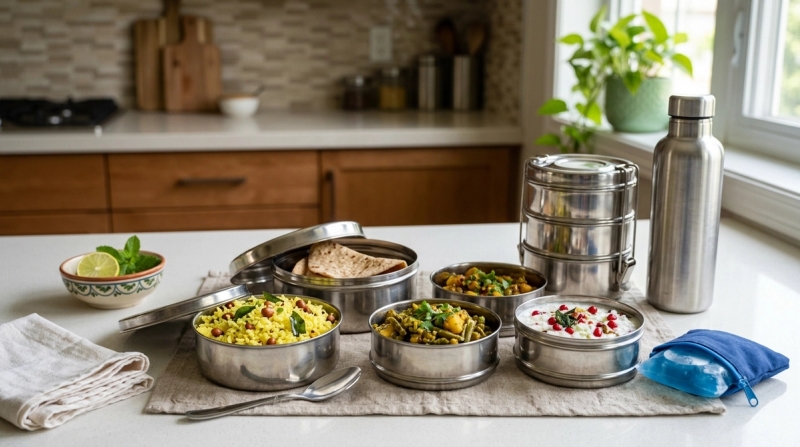
You open your tiffin at lunch, look at the food for a moment, and pause.
“Is this still okay?”
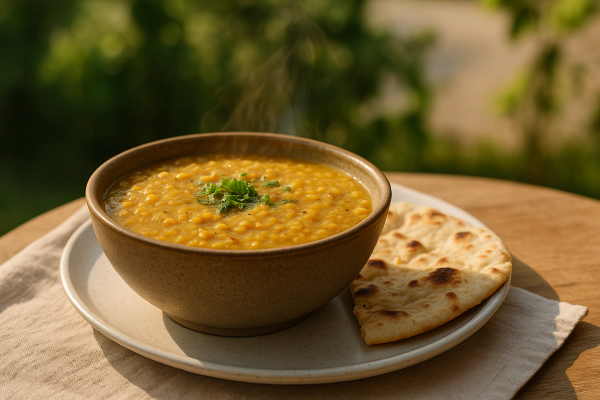
Maybe it’s dal from last night. Maybe it’s lemon rice your mom packed in the morning. Maybe it’s curd rice that felt like a brilliant idea at 8 AM, but has now spent five hours in a warm office bag.
Cold Indian food can be perfect in summer. It can be light, comforting, and honestly, very convenient. But not everything that tastes good cold is safe to eat cold. Some foods are fine if they’ve been packed properly. Some need to be reheated properly. And some, painful as it is, should go straight into the bin.
Here’s a simple, practical guide for deciding what to eat cold, what to reheat, what to avoid, and how to pack Indian food in summer without turning lunch into a guessing game.
Quick answer
#In summer, whether you can eat Indian food cold depends on a few things:
- How wet the food is
- Whether it has dairy, coconut, rice, dal, meat, or seafood
- How long it has been outside the fridge
- Whether it was packed hot, cold, or just left at room temperature
As a rough guide:
- Usually okay cold: Dry sabzis, rotis, phulkas, theplas, plain parathas, lemon rice, tamarind rice, and other dry or tangy foods, if they were freshly made and not left in heat for too long.
- Better reheated: Dal, sambar, rajma, chole, paneer gravies, wet curries, khichdi, chicken, fish, meat curries, and most leftovers from the fridge.
- Better skipped: Coconut chutney, curd rice that wasn’t kept cold, dairy-heavy dishes, cooked rice, dal, or curries that have been sitting out too long.
A useful rule: cooked food should not sit at room temperature for more than 2 hours.
In peak summer, especially if the food is in a hot bag, car, school bus, hostel room, or non-AC office, be stricter and use a 1-hour limit for risky foods like dairy, coconut, rice, dal, meat, and seafood.
And if the food smells sharply sour, looks bubbly, feels slimy, has separated strangely, or just seems “off”, don’t try to fix it with tadka, pickle, or microwave heat.
Just let it go.
Why cold food feels so good in summer
#Summer changes how we eat.
A hot, heavy lunch can feel like too much in May or June, especially after a sweaty commute or a morning in a hot kitchen. That’s why cold Indian food feels so appealing.
Curd rice feels soothing. Lemon rice feels light. Thepla with pickle feels easy. Dry sabzi and roti feel much better than a rich curry when the weather is already exhausting.
But here’s the catch.
Food that feels cooling is not automatically safe.
Curd, coconut, cooked rice, dal, and mild gravies can spoil quickly if they sit warm for too long. Summer food safety is not about whether a dish feels “cooling” for the body. It is about moisture, temperature, storage, and time.
So the real question is not just:
“Can I eat this cold?”
It is:
“Was this kept safely before I ate it cold?”
That one question makes all the difference.
Eat cold, reheat, or skip?
#Use this table as a quick guide for common Indian lunchbox foods and leftovers in summer.
Foods that are usually fine to eat cold
#Some Indian foods are simply better suited to summer lunchboxes. They are drier, less creamy, less watery, and still taste good without reheating.
Dry sabzis
#Dry sabzis are usually the safest and most practical option for summer tiffins.
Good examples include:
- Aloo methi
- Bhindi sabzi
- Cabbage sabzi
- Beans poriyal
- Carrot-beans stir fry
- Dry tindora
- Aloo jeera
- Dry cauliflower sabzi
These foods are not magically safe forever, but they are usually more forgiving than dal, paneer gravy, or sambar because they have less moisture.
Rotis, phulkas, theplas, and plain parathas
#Plain rotis and phulkas are easy to eat cold or at room temperature. Theplas are especially practical because they are made to travel well.
Plain parathas are also usually okay, but be careful with stuffed ones.
A methi thepla is very different from a paneer paratha sitting in a school bag for six hours. Wet or dairy-heavy stuffing makes the food riskier in summer.
Lemon rice and tamarind rice
#Lemon rice and tamarind rice are classic summer-friendly foods for a reason.
They taste good cold, don’t need gravy, and are common for travel and tiffins. Their tangy flavour and relatively dry texture help them hold up better than plain rice mixed with dal or curd.
But don’t overestimate them.
If lemon rice was packed at 8 AM and sat in a hot bag until 4 PM, it still deserves caution. “Travel-friendly” does not mean “heat-proof forever.”
Good cold lunch combinations
#For school, office, hostel, or train travel, these combinations usually work better than wet meals:
- Lemon rice with roasted peanuts and dry sabzi
- Tamarind rice with papad packed separately
- Roti with dry aloo methi
- Thepla with pickle
- Dry bhindi with phulka
- Plain paratha with cabbage sabzi
- Aloo jeera with roti
- Beans poriyal with lemon rice
These meals may not sound fancy, but they work. In Indian summer, that matters more than anything.
Foods you should reheat properly
#Anything wet, gravy-based, protein-heavy, rice-based, or dairy-based should usually be reheated before eating, especially if it is leftover from the fridge.
This includes:
- Dal
- Sambar
- Rasam with cooked dal
- Rajma
- Chole
- Kadhi
- Paneer curry
- Egg curry
- Chicken curry
- Fish curry
- Meat curry
- Mixed vegetable gravy
- Leftover khichdi
- Plain cooked rice from the fridge
- Biryani or pulao leftovers
- Curd-based gravies
- Cream-based curries
The reason is simple: moisture makes food spoil faster.
A dry roti and a bowl of dal do not behave the same way in summer. Dal, rice, gravies, and meat dishes give bacteria a much easier place to grow if they are left warm for too long.
When reheating, don’t just make the food slightly warm. Heat it until it is steaming hot all the way through.
For thick dishes like rajma, chole, dal makhani, paneer gravy, or chicken curry, stir while reheating. The outside may get hot while the centre stays lukewarm.
If you use a food thermometer, reheated leftovers should reach 165°F or 74°C.
If you don’t use one, the home rule is simple:
The food should be steaming hot throughout, not just warm at the edges.
A few foods that need extra care
#Dal
#Dal is comforting, but it is also wet and protein-rich. That means it needs caution in summer.
Don’t eat cold dal from a tiffin that has been sitting outside for hours. Reheat it properly. If it smells sour, looks bubbly, or has changed texture, skip it.
Sambar
#Tamarind does not make sambar completely safe at room temperature.
Sambar is still a wet cooked dish with dal and vegetables. If you are carrying it, pack it hot in an insulated container or keep it refrigerated and reheat before eating.
Paneer and cream curries
#Paneer butter masala, malai kofta, shahi paneer, and cream-heavy gravies are not great choices for unrefrigerated summer lunch.
If they were refrigerated properly, reheat them well. If they spent half the day in a warm bag, don’t take chances.
Chicken, fish, and meat curries
#These should always be handled carefully in summer.
If refrigerated properly, reheat thoroughly until steaming hot. Cold meat curry from a warm lunchbox is not worth the risk.
Rice
#Plain cooked rice needs more caution than many people give it.
If rice was cooled and refrigerated properly, reheat it well before eating. If it sat warm for hours, especially in summer, skip it.
Rice may look harmless even when it is not.
Foods you should skip
#Nobody likes throwing food away. It feels wasteful, especially when it is homemade.
But summer is not the season to be sentimental with leftovers.
Skip cooked food if it has been sitting unrefrigerated for more than 2 hours. In very hot weather, be stricter and use a 1-hour limit for high-risk foods.
Also skip food if you notice:
- Sharp sour smell
- Fizzy or fermented smell
- Bubbles on the surface
- Slimy texture
- Strange separation
- Curdling in a dish that was not supposed to curdle
- Mold
- Unusual bitterness
- Unusual sourness
- A taste or smell that feels wrong
When in doubt, don’t taste repeatedly to “check.” One small taste is not a safety test.
Coconut chutney
#Coconut chutney spoils quickly in summer, especially when it is fresh, wet, and not kept cold.
If it smells sour, fermented, or even slightly strange, don’t mix it into idli and hope for the best. Throw it away.
Curd rice
#Curd rice is wonderful when it is fresh and cold.
It is not wonderful after sitting in a warm backpack for hours.
If it has turned watery, bubbly, sharply sour, or slightly fizzy, skip it. If you want to carry curd rice in summer, keep it chilled with an ice pack or store it in a fridge until lunchtime.
Dairy-heavy curries
#Malai dishes, paneer gravies, kadhi, cream-based curries, and raita need proper temperature control.
If they were left out too long, reheating may not make them worth eating.
Cooked rice left outside
#Don’t assume rice is safe just because it looks plain.
Cooked rice that has been sitting warm for hours should be treated carefully. When in doubt, skip it.
Mixed wet meals
#Food spoils faster when everything is mixed together.
Rice mixed with dal, curd, sambar, or gravy is riskier than rice and dal packed separately. The same goes for idli soaked in sambar or poha mixed with wet chutney.
If it has been sitting in the heat, be stricter.
Summer tiffin rules that actually help
#If your lunch sits out until 1 or 2 PM, pack differently in summer. The same lunch that works beautifully in December may not be a good idea in May.
Here are some simple rules for office tiffins, school lunches, hostel meals, and long commutes.
1. Keep hot food hot and cold food cold
#If you are packing dal, sambar, khichdi, or curry, pack it hot in an insulated container.
If you are packing curd rice, raita, salad, chutney, or anything dairy-based, keep it cold with an ice pack or put it in a fridge as soon as you reach office.
A normal steel dabba inside a warm bag is not temperature control. It is just storage.
2. Pack wet and dry separately
#Don’t mix sambar into idli at 8 AM if lunch is at 1:30 PM.
Pack them separately.
Do the same for:
- Rice and dal
- Rice and curd
- Roti and wet sabzi
- Idli and sambar
- Dosa and coconut chutney
- Poha and wet chutney
Dry food usually keeps better than food sitting in moisture for hours.
3. Choose dry sabzis when there is no fridge
#If you don’t have fridge access at work or school, dry sabzi plus roti is often more sensible than rice with dal or paneer gravy.
Good options include:
- Roti with aloo methi
- Thepla with dry bhindi
- Phulka with cabbage sabzi
- Lemon rice with beans poriyal
- Tamarind rice with roasted peanuts
- Plain paratha with aloo jeera
Simple food wins in summer.
4. Be careful with chutneys
#Green chutney and coconut chutney can both spoil, but coconut chutney is especially risky because it is fresh, wet, and often not acidic enough.
If you must pack chutney:
- Pack a small amount
- Use a clean spoon
- Keep it cold
- Don’t save leftovers from the tiffin
5. Don’t pack leftovers that are already suspicious
#If last night’s dal smells slightly sour in the morning, don’t pack it for lunch.
Heat will not improve it. A few hours in a warm tiffin will only make things worse.
Summer is not the time for “maybe it’s still okay.”
6. Pack smaller portions
#Pack only what you will actually eat.
Half-eaten tiffin food that has been opened, touched, and carried back home in the heat should usually not be saved again.
Leftover rules for summer
#Indian leftovers can be safe and useful in summer, but only if they are handled properly.
The fridge helps, but food has to go into it on time. And when you eat it later, it needs to be reheated properly.
Refrigerate quickly
#Don’t leave cooked food on the stove overnight.
Once the meal is done and the food has stopped steaming heavily, transfer leftovers into clean, covered containers and refrigerate them.
A good rule is to get cooked food into the fridge within 2 hours. In very hot weather, do it sooner.
Use smaller containers
#A huge vessel of dal, biryani, or curry cools slowly. Smaller containers cool faster and are easier to reheat in portions.
This also stops you from reheating the same dish again and again.
Finish leftovers sooner in summer
#In hot weather, try to finish most cooked leftovers within 1 to 2 days, especially:
- Dal
- Sambar
- Rice
- Khichdi
- Meat
- Fish
- Chicken
- Paneer dishes
- Dairy-based curries
If something smells odd or looks different before that, skip it.
Reheat only what you need
#Don’t reheat the whole container of curry, take two spoons, cool it again, and put it back in the fridge.
Take out only what you need and reheat that portion.
Repeated heating and cooling affects taste, texture, and safety.
Reheat thoroughly
#For dal, sambar, rajma, chole, rice, paneer gravy, and meat curries, reheat until steaming hot throughout.
If using a microwave, remember that it can heat unevenly. Stir the food, heat again, and check the centre.
Don’t rely only on smell
#Smell helps, but it is not enough.
Some unsafe food may not smell terrible at first. Use the full picture:
- Was it refrigerated on time?
- How long was it outside?
- Is it wet, dairy-based, rice-based, dal-based, or meat-based?
- Was it reheated properly?
- Does it look, smell, or taste different?
If the answers make you uncomfortable, skip it.
Final thought
#Cold Indian food is not the problem.
Poor storage is.
Dry sabzi with roti, lemon rice, tamarind rice, and theplas can be great summer foods. But curd, coconut chutney, dal, rice, gravies, paneer, and meat need more care.
When in doubt, remember the simple summer rules:
Keep cold food cold. Keep hot food hot. Reheat wet leftovers properly. Don’t save food that has been sitting in the heat for hours.
And if something smells wrong, looks wrong, or makes you hesitate too much, don’t argue with it.
Skip it.