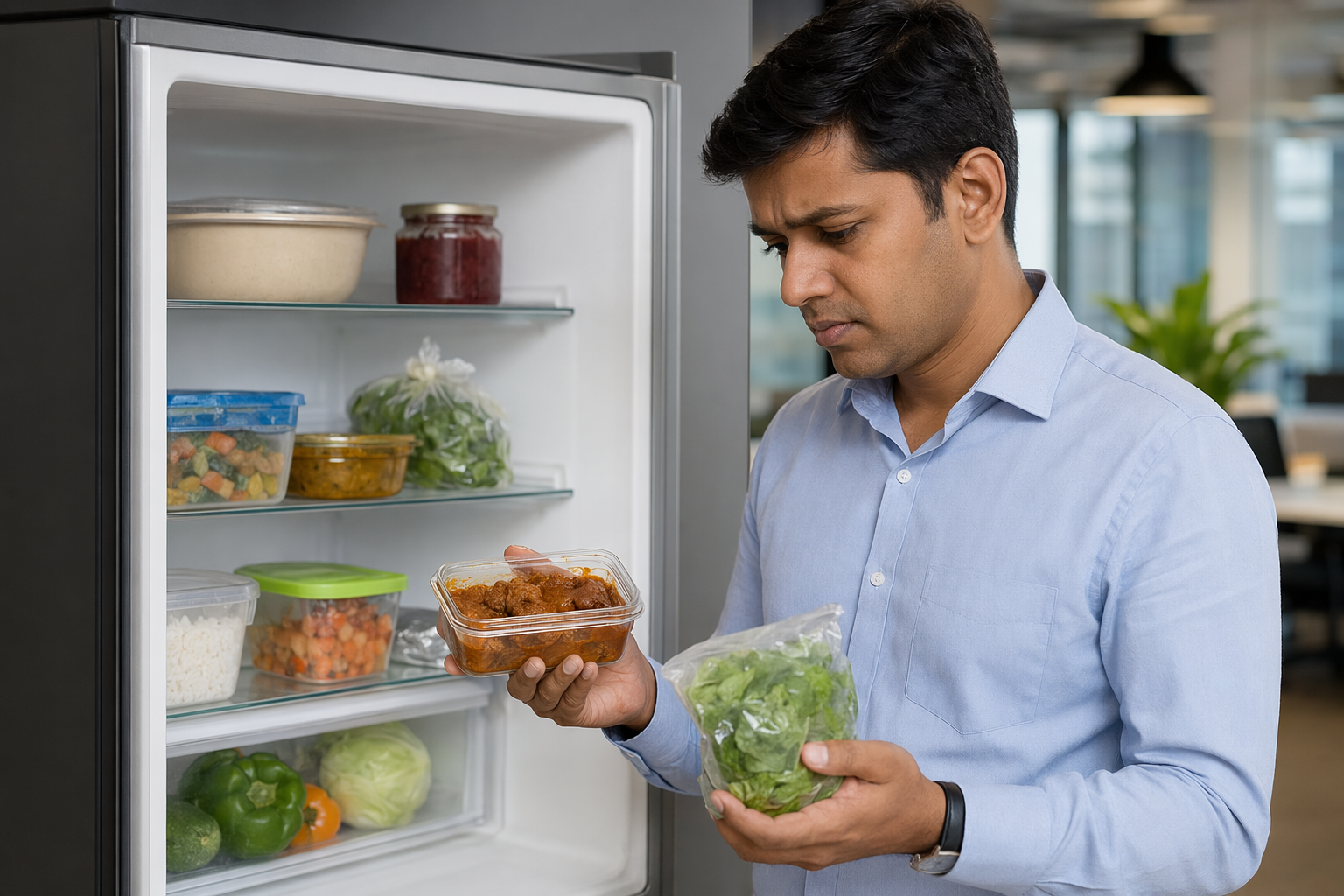
The office fridge is basically a food court with trust issues
#I love office lunches. Like, properly love them. The steel dabba opening sound at 1:07 pm, somebody microwaving rajma so aggressively the whole floor smells like a Punjabi wedding, that one colleague who brings lemon rice with peanuts and acts casual about it even though it is clearly the best thing in the building. But the office fridge? Arre baba. That thing is a whole emotional journey. Half convenience, half crime scene. I have seen beautiful homemade paneer bhurji saved by a cold fridge, and I have also seen a forgotten bowl of sambar turn into something that looked like it was planning a coup. So when people ask me, Office fridge food safety India: store or toss? my answer is usually annoying but honest: depends, but when in doubt, don’t be a hero.
This isn’t one of those posts where I pretend I have always been perfect. I have eaten questionable leftover biryani at work because I was hungry and the canteen dosa was looking sad. I have sniffed curd rice like a detective. I have argued with myself over whether yesterday’s aloo paratha was still okay because it smelled fine. And honestly, smell is not always enough. Food poisoning doesn’t announce itself with a dramatic villain background score. Sometimes the food looks normal, tastes normal, and then by 8 pm you are lying on your bed wondering why you trusted office refrigeration maintained by 47 random people and one tired housekeeping guy.
My first proper office-fridge scare, and why I got less brave after that
#Years ago, at my first office in Pune, we had this fridge near the pantry that everyone treated like common property and also like nobody’s problem. Monday morning it would be clean-ish. By Thursday there would be five unlabelled containers, two opened milk packets, a half onion in cling film, and a sad dabba of poha from maybe Tuesday, maybe last month, who knows. One Friday, my friend and me went to heat up lunch, and she pulled out her chicken curry from the back shelf. It had been cooked the previous night, she said. But the fridge door had apparently not closed properly overnight. The curry was cool-ish, not cold. She said, 'It’s fine na, I’ll just heat it extra.' I remember staring at that red oil floating on top and thinking... it smelled so good, but also, why is my stomach already nervous?
She tossed it, thank god. We went to this tiny Andhra meals place nearby instead, the kind with steel plates, unlimited rasam, and waiters who move faster than office Wi-Fi on appraisal day. Best accidental lunch ever. But that day stuck with me. Because reheating can kill many bacteria, yes, but it may not fix toxins already produced in food that sat too warm for too long. That’s the annoying little truth. Heat is not a magic eraser.
The boring temperature thing that actually matters a lot
#Okay, tiny food safety lecture, but I promise I’ll keep it human. Food safety guidance used in India, including FSSAI training material, talks about the danger zone as roughly 5°C to 60°C, where bacteria can multiply quickly. The general safe idea is: keep cold foods cold, ideally at 5°C or below, and hot foods hot above 60°C if they’re being held. WHO’s food safety messages also push the same basic principle: don’t leave cooked food hanging around at room temperature for ages. And in an Indian office, room temperature is not some cute European 21°C situation. It can be hot, humid, power-cutty, and weirdly air-conditioned only in the conference room nobody uses.
- If your office fridge has a thermometer and stays around 5°C or below, you are already living a better life than many people.
- If the fridge feels just mildly cool, like a matka but with electricity, don’t trust it blindly.
- If the door doesn’t seal, or people keep opening it every 3 minutes to search for their dabba, food may not stay cold enough.
- If there was a power cut and nobody knows for how long, be conservative. Especially with meat, fish, eggs, milk, paneer, cooked rice, and gravies.
Store or toss: the Indian lunchbox edition
#Indian food is glorious but also complicated for office storage. We don’t just bring one sandwich and one apple. We bring dal, rice, sabzi, chutney, curd, pickle, cut fruit, boiled eggs, leftover butter chicken, coconut chutney, idli, fried fish if someone is fearless, and sometimes one dabba that is only for sharing because that is our culture and also our weakness. Each one behaves differently in a fridge. A dry methi thepla is not the same as prawn curry. Plain roasted chana is not the same as cooked rajma. This is where the store-or-toss decision gets real.
| Food in the office fridge | Store if... | Toss if... |
|---|---|---|
| Cooked rice, pulao, biryani | It was cooled quickly, refrigerated within about 2 hours, and eaten in 1 to 3 days | It sat outside half the day, smells sour, feels slimy, or you don’t know when it was made |
| Dal, sambar, rajma, chole | It was packed clean, stayed cold, and is reheated till properly steaming | It was left on a desk for hours, has bubbles, sour smell, or fuzzy bits |
| Paneer dishes | It stayed cold and is eaten within 1 to 2 days for best safety and taste | The fridge was warm, gravy smells off, or paneer feels sticky |
| Curd, raita, lassi | It stayed chilled, container was closed, and there is no separation beyond normal whey | It smells yeasty, fizzy, overly sour, or was opened and forgotten |
| Egg, chicken, fish | It was cooked recently, chilled fast, and reheated well | Any doubt about temperature, age, or smell. Honestly, don’t gamble here |
| Cut fruit and salad | Packed fresh, kept cold, eaten same day ideally | It is watery, mushy, smells fermented, or sat unrefrigerated in humid weather |
Cooked rice is my weakness, but also my caution zone
#Rice is where I become both emotional and strict. I grew up in a house where leftover rice became next morning lemon rice, curd rice, phodni bhaat, or sometimes just rice with ghee and podi, and I still think that is one of life’s purest comforts. But cooked rice can be risky if handled badly because Bacillus cereus spores can survive cooking, and if rice sits warm too long, bacteria can grow and produce toxins. This is why I don’t casually eat rice that spent 5 hours in someone’s bag before reaching the office fridge. If you pack rice, cool it fast, refrigerate quickly, and reheat till steaming. I wrote more notes in my head after reading up on this, and this piece on Can Cooked Rice Stay Outside in Monsoon? Tiffin and Leftover Safety Rules is exactly the kind of thing I wish every office pantry had stuck on the wall, maybe next to the passive-aggressive mug washing notice.
Curd rice, raita, and the dairy drama
#Curd rice is comfort food, yes. It is also very sensitive to heat. Same with raita, lassi, buttermilk, paneer, cream-based gravies, and those fancy overnight oats people bring in glass jars to look like they have their life together. Dairy needs proper cold storage. If you bring curd rice in May, travel one hour in a bus, reach office, then keep it on your desk till 1 pm because the fridge is full, please don’t call that food safety. Call it optimism. I still love curd rice with pickle, especially with pomegranate and curry leaf tadka, but I pack it chilled and put it in the fridge the minute I enter office. Not after tea, not after checking mails, immediately.
Non-veg leftovers need zero ego
#Chicken curry, egg bhurji, fish fry, prawn masala, mutton keema... all delicious, all high-risk if abused. I know people who say, 'But we always ate food kept outside at home and nothing happened.' Same, bro. We all have stories. But office food is different. It travels, sits, gets opened, maybe gets cross-contaminated, maybe the fridge is overloaded, maybe someone put hot food inside and warmed up the whole shelf. With meat and fish, I follow a very boring rule: if I don’t know it stayed cold, I toss. It hurts. I have thrown away a gorgeous egg curry once and mourned it like a breakup. But I did not spend the evening in regret, so fine.
The two-hour rule, except Indian offices make it weird
#A lot of food safety advice says perishable cooked food should not sit out more than 2 hours at room temperature, and if the temperature is above 32°C, one hour is safer. This is common in USDA-style guidance and honestly it makes sense for India too, especially in peak summer or monsoon humidity. But our lunchboxes don’t live in lab conditions. Your dabba may leave home at 8:15, travel in a scooter dicky, sit in a security tray, then reach a fridge at 10:30. So I count time from when food stops being hot or cold, not from when I remember it exists. If the food was cooked at 6 am and stayed warm in a closed dabba till 11 am, that’s not exactly ideal.
Hot food packed straight into a tight box can also trap steam and moisture, which sounds nice but can keep it in that warm danger-zone range longer. My mother used to spread rice on a plate for a bit before packing, and I used to think she was just being extra. Now I understand. Moms are basically food safety officers with better snacks.
Smell, spills, and monsoon fridge horror stories
#Monsoon makes everything more dramatic. The air is damp, the pantry floor is sticky, coriander wilts faster, and the office fridge develops that smell. You know the smell. A mix of old methi, spilled milk, plastic dabba, and someone’s forgotten garlic chutney from another era. Smell alone doesn’t always mean food is unsafe, but it does tell you the fridge is not being managed properly. Spills can spread bacteria, mould can travel, and uncovered food absorbs smells like gossip. If your office fridge has odour, leaks, or sticky shelves, this checklist on Fridge Smell in Monsoon? A Cleaning and Food Safety Checklist for Indian Kitchens is useful even for shared office fridges, not just home kitchens.
My personal rule: if my dabba comes out smelling like somebody else’s fish curry, I am annoyed but not automatically scared. If the container is wet from a mystery spill, or there’s mould near it, or the lid was loose and something dripped in, I’m done. Toss. No lunch is worth playing stomach roulette. Also, please don’t put open chutney bowls in the fridge. I am begging. Coconut chutney especially. It goes bad fast and then the whole shelf suffers.
Labels are not aunty behavior, they are survival
#I used to think labelling food in the office fridge was too much. Like who am I, running a restaurant walk-in freezer? But then I saw three identical steel dabbas, all with yellow dal, all belonging to different people, and one poor guy ate someone else’s lunch by mistake. After that, I became a label person. Name, date, and sometimes time. Not fancy. Just masking tape. If you work in a place where people steal food, first of all, emotional damage. Second, labels still help because at least you know when you packed it.
- Write your name and date on leftovers, especially if you plan to keep them overnight.
- Use leak-proof containers because one loose rasam lid can ruin everyone’s day.
- Keep raw foods away from cooked foods. Honestly, raw chicken in an office fridge is a no from me unless there is a proper separate setup.
- Don’t store food for the whole week in an office fridge unless your office has actual policies and a reliable temperature check.
- Do a Friday cleanout. Monday mystery boxes are where sadness grows.
What I pack when I don’t trust the office fridge
#Some offices have great fridges. Some have one tiny fridge for 80 people and it is packed like Mumbai local at 6 pm. On those days, I pack food that can handle a few hours better. Not forever, okay, but better. Thepla with dry aloo, podi idli without coconut chutney, lemon sevai if eaten early, peanut chikki, roasted makhana, whole fruit, dry sabzi, paratha with pickle, or a good old veg sandwich with no mayo if I’m eating it soon. If your office fridge is unreliable or non-existent, this guide on Monsoon Office Lunch Without a Fridge: Safe Indian Tiffin Ideas and What to Avoid is a handy companion, especially in humid weather when food acts extra moody.
- Safer-ish dry picks: thepla, khakhra, dry poha, roasted chana, dry sabzi, paratha, whole fruits like banana or apple.
- Be careful with: coconut chutney, mayo, cream, cut melon, seafood, cooked rice kept warm too long, and anything with lots of moisture.
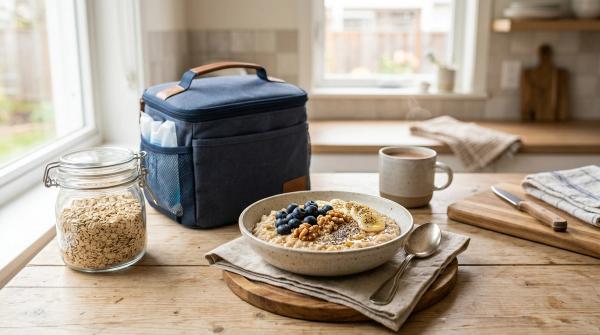
- Use an insulated lunch bag with an ice pack if your commute is long. I know it sounds school-kid type, but it works.
- Pack small portions. Leftovers of leftovers are where things get dodgy.
My very unscientific sniff test, and why it is not enough
#Look, I still sniff food. Everyone does. Even food safety people probably sniff and then pretend they didn’t. But I don’t rely only on smell anymore. I look at the container, the time, the fridge condition, the food type, and then my gut feeling, which is sometimes just fear wearing a kurta. Sour smell, fizzing, bubbles in dal, slimy texture, mould, sticky paneer, weird colour change, swollen container lid, or rice clumping in a wet unpleasant way means toss. But absence of these signs does not guarantee safety. That’s the part people hate. Food can be unsafe before it becomes visibly disgusting.
My office fridge mantra is simple: if I would not serve it to someone I love, I should probably not eat it myself just because I am hungry and meetings ruined my lunch break.
Reheating: make it actually hot, not office-microwave warm
#Office microwaves are funny. They heat one corner to lava and leave the middle cold like revenge. When reheating dal, rice, curry, or noodles, stir halfway if you can. Cover loosely so it doesn’t splatter but steam can move around. Food should be steaming hot all through. Some guidance uses 74°C as a safe reheating target for leftovers, which most of us won’t measure at work because nobody is carrying a probe thermometer next to their spoon. So practically, heat thoroughly, stir, heat again, and don’t eat lukewarm chicken curry while telling yourself it is fine. Also, don’t reheat the same food again and again. Heat only what you will eat.
There is one colleague in every office who microwaves fish and creates international tension. I am not here to judge. Okay, I am judging a little. But from a safety angle, fish leftovers should be handled carefully and eaten quickly. From a social angle, maybe open a window, yaar.
Shared fridge etiquette is food safety too
#We treat etiquette like it is about manners, but in a fridge it is also about not making people sick. Don’t shove your hot biryani vessel into the fridge and warm up everything around it. Let hot food cool a bit first, but don’t leave it out for hours. Don’t keep food uncovered. Don’t taste directly from a spoon and put it back. Don’t store your dabba on top of someone’s salad so the lid cracks and dressing goes everywhere. And please, please take your food home or throw it away by Friday. Office fridges are not museums.
If your workplace has a facilities team, ask them to keep a fridge thermometer. It is a tiny thing, not expensive in the grand scheme, and it removes so much guessing. A weekly cleaning schedule also helps. In one office I worked at, housekeeping put a note saying anything unlabelled after Friday 5 pm would be discarded. People complained for two weeks, then the fridge became beautiful. Not five-star hotel beautiful, but safe enough that I stopped doing that suspicious eyebrow thing every lunch.
Quick store-or-toss cheat sheet for busy lunch people
#| Situation | My call | Why |
|---|---|---|
| Food was cooked last night, chilled fast, fridge is cold, eating today | Store and eat | This is normal leftover life |
| Food sat in your bag from 8 am to 1 pm in hot weather | Toss if perishable | Too much time in the danger zone |
| Rice was left on desk all morning, then refrigerated | Toss | Cooling late doesn’t undo earlier bacterial growth risk |
| Curd smells fizzy or container is swollen | Toss | Fermentation or spoilage signs are not worth it |
| Paneer gravy is 3 days old but always refrigerated | Use judgement, but I lean toss | Quality and safety both decline, especially in shared fridges |
| Dry thepla in clean box, same day | Usually okay | Low moisture foods generally hold better |
| Power cut happened overnight and fridge was warm in morning | Toss high-risk foods | Meat, dairy, cooked rice, and gravies may be unsafe |
| Mystery dabba with no date | Toss | If nobody claims it, nobody should eat it |
My tiny ritual before I trust office leftovers
#This is what I do now, and it has saved me from many bad decisions. When I cook dinner knowing I’ll take leftovers, I cool it properly, pack in a clean container, and refrigerate it at home. In the morning, if the commute is long, I use an insulated bag. At office, I put it in the fridge immediately, not after gossip, not after coffee. At lunch, I check the container, smell, texture, and whether the fridge felt cold. Then I reheat till it is properly hot. If any step went badly, I adjust. Maybe I eat the dry snack I packed. Maybe I buy lunch. Maybe I sulk, because wasting food feels awful. But getting sick feels worse.
And yes, I still get tempted. Last month I had leftover veg pulao with cashews and fried onions, the kind that tastes better next day, and the office fridge was suspiciously not cold. I stood there for one full minute, spoon in hand, negotiating with destiny. Finally tossed it and got a masala dosa from the canteen. Was it as good? No. Was I alive and functional for my 4 pm call? Sadly yes, but also thankfully yes.
Final food thoughts, from one dabba lover to another
#Office fridge food safety in India is not about being paranoid. It is about respecting food enough to store it properly, and respecting your stomach enough to not treat it like a testing lab. Store food when it was cooled, packed, labelled, refrigerated cold, and reheated well. Toss it when time, temperature, smell, texture, or common sense feels off. I know it hurts to throw away good rajma or fish curry. I have been there, standing over the dustbin with genuine sadness. But tomorrow there will be more lunch. There will always be more dal, more parathas, more lemon rice, more little food adventures between emails. If you like these everyday food stories and practical kitchen rambles, I keep finding nice reads over at AllBlogs.in, so maybe wander there after you clean out that office fridge.