Every Indian summer, I become that person. The one standing in the kitchen with mango juice running down my wrist, pretending I’m “just tasting” one cube while actually eating half the bowl before it even reaches the fridge. Alphonso, Kesar, Banganapalli, Langra, Dasheri, Totapuri for chaat... I don’t discriminate much, honestly. If it smells like sunshine and childhood holidays, I’m in. But cut mango storage in Indian summer is one of those things I learned the hard way, because mangoes are not just cute golden cubes sitting in a dabba. Once you cut them, they become perishable, delicate, and a little dramatic, like most of us in May heat.
I grew up in a house where mangoes were treated with more respect than some relatives. My grandmother had rules. Wash before cutting. Don’t leave cut fruit near the window. Don’t use the onion knife, are you mad? And always, always cover the bowl. Back then I thought she was just being fussy. Now, after a few sweaty summers, one suspiciously fizzy mango bowl, and a cousin who got a stomach upset after eating cut mango from a roadside stall in peak afternoon heat, I get it. Indian summer is not gentle. In many cities, kitchens sit at 32°C to 40°C or more, and cut fruit can go from perfect to risky faster than we admit.
Why Cut Mango Spoils So Fast In Our Summer Heat
#A whole mango has a skin, and that skin is basically its little bodyguard. Once you slice into it, you expose the flesh to air, your knife, your hands, the cutting board, the dabba, the fridge smell, everything. Mangoes are high in moisture and natural sugars, which is exactly why we love them, but also why bacteria and yeasts love them too. Food safety folks usually talk about the “danger zone,” around 5°C to 60°C, where microbes can multiply quickly. In Indian summer, your kitchen counter is practically a luxury resort for them.
The simple rule I follow now: cut mango should not sit out for more than 2 hours. If the room is very hot, like above 32°C, make it 1 hour. And honestly in Delhi, Nagpur, Ahmedabad, Chennai, Kolkata, Hyderabad, basically most places during a heatwave, I don’t even wait that long. I cut, serve, and pack the leftovers into the fridge within 20 to 30 minutes. Sounds boring? Maybe. But so is food poisoning, and nobody wants to spend mango season hugging the bathroom bucket. Sorry, but true.
My First Mango Storage Disaster, Because Of Course I Had One
#I still remember one May afternoon when I had friends over for a lazy lunch. I made curd rice, potato fry, papad, and a huge bowl of chilled Kesar mango cubes with a little lime and chilli salt on the side. Very smug hostess energy. We ate slowly, talked nonsense, and the mango bowl sat on the dining table for... I don’t know, three hours? Maybe more. The fan was on, so my brain somehow decided that meant everything was fine. Later, I put the leftovers in the fridge and ate them at night. Big mistake. The mango tasted slightly alcoholic, like it had started doing its own fermentation project. I spat it out, thankfully, but that smell stayed with me.
Since then, I’ve become annoyingly careful. Not paranoid, just careful. There’s a difference. Mango should taste lush and floral, not fizzy, sour in a weird way, slimy, or “sharp.” If it smells like toddy, vinegar, nail polish remover, or anything that makes your eyebrows go up, don’t debate with yourself. Throw it. I know mangoes are expensive. I know Alphonso prices can make you rethink your life choices. But no mango is worth a stomach infection.
The Clean Cutting Ritual I Actually Follow
#Before cutting mangoes, I wash the whole fruit under clean running water and rub the skin gently with my fingers. Not soap. Please don’t soap your mangoes, they are not steel plates. If there is dirt near the stem, I clean that properly and dry the fruit with a clean cloth or paper towel. This matters because the knife passes through the skin into the flesh, so whatever is sitting on the outside can hitch a ride inside. I used to skip drying, but wet mangoes slip around and then you’re doing acrobatics with a sharp knife. No thanks.
- Use a clean knife and a clean cutting board, not the board you just used for raw meat, fish, eggs, or even onion-garlic if you don’t want mango that tastes like sabzi prep.
- Wash hands properly before cutting. I know this sounds like school assembly advice, but it’s still the thing people skip when they are hungry.
- Cut only what you need if your fridge is already packed or power cuts are common in your area.
- Avoid cutting bruised, leaking, mouldy, or over-fermented mangoes for storage. Eat good fruit, not suspicious fruit with ambition.
Best Containers For Cut Mango, According To My Very Opinionated Fridge
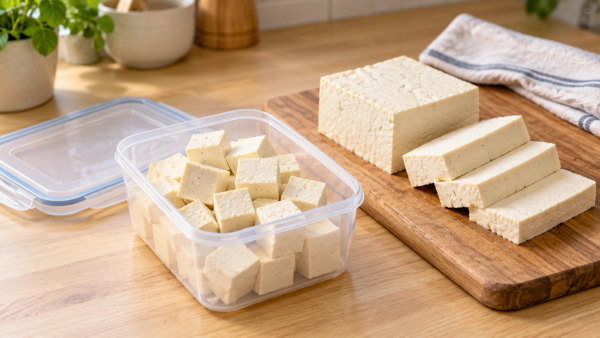
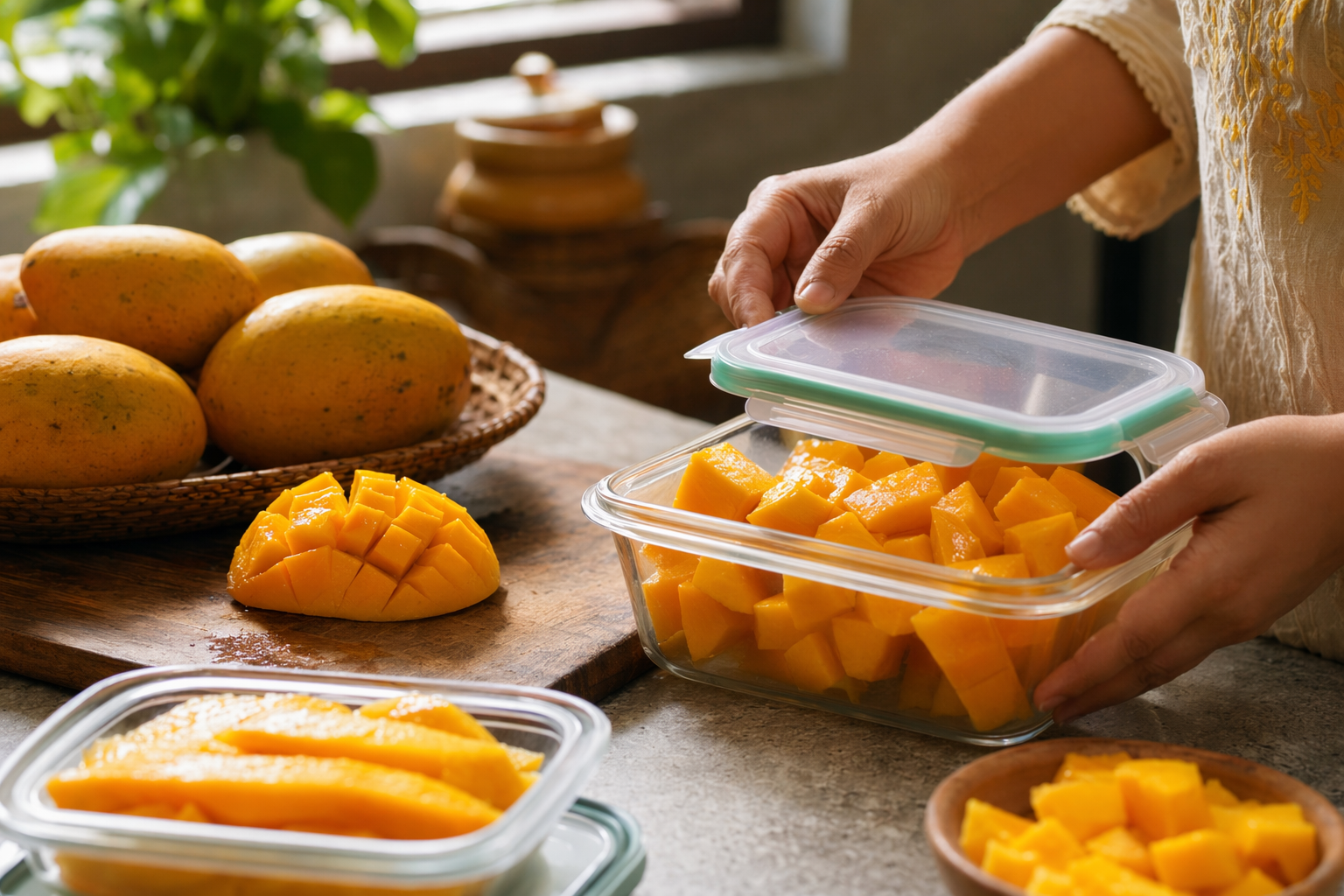
#I’ve tried everything: steel dabbas, glass boxes, plastic takeaway tubs, beeswax wraps, ceramic bowls with plates balanced on top in that very desi engineering way. My favorite is a clean, dry, airtight glass container. Steel is also great, especially if you don’t want plastic smell. If using plastic, use a food-safe container that doesn’t smell of old pickle or biryani. Mango absorbs smells like gossip absorbs details, quickly and without shame.
Airtight matters because it slows drying, keeps fridge odours away, and reduces extra exposure. But don’t pack warm mango from a hot kitchen into a container and immediately forget it in a crowded fridge corner where cooling takes forever. Spread the pieces a bit if possible, close the lid, and keep it in the coldest useful part of the fridge, usually the middle or lower shelves, not the door. The door is too warm because we open it every 11 seconds looking for something sweet.
How Long Does Cut Mango Last In The Fridge?
#Technically, cut mango stored safely in the fridge at 4°C or below can last about 3 to 4 days. Some people stretch it to 5 days, and maybe it’s fine if everything was super clean and the fruit was firm, but in Indian summer I don’t like pushing it. My personal rule is: best within 24 hours, okay up to 48 hours, inspect carefully after that. For kids, elderly people, pregnant women, or anyone with low immunity, I’d be stricter. Fresh-cut fruit is not the place to show bravery.
If you’re storing mango for aamras, smoothies, mango lassi, or a salsa for dinner, label the container with the date. I started doing this because I once found three identical yellow boxes in the fridge and had to play mango archaeology. Was it yesterday? Was it Sunday? Was it from the mango cheesecake experiment? Nobody knew. Date labels save marriages and stomachs. Okay maybe not marriages, but definately stomachs.
| Storage situation | Safe-ish time I follow | My kitchen note |
|---|---|---|
| Room temperature, normal warm day | Up to 2 hours | Less is better, especially if flies are around |
| Room temperature above 32°C | Up to 1 hour | In peak summer, I chill it quickly |
| Fridge at 4°C or below | 1 to 3 days | Best texture in first 24 to 48 hours |
| Freezer | 2 to 3 months for best taste | Great for smoothies, aamras, sorbet, not perfect fresh texture |
| Lunchbox with ice pack | About 4 hours | Use insulated bag, keep out of sun |
Freezing Cut Mango: My Lazy Summer Superpower
#Freezing mango is honestly one of those small life upgrades. When mangoes are cheap and good, I cut extra, freeze pieces on a tray in one layer, then move them into freezer bags or boxes. If you dump fresh pieces straight into a box, they freeze into one mango iceberg and then you’ll be attacking it with a spoon at 7 am. Tray freezing keeps them separate. Frozen mango is brilliant for lassi, smoothies, mango shrikhand, quick sorbet, kulfi mix, and that new-ish trend of mango protein smoothies everyone at gyms and cafes seems to be selling now.
Texture changes after freezing, so don’t expect thawed mango cubes to behave like fresh-cut Langra on a plate. They get softer, a little watery. But blended? Gorgeous. Add curd, a pinch of cardamom, maybe roasted saffron milk if you’re feeling rich, and suddenly it’s better than many cafe drinks. In 2026, I’m seeing more people do “functional” mango drinks too: probiotic mango lassi, mango kefir bowls, chia mango breakfast jars, electrolyte aam panna slushies. Some are genuinely nice, some taste like someone read a wellness menu and panicked.
Street Cut Mango, Restaurant Mango, And My Mixed Feelings
#I love street fruit. I really do. There’s something about a vendor slicing Totapuri mango, dusting it with chilli-salt, handing it over in newspaper or a paper plate, and you eat it standing under a tree while traffic screams around you. Very Indian summer poetry. But I’m more cautious now with pre-cut mango sitting in carts, especially if it’s uncovered, not on ice, or the knife is being dipped in mystery water. If the fruit is cut fresh in front of me, the vendor’s setup looks clean, and it’s not sitting in direct sun, I might still eat it. If it’s already chopped and sweating in a plastic tub? No, yaar. My love has limits.
Restaurants and cafes have gotten much better about fresh fruit handling in many cities, especially the newer juice bars, dessert studios, and cloud-kitchen brands doing mango menus. These days you’ll see blast-chilled fruit purees, vacuum-sealed cut fruit cups, QR-coded sourcing labels at fancy grocers, and cold-chain delivery bags with gel packs. Some premium places in Mumbai, Bengaluru, Pune, Delhi NCR, and Hyderabad are doing mango tasting menus in summer too, pairing regional mangoes with burrata, coconut rice pudding, chilli crisp, miso caramel, or black salt granita. I’m both impressed and slightly amused. My nani would say, “Just eat the mango, why miso?” But then she would taste it and ask for another spoon.
The 2026 Mango Mood: Fancy, Chilled, And A Little Extra
#The big food trend I keep noticing lately is that mango isn’t just dessert anymore. It’s in salads with avocado and cucumber, in cold noodle bowls, in spicy fermented hot sauces, in mango sando-style cream sandwiches, in croissant fillings, in Korean bingsu-inspired shaved ice, and even in zero-alcohol spritzers with aam panna, soda, mint, and kala namak. Indian restaurants are also leaning into regional mango identity more proudly, which I love. Not every mango has to be Alphonso. Kesar has its perfume, Banganapalli has that clean sweetness, Langra has depth, Chausa is messy heaven, and Totapuri is the chaat king.
But all this trendiness means more cut mango is being stored, delivered, displayed, packed into jars, and sent across town in hot weather. That’s where safety gets serious. If you order cut fruit or mango desserts online, check whether it arrives cold. Not “slightly cool because AC was on in the car,” properly cold. If the box is warm, leaking, swollen, or smells fermented, don’t eat it. Delivery times in summer matter. A mango cream cup travelling 70 minutes in traffic is not the same as one pulled from a chilled counter.
How I Pack Cut Mango For Tiffin, Picnics, And Train Trips
#For tiffin, I chill the mango first, then pack it in a small airtight box with an ice pack in an insulated lunch bag. If it’s for school kids, I prefer firmer mango pieces, not super ripe squishy ones, because they hold better and don’t turn into mango soup by recess. I also avoid adding salt early because salt pulls out water and the fruit gets limp. Chilli-salt goes in a tiny separate container. Very fancy for something that takes 30 seconds, but it works.
Train trips are trickier. I know everyone has memories of steel tiffins, puri-aloo, mango slices wrapped in foil, and someone’s uncle saying “arre it’s fine” while the compartment is basically an oven. For short trips, cut mango with ice packs is okay. For long trips, I’d carry whole mangoes and cut them when needed with a clean knife, or take dried mango, mango barfi, aam papad, or sealed commercial packs that are meant for travel. Whole fruit is safer because the peel protects it. Also eating a whole mango on a train is messy and glorious, and sometimes that’s the point.
Signs Your Cut Mango Has Gone Bad
#This is where you have to trust your senses but not argue with them. Spoiled cut mango can smell sour, alcoholic, yeasty, or just “off.” It may look darker, mushy, watery, slimy, bubbly, or have white patches or mould. Sometimes the top layer looks dry but the bottom has liquid pooling and a fermented smell. Don’t scoop off the bad part and eat the rest. I know aunties do this with pickle and sometimes cheese people do complicated things with mould, but cut fruit is different. If in doubt, throw it out.
- Slimy texture? Bin it.
- Fizzing, bubbles, or alcoholic smell? Bin it, even if it was expensive.
- Mould anywhere in the container? Don’t rescue the “good” cubes.
- Left out overnight? Please don’t do emotional bargaining. Toss.
Tiny Tricks To Keep Cut Mango Fresher, Without Ruining The Taste
#A squeeze of lime can help slow browning a little and tastes lovely, especially with Totapuri or slightly sweet-sour mangoes. But lime is not a magic safety shield. Same with sugar syrup, honey, salt, chilli, or chaat masala. They may change texture and flavour, but they don’t make unsafe storage safe. I like storing plain mango and seasoning only before serving. If I’m making mango salsa, I keep onion, coriander, chilli, and lime separate until closer to eating because onion can make the whole box smell aggressive, and coriander wilts into sadness.
Another small thing: don’t keep opening the container repeatedly. Every time you open it, warm air and new microbes can enter. If I cut a big batch, I divide it into smaller boxes. One for today’s snacking, one for tomorrow’s lassi, one for freezing. This also stops me from standing at the fridge with a fork and eating directly from the main dabba, which is apparently “unhygienic” and also exactly what I want to do at midnight.
Power Cuts, Small Fridges, And Real Indian Kitchen Problems
#A lot of food safety advice sounds like it was written for a perfect kitchen with constant electricity, big fridge space, and no one’s mother storing five pressure cookers inside the fridge because guests are coming. Real homes are different. If your area has power cuts, keep a fridge thermometer if you can. It’s a small thing but useful. The fridge should be at or below 4°C. During outages, keep the fridge door closed. A closed fridge can usually stay cold for a few hours, but once it warms up, cut fruit becomes risky.
If the power was gone for many hours and the mango is no longer cold, especially if it smells odd or has been sitting in a warm fridge, toss it. I hate waste, so I plan smaller batches in summer. I also keep mangoes whole until needed. Ripe whole mangoes can sit at room temperature for a bit, but once ripe I shift them to the fridge to slow them down. Then I cut only one or two at a time. It’s less Instagram-pretty than a giant meal-prep box, but safer and fresher.
My Favorite Safe Mango Things To Make With Leftover Cut Mango
#When I have properly stored cut mango that needs using, I don’t overthink. Mango lassi with thick curd and cardamom is the classic. Aamras with a little milk or coconut milk, depending on the mango, is pure comfort. Mango salsa with cucumber, green chilli, coriander, lime, and roasted cumin is brilliant with papad or grilled fish. Mango overnight oats are not traditional but they are useful when life is chaos. And mango shrikhand, oh my god. Hung curd, mango pulp, saffron, cardamom, pistachio, chilled properly. That bowl can fix a bad mood faster than motivational quotes.
Lately I’ve been making a quick mango coconut cooler: chilled mango, tender coconut water, a squeeze of lime, tiny pinch of salt, and ice. Blend. Drink immediately. If the mango was refrigerated safely, it tastes like a beach holiday without the sunscreen smell. I also love frozen mango blended with curd into a soft-serve-ish bowl, topped with toasted coconut and chilli crisp. Sounds strange, works beautifully. Mango can handle spice. In fact, mango wants spice. That’s my controversial opinion and I’ll stand by it.
Cut mango is summer joy, but it’s also fresh-cut fruit in brutal heat. Keep it clean, keep it cold, and don’t let nostalgia bully you into eating something suspicious.
My No-Nonsense Mango Storage Rules, Finally
#So if you remember nothing else from my mango rambling, remember this. Wash mangoes before cutting, use clean tools, refrigerate cut pieces quickly, keep them at 4°C or below, eat within 1 to 2 days for best quality, and don’t leave them out beyond 2 hours, or 1 hour in very hot weather. Use airtight containers, avoid cross-contamination, freeze extra mango before it gets overripe, and throw away anything that smells fermented, feels slimy, or looks mouldy. It’s not about being scared of food. It’s about respecting food enough to handle it properly.
Mango season is emotional in India. It’s family WhatsApp debates about which variety is best, it’s bargaining with fruit sellers, it’s chilled aamras after lunch, it’s sticky kids, it’s steel plates on balconies, it’s that first bite where everyone goes quiet for two seconds. I want all of that, every year, without the stomach drama. So yes, I’ll still eat mango over the sink like a greedy child. I’ll still buy too many when the smell hits me at the market. But I’ll also put the cut mango away fast, because summer doesn’t forgive laziness. Anyway, if you’re as mango-mad as me and want more food stories, kitchen notes, and random delicious rabbit holes, go have a browse through AllBlogs.in sometime.