
I have a theory that you don’t really know yourself as a traveler until you’re standing inside a museum gift shop at 2:17 p.m., dizzy from looking at Dutch still lifes or Roman marble feet, wondering if a $14 slice of quiche is a responsible life choice. Museum hunger is different. It sneaks up on you. One minute you’re emotionally moved by a painting, the next you’re practically growling at a child eating crackers from a stroller. So, the big question: do you eat at the museum cafe, or do you pack snacks and save your money for dinner somewhere better? Honestly... both. But also, it depends. I’ve had museum meals that were sad little sandwiches in plastic coffins, and I’ve had cafe lunches so good they became part of the travel memory itself.
In 2026, museum dining feels more interesting than it used to. It’s not just “grab a muffin and keep walking” anymore, though plenty of places still do that, badly. Big museums are leaning into local sourcing, plant-forward menus, better coffee, seasonal specials, mobile ordering, and cafes that actually feel connected to the city outside. At the same time, travel costs are up, timed-entry tickets make your day feel weirdly scheduled, and not every traveler wants to spend half their lunch budget inside a museum atrium. I love food too much to ignore the cafe, but I also never enter a museum without emergency snacks. Learned that one the hard way in Madrid.
The Madrid Lesson: Never Trust Your Future Self Around Art and Hunger
#The Prado was where I became a museum snack realist. I’d planned everything that day like a normal overexcited travel person: early coffee, museum ticket, late tapas lunch, maybe churros if I was still alive. The problem was I got completely swallowed by the galleries. Velázquez does that. Goya definitely does that. Suddenly it was nearly 3 p.m. and my body was like, hello?? we are not made of oil paint. I went to the cafe and, to be fair, it was fine. Not life-changing. Not offensive. Just fine in that airport-adjacent way some museum cafes can be. I paid more than I wanted, ate faster than I should have, and then spent the rest of the afternoon thinking about the tortilla española I could have had nearby if I’d packed almonds or a banana.
That day changed my travel bag forever. Now I do what I call “snack insurance.” Nothing dramatic. A small packet of nuts, a granola bar that won’t melt into bag lint, maybe a mandarin orange if I’m feeling organized. I’m not trying to host a picnic under a Caravaggio. Lots of museums don’t allow eating in galleries anyway, and rightly so. But having something for the courtyard, locker area, or a bench outside can stop you from making desperate food decisions. And desperate food decisions are how you end up paying too much for a dry brownie called “artisan” because it has one pistachio on top.
But Some Museum Cafes Are Absolutely Worth It
#Here’s where I contradict myself, because some museum cafes are not just convenient, they’re part of the trip. The Victoria and Albert Museum in London is the one I always bring up first, partly because I’m obsessed with those old refreshment rooms. The V&A is often described as having the world’s first museum restaurant, and when you sit in the Morris, Gamble, or Poynter rooms with tea and cake, you feel like lunch somehow belongs to the collection. It’s not just fuel. It’s atmosphere. I once sat there with a scone, jam everywhere, watching people whisper under all that tile and decoration, and thought: yep, this is why I travel.
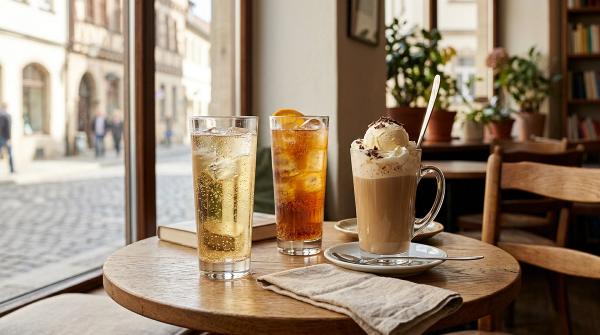
Paris is another place where the museum cafe question gets complicated in the nicest way. At the Louvre, Café Richelieu-Angelina is famous for that thick Angelina hot chocolate and the Mont-Blanc dessert, which is basically sweet chestnut drama on a plate. Is it cheap? No. Is it a little touristy? Obviously. But if you’ve spent two hours fighting the Mona Lisa crowd and your feet are complaining in three languages, a proper pastry break with a view can feel like emotional repair. Same with the Musée d’Orsay’s Café Campana, tucked behind that giant clock feeling all golden and theatrical. Sometimes the right museum cafe makes the museum feel even more itself.
The 2026 Museum Food Mood: Local, Seasonal, Less Boring
#What I’ve noticed lately, especially traveling through Europe and bigger North American cities, is that museum cafes are trying harder. Not everywhere, but enough that I now check the menu before writing them off. In 2026 the food travel trend is very much about eating “in context” — local ingredients, regional stories, chef collaborations, less generic international cafe food. Museum restaurants are catching on because visitors don’t just want a sandwich, they want something that feels connected to Amsterdam, Doha, Washington, Tokyo, Mexico City, wherever they are.
The Rijksmuseum in Amsterdam is a great example of how serious this can get. RIJKS, the restaurant connected with the museum, has built a reputation around Dutch ingredients and modern Dutch cooking, and it’s the sort of place people book even if they’re not sprinting through Rembrandt beforehand. In Washington, D.C., the Sweet Home Café at the National Museum of African American History and Culture has long stood out because the menu is built around regional African American foodways — the Agricultural South, Creole Coast, North States, Western Range. That kind of museum meal teaches you something without feeling like homework. Which is the dream, really.
- If a museum cafe is showing off local food traditions, I’m much more likely to eat there.
- If the menu is just “chicken wrap, muffin, bottled soda,” I start reaching for my snack stash.
- If there’s a terrace, historic dining room, or a famous pastry involved... I become weak. Very weak.
The Case for Packing Snacks, Even If You Love Eating Out
#Packing snacks is not unromantic. I used to think it was. Like, oh, I’m in Florence, I should be floating between espresso bars and tiny trattorias, not eating trail mix like someone’s practical aunt. But travel days are messy. Museums have security lines, bag rules, crowded cafes, sold-out specials, and opening hours that don’t care about your blood sugar. If you’re traveling with kids, older parents, dietary restrictions, or just a body that gets cranky when lunch is late, snacks are not optional. They’re kindness.
Also, museum cafes can be wildly expensive for what they are. A coffee and pastry might be fine, but a full lunch for two or three people can sneak into “we could’ve had a beautiful neighborhood meal” territory. In 2026, with travelers watching costs more carefully and still wanting great food experiences, I think the smartest approach is selective spending. Don’t blow money on mediocre museum food just because you’re trapped. Save it for something memorable: a ramen counter in Tokyo after the museum, pintxos in San Sebastián, a proper mezze spread in Istanbul, tacos al pastor in Mexico City, or whatever local meal you came dreaming about.
My Basic Museum Snack Rules, Which I Break Constantly
#- Pack clean, quiet snacks. No crunchy chip bags that sound like a thunderstorm in a chapel-like gallery. No smelly cheese. I say this as a cheese person.
- Bring water, but check the rules. Some museums are strict about bottles in galleries, though refill stations are becoming more common as sustainability becomes a bigger travel priority.
- Eat outside the gallery spaces. Courtyards, designated cafe areas, the steps out front — don’t be the person sprinkling croissant flakes near a priceless textile.
- Don’t pack so much that your bag becomes a grocery store. Museum days involve walking, lockers, stairs, security checks, and regret.
When the Cafe Is the Better Choice
#There are days when eating at the museum cafe is absolutely the right move. Bad weather is one. I once ducked into Tate Modern on a rainy London day, pretending I was there for culture but mostly needing warmth, and ended up having a surprisingly good coffee break overlooking the Thames. Was it the best meal in London? No. But it kept me dry, happy, and still inside the day’s rhythm. Leaving a museum for lunch can be risky if the neighborhood is crowded, if you have a timed re-entry situation, or if you’re with someone who moves slower and doesn’t want to hunt for food.
Museum cafes are also helpful when the building itself is the destination and you want to linger. In Doha, the Museum of Islamic Art has that stunning waterfront setting, and dining there or nearby makes sense because the whole experience is visual and slow. In Bilbao, after the Guggenheim’s silver curves and all that river light, even a simple cafe stop feels tied to the architecture. The meal doesn’t have to be fancy. Sometimes you just want a coffee and something salty while your brain catches up with what your eyes just saw.
The Rise of Food-as-Exhibit, Sort Of
#One thing I love about current museum dining is that food is being treated less like an afterthought and more like another way to understand place. Not always formally, but emotionally. Museums are doing chef pop-ups, seasonal menus, cultural festival tie-ins, and more thoughtful labels for vegan, gluten-free, halal, and allergy-friendly options. Some use QR menus or mobile ordering so you can avoid the lunch crush, which is very 2026 and honestly useful when it works. I’ve also seen more low-waste ideas: reusable serviceware, compostable packaging, pantry items in gift shops, and menus that highlight local farms or bakeries.
This matches what’s happening in food travel generally. People want meals with a story. They want market tours, cooking classes, regional specialties, bakery maps, and restaurants that don’t feel copy-pasted from another city. Museum cafes are smart to join that conversation. A bowl of soup made with local beans or a pastry from a respected neighborhood bakery can be more exciting than some overdesigned “signature dish” that tastes like conference catering. I know that sounds harsh. But you know when food is trying too hard.
My Favorite Museum Meal Memory Wasn’t Fancy at All
#One of my favorite museum food moments happened in Mexico City after visiting the Museo Nacional de Antropología. The cafe break itself was simple — coffee, something sweet, a little rest for my feet — but what I remember is how it fit into the day. That museum is enormous and powerful and kind of humbling. You come out thinking about civilizations, corn, stone, water, gods, ordinary hands making extraordinary things. Then later I ate tacos nearby, standing with salsa running down my wrist, and it all connected in that messy travel way. The museum cafe didn’t need to be the main meal. It just needed to carry me to the next one.
That’s probably my real answer: museum cafes are often best as bridges. A coffee bridge. A pastry bridge. A soup bridge if the weather is grim. They keep you from crashing, but they don’t always need to be the culinary centerpiece. Unless they’re special. And when they are special, don’t be stubborn. Eat there. I’ve met travelers who refuse museum food on principle, like it’s some moral victory, and then they get hangry and ruin the last gallery. Nobody wins when you’re silently furious at a sculpture because you needed lunch forty minutes ago.
What to Eat Around Museums Instead
#If you decide to skip the museum cafe, do a tiny bit of food research before you go. Not a spreadsheet, please don’t turn lunch into corporate logistics. Just save two or three nearby options. Around major museums, the closest restaurants can be tourist traps, but one street farther often changes everything. Near the British Museum, I’d rather wander toward Bloomsbury or Soho depending on my mood. Around the Louvre, I’m not saying every nearby place is magic, but a bakery stop or wine-bar lunch can beat an exhausted cafeteria tray. In New York, after MoMA, you’ve got everything from fancy Midtown dining to quick Japanese, pizza, bakeries, and carts if you’re willing to walk a bit.
And sometimes the museum restaurant itself is the splurge. The Modern at MoMA in New York has been one of those famous museum dining names for years, known for polished cooking and a serious restaurant experience rather than just convenience. That’s not the same decision as buying a pre-made sandwich between galleries. It’s a destination meal. Same category, different planet. So when people ask “museum cafe or snacks?” I always ask, which museum and which cafe? Because there’s a giant difference between a destination restaurant, a historic tea room, and a refrigerated hummus cup with sad carrots.
My 2026 Strategy: Snack First, Cafe If It Sparks Joy
#This year my museum routine is pretty simple. I eat a real breakfast before I go, even if it’s just eggs and toast or yogurt with fruit. I carry snack insurance. I check whether the museum has a cafe worth trying, especially if it’s known for regional food, a view, or a historic room. If the cafe looks good, I plan a mid-visit break instead of waiting until I’m starving. If it looks boring, I snack lightly and save my appetite for a proper local meal after. It’s not glamorous, but it works.
The other thing: I don’t judge myself for convenience anymore. Travel already asks a lot from your body. Flights, trains, jet lag, cobblestones, stairs, wrong turns, museum standing — which is somehow more tiring than hiking, don’t ask me why. If a museum cafe gives you a warm bowl of soup, a decent espresso, a clean bathroom nearby, and twenty minutes to sit down, that has value. Maybe not “best meal of the trip” value. But real value.
A great museum meal doesn’t have to be the most authentic, cheapest, or trendiest thing you eat on a trip. It just has to make the day better.
So... Eat or Pack Snacks?
#Pack snacks. Always. But don’t let the snacks make you boring. That’s my final, very scientific conclusion. Snacks protect you from overpriced disappointment and hunger tantrums, but museum cafes can be lovely little windows into a city’s taste, design, and hospitality. Eat at the cafe when it has a reason to exist beyond convenience: a local menu, a beautiful room, a dish connected to the museum’s story, a pastry you’d regret missing, or simply a view that makes your shoulders drop. Skip it when the food looks like it lost the will to live.
Food travel isn’t only about chasing the perfect restaurant reservation. Sometimes it’s about a paper cup of coffee between galleries, a contraband-ish granola bar eaten outside on cold steps, a slice of cake in a tiled Victorian room, or hot chocolate after getting elbowed near a masterpiece. Museums feed your brain, sure, but the rest of you needs attention too. So pack the almonds, check the cafe menu, stay flexible, and please don’t wait until you’re furious to eat. I’ve done that enough for all of us. For more food-and-travel rambles like this, I like poking around AllBlogs.in when I’m planning my next hungry little adventure.