The first thing I learnt: Japan theme parks are magical, but vegetarian food needs a plan
#I love Japan in that slightly embarrassing way where I will defend a konbini rice ball like it is a close relative. But theme parks in Japan? That’s a different beast, especially if you’re Indian and vegetarian. You’re walking 20,000 steps, your kid wants popcorn, your cousin wants ramen, your stomach is growling, and suddenly you realise every “simple” noodle soup might have dashi, which is fish stock. Fun times, no? I’ve done Tokyo Disney Resort, Universal Studios Japan in Osaka, and a couple of smaller parks with my very hungry, very opinionated family. And I’ll say this upfront: you can eat vegetarian in Japanese theme parks, but you can’t just casually assume. That’s where people mess up.
My first park day in Japan, I made the classic Indian traveller mistake. I ate a tiny hotel breakfast, thought “arre there will be fries or pizza inside,” and went in all confident. By 2 pm I was staring at a beautiful-looking curry and asking staff, through Google Translate and hand gestures, whether it had meat extract. The staff were polite, really polite, but the queue behind me was not exactly thrilled. Since then I’ve become the annoying person who checks menus before travel, saves screenshots, carries emergency thepla, and reads labels like I’m studying for UPSC.
Why vegetarian food feels confusing in Japanese parks
#The confusing part is that Japanese food can look vegetarian and still not be vegetarian in the Indian sense. A plain-looking miso soup can have bonito flakes. A cute croquette can contain meat broth. A sauce on fries may include chicken extract. Even desserts are sometimes tricky because gelatin can pop up in jellies, mousses, marshmallow-type sweets, and random “why is this even here” places. If you eat egg, you’ll have more choices. If you are lacto-vegetarian, Jain, vegan, or no onion-garlic, the options shrink fast. Not impossible, but yeah, you need patience.
And language makes it worse. “Vegetable” in Japan doesn’t always mean vegetarian. It may mean there are vegetables in the dish, along with pork broth or seafood base. I once got excited over “vegetable soup” near a park and thankfully asked one more question. The answer was basically, yes vegetables, but also chicken stock. I didn’t eat it, but I did emotionally recover with melon bread later. Small wins.
Before my second trip I started reading ingredient lists more seriously, especially for snacks and sauces. If you’re new to this, I’d honestly recommend reading something like Vegetarian Food Labels Abroad: Hidden Ingredients before you go, because once you understand words like gelatin, extract, broth, and fish stock, Japan becomes less scary. Still confusing, but less scary.
My basic park-day food strategy, after making all the dumb mistakes
#So here’s what actually works for me now. I don’t enter a Japanese theme park hungry. Never. I eat a proper breakfast outside, usually from a hotel buffet if it has safe options, or from a convenience store where I can pick yogurt, banana, bread, coffee, maybe plain rice or a labelled snack. Konbini food is a whole seperate skill, honestly. For Indian vegetarians who are nervous about breakfast before Tokyo Disney or USJ, the Japan Konbini Breakfast Guide for Indian Travelers is a helpful thing to keep open while planning.
- I carry dry snacks, but not messy full meals, because many parks have rules about outside food and you don’t want drama at bag check.
- I save official menu pages or screenshots from the park app the night before. Menus change seasonally, especially for events like Halloween, Christmas, Easter, anime collabs, and summer specials.
- I ask staff about meat, fish, dashi, gelatin, and animal broth separately. Just asking “vegetarian?” sometimes gets lost in translation.
- I eat early. Like lunch at 11:30 early. Indian stomach timing and Japanese theme park queues are not friends.
Tokyo Disney Resort: beautiful, emotional, and slightly stressful for vegetarians
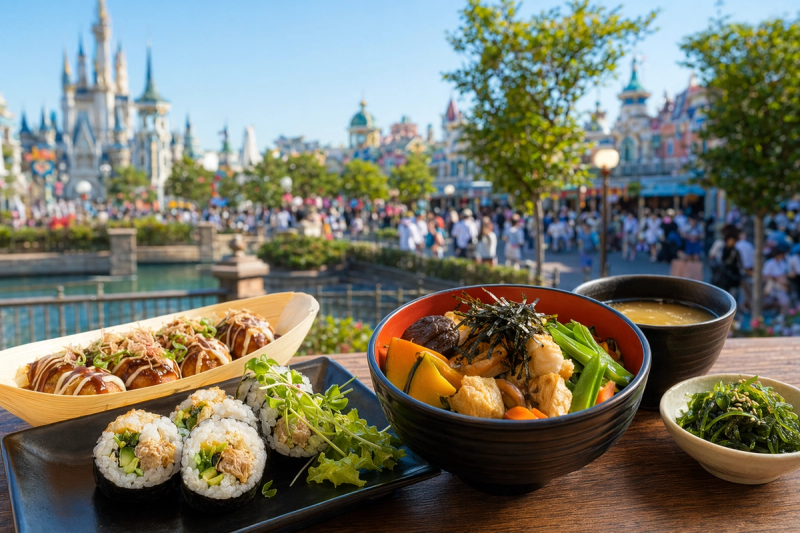
#Tokyo Disneyland and Tokyo DisneySea are gorgeous. Like, annoyingly gorgeous. DisneySea especially made me forget I was hungry for almost an hour, which is rare for me. The theming is so good that you’ll be walking around Mediterranean Harbor thinking, “I could live here,” and then your stomach reminds you that you are not a Venetian poet, you are an Indian vegetarian who needs lunch.
Food-wise, Tokyo Disney Resort is more organised than many places. The official website and app usually list restaurant menus, allergen info, and dietary details better than random blogs. But I still don’t blindly trust old recommendations because Disney menus in Japan change a lot with seasonal events. A dish someone ate last year may disappear, or the sauce may change. Also “plant-based” options have appeared in different forms in recent years, but availability can shift by restaurant and season, so please check the official menu near your travel date rather than trusting anyone’s 2021 Instagram caption. Mine included, ha.
What I usually look for inside Tokyo Disneyland
#At Tokyo Disneyland, I’ve had the best luck with simple western-style food, snacks, and desserts after confirming ingredients. Things like fries, popcorn, bakery items, salads without meat toppings, and pasta-style dishes are where I start looking. But again, sauces and broths are the troublemakers. Some restaurants are table-service or counter-service with more detailed menu cards, and staff can usually bring allergen information if you ask politely. I keep a Japanese note on my phone saying I do not eat meat, fish, seafood, bonito, chicken stock, pork, beef, gelatin, or dashi. It feels dramatic, but it helps.
Popcorn is the emotional support food of Tokyo Disney. The flavours rotate and some are sweet, some savoury, some weird-but-fun. I’ve had caramel-style popcorn that saved me during a long parade wait. But don’t assume every flavour is vegetarian. Butter, cheese, curry, soy sauce, and special event flavours can have surprise ingredients. Ask, check, then buy the big bucket if safe. I say this as a person who has carried an empty popcorn bucket across three train lines because “it’s cute yaar.”
Tokyo DisneySea felt slightly better for a slow food break
#DisneySea, for me, is better when you want to sit down and feel like you’re having a proper travel meal, not just survival snacks. The park has areas themed around Italy, Arabia, America, and more, so the food looks more varied. I remember sitting near the Arabian Coast with tired feet and thinking how funny it was that I came to Japan and was now hunting for the safest non-meat curry-ish option in a Disney desert land. Travel is strange like that.
Again, the trick is asking about the base. Japanese curry often contains meat stock, even when it looks like vegetable curry. Soups, ramen, and sauces can include seafood or chicken. If you’re okay with egg and dairy, you’ll find more desserts and bakery choices. If you’re vegan, it’s harder, no sugar-coating. I met an Indian couple from Pune in a queue who had packed khakra, dates, and instant poha cups for their hotel nights. We bonded instantly. Nothing brings desis together like discussing where to find hot water.
Universal Studios Japan: more chaotic, more fun, and you need to be sharper
#USJ in Osaka is pure chaos in the best way. The rides are intense, the crowds are intense, the themed food is intense, and the hunger is also intense because you are running between Super Nintendo World, Wizarding World of Harry Potter, Minions, and whatever limited-time anime thing is happening. If you’re comparing parks as an Indian family, especially food comfort and planning stress, this piece on Universal Studios Singapore vs Japan for Indians fits that exact conversation. Singapore is generally easier for Indian vegetarian food, but Japan has that insane atmosphere you can’t copy.
In USJ, I found it more important to check the official app and menus before going in. Some restaurants may have vegetarian-friendly items at times, but the menu changes, collab foods come and go, and not every staff member can explain every ingredient in English during rush hour. I don’t blame them. Imagine explaining dashi to 400 hungry tourists while someone dressed as a Minion walks past.
The USJ foods I personally found easiest to manage
#My safest approach at USJ has usually been: eat a solid breakfast in Osaka, carry small backup snacks, then use the park food for confirmed snacks and one planned meal. I look for fries, plain bakery items, desserts, fruit cups if available, churros or sweet snacks after checking ingredients, and simple western dishes. Harry Potter area is tempting because Butterbeer is everywhere and everyone is taking photos with foam moustaches. I tried it and it was fun, very sweet, very “I’m on holiday so calories don’t count.” But for stricter vegetarians, still ask about ingredients, because theme park drinks and toppings can change.
One of my funniest USJ food moments was me standing with a translation card outside a restaurant while my nephew kept yelling that he wanted Mario popcorn. I was trying to ask if a pasta had fish extract. The staff member was so kind, she checked a binder, came back, and explained as much as she could. The answer was not safe for us that day, but I still appreciated the effort. This is a big thing in Japan: people may not always be able to say yes, but they usually try to help if you’re polite and not acting like the world owes you paneer tikka.
Quick cheat sheet for Indian vegetarians in Japan theme parks
#| Food or situation | What to watch for | My practical move |
|---|---|---|
| Ramen, udon, soups | Dashi, pork, chicken, fish broth | Avoid unless staff confirms vegetarian broth clearly |
| Japanese curry | Meat stock or beef/pork extract | Ask about base, not just visible toppings |
| Fries and potato snacks | Shared fryers, seasoning with meat extract | Ask if plain and check seasoning |
| Popcorn | Butter, cheese, curry powders, event flavours | Check each flavour, even if you bought safe one yesterday |
| Desserts and jellies | Gelatin, animal-derived glaze, egg | Good options exist, but read/ask first |
| Pizza and pasta | Meat sauce, fish extract, bacon bits, cheese concerns | Plain-looking is not always safe |
| Packaged snacks | Gelatin, fish powder, bonito, chicken extract | Use translation app and don’t rush |
Sanrio Puroland, Fuji-Q, Legoland Japan and other parks: cute but don’t wing it
#Not every trip is Disney or USJ. Sanrio Puroland near Tokyo is adorable and very indoor, which is amazing if it rains. It has cute character foods, but cute doesn’t mean vegetarian. A Hello Kitty-shaped dish can still have meat sauce or gelatin. Fuji-Q Highland near Mount Fuji is more ride-focused, and if you’re there for roller coasters, honestly, your stomach may already be doing enough adventure. Food choices can feel more limited for strict vegetarians, so I’d eat before going and keep safe snacks. Legoland Japan in Nagoya is family-friendly and has more western-style food vibes, but again, menus and ingredient handling can change, so check directly.
One small park I visited had almost nothing I trusted except a sweet snack and bottled drink. Was I annoyed? Yes. Did I still have fun? Also yes. That’s the contradiction of travel. Sometimes food is the highlight, sometimes food is the challenge you survive so you can enjoy the view, the ride, the silly souvenir shop, the train ride back. I used to get cranky when I couldn’t find proper meals, but Japan taught me to plan better and be less dramatic. Only slightly less.
The Indian vegetarian translation card I keep on my phone
#This is not perfect Japanese, but a simple message helps. I usually show something like: “I am vegetarian. I do not eat meat, chicken, pork, beef, fish, seafood, bonito flakes, fish stock, dashi, meat broth, gelatin. Does this contain any of these?” If you’re Jain, add onion, garlic, root vegetables, egg, and whatever applies. If you don’t eat egg, say it separately because many people assume vegetarian can include egg. If you don’t eat dairy, say that too. Don’t make the staff guess your version of vegetarianism because India itself has like 47 definitions depending on family, region, festival day, and grandmother mood.
Also, be prepared for “no” or “we cannot guarantee.” That doesn’t mean they are being rude. In Japan, restaurants are careful about allergen and ingredient claims, and theme parks especially may avoid making promises if they can’t confirm cross-contact or exact stock base. I actually respect that. Better a clear no than a confident wrong yes. And please, please don’t argue with staff. Move on, eat your emergency snack, and live to fight another queue.
What I pack in my Indian vegetarian theme park survival kit
#I don’t pack like I’m moving house, because theme parks involve security checks and long walking days. But I do carry small things that don’t smell strong, don’t spill, and won’t offend everyone in line for Space Mountain. Thepla is wonderful but maybe don’t open a full achar dabba in a crowded indoor queue, okay. I’ve seen it happen. I pretended not to be Indian for 4 minutes.
- Dry snacks like khakra, roasted makhana, energy bars without gelatin, nuts, or chikki.
- A banana or simple fruit if allowed and practical, but check park rules because outside food policies vary.
- Electrolyte sachets, especially in summer. Japan can get humid and theme park walking is no joke.
- A refillable bottle if the park permits it, because buying drinks all day gets expensive fast.
- Screenshots of menus and a translation card, because internet gets patchy exactly when you’re hungry. Ofcourse it does.
Best areas to stay if food comfort matters
#For Tokyo Disney, staying near Maihama is convenient, but food outside the resort can be limited late at night depending on where you stay. If you want easier Indian restaurants or broader vegetarian choices, staying in Tokyo city and commuting can make sense, though early morning trains with kids are... character building. I’ve done both. The Disney-area hotel was amazing for tired feet. The city stay was better for dinner variety. Choose your pain.
For USJ, I like staying in Osaka with access to Namba, Umeda, or areas with Indian restaurants, then taking the train to Universal City. Osaka has a better big-city food backup feeling. You can find Indian restaurants, vegetarian-friendly cafes, and convenience stores everywhere. After USJ, we once came back exhausted and ate dal, rice, and aloo gobi at a tiny Indian place near our hotel. Was it the most authentic Osaka culinary experience? Maybe not. Did it feel like emotional medicine after 12 hours of queues? Absolutely.
My honest ranking: easiest to hardest for Indian vegetarians
#If I’m ranking only from a vegetarian food planning angle, not rides or beauty, I’d say Tokyo Disney Resort feels more organised, USJ feels more exciting but slightly more chaotic, and smaller parks vary wildly. But if you include the whole travel vibe, it gets messy. DisneySea gave me the best sit-and-breathe moments. USJ gave me the most fun. Sanrio gave me the cutest photos. Fuji-Q gave me fear, mostly. Food-wise none of them are like walking into an Indian wedding buffet, so don’t expect that. Expect effort, some confusion, and then a surprisingly good snack when you least expect it.
- Check official park menus close to your travel date, not months before.
- Do not assume “vegetable” means vegetarian.
- Ask specifically about dashi, fish stock, meat broth, gelatin, and extracts.
- Eat breakfast before entering the park. This single thing changes the whole day.
- Keep backup snacks, but respect park rules and don’t carry a full picnic unless allowed.
The foods I still dream about, and the ones I would skip
#The funny thing is, my best Japan theme park food memories are not always full meals. It’s caramel popcorn while watching people rush for parade spots. It’s a hot coffee in DisneySea when the air turned cold in the evening. It’s sharing fries with my nephew while we debated if we were brave enough for one more ride. It’s a sweet bakery snack after discovering the restaurant I wanted wasn’t safe for us. Food travel isn’t always about fancy tasting menus. Sometimes it’s about the thing you eat when your feet hurt and the lights come on and the whole park turns golden.
What would I skip? Anything I cannot verify when I’m tired and impatient. That’s when mistakes happen. I also skip random “vegetable” noodles unless they can confirm the broth. I don’t take chances with soups in Japan, because dashi is everywhere and honestly it’s part of the cuisine, not some hidden evil thing. We’re the visitors, we adapt. I’d rather eat safe fries than spend the evening feeling guilty or uncomfortable.
Final thoughts from one hungry traveller to another
#Japan theme parks are absolutely worth it for Indian vegetarians, but they reward planners. If you want the trip to feel fun and not like a daily ingredient investigation, do your homework before you go. Save menus. Learn a few food words. Carry snacks. Eat breakfast. Be kind to staff. And keep your expectations realistic: you may not get a hot Indian-style vegetarian meal inside every park, but you can still have a brilliant day with safe snacks, careful choices, and a proper dinner after.
Honestly, some of my favourite travel stories came from these food struggles. Me trying to explain dashi with hand gestures. My family celebrating a confirmed vegetarian dessert like we won a lottery. Eating dal in Osaka after USJ and nearly crying. That’s travel, na? Not perfect, not always smooth, but full of little victories. If you’re planning Japan with theme parks and vegetarian food anxiety, breathe. It’s doable. And for more food-travel stories and practical desi travel rambles, I keep finding myself browsing AllBlogs.in before trips.