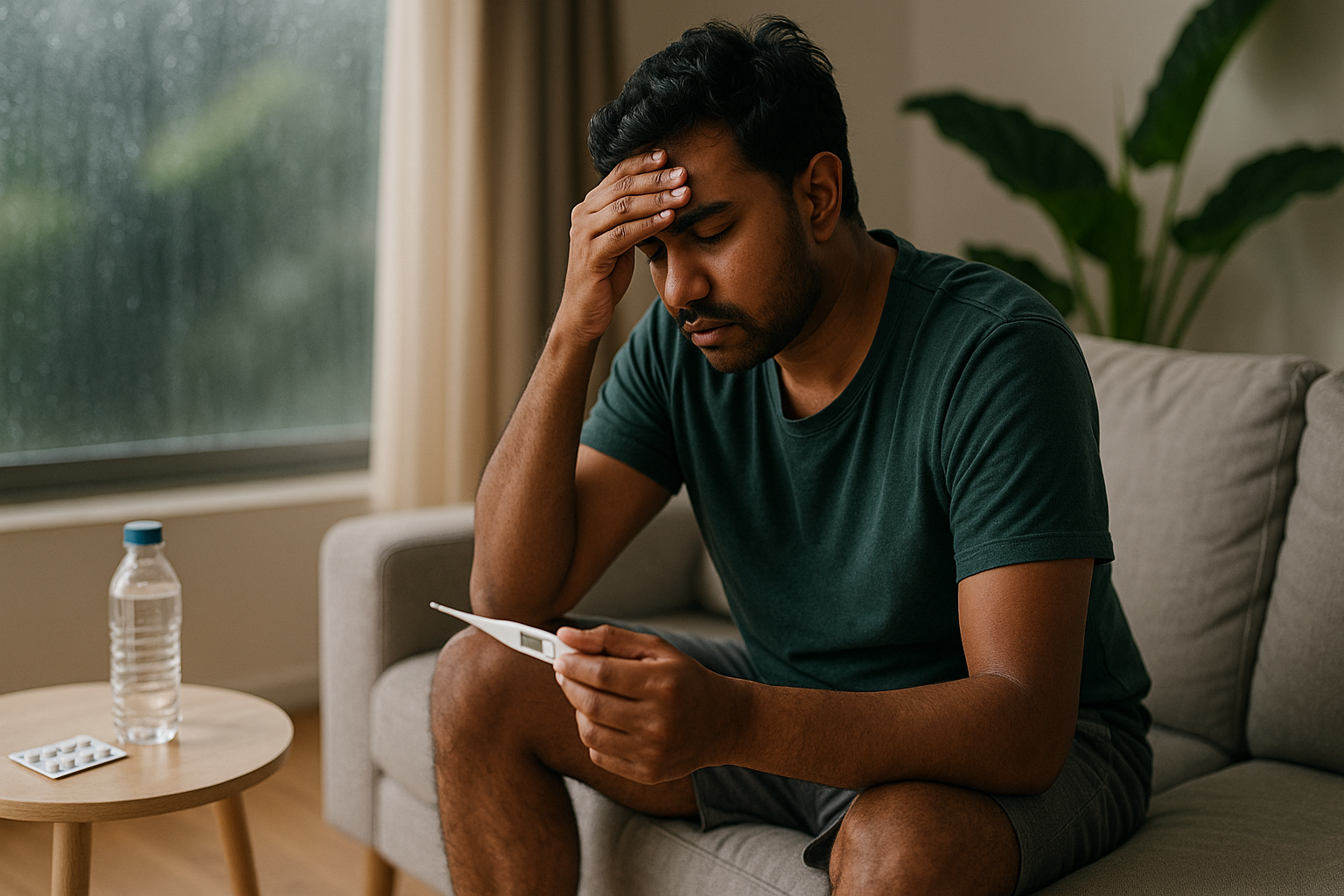
Every monsoon, same story. Someone in the family gets fever, everybody says, “arre seasonal hai,” and then the WhatsApp forwards begin. Give kadha. Eat papaya leaf. Don’t take this medicine. Get tested immediately. Don’t test too early. Honestly, it gets confusing fast. I’m writing this because I’ve seen way too many people in India, including people close to me, brush off dengue as just a “viral” and then panic 2 days later when the fever won’t quit. And yeah, not every monsoon fever is dengue. A lot of it is common viral fever, flu-like infections, sometimes COVID still, chikungunya, typhoid, even malaria in some places. But dengue has a pattern, and knowing that pattern can matter a lot.
A quick thing before I ramble too much. I’m not your doctor, obviously. This is based on current medical guidance, public health updates, and the kind of practical stuff people actually need at home when someone’s burning up with fever and no one knows what’s going on. I’m also writing this as someone who’s weirdly interested in health, the kind of person who reads lab reports line by line and annoys doctors with too many questions. So, you know... take the useful bits, and if symptoms are serious, please go see an actual clinician.
Why this gets so messy in monsoon season
#Monsoon in India is beautiful and also, sorry, kind of a germ festival. Mosquito breeding shoots up because of stagnant water, humidity is wild, people are indoors more, and viral infections spread like crazy in schools, offices, hostels, metro rides, all of it. Dengue especially tends to spike after rains because Aedes mosquitoes breed in clean stagnant water around homes, coolers, buckets, plant trays, rooftops, construction sites. That part still shocks people. It’s not just dirty drains. Even one forgotten container is enough.
In the last few years, doctors and public health teams have also been talking more about how dengue isn’t always showing up in the “classic textbook” way. Some people get high fever and body pain, sure. But others show more tummy symptoms, fatigue, mild rash, or just feel unusually wiped out. Kids and older adults can present differently too. And cities are reporting cases over a longer season now, not just one short burst, probably because climate patterns are changing mosquito habitats and breeding cycles. That’s one of the big health conversations in 2026, actually, climate-linked infectious disease risk isn’t some abstract thing anymore. It’s very, very local.
So... what even is “viral fever” and how is dengue different?
#This is where families get stuck. “Viral fever” isn’t one single disease. It’s a casual term people use when fever is caused by a virus and not bacteria. It can mean a simple upper respiratory viral infection, flu, adenovirus, enterovirus, and a bunch of other things. Usually there’s fever, weakness, headache, maybe sore throat, runny nose, cough, body ache. It often settles with rest, fluids, and time. Dengue, on the other hand, is a specific mosquito-borne viral infection caused by dengue virus. Different ballgame.
- Common viral fever often comes with cough, cold, sore throat, sneezing, congestion, or mild stomach upset
- Dengue more often brings sudden high fever, severe headache, pain behind the eyes, intense body ache, joint and muscle pain, nausea, vomiting, rash, and marked fatigue
- Bleeding gums, nosebleeds, abdominal pain, persistent vomiting, lethargy, restlessness, or a drop in urine output are not “normal seasonal fever” signs and need medical review fast
- In dengue, the dangerous period can begin when the fever starts coming down, which is honestly the sneaky part
That last point is the one people miss. With ordinary viral fever, if temperature comes down, everyone relaxes. With dengue, the phase around day 3 to day 7 can be risky, especially if plasma leakage starts and platelets or hematocrit trends become concerning. So if someone says, “fever is less now, but they look worse,” don’t ignore that. I remember a neighbour’s son like that, actually. Fever dipped, everybody thought thank God it’s over, and by evening he looked pale, sleepy, and had abdominal pain. They rushed him in time, but yeah... scary.
Symptoms that make me think ‘could be dengue’
#No symptom list is perfect, but if it’s monsoon and someone has a sudden high fever with smashing body pain, I start paying attention. Doctors often call dengue the “breakbone fever” because the aches can feel brutal. Not always, but often. Some people say their back hurts, legs hurt, eyes hurt, skin hurts, even the bedsheet touching them feels annoying. That level of ache is a clue, not a diagnosis, but a clue.
- High fever, often sudden onset
- Severe headache, especially frontal
- Pain behind the eyes
- Muscle and joint pain that feels much worse than a usual viral
- Nausea, vomiting, loss of appetite
- Rash, sometimes appearing after a couple of days
- Extreme weakness or unusual exhaustion
And then there are the warning signs, which really deserve their own spotlight. Severe abdominal pain. Persistent vomiting. Bleeding from gums or nose. Black stools. Drowsiness. Irritability. Cold clammy skin. Breathing difficulty. Reduced urination. These can point toward severe dengue or complications and shouldn’t be managed with random home remedies and optimism. I know Indian families love to “wait till morning.” Sometimes that’s fine. Sometimes it really isn’t.
Tests: when to do what, because timing matters more than people think
#This part gets mangled online. People get one test too early, it’s negative, then they assume it’s not dengue. Nope. Timing matters. In the early phase of dengue, the NS1 antigen test is commonly useful, especially in the first 1 to 5 days of illness. RT-PCR can also detect dengue early in many settings, though it’s not always as easy or affordable to access everywhere. After those first few days, IgM antibodies become more useful, usually from around day 4 or 5 onward. IgG has a different role and can reflect past infection too, so interpretation is not always simple-simple.
| Test | Best timing | What it helps with |
|---|---|---|
| NS1 antigen | Usually day 1 to 5 of fever | Early detection of dengue infection |
| RT-PCR | Early illness phase | Detects viral genetic material, useful in some labs/hospitals |
| Dengue IgM antibody | Usually from day 4 or 5 onward | Supports diagnosis in later phase |
| CBC / hemogram | Anytime, often repeated daily if dengue suspected | Tracks platelets, hematocrit, white cells |
| Liver function tests | When advised by doctor | Can show liver involvement in dengue |
The CBC is hugely important, maybe more than people realize. Not because platelets alone decide everything, but because trends matter. In dengue, doctors watch platelet count, hematocrit, total white cell count, and the patient’s overall condition together. A falling platelet count sounds dramatic, and yes, it matters. But platelet count by itself is not the whole story. A patient with low platelets but stable vitals may be watched closely, while someone with warning signs and fluid leakage can be in more danger even before platelets hit some scary number. This is where people get obsessed with one lab value and miss the actual clinical picture.
One thing I’ve learned the hard way from watching family members get sick is this: don’t chase a platelet number like it’s the only truth. Watch the person, not just the paper.
Dengue vs a regular viral fever: the practical comparison families need
#If I had to explain it to a friend over chai, I’d say it like this. A regular viral fever usually looks respiratory-ish or generally flu-ish. There may be fever, sore throat, cough, runny nose, tiredness, maybe mild loose motions. Dengue often has less cough-cold drama and more pain, more weakness, more nausea, and more concern around day 3 to 7. Also, dengue can become serious even when the fever appears to improve. That’s the weird and dangerous twist.
| Feature | Dengue | Typical viral fever |
|---|---|---|
| Cause | Dengue virus spread by Aedes mosquito | Many different viruses |
| Spread | Mosquito bite, not casual contact | Often respiratory droplets, close contact, or other viral routes |
| Fever | Often sudden and high | Variable, often moderate to high |
| Cough/cold | Usually not the main feature | Often common |
| Body pain | Often severe | Usually mild to moderate |
| Eye pain | More suggestive of dengue | Less common |
| Platelet drop | Can occur | Usually not a major issue |
| Danger phase | Often around fever defervescence, day 3 to 7 | Usually gradual recovery without a classic critical phase |
The medicine mistake almost every household makes
#Let’s just say it plainly. Don’t self-medicate with ibuprofen, diclofenac, aspirin, or other NSAID-type painkillers when dengue is possible unless a doctor specifically tells you to. These can increase bleeding risk or worsen things in the wrong situation. Paracetamol is generally the safer fever medicine used, within proper dosage limits. And no, more is not better. People forget paracetamol can harm the liver if overused, which is extra not-great when dengue itself can affect liver enzymes.
Hydration matters a ton. This sounds boring, I know, but it’s honestly one of the biggest pieces of supportive care. Oral fluids, ORS, soups, coconut water if it suits the patient, plain water, whatever they can tolerate. If vomiting is persistent or urine output drops, they need medical assessment because dehydration and plasma leakage are a bad combo. I’ve seen families focus on fancy foods and ignore fluids. Big mistake.
Stuff people swear by online... and my slightly grumpy take
#Papaya leaf juice gets mentioned every single season. Giloy too. Kiwi became a weird health hero for a while. Look, I get why people reach for home remedies. It feels like doing something. But none of these should replace proper monitoring, medical evaluation, fluids, and indicated testing. Some small studies and lots of anecdotes exist around certain supplements or traditional remedies, but evidence is still mixed and not strong enough to use them as primary treatment. If you want to eat fruit because the patient likes it, fine. Just don’t delay care because some uncle said platelets will magically bounce back by evening.
What doctors usually watch for in suspected dengue
#By 2026, there’s more emphasis on early triage and risk stratification, which is a fancy way of saying doctors are trying to identify who can safely recover at home and who needs closer observation. They’ll look at hydration status, vomiting, abdominal pain, bleeding, blood pressure, pulse, breathing, urine output, age, pregnancy, other illnesses like diabetes or kidney disease, and serial lab trends. Not everybody with dengue needs hospital admission. But some absolutely do.
- Persistent vomiting or inability to drink enough
- Severe abdominal pain or increasing tummy distension
- Bleeding symptoms
- Dizziness, fainting, low blood pressure, extreme lethargy
- Breathing difficulty or fluid accumulation concerns
- Very low urine output
- Pregnancy, infancy, old age, or significant comorbidities
There’s also been growing public health discussion around better use of point-of-care diagnostics in urban clinics and emergency settings, because early access matters. Some hospitals are using more structured dengue pathways now, which honestly is good, because random panic management helps nobody.
What recovery actually feels like, because no one talks enough about that
#Even after the fever settles, people can feel wrung out for days or weeks. Appetite can stay low. Energy can be rubbish. I’ve noticed this with dengue more than with many ordinary viral fevers, though of course severe viral illnesses can also drag on. The pressure to “bounce back” quickly is so Indian-family coded, lol. Someone’s finally afebrile and immediately gets told to answer emails, attend class, go to a wedding. Please no. Rest is not laziness. Recovery is part of treatment, basically.
Some people ask if there are wellness things that help in recovery. Honestly, yes, but not in the magical-influencer way. Simple food, enough fluids, sleep, avoiding alcohol, easing back into activity, and follow-up tests when advised. Protein intake matters if the person can tolerate it. So does not skipping meals once appetite returns. I’m also very pro mosquito protection during recovery because if one person in the house has dengue, that means mosquitoes are around and biting. Nets, full sleeves, repellents, window screens, emptying standing water, all that old-school stuff still matters. Boring but solid.
Prevention in 2026 is still surprisingly basic... and still super effective
#With all our apps and smart watches and wellness tech, dengue prevention still comes down to pretty unglamorous habits. Weekly dry day at home. Empty and scrub coolers. Check trays under plants. Cover water storage. Clean roof drains. Don’t let buckets sit around. Use repellents with proven active ingredients. Wear long sleeves if mosquitoes are heavy. Schools, apartments, offices, construction sites, everybody has to do it together or the effort falls apart. Community action sounds cheesy, but one careless balcony can ruin the whole building’s vibe.
Public awareness has improved, I think, but not enough. People still assume mosquito control is only a government job. It isn’t. Also, because Aedes mosquitoes bite during daytime too, a lot of folks use nets only at night and feel sorted. Nope, not fully. Daytime precautions matter. This catches people out all the time.
When I’d stop reading blogs and just go to the hospital, straight up
#If the fever is high and unrelenting with severe body pain in monsoon season, get evaluated. If dengue is suspected, ask when to test based on day of illness. If there’s abdominal pain, repeated vomiting, confusion, bleeding, fainting, trouble breathing, or not peeing enough, that’s not a “see tomorrow” situation. Go in. Same if it’s a child, pregnant person, elderly relative, or someone with a chronic illness. Also if the patient just looks wrong. Families know this feeling. Sometimes you can’t explain it, but the person looks off. Trust that instinct and get help.
And one more thing, because this matters. Please don’t pressure doctors for platelet transfusions just because the number looks low on paper. Transfusion decisions depend on bleeding, severity, and overall clinical context. Unnecessary transfusions aren’t harmless. This is one of those myths that really needs to retire already.
My take, after years of seeing monsoon fevers around me
#I think the biggest problem isn’t lack of information. It’s too much messy, half-correct information. One website says don’t worry. Another says emergency!!! A relative says all viral fevers are dengue now. Someone else says dengue is overhyped. Truth is somewhere in the middle. Most fevers aren’t catastrophic, but dengue deserves respect. The trick is not panic, not denial either. Observe carefully. Test at the right time. Hydrate. Avoid the wrong painkillers. Watch for warning signs. Follow up if the person looks worse when the fever drops. That’s the practical middle path, I guess.
If you’re dealing with this right now, I’m sorry. It’s stressful, sweaty, tiring, and the waiting is awful. But you don’t have to figure it all out alone. A good local doctor and timely tests can clear up so much confusion. And if you like health stuff explained in a normal-human way, not too textbook-y, you can always wander over to AllBlogs.in too. There’s usually something useful there.