The morning my fridge started sweating all over my dinner plans
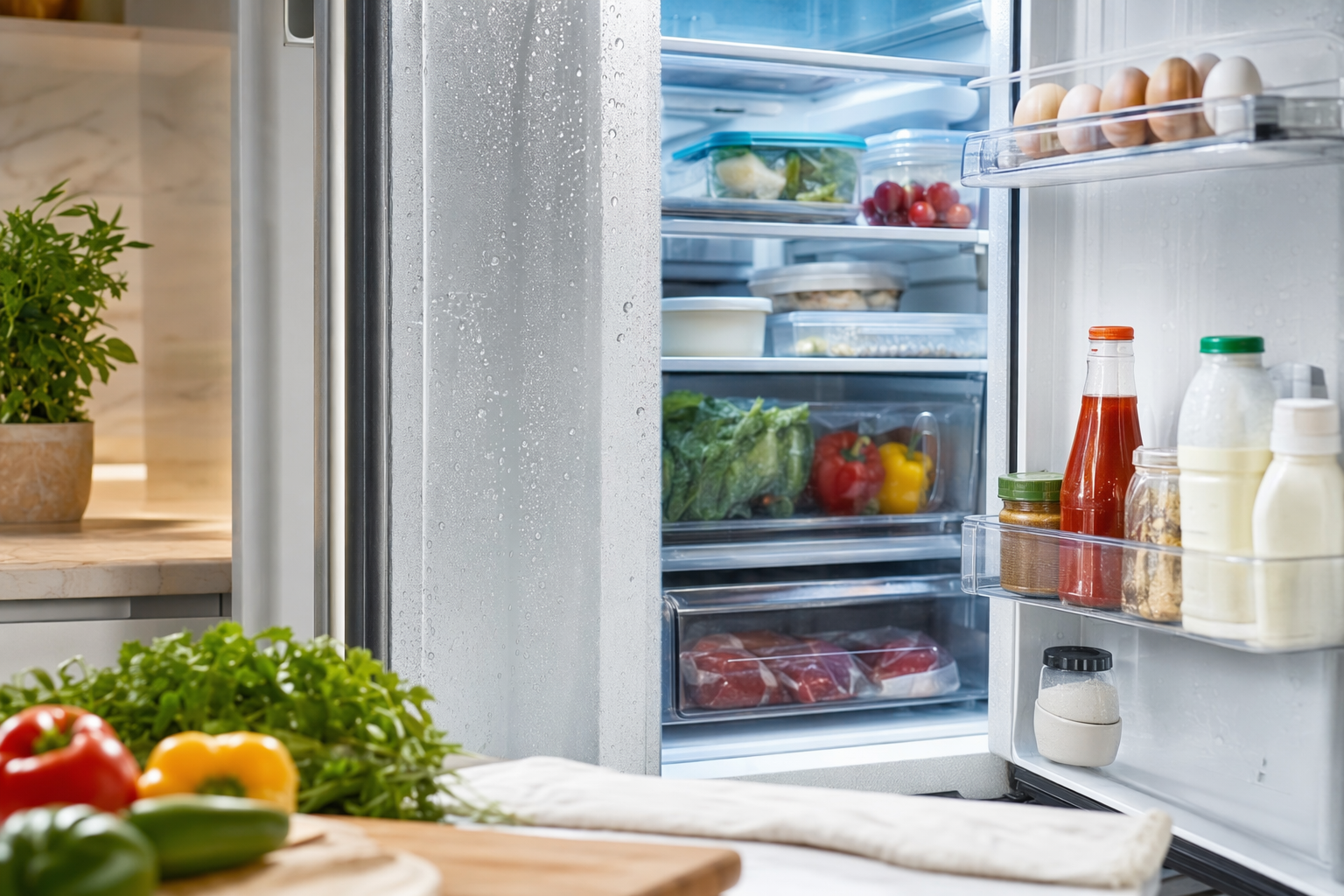
#I first noticed the condensation thing on a Saturday morning, which is honestly the rudest possible time for a fridge to act dramatic. I had this whole cozy lunch plan in my head: cold soba noodles, cucumbers, a little sesame dressing, the leftover roast chicken I was weirdly proud of, and a bowl of strawberries I’d bought from the market because they smelled like actual summer. Then I opened the fridge and everything looked… misty. Little beads of water on the back wall, a wet patch under the salad drawer, and the strawberries sitting in their punnet like they’d been through a tiny monsoon.
If you love food, fridge condensation is not just an appliance problem. It’s personal. It’s the difference between crisp lettuce and sad green ribbons. Between last night’s biryani tasting even better the next day, or becoming a questionable science project. It’s also one of those things people ignore until the milk smells off or the deli drawer turns into a damp little cave. I’ve done that too, so no judgement here.
The good news is that most fridge condensation comes down to a few boring-but-fixable things: warm air getting in, blocked airflow, hot food being stored too soon, bad door seals, temperature swings, or drainage problems. The slightly less fun news is that once moisture shows up, food safety needs a quick check. Not panic. Just a sensible sniff-free, thermometer-friendly check, because your nose is not a food safety lab no matter how confident your auntie sounds.
What condensation in the fridge actually means, in normal kitchen language
#Condensation is basically water from warm, humid air turning back into droplets when it hits something cold. Same as when your iced coffee sweats on the table, except now it’s happening inside the box where your cheese, eggs, leftovers, herbs, sauces, chutneys, and emergency chocolate live. When warm kitchen air enters the fridge, it cools quickly and releases moisture. That moisture lands on shelves, walls, containers, produce, and sometimes the ceiling of the fridge compartment.
A tiny bit can be normal, especially if you’ve been opening the door a lot while cooking. I do this constantly when I’m making pasta, because apparently I need to stare into the fridge twelve times before deciding yes, I am using parmesan again. But constant wetness, puddles, dripping from the ceiling, fogged-up containers, or produce that molds fast are signs something’s off.
One thing I’ve learned the hard way: condensation is not always because the fridge is “too cold.” Sometimes the fridge is too warm. Sometimes it’s cycling badly. Sometimes the drawer is too packed with coriander, spring onions, carrots, half a cabbage, and three mystery lemons that nobody wants to admit they bought. Cold appliances are simple until they’re not.
Cause number one: warm air keeps sneaking in
#This is the big one. Every time the fridge door opens, warm humid air gets inside. If the door is opened often, held open while you decide what to snack on, or not shut properly, the fridge has to fight all that warm air. The moisture in that air condenses on the cold surfaces. In a busy kitchen, it adds up fast.
I once cooked for six friends in my tiny apartment and my fridge looked like a rainforest by dessert. People kept opening it for lime wedges, soda, yogurt dip, more soda, “wait where’s the chili crisp?”, and at one point someone just stood there with the door open discussing whether the pickles looked homemade. They were not homemade. They were from a jar. But the fridge had already lost the battle.
The simple fix is annoyingly obvious: open less, close faster, and make sure nothing blocks the door. But also, organize the fridge like someone who actually eats from it. Put the things you grab often near the front. Keep condiments in predictable spots. If you meal prep, label containers so you’re not opening every tub like it’s a game show. I’m not always this organized, by the way. My fridge has had weeks where it looks like a tapas bar after an earthquake.
Door seals: the rubbery little heroes nobody respects
#The gasket, that soft rubber seal around the door, is supposed to keep cold air in and warm air out. If it’s dirty, cracked, loose, or warped, humid air can leak in all day. Then you get condensation, temperature instability, and food that doesn’t last like it should.
A quick test: close the fridge door on a piece of paper or a thin currency note. If it slides out too easily, the seal may not be gripping well. Try this in a few places around the door, especially corners. Also clean the gasket with warm soapy water, then dry it properly. Sticky jam, flour dust, turmeric fingerprints, and that mysterious brown sauce residue can stop the seal from sitting flat.
If the gasket is torn or stiff, replacement might be needed. It’s not glamorous kitchen work. Nobody posts a moody Instagram reel of themselves replacing fridge seals with soft jazz in the background. But honestly, it can save your herbs, your leftovers, and your electricity bill. A bad seal makes the fridge work harder than a line cook on a festival weekend.
Hot food in the fridge: my soup mistake and what I do now
#I used to be terrified of putting warm food in the fridge because my grandmother always said it would “spoil everything.” Then I went too far the other way and left a huge pot of lentil soup cooling on the counter for ages while I watched one episode of something, which became three episodes because obviously. Not ideal.
Food safety guidance generally says perishable food should not sit in the danger zone too long. The danger zone is roughly 40°F to 140°F, or 4°C to 60°C, where bacteria can grow more quickly. The usual rule is to refrigerate perishables within 2 hours, or within 1 hour if it’s very hot out. The fridge itself should be at or below 40°F, which is 4°C. A freezer should be around 0°F, or -18°C.
So here’s the balance: don’t shove a giant steaming stockpot straight into the fridge, because it can raise the internal temperature and create loads of condensation. But don’t leave it out forever either. I divide hot food into shallow containers, leave the lids slightly ajar for a short time so steam can escape, then cover and refrigerate. For big batches, an ice bath works beautifully. I learned this after making chicken curry for a dinner that turned into breakfast the next day, and yes, I was very smug about how good the curry tasted, but only because I cooled it properly.
Your fridge might be too full, too empty, or just badly arranged
#Airflow matters. Cold air needs space to move around. When the fridge is packed tight, the vents can get blocked and some areas become warmer or wetter than others. You’ll see condensation near the back wall, soggy greens, or containers sweating even when the door seals are fine.
But an almost-empty fridge can also behave a bit weirdly because there’s less chilled mass to help hold a steady temperature when the door opens. I’m not saying you need to buy groceries just to please the appliance, but keeping a few basics in there helps. Water bottles, jars, hardy vegetables, whatever you actually use.
- Don’t press bags of spinach, bread, or takeout boxes right against the back wall.
- Leave a little breathing space around vents.
- Keep raw meat, poultry, and seafood in sealed containers on the lowest shelf so drips don’t ruin your day.
- Use clear containers if you can, because mystery tubs create door-open time and emotional stress.
My personal fridge rule is that anything expensive or delicate gets the VIP treatment. Fresh herbs wrapped lightly, cheese in the right zone, berries dry and visible, leftovers dated if I’m pretending to be a responsible adult. Damp drawers are especially brutal on berries, by the way. If strawberries, blueberries, or raspberries are molding too fast in your fridge, moisture is probably part of the story. I’ve written more practical berry-specific storage notes here: How to Store Fresh Berries So They Last Longer.
The drain hole problem, aka why is there a puddle under the crisper?
#Many fridges have a small drain channel or drain hole at the back that carries condensation away. If crumbs, bits of leaf, ice, or general fridge gunk blocks it, water can collect under the drawers. This is one of those problems that feels mysterious until you find the tiny blocked hole and suddenly feel like a detective in an apron.
Unplugging the fridge before doing any proper poking around is the safe move. Check the manual if you have it. A blocked drain can often be cleared gently with warm water and a soft flexible cleaning tool, but don’t jab it with a knife or skewer like you’re fighting a crab shell. You can damage things. Also, if there’s ice buildup, forcing it usually makes the problem worse.
I discovered my own blocked drain after a bunch of coriander leaves escaped their bag and turned into green confetti behind the drawer. The smell was… earthy, let’s say. Not rotten exactly, but definitely not the fresh market vibe I was hoping for. Now I clean that area every couple of weeks, usually when I’m already annoyed at myself for buying too much produce.
Temperature settings and the humble fridge thermometer
#If you take only one practical thing from this post, let it be this: buy a cheap fridge thermometer. Built-in dials that say 1 to 5 or “coldest” are not always telling you the real temperature. They’re settings, not measurements. The only way to know if your fridge is holding food safely is to measure it.
Place the thermometer in the center area, not jammed against the back wall, and check it after the door has stayed closed for a while. You want the fridge at or below 40°F or 4°C. I like mine around 37°F, about 3°C, because it gives a little buffer without freezing lettuce into sad glassy leaves. If things are freezing in the fridge, turn it slightly warmer and check airflow. If it’s creeping above 40°F, adjust colder, reduce door opening, check seals, and consider whether the fridge is struggling.
Temperature swings can happen during power cuts too, and that’s when condensation often shows up because warm air and melting frost shift moisture around. If power supply is unstable where you live, especially in Indian homes dealing with outages or voltage fluctuations, this deeper guide may help: Refrigerator Stabilizer vs Surge Protector vs UPS: What Should Indian Homes Use During Power Cuts?. It’s not sexy reading like a dumpling crawl, but it’s useful.
Quick food-safety checks when the fridge has been wet or warm
#This is the part where I get a little strict, because I love leftovers but I do not love gambling with them. If your fridge has condensation but is still holding at or below 40°F, most properly stored food is likely fine. Dry wet packaging, wipe shelves, fix the cause, and keep going. But if the fridge temperature has been above 40°F for more than 2 hours, especially with meat, dairy, cooked rice, seafood, cut fruit, cooked vegetables, or leftovers, you need to be more careful.
| Food or situation | What I check | What I usually do |
|---|---|---|
| Milk, cream, soft cheese | Temperature history, sour smell, curdling, swollen packaging | If above 40°F for over 2 hours, I toss. Not worth it. |
| Cooked rice, pasta, biryani, noodles | How long it was warm, container wetness, date cooked | I’m extra cautious with rice. If unsure, out it goes. |
| Raw chicken, fish, mince | Package leaks, fridge temp, time above 40°F | Discard if temperature abuse is likely. Also sanitize the shelf. |
| Whole vegetables | Visible mold, slimy texture, wet storage bag | Usually salvageable if firm, but wash and dry well. |
| Berries and cut fruit | Mold, fizzing smell, mushy wet spots | Moldy berries go. Cut fruit is more risky if warm too long. |
| Eggs | Cracks, condensation on shells, temperature swings | Keep refrigerated. If they warmed too long, I don’t play hero. |
And please don’t rely on “it smells fine.” Some harmful bacteria don’t create obvious smells or slime. I say this as someone who has sniffed leftover dal like a suspicious raccoon. Smell can tell you when food is obviously spoiled, sure, but it can’t prove food is safe.
The condensation and mold connection, especially in produce drawers
#Moisture plus food plus time equals mold’s favorite little vacation package. Produce drawers are meant to manage humidity, but they are not magic. If you put wet herbs, damp lettuce, mushrooms in a sweaty plastic bag, or berries with condensation trapped under the lid, you’re giving mold a head start.
I’m weirdly emotional about herbs because fresh coriander, mint, dill, basil, and parsley can change a meal completely. A tired bowl of chickpeas becomes lunch. Plain yogurt becomes dip. Eggs become dinner. So I dry herbs before storing them, wrap them in a barely damp paper towel if needed, and use containers or bags that don’t trap too much water. Mushrooms I keep in paper if possible, because sealed plastic makes them slimy faster. Lettuce gets washed, spun very dry, and stored with a towel. Yes, I own a salad spinner and yes, I used to think that made me boring. Now I think it makes me rich in future sandwiches.
The crisper humidity sliders are worth using. High humidity is better for leafy greens that wilt. Low humidity is better for ethylene-producing fruits and items that rot faster with trapped moisture. But if your drawer is literally wet, sliders won’t save it. Dry the drawer, check the drain, don’t overpack it, and stop putting warm produce bags straight from a hot car into the fridge without opening them up a little.
Frost, freezer burn, and when the moisture problem is bigger than the fridge side
#Sometimes people say “my fridge has condensation” but they also mean there’s frost in the freezer, ice crystals on food, or frozen packets that look like they’ve been dusted with snow. That can point to door leaks, warm air entering, poor wrapping, temperature swings, or defrost issues. Moisture is sneaky. It moves between air, surfaces, and food, and it does not care that you spent good money on salmon.
Freezer burn is different from fridge condensation, but they’re cousins in the same annoying family. Freezer burn happens when moisture leaves the food surface and forms ice crystals, often because food wasn’t wrapped well or the freezer temperature fluctuated. It’s more of a quality issue than a safety issue if the food has stayed frozen, but the texture can be tragic. I have eaten freezer-burned peas in fried rice and survived, but I did complain the whole time.
If you’re seeing both fridge condensation and freezer frost, check door seals on both compartments, avoid leaving doors open, cool food before freezing, and wrap food tightly. For a deeper dive into that side of the cold-food universe, I like this guide: How to Prevent Freezer Burn and Keep Food Better.
My no-drama cleanup routine after a sweaty fridge episode
#When I see condensation now, I don’t immediately spiral. I used to. I’d imagine everything spoiled, dinner ruined, takeout required, budget destroyed. Now I do a little routine, usually with music on and a cup of tea going cold nearby because that’s my brand.
- Check the thermometer first. If the fridge is at or below 40°F, I relax a bit. If it’s above, I start thinking about time and risky foods.
- Move food into a cooler if I need to clean properly, especially dairy, meat, seafood, and cooked leftovers.
- Wipe visible water with clean towels. I don’t just push water around with a sad sponge.
- Clean shelves and drawers with warm soapy water, then dry them completely before putting food back.
- Check door seals, vents, and the drain area. Those three solve a lot of mysteries.
- Repack damp foods. Wet cardboard, sweaty berry boxes, and loose greens get sorted right away.
If raw meat juice has leaked, that’s a different level of cleaning. Remove anything contaminated, wash the area with hot soapy water, then sanitize with a food-safe sanitizer or a properly diluted bleach solution, following the product label. Let surfaces air dry if the sanitizer instructions say so. Cross-contamination is not a cute kitchen quirk. It’s the fastest way to turn Sunday roast into Monday regret.
When condensation means you should call someone
#Some problems are beyond a quick wipe and a confident attitude. If condensation keeps returning even after you clean the seals, unblock the drain, adjust the temperature, and stop overpacking the fridge, it may be time to call a technician. Same if the fridge can’t stay at or below 40°F, makes strange clicking noises, runs constantly, freezes food in one section while warming another, or has water pooling again and again.
Older fridges can have failing thermostats, damaged sensors, defrost system issues, fan problems, or insulation trouble. I know, appliance repair is not the fun kind of food spending. I would rather buy excellent olive oil and a silly amount of cheese. But a fridge is basically the quiet sous-chef of the home kitchen. If it’s failing, everything else gets harder.
Also check placement. A fridge jammed tight against the wall, sitting beside a hot oven, or baking in direct sun may struggle more. It needs ventilation around it according to the manufacturer’s instructions. I once lived in a flat where the fridge was wedged next to the stove, and every time I made soup the poor thing sounded like it was training for a marathon.
Little habits that keep food fresher and the fridge less swampy
#The best fix is boring prevention. I say boring with love. The small habits are what keep your Friday market haul crisp until Tuesday and your leftovers safe enough to actually enjoy. And isn’t that the whole point? I want the roasted cauliflower to become tacos, not compost. I want the paneer curry to taste better tomorrow. I want strawberries that don’t betray me overnight.
- Cool cooked food in shallow containers so it chills quickly without steaming up the fridge.
- Dry washed produce before storing it. Like, actually dry it, not “shake it twice and hope.”
- Don’t store uncovered bowls unless you enjoy fridge rain and mystery smells.
- Keep a thermometer inside and glance at it the way you glance at the weather.
- Do a tiny weekly reset: toss old food, wipe wet spots, check the crisper, forgive yourself for the forgotten cucumber.
One more opinion, and I will die on this hill: glass containers with decent lids make leftovers more lovable. You can see what’s inside, they don’t hold smells as badly, and they stack nicely. Are they heavier? Yes. Do I still drop lids into the drawer and curse? Also yes. But they help me eat the food I already cooked, which is the cheapest restaurant in town.
A quick “keep or toss” mindset, because wasting food hurts
#I hate throwing food away. Truly hate it. I grew up in a kitchen where leftovers had destinies: rice became fried rice, dal became paratha filling, roast vegetables went into omelets, stale bread became crumbs or pudding. Food waste feels personal when you’ve watched someone turn scraps into dinner like magic.
But food safety has to win over guilt. If a risky food has been too warm for too long, tossing it is not wasteful. The mistake already happened when the temperature got away from you. Eating it won’t reverse the waste, it just adds risk. That little mental shift helped me a lot. I still feel annoyed, but I don’t argue with the chicken anymore.
My kitchen rule now: save food aggressively before it becomes risky, but once it’s risky, let it go. No leftover is worth spending the night regretting your bravery.
For lower-risk foods, use judgement. Whole carrots with a little surface dampness? Dry them, trim if needed, cook them. A sealed jar of mustard with condensation outside? Fine, wipe it. A tub of cooked seafood that sat warm because the fridge door didn’t close? Nope. The more protein-rich, cooked, cut, moist, and perishable the food is, the less I negotiate.
Final fridge thoughts, from one hungry person to another
#Fridge condensation looks like a small thing, but it touches everything I care about in the kitchen: flavor, texture, safety, money, and that smug little happiness of opening the fridge and knowing dinner is already halfway done. Most of the time, the fix is not dramatic. Check the temperature. Clean the door seal. Stop blocking vents. Cool hot food properly. Dry produce. Clear the drain. Keep the door shut unless you’re actually grabbing something, not searching for emotional answers in the pickle shelf.
And if your fridge has been warm, do the food-safety checks without turning it into a whole crisis. A thermometer and a calm brain go a long way. I’ve lost berries, soup, herbs, and one very promising mango cheesecake to bad fridge habits, and I still think home cooking is worth all the fiddly details. Maybe especially because of them. The better we store food, the more we get to enjoy it later, and leftovers are honestly one of life’s underrated luxuries.
Now go peek at your fridge gasket, rescue the coriander, and maybe label that container you’re pretending you’ll remember. If you like casual kitchen deep-dives like this, with practical food fixes and a bit of real-life mess, have a wander through AllBlogs.in sometime.