The sad little chicken thigh that taught me everything
#I used to think freezer burn was just one of those tiny kitchen annoyances, like when cilantro turns into green slime overnight or when you swear there was one more lemon in the crisper but nope, it vanished into the produce void. Then one night I pulled a pack of chicken thighs out of the freezer, all proud because I was going to make my Sunday-ish roast chicken with garlic, paprika, and way too much olive oil, and the meat looked like it had been left on the moon. Pale patches. Dry corners. Little ice crystals stuck to it like it had been through emotional trauma. I cooked it anyway because I was hungry and stubborn, and wow. It tasted like chicken-flavored cardboard that had once had dreams.
That dinner was not my finest hour. I remember sitting there with my little plate, dipping every bite into pan sauce like I was rescuing it, and thinking, ok, this is my fault. Not the freezer’s fault, not the chicken’s fault, mine. I had tossed it in there in the flimsy supermarket tray, barely wrapped, and then forgot it behind frozen peas and a bag of mango chunks. So yeah, if you’ve ever opened the freezer and found sad grey meat or ice-crusted berries that taste like the inside of a snowman, I am with you. Fully.
Freezer burn isn’t dangerous, but it is rude
#Let’s get this part out of the way because people get nervous about it. Freezer burn is mostly a quality problem, not usually a safety problem. Food that has been kept frozen solid at 0°F, or about -18°C, stays safe in the freezer for a very long time, according to the usual food safety guidance from places like USDA. But safe does not always mean delicious. That’s the catch, and honestly it’s a big one if you care about food even a little.
Freezer burn happens when moisture leaves the surface of food and turns into ice crystals, and oxygen gets in there too, making flavors go flat or weird. Meat gets leathery. Bread gets stale in that freezer-stale way. Ice cream gets crunchy and sad. Vegetables lose that sweet, fresh thing. It’s basically dehydration plus oxidation, which sounds like a chemistry lesson, sorry, but it matters because the solution is not magic. You prevent freezer burn by keeping air away, freezing food quickly, and not letting temperatures bounce up and down like a toddler on a sofa.
My very unscientific rule: if air can touch it, the freezer will eventually make it taste like regret.
Start before the food even reaches the freezer
#This is the bit I ignored for years. I thought freezing was just throwing food into the cold box and letting future-me deal with it. Future-me, by the way, is always irritated. The truth is, preventing freezer burn starts when the food is still fresh, warm, juicy, and worth saving. If you freeze something when it’s already halfway tired, freezer burn is like adding insult to injury. You can’t freeze a mediocre stew and expect it to come out like grandma’s best pot roast. I mean, sometimes stew is forgiving, but still.
Cool cooked food before freezing, but don’t leave it sitting around forever. I usually spread rice, chili, meatballs, or roasted veg in a shallow container so it cools faster, then pack it once it’s not steaming like a little volcano. Hot food in the freezer can raise the temperature around it, which is not great for everything else, and it also creates condensation that becomes ice. Ice is pretty in cocktails, not on your lasagna.
And freeze sooner than you think. If I make a big pot of soup and tell myself, “Oh I’ll eat that all week,” that is a lie half the time. By day three I’m bored and ordering noodles. Now I freeze some on day one or day two while it’s still good. This one habit has saved me so many dinners, especially during those weeks where cooking feels like a sport I did not train for.
Wrap like you actually care about your future dinner
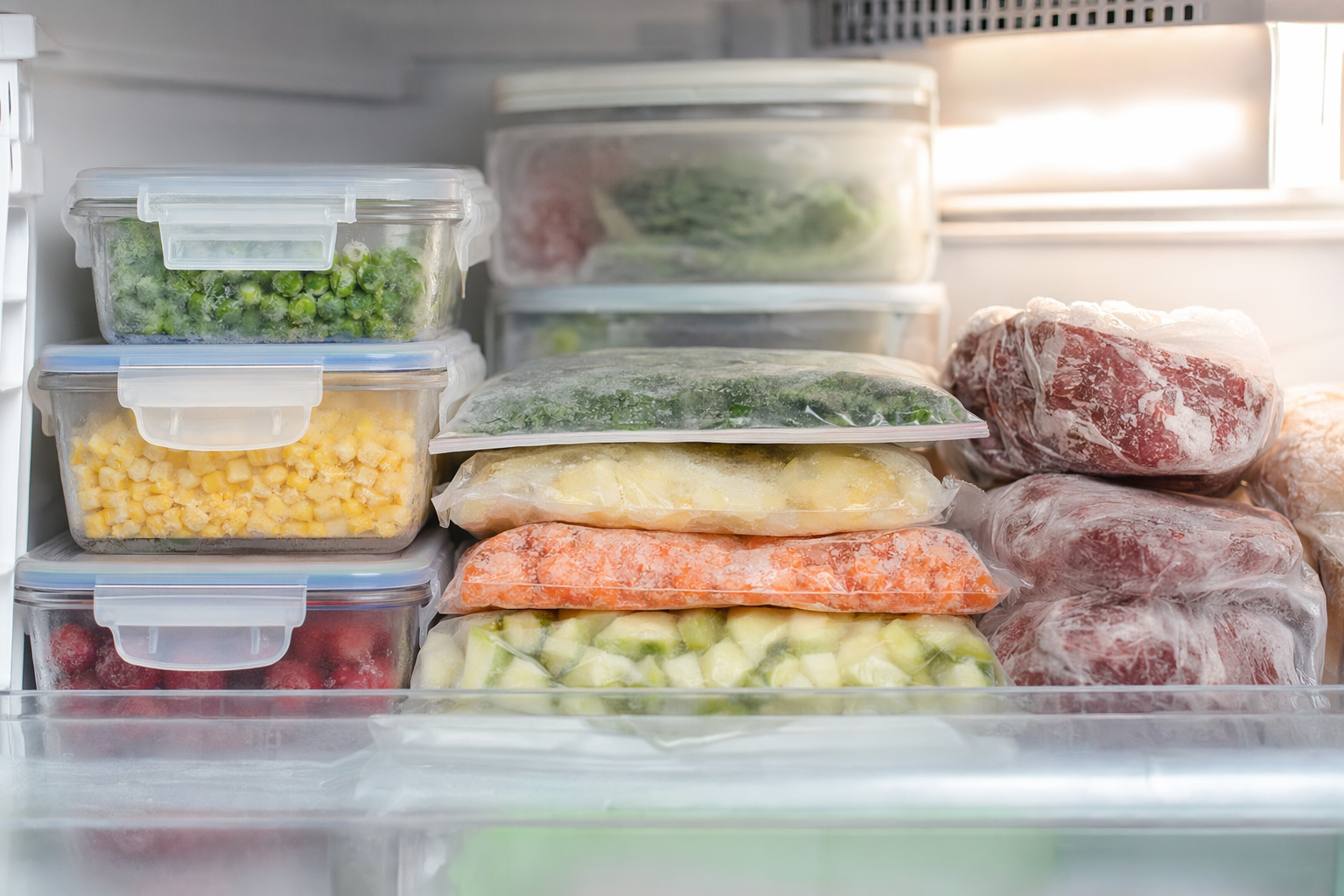
#Packaging is the whole game. I know people love gadgets, and yes, vacuum sealers are amazing if you freeze a lot of meat, fish, garden produce, or batch-cooked meals. But you can do a really good job with basic freezer bags, plastic wrap, foil, parchment, and sturdy containers too. The main thing is removing as much air as possible and creating a tight barrier.
For meat, I like the double-wrap method when I’m not vacuum sealing. First I wrap the meat tightly in plastic wrap or freezer paper, pressing it right against the surface so there aren’t big air pockets. Then it goes in a freezer bag, and I squeeze the air out like I’m mad at it. If it’s something awkward, like pork chops with sharp bones, I’ll add a layer of foil or parchment so the bag doesn’t get punctured. Tiny holes are sneaky little freezer-burn doors.
- Freezer bags beat regular sandwich bags for longer storage because they’re thicker and less flimsy.
- Flat packages freeze faster, stack better, and make you feel like a person who has their life together, even if you don’t.
- Small portions are better than one giant frozen brick, unless you truly want to chisel soup at 7 p.m.
- Press wrap directly onto casseroles, sauces, and mashed potatoes before adding the lid. That top layer is where freezer burn loves to party.
The restaurant leftover lesson, aka why foil alone betrays you
#I learned this after a wildly good dinner at a little neighborhood Italian place, the kind with soft lighting, tiny tables, and a server who called me “hon” even though I am not sure she liked us. I took home half a slab of lasagna, because restaurant lasagna has this magical structure that my home lasagna only sometimes achieves. I wrapped the leftovers in the restaurant foil, shoved it in the freezer, and found it three weeks later with frosty edges and that dull freezer smell.
Foil is useful, don’t get me wrong, but foil by itself usually isn’t enough for something you want to keep properly. It can tear, it doesn’t always seal tight, and air sneaks in around the folds. Now when I freeze restaurant leftovers, I re-pack them. Lasagna gets portioned, wrapped snugly, then bagged. Saucy curries go into containers with not too much empty space. Dumplings from my favorite little spot near the train station get frozen on a sheet pan first, then bagged once solid so they don’t become one giant dumpling sculpture. Which, ok, I would still eat, but it’s not ideal.
Use the right container for the food, not just whatever’s clean
#This sounds fussy, and I guess it is a little fussy, but it makes such a difference. Liquids expand as they freeze, so soups, stocks, and sauces need a bit of headspace in jars or containers. Not a huge empty canyon, because air is still the enemy, but enough room so the container doesn’t crack or pop open. I’ve lost chicken stock to a cracked jar before and it felt personal. Like the freezer was mocking me.
For soups, I often use deli containers or freezer-safe jars. For sauces, I freeze some in ice cube trays, then move the cubes into freezer bags. Tomato paste, pesto, curry paste, chipotle peppers in adobo, leftover wine, coconut milk, broth, all of that freezes beautifully in little cubes. It’s one of those tiny kitchen habits that feels almost too simple, but then on a random Wednesday you drop a cube of pesto into beans or soup and suddenly dinner has personality.
Bread is a whole other thing. I do not understand people who freeze a loaf still in the thin store bag and expect miracles. Slice it first if it isn’t sliced, wrap it well, then bag it. I toast slices straight from frozen. Bagels get sliced before freezing because trying to cut a frozen bagel is basically a cry for help. And pastries, oh pastries. If you have good croissants from a bakery, wrap them individually and warm them from frozen in the oven. They won’t be exactly bakery-fresh, no, but they can still be buttery and lovely and better than most sad weekday breakfasts.
Labeling is boring until it saves your dinner
#I hate labeling. There, I said it. It feels like homework. But mystery freezer food is how you end up thawing what you thought was chili and discovering it’s actually plum compote from last summer. Not bad, just extremely not chili. Labels keep you from wasting food, and they help you use things while they’re still at their best. If you want a more organized approach than my scribbled masking tape system, this guide on Freezer Inventory for Beginners: Label, Date & Use Food is genuinely the kind of practical thing I wish I had read earlier, before the chicken thigh incident.
I write the food name, date, and sometimes a tiny note like “spicy,” “needs rice,” or “add cream after thawing.” That last one matters because dairy can get weird. Creamy soups, for example, often freeze better if you freeze the base and add cream later. Same with some pasta dishes. Pasta can go mushy if you freeze it overcooked, so I undercook it a touch or freeze the sauce separately. Is this always possible? Nope. Sometimes you’re tired and the pasta goes in the freezer exactly as it is. Life continues.
Freeze fast, stack later
#A thing I didn’t know for ages: faster freezing usually means better texture. When food freezes slowly, bigger ice crystals can form, and those crystals can damage texture, especially in fruit, vegetables, meat, and fish. Commercial freezing can be very fast, which is part of why some frozen peas are honestly better than the fresh peas sitting around at the store. At home we can’t totally mimic that, but we can help.
Spread things out in thinner layers. Put bags of soup flat on a sheet pan until frozen, then stand them upright like little soup files. Freeze berries on a tray before bagging, unless you like frozen berry boulders. Don’t cram the freezer full of warm containers all at once, because the poor appliance has to work hard and everything freezes slower. I’ve done it, of course. After Thanksgiving my freezer looks like a casserole avalanche. But when I’m being sensible, I freeze in batches.
Also, keep the freezer cold and steady. The door shelves are the warmest, most temperature-swingy area, so I use those for things I go through quickly, like butter or bread ends for breadcrumbs. Meat and fish go deeper in, where it stays colder. If your freezer has a “quick freeze” setting, use it for big batches. And if your freezer has frost buildup, bad seals, or a door that doesn’t shut right because a bag of peas is blocking it, fix that. I say this as someone who once found the door slightly open in the morning and nearly had a spiritual collapse.
Blanch the vegetables, even when you don’t feel like it
#Vegetables are where I used to get lazy. I’d throw raw green beans or broccoli into a bag and feel very rustic and efficient, then later they’d thaw into something that tasted like wet lawn. Many vegetables benefit from blanching before freezing, which means briefly boiling or steaming them, then cooling them fast in ice water. It slows enzyme activity that messes with color, flavor, and texture over time. That sounds very official, but basically, blanching helps veg stay more like veg.
I blanch green beans, broccoli, asparagus, corn, peas if they’re fresh from the market, and leafy greens. Not onions or peppers usually, because I toss those straight into cooked dishes and they behave fine enough. Herbs are different again. Soft herbs like basil darken, so I chop them into oil or make pesto. Cilantro I freeze in little flavor bombs with lime zest and oil if I’m feeling ambitious. Sometimes I just buy a new bunch because cilantro and I have a complicated relationship.
Fruit needs a little kindness too
#Fruit is my freezer joy. Summer peaches, blueberries, mango, strawberries, ripe bananas, all waiting for smoothies, crumbles, pancakes, quick sauces. But fruit gets freezer burn too, and because it has so much water, texture changes are just part of the deal. You can’t freeze a strawberry and expect it to thaw like a fresh strawberry. That’s not failure. That’s physics being annoying.
For fruit, I wash it, dry it very well, cut it if needed, freeze it on a tray, then bag it tightly. Drying matters more than people think. Extra water becomes extra ice, and extra ice becomes that crunchy freezer taste. Bananas I peel first because peeling a frozen banana is an activity for people who enjoy suffering. Avocado is tricky because browning and wateriness are real issues, so if that’s your current kitchen puzzle, I’d send you to How to Freeze Avocado Without Browning or Going Watery rather than pretending a casual paragraph can solve all avocado drama.
Fish, meat, and the smell problem nobody wants to talk about
#Fish is the diva of the freezer. I love it, but it punishes sloppy storage. Fatty fish like salmon can pick up off flavors faster than you expect if it’s not sealed well. White fish can dry out around the edges. Shrimp usually does pretty well, especially if it was frozen properly before you bought it, but once you open a bag, re-seal it like you mean it. I often move seafood into smaller freezer bags so I’m not opening and closing the same giant bag ten times.
Meat is more forgiving, but not invincible. Ground meat gets freezer burnt quickly if it’s left in loose packaging, so I flatten it in bags, press out air, and freeze it in one-pound or half-pound portions. Steaks and chops do better wrapped tightly, and if you want to be extra, you can add a thin layer of oil or marinade before freezing. I don’t always do that, but when I do, future dinner tastes like I planned ahead, which is a nice little lie.
There’s also smell transfer. Freezers have smells. Oniony leftovers, fish, old ice, that one container of mystery broth, all of it can mingle if packaging is weak. I once had vanilla ice cream that tasted faintly like frozen garlic bread and it was, honestly, upsetting. Ice cream needs its lid tight, and I press parchment or plastic wrap onto the surface after opening. It helps keep ice crystals away and protects that creamy top. Plus you get to feel like a fancy gelato person for three seconds.
What to do when freezer burn already happened
#So you found freezer burn. Don’t panic. First, inspect the food. If it stayed frozen and there are no other spoilage signs after thawing, freezer burn alone doesn’t mean you have to toss it. But you do need to manage expectations. Trim dry patches off meat if they’re small. Use freezer-burned fruit in smoothies, cooked sauces, jams, or crumbles where texture matters less. Turn slightly sad bread into breadcrumbs, croutons, strata, or French toast. Do not serve freezer-burned steak to guests and pretend it’s “aged.” They’ll know. Maybe not consciously, but they’ll know.
My favorite rescue move is soup. Soup forgives so many freezer sins. A few frosty vegetables, some dry-ish chicken, broth, aromatics, herbs, maybe noodles or beans, and suddenly the whole thing feels intentional. Fried rice is another hero. So is curry. Strong flavors, sauces, and moisture can bring back food that would be depressing on its own. Not always, though. Sometimes freezer burn is too far gone, and you have to say goodbye. Compost if you can. Mutter a little. Learn. Move on.
My messy little freezer system that mostly works
#I would love to tell you my freezer is a perfectly organized wonderland, but that would be hilarious and false. It’s more like controlled chaos with zones. One bin for raw proteins, one for cooked meals, one for bread and breakfast things, one for fruit, and one dangerous little corner where sauces and cubes live. Every few weeks, usually when I’m avoiding some other chore, I rummage through and make a list. Not a beautiful spreadsheet. Just a note on my phone that says things like “2 soups, 1 salmon, dumplings??, use peas.”
The rotating part matters. First in, first out is the restaurant rule, and restaurants are strict about it because waste is money. At home, waste is also money, but it’s emotional too. I get weirdly sad throwing away food I was excited about. So I try to put newer items behind older ones. I keep a roll of masking tape and a marker in the junk drawer. If the marker disappears, which it always does, labeling collapses for a week and then I regret it. This is the circle of life in my kitchen.
- Pack food in meal-sized portions, because future-you does not want to thaw eight servings of chili for one bowl.
- Make packages flat when possible, especially soups, sauces, ground meat, and cooked grains.
- Leave a little headspace for liquids, but not a big air pocket.
- Cool food before freezing, then freeze it as quickly as your home freezer allows.
- Label the thing. Even badly. Even with ugly handwriting. Just label it.
Foods I freeze all the time, and foods I usually don’t
#Some foods are freezer champions. Chili, dal, beans, meatballs, tomato sauce, braised meats, shredded chicken, cookie dough, pie crust, butter, nuts, tortillas, pancakes, waffles, rice, broth, pesto, chopped ginger, and sliced bread. These are my little security blanket foods. If I have beans, rice, tortillas, and some frozen salsa or sauce, I can make dinner even when the fridge looks like a bachelor apartment from a sitcom.
Then there are the iffy ones. Lettuce is a no for me unless you’re blending it into something, and even then why. Cucumbers become watery ghosts. Mayonnaise-based salads split and get strange. Potatoes can be tricky depending on how they’re cooked, although mashed potatoes with enough fat can freeze fine. Cream sauces may separate, but you can sometimes whisk them back together gently. Fried foods lose their crunch unless reheated properly in an oven or air fryer. I still freeze fried chicken sometimes because cold fried chicken has its own charm, but I’m not gonna lie and say it’s perfect.
Restaurant food is case-by-case. Pizza freezes beautifully if wrapped slice by slice, and reheated in a skillet it can taste better than it did at midnight the night before. Tacos do not usually freeze well once assembled, but fillings do. Dumplings are freezer royalty. Ramen broth freezes, noodles not so much. Fancy composed dishes with delicate garnishes, eh, eat those now. Invite a friend if you have to. I have never regretted finishing the good stuff while it’s still good.
A quick cheat sheet, because I need one too
#| Food | Best freezer-burn prevention move | My tiny opinion |
|---|---|---|
| Meat and poultry | Wrap tight, remove air, freeze flat when possible | Double wrap if you’re not vacuum sealing |
| Fish and seafood | Use airtight packaging and store deep in the freezer | Don’t let opened bags hang around half-sealed |
| Soup and sauce | Cool first, leave slight headspace, cover surface if needed | Flat bags are a weeknight gift |
| Bread | Slice, wrap well, then bag | Toast straight from frozen and be happy |
| Fruit | Dry well, tray-freeze, then bag tightly | Best for smoothies, baking, sauces |
| Vegetables | Blanch most green veg before freezing | Lazy freezing works sometimes, but blanching wins |
| Ice cream | Press wrap or parchment on the surface | Protect it like treasure because it is |
The bigger point: freezing is cooking’s quiet sidekick
#I think people talk about freezing like it’s second-best food. Like fresh is always noble and frozen is some sad backup plan. But some of my best meals have come from the freezer. A bag of dumplings after a long train ride. Tomato sauce from August tomatoes in the middle of a bleak January week. Cookie dough balls baked at 10:30 p.m. because the day required chocolate. A container of chicken soup my past self made when I had energy, waiting for me when I absolutely did not.
Preventing freezer burn isn’t about being perfect. It’s about protecting the food you already cared enough to buy, cook, grow, or carry home from that restaurant you love. It’s about not letting your beautiful stew turn into icy sadness because you couldn’t find a proper lid. And look, you will still mess it up sometimes. I do. Everyone does. But if you remember air out, wrap tight, freeze fast, label, rotate, and keep the temperature steady, you’re most of the way there.
Now when I open my freezer and see flat bags of soup, wrapped bread, berries in their little corner, and maybe one suspicious unlabeled container because I am still me, I feel oddly rich. Not fancy rich. Dinner-rich. And that’s the kind I like best. If you’re into these practical kitchen rambles and food stories, have a wander through AllBlogs.in sometime. It’s the sort of place I like poking around when I’m thinking about what to cook next, or what I should’ve done before ruining those poor chicken thighs.