I’ll be honest, before my Osaka trip I had this slightly annoying fear in my head that finding proper vegetarian food in Japan would be a whole daily struggle. Like, the kind where you survive on convenience store bananas, plain onigiri, and regret. I’m Indian, I travel for food almost as much as for the place itself, and I’m one of those people who plans temples, train rides, and lunch with equal seriousness. Maybe lunch more, if we’re being real. But Osaka surprised me in the best way. It’s loud, funny, a little messy, obsessed with food, and way more vegetarian-friendly than people give it credit for, esp if you know what to look for and if you ask the right questions about dashi, bonito, oyster sauce and all the sneaky bits that can make an apparently veg dish not actually veg at all.
Also, quick thing. I can’t pretend I personally invented some magical secret map of Osaka. A lot of what helped me was recent traveler chatter, restaurant updates, current menu labeling trends, and the very obvious 2026 shift toward plant-based travel in big Asian cities. Osaka has leaned into that in a practical way. More cafes now mark vegan and vegetarian options clearly, multilingual digital menus are way more common than they used to be, and neighborhoods like Shinsaibashi, Namba, Umeda and Nakazakicho feel especially easy for Indian travelers who want meat-free meals without spending all day decoding ingredients. There’s also been a bigger push in Japan generally toward sustainability-focused dining and plant-based innovation, which sounds very buzzword-y, I know, but on the ground it basically means you’ll see soy-based karaage, vegan ramen broths, rice-milk desserts, and temple-inspired set meals more often than before.
First things first - understanding vegetarian in Osaka is half the battle
#This tripped me up on day one. In India, if we say vegetarian, we usually mean no meat, no fish, no seafood, and for many of us no egg too. In Japan, a restaurant might hear “vegetarian” and think, sure, no visible meat... while still using fish stock in soup, bonito flakes on top, or a sauce that has oyster extract. So yeah, ask nicely and specifically. I started using a very basic line on my phone translation app: “No meat, no fish, no bonito, no dashi, no oyster sauce, no egg.” It felt a bit extra at first, but it saved me more than once. And honestly people were generally kind about it, even when they seemed mildly panicked by my list.
My biggest Osaka food lesson? Never trust a soup until you’ve asked about the broth. It looks innocent. It is not always innocent.
Where I actually ate well as an Indian vegetarian in Osaka
#Let’s get into the useful stuff. The best base, in my opinion, is around Namba or Shinsaibashi if food access matters to you. You’re close to Dotonbori, lots of train links, late-night options, and enough cafes that you won’t feel trapped. Umeda is also super convenient, especially if you’re doing day trips, and it has department store dining floors with surprisingly decent veg possibilities if you have patience. Nakazakicho, meanwhile, is where I went when I wanted slower mornings, coffee, cute independent cafes, and not being elbowed by crowds every 11 seconds.
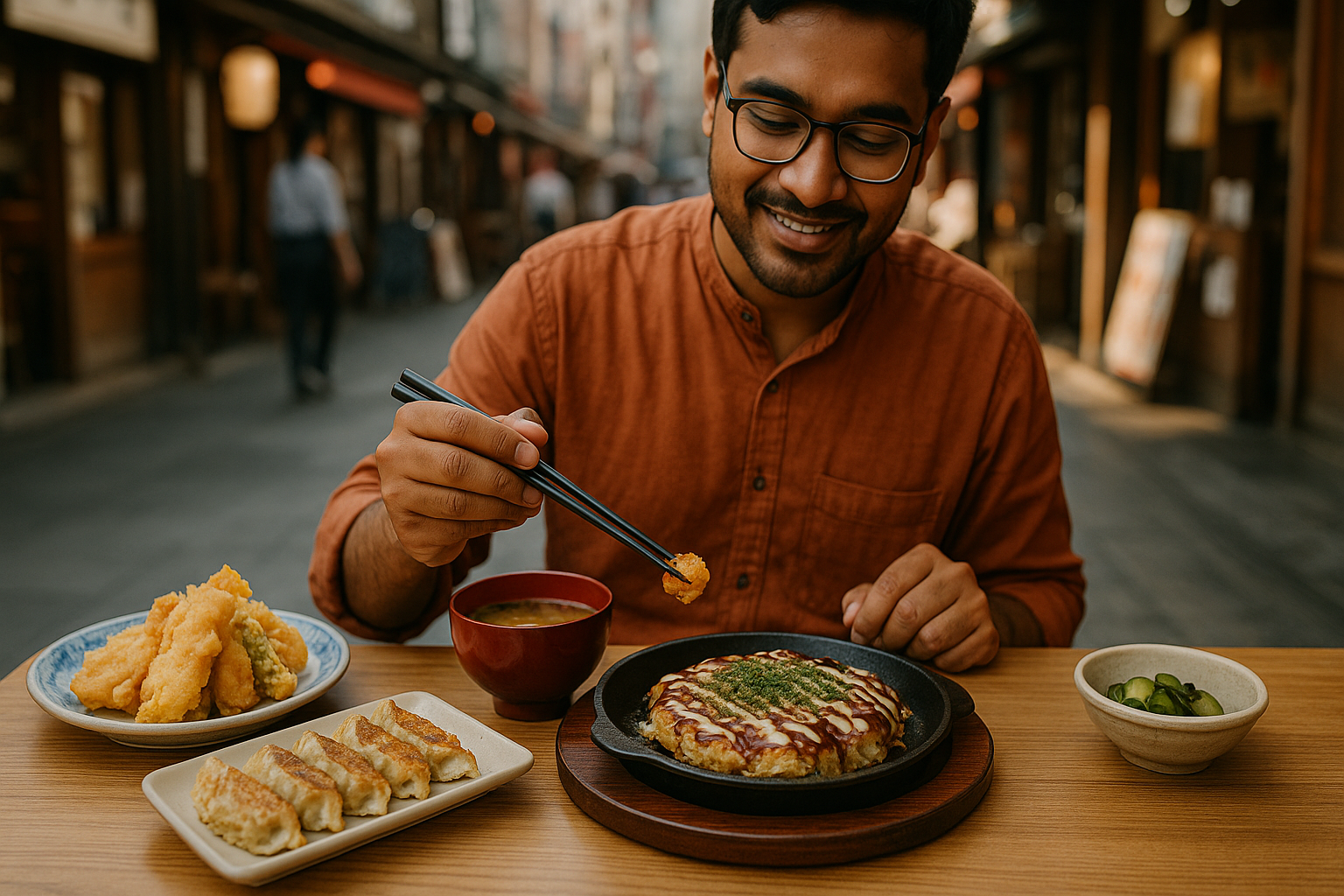
A place that really stuck with me was Oko - Fun Okonomiyaki Bar. Now, Osaka and okonomiyaki are basically inseperable, but classic versions usually come with meat or fish-based ingredients. At Oko, being able to order a vegetarian version without that whole awkward back-and-forth felt like such a relief. Watching the okonomiyaki cooked right there, hearing that sizzling sound, smelling the cabbage and sauce and mayo-ish toppings in the air... wow. Mine had a lovely soft center and crisp edges, and no, it wasn’t trying to be a sad compromise version. It tasted like the real experience, not a backup plan.
I also hunted down vegan ramen because I simply refuse to go to Japan and not eat ramen. There are a few spots in Osaka where plant-based ramen has become a proper thing, not just an afterthought. The style I liked most was a creamy sesame or soy-milk based broth with noodles that still had bite and toppings like grilled vegetables, mushrooms, spring onion, maybe some spicy paste if you ask. This is one of those 2026 food travel trends that’s very real by the way, ramen shops in major cities are much more open to separate vegan broths now because international travelers actively seek them out. I noticed online reservation pages and maps mentioning vegan filters more often too, which would’ve made my life easier years ago.
What to eat in Osaka when you’re veg and still want the city’s actual food culture
#This part matters. I didn’t want to eat only Indian food in Osaka, much as I love it. I wanted Osaka food, or at least vegetarian versions that still felt connected to the city. So here’s what worked for me.
- Vegetarian okonomiyaki - ask for no meat, no seafood, and no fish-based broth or flakes. Some places can do cheese, mochi, corn, kimchi, mushrooms, or extra veg.
- Takoyaki-style vegan balls - not everywhere, obviously, because traditional takoyaki is octopus. But a few modern plant-based places and pop-ups do versions with mushrooms or konjac. I found one at a market-style event and, okay, purists would maybe yell at me, but it was delicious.
- Shojin ryori inspired meals - this Buddhist temple cuisine influence is a gift for vegetarians. Think tofu, seasonal vegetables, sesame, pickles, rice, delicate broths made without fish, if properly specified.
- Japanese curry rice - often a safe-ish comfort meal, but still check the roux because sometimes it contains animal ingredients.
- Onigiri, inari sushi, cold soba, and vegetable tempura - all possible wins, all requiring some ingredient caution. Again with the broth. Always the broth.
One meal I still think about was this simple tofu set lunch in a quiet cafe lane away from the neon madness. Rice, miso-style soup adapted for vegetarians, little side dishes, pickled vegetables, sesame-dressed greens, and tofu done three ways. It wasn’t flashy, no dry ice, no giant social-media gimmick, none of that. But it made me slow down. And weirdly that was one of my favorite moments in Osaka, just me sitting there, slightly tired, slightly sweaty from walking, feeling very grateful that subtle food can hit just as hard as dramatic food.
The neighborhoods I’d tell Indian travelers to focus on
#Dotonbori is chaotic and yes, touristy, but I still think you should go. Even if you don’t eat every meal there. The giant signs, canal walks, the smell of grills and sauces, the crowds taking photos under Glico, it’s classic Osaka. For vegetarians, though, treat it more like a snack-and-stroll area unless you’ve pre-checked exact restaurants. Some places can customize, some absolutely can’t, and during rush hours nobody has time for a long ingredient discussion. I learned that one the hard way and ended up with fries and melon soda for dinner. Cute for ten minutes, depressing after that.
Shinsaibashi felt easier overall. More cafes, dessert spots, newer concept places, and enough international traffic that dietary requests didn’t seem to totally confuse staff. Umeda was my practical zone, especially inside malls and station complexes where digital ordering kiosks and allergen info were more common. This is another recent travel shift, by the way. In 2026, smart menu systems, QR code translations, and icon-based dietary labeling are way more normal in big-city Japan than they used to be. Not universal. But definitely better. And for anyone Indian traveling with parents, this helps sooo much because you can cross-check ingredients before ordering rather than guessing and hoping for the best.
A little note for Jain travelers, and stricter vegetarians too
#I met a couple from Ahmedabad in Osaka who were Jain, and they were doing a mix of apartment stays plus very selective eating out. Their strategy was honestly smart. Book accommodation with a kitchenette, carry theplas and ready poha cups from home, then enjoy one researched meal out each day instead of trying to improvise every single time. Osaka supermarkets also help more than people think. Fruit, yogurt if you take dairy, salads, plain rice, breads, instant miso alternatives, and some very decent microwave meals from plant-based sections in larger stores are easier to find now. Natural Lawson-style convenience trends and health-food corners have kind of expanded the options, especially in central areas. Not every konbini is a vegetarian paradise, don’t get carried away, but it’s better than the old horror stories.
Stuff I wish someone had told me before my first Osaka vegetarian hunt
#- Download an ingredient translation card before landing. Airport wifi is not where you want to be constructing your fish-stock explanation.
- Lunch is easier than late dinner for vegetarian-specific requests. Kitchens are calmer, staff has more time, and set menus are often better value.
- Department store basements are dangerous if you’re hungry. Gorgeous food everywhere, but a lot of hidden seafood. Don’t assume, check.
- Carry a tiny emergency snack. I had a masala protein bar in my bag and, not gonna lie, it saved my mood on at least two train days.
And yes, there are Indian restaurants in Osaka if you need a break. I definitely did, once. After several days of soy, miso, noodles and rice, my body started whispering, then demanding, dal. There are decent Indian and Nepalese spots around Namba, Umeda and Shin-Osaka, and while I usually avoid eating my home cuisine too much abroad, having one thali reset me emotionally. No shame in that. Travel doesn’t have to be a purity test.
Osaka desserts, coffee breaks, and the softer side of the food scene
#One thing Osaka does really well, and I didn’t expect to care this much, is the cafe break between major meals. Matcha desserts, fruit sandos, little pastries, soft serve alternatives, wagashi-inspired sweets, beautiful coffee in tiny spaces with exactly seven seats... it’s a mood. Vegan dessert options have improved a lot in the city’s trendier neighborhoods, partly because plant-based sweets are just more mainstream now, and partly because younger travelers keep looking for dairy-free and egg-free treats. I had a black sesame oat milk latte in Nakazakicho that was so good I almost missed my train after, which would’ve been embarassing but worth it.
If you’re from India and you like stronger flavors, some Japanese sweets may feel very mild at first. I actually liked that after a few days. Not everything needs to punch you in the face with sugar. Sometimes a subtly sweet mochi and hot tea is perfect, especially after walking through Osaka Castle grounds or doing that endless station staircase cardio Japan seems weirdly committed to.
Best food-and-travel rhythm for 3 days in Osaka if you’re vegetarian
#Day 1, stay around Namba and Shinsaibashi. Do Dotonbori for the visuals, but eat at a researched vegetarian-friendly place nearby rather than gambling in peak crowd time. Grab okonomiyaki or vegan ramen. Day 2, mix culture and slow food. Osaka Castle in the morning, then a tofu or set-lunch cafe, then coffee in Nakazakicho. Day 3, Umeda or a market-and-museum kind of day, with time for depachika browsing and one nice dinner where you specifically reserve vegetarian options. That’s the thing now, by the way, a lot more travelers reserve food-first, not attraction-first, and I fully support this lifestyle.
Osaka isn’t just a city where you eat. It’s a city where your whole day sort of bends around the next thing you’re going to eat, and honestly I loved that about it.
The honest truth - is Osaka easy for Indian vegetarians?
#Easy? Not always. Easier than expected? Absolutely. If you compare it with places where vegetarianism is deeply built into the local food culture, then no, Osaka is not effortless. You do need to research, ask questions, and stay alert about hidden fish ingredients. But compared with the old image of Japan as impossible for vegetarians, Osaka in 2026 feels way more doable, more aware, and more adaptable. Tourism has changed menus. Plant-based dining trends have changed menus. International visitors with dietary needs have definitely changed menus. And younger Japanese diners seem more open to vegan and vegetarian food too, not just for religion, but for wellness, sustainability, and curiosity.
For Indian travelers specifically, I think the biggest adjustment is psychological. We’re used to having many obvious vegetarian choices. In Osaka, the choices are there, but they’re not always screaming for your attention. You have to seek them. Once you do, though, you can eat really, really well. Not fake-well. Not “at least I found something” well. Actual memorable meals. The kind you talk about later with friends while waving your hands around too much.
What I’d do differently next time
#I’d probably book one or two special meals in advance instead of relying so much on wandering. Wandering is romantic in theory, but hunger makes me dramatic and unwise. I’d also do a small food tour or cooking class focused on plant-based Japanese food if I found a good one, because those culinary experience formats have gotten more popular lately and they’re a clever way to understand ingredients instead of just ordering them. And I’d stay one extra day. Osaka deserves that. It’s got this warmth to it, this slightly rough-around-the-edges energy, and for a food-loving traveler that feels very welcoming somehow.
So yeah, if you’re an Indian vegetarian wondering whether Osaka is worth it, my answer is a big fat yes. Go hungry, but not unprepared. Learn a few food words. Save restaurant pins in advance. Be flexible, ask kindly, and don’t let one failed meal ruin the trip. Some of my best travel memories here came from tiny victories, a perfect sizzling okonomiyaki, a bowl of ramen I almost gave up searching for, a quiet tofu lunch, a random oat milk latte, and that lovely feeling when a city you were worried about suddenly opens up and says, relax, you can eat here too. If you want more food-and-travel rambling like this, have a look at AllBlogs.in.