If you have ever come across “horse gram” in a recipe and then felt completely unsure what to ask for at the kirana store, you are not alone.
Horse gram is one of those ingredients that many Indian homes use regularly, but the name changes from region to region. In one place it is called kulthi, in another it is kollu, somewhere else it is hurali, ulavalu, kulith, or gahat.
So, if all these names have confused you, here is a simple guide to what horse gram is called in Hindi, what it tastes like, and how to cook it properly at home.
Quick answer
#Horse gram in Hindi is called kulthi or kulath.
If you are buying it from a local grocery shop, you can ask for kulthi dal. In some North Indian regions, it may also be called gahat.
So if a recipe says horse gram, kollu dal, hurali, ulavalu, kulith, muthira, or gahat, it is usually talking about the same legume.
What is horse gram?
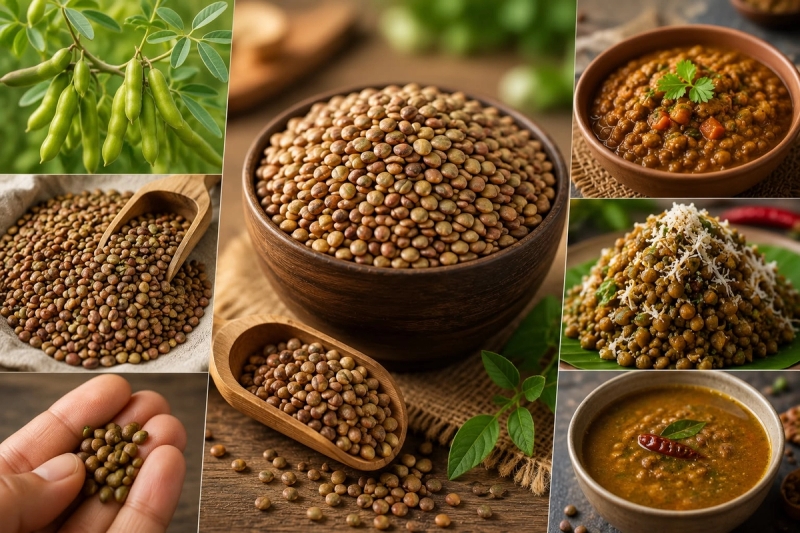
#Horse gram is a small, hard legume commonly used in Indian cooking. The beans are usually oval in shape and can be brown, reddish-brown, or sometimes greenish-brown.
It is not like moong dal, which cooks quickly and becomes soft in a short time. Horse gram needs a little more patience. Most people soak it first and then pressure cook it until tender.
Once cooked, it has a deep, earthy, slightly rustic taste. It feels very homely in dishes like dal, rasam, usal, chutney, and sprouted preparations.
A quick note: this article is only a food and cooking guide. If you follow a medical diet or have specific health concerns, it is always better to check with a doctor or dietitian before making major changes to your meals.
Regional names of horse gram
#This is where most of the confusion starts. Horse gram has different names across India.
You may also see different spellings in recipes or on packets, such as kulthi dal, kollu dal, kulith, hurali, or ulavalu.
If you are not sure, ask the shopkeeper for kulthi dal or show them the regional name used in your recipe.
What does horse gram taste like?
#Horse gram has a much stronger taste than many everyday dals.
It is earthy, slightly nutty, and quite hearty. It does not taste mild like moong dal, and it does not turn soft and creamy like masoor dal or toor dal.
The texture is also firmer. Even after cooking, the beans usually hold their shape. When cooked well, they become tender, but they still have a little bite.
That is why horse gram works beautifully with bold Indian flavours like:
- Garlic
- Cumin
- Dry red chillies
- Curry leaves
- Tamarind
- Tomato
- Coconut
- Coriander
- Garam masala
It can handle strong tadka, spices, and sour ingredients very well.
In simple words:
- Moong dal is light, soft, and quick to cook.
- Masoor dal cooks fast and becomes soft easily.
- Toor dal becomes creamy and is used in dal, sambar, and amti.
- Horse gram or kulthi dal is firmer, earthier, and takes longer to cook.
How to cook horse gram
#Cooking horse gram is not difficult, but it does need some planning because the beans are naturally hard.
1. Sort and wash
#First, spread the horse gram on a plate and quickly check for small stones, dirt, or damaged beans.
Then rinse it 2 to 3 times with water until the water looks cleaner.
2. Soak it overnight
#Soak horse gram in plenty of water for 8 to 12 hours. The easiest way is to soak it overnight.
This step really helps. If you skip soaking, the beans can take much longer to cook, and sometimes they may still remain hard in the centre.
3. Use fresh water for cooking
#After soaking, discard the soaking water and rinse the beans once again.
Add the soaked horse gram to a pressure cooker with fresh water. You can add salt at this stage, or add it later depending on the dish you are making.
4. Pressure cook until tender
#Horse gram takes longer to cook than regular dals like moong, masoor, or toor. Think of it more like cooking chana or rajma.
Pressure cook it until the beans are tender but still holding their shape.
If you open the cooker and the beans are still hard, do not worry. Add a little more water if needed and pressure cook again for a few more whistles.
5. Do not expect it to become creamy
#This is important. Kulthi dal does not usually become creamy on its own like toor dal.
If you want a thicker dal, mash some of the cooked beans with a spoon or masher and mix them back into the pot. This gives the dish a better body without changing the natural texture too much.
Pressure cooker tips for horse gram
#- Soak it overnight for easier cooking.
- Use enough water because the beans take time to soften.
- Do not overfill the pressure cooker.
- Older beans may need extra cooking time.
- Save the cooking water if you are making rasam or thin dal because it has a lot of flavour.
Easy ways to use horse gram
#You do not need a complicated recipe to start using kulthi dal. Here are a few simple and popular ways to cook it.
1. Kulthi dal
#Cook soaked horse gram until tender.
In another pan, heat oil or ghee. Add cumin seeds, garlic, green chillies, turmeric, and a little garam masala if you like.
Add the cooked kulthi along with some of its cooking water. Let it simmer for a few minutes so the flavours come together.
Finish with chopped coriander leaves.
It tastes great with rice, roti, bhakri, or even plain steamed rice with a little ghee.
2. Kollu rasam
#In many South Indian homes, kollu is used to make a thin, tangy rasam.
The cooking water from boiled horse gram is simmered with tamarind, tomato, pepper, cumin, garlic, curry leaves, and a tempering of mustard seeds and dry red chillies.
It is earthy, sharp, warming, and very comforting with hot rice.
3. Kulith usal
#In Maharashtra, kulith is often used to make usal.
It can be cooked with onions, coconut, garlic, and regional masalas. Some people make it semi-dry, while others keep it slightly gravy-like.
You can make it with cooked horse gram or sprouted horse gram.
4. Kollu chutney
#Dry roast horse gram until it smells nutty and fragrant.
Then grind it with coconut, dried red chillies, tamarind, and salt.
This makes a thick, flavourful chutney that goes well with rice, dosa, idli, or even a simple dal-rice meal.
5. Horse gram sprouts
#Horse gram can also be sprouted.
Soak it, drain it, and keep it in a clean damp cloth or sprouting container until sprouts appear.
Since horse gram is naturally firm, many people lightly steam or stir-fry the sprouts before eating. You can add lemon juice, salt, chopped onion, coriander, and chaat masala.
It makes a simple, filling, and tasty snack or side dish.
How to store horse gram
#Horse gram stores well as long as it is kept dry.
When buying it, look for clean whole beans. They may be brown, reddish-brown, or greenish-brown. Avoid packets with too much dust, stones, broken pieces, or any sign of moisture.
At home:
- Store it in an airtight container.
- Keep it in a cool, dry place.
- Keep it away from direct sunlight.
- Always use a dry spoon or cup.
Like most dried legumes, older horse gram takes longer to cook. If your kulthi dal has been sitting in the pantry for many months, soak it for longer and be ready to pressure cook it a little more.