The day my chutney escaped somewhere between Vadodara and Mumbai
#I learned my first serious lesson about leak-proof snack containers on a night train, not in a kitchen. I had packed idli with coconut chutney for the journey because, honestly, idli is one of the great travel foods when it behaves. Soft, filling, not too heavy, and it tastes fine even when you’re eating it half-asleep with station chai. But my chutney was in one of those cute little plastic boxes that came free with some bigger dabba set, the kind we all keep because “it’ll be useful someday.” It was not useful. Somewhere after Vadodara, the lid popped just enough for chutney to slowly creep out, soak the tissue, perfume my tote bag, and make my book smell like coconut, green chilli, and regret for about two weeks.
Since then, I’ve become that slightly annoying person who checks seals, flips containers upside down over the sink, and asks friends, “But is it actually leak-proof, or just emotionally supportive?” Because train and bus travel is different from carrying lunch to office. Your bag gets shoved under seats, tilted sideways, squashed by someone’s backpack, vibrated for hours, and warmed by the sun coming through a dusty window. A container that survives your desk drawer may absolutely betray you on a sleeper bus to Goa.
Why food tastes better on trains and buses, but also gets messier
#There is something about eating while moving that makes even simple food feel special. Aloo paratha wrapped in foil at 6 am. Lemon rice on a southbound train. Thepla with pickle on a bus that keeps stopping for diesel and tea. Bread omelette from a station stall that you know is not fancy, but in that moment it’s perfect. Food and travel have always been tangled up for me. I remember taking the Konkan route once, green hills sliding past the window, and eating tamarind rice from a steel tiffin while the whole coach smelled like bananas, fried snacks, and somebody’s very strong mango pickle. Beautiful chaos.
But travel food has enemies. Heat, humidity, bumpy roads, pressure changes in hilly routes, badly packed chutneys, overfilled containers, and the biggest villain of all, confidence. We overtrust lids. We think, “It’s just curd rice, it’ll be fine.” No. Curd rice has plans. Chole has ambition. Sambar has no respect for luggage.
That’s why leak-proof containers matter so much, especially if you’re packing Indian snacks and small meals. Our food is not dry sandwich culture only. We carry chutney, achar oil, raita, dal, sabzi, curd, cut fruit, sprouts with lemon, and sometimes full emotional support meals because station food can be hit or miss. When the packing works, you feel like a genius. When it fails, you are wiping masala oil from a power bank.
What “leak-proof” actually means, because brands throw that word around too easily
#I don’t trust the word leak-proof until I see the design. For travel, I look for a proper silicone gasket, strong locking clips, a lid that doesn’t flex too much, and a container shape that doesn’t warp when packed with warm food. A lot of boxes are only spill-resistant. That means they’ll handle a gentle tilt on your kitchen counter, but not eight hours inside a bus luggage rack while the driver is overtaking trucks like he’s in a rally.
A genuinely useful snack container for trains and buses should handle three things: liquid pressure, repeated shaking, and sideways storage. Sideways is the real test. Your container will go sideways, even if you lovingly packed it upright. Someone will move your bag. You will shove it under the berth. The bus will brake suddenly. Gravity always wins.
Material matters too. Stainless steel is sturdy, doesn’t hold smell much, and feels very Indian-travel practical. Glass is lovely for taste and easy cleaning, but heavy and a bit stressful in crowded travel. Plastic is light and cheap, but it should be food-grade, not flimsy, and the lid must seal properly. Insulated jars are great for hot poha or upma, but only if the lid is designed for liquids and steam. If you’re comparing dabba materials in more detail, this guide on Best Lunch Box for Indian Summer Office Tiffin: Steel, Glass, Insulated or Plastic? is useful because the same steel-versus-glass-versus-plastic debate gets even more serious when your lunch is riding a bus.
My current travel snack container setup, tested in real mess situations
#I don’t carry one perfect box anymore. I carry a little system. Sounds dramatic, but it works. For dry snacks, I use lightweight airtight boxes or zip pouches inside a hard container so they don’t crush. For wet snacks, I use clip-lock containers with silicone rings. For chutney, pickle, and sauces, I use tiny screw-top jars, and then I still put them in a small reusable pouch because trust is good, but chutney insurance is better.
- For dry stuff like khakhra, roasted makhana, peanuts, chivda, or bhujia, airtight matters more than liquid-proof. Humidity can ruin the crunch faster than you expect, especially on coastal routes or during monsoon travel.
- For semi-wet foods like poha, upma, lemon rice, paneer rolls, or besan chilla, I want a locking lid and not too much empty space inside. Food bouncing around becomes mush.
- For runny things like chutney, raita, curd, dal, sambar, or pickle oil, I don’t use wide shallow boxes. I use small jars or narrow containers, filled only about three-fourths.
- For cut fruit, I prefer a box with a tight lid but I also drain extra juice first. Watermelon on a bus is brave, but sometimes foolish.
One thing I learnt late: don’t pack hot food and immediately lock it like a vault. Steam builds condensation and can soften things, plus some lids behave weirdly when heat is trapped. I let food cool a bit, not forever, just enough, then pack it. If it’s something that needs to stay hot, I use an insulated container meant for hot food, not a random plastic dabba pretending to be tough.
The great Indian travel snack problem: dry, wet, oily, and everything in between
#Indian snacks are complicated in the best way. We don’t just pack crackers. We pack thepla with chhundo, idli with chutney, curd rice with tempering, aloo puri with achar, kathi rolls with green sauce, momos with red chutney if you’re living dangerously, and fruit chaat that starts dry and becomes syrupy after thirty minutes. Every snack has a container personality.
Take Bikaneri bhujia. It’s dry, yes, but it hates moisture. I once carried bhujia on a Jaipur to Delhi bus in a half-closed packet, and by the time we reached Gurgaon it had lost that sharp crunch and become sad little spicy strings. Still edible, because bhujia is forgiving, but not glorious. For namkeen, sev, khakhra, and roasted snacks, you need airtight storage and a container that won’t get crushed under a water bottle. There’s a nice practical packing angle in Bikaneri Bhujia as a Travel Snack: Packing Guide, especially if your route is humid or you’re carrying snacks for more than a day.
Now compare that to homemade chutney. Chutney doesn’t care about airtight. It wants escape routes. Green chutney can stain, coconut chutney spoils faster in heat, tomato chutney leaks oil, and peanut chutney becomes thicker but still somehow finds a lid gap. I pack chutney in tiny jars and then place those jars upright inside a larger box. It feels excessive until the day your bag doesn’t smell like garlic for the whole trip.
Train food memories, from perfect tiffins to public embarrassment
#My favorite train-food memory is from a Mumbai to Madgaon ride, when a family across from me opened what looked like an entire home kitchen. Neat steel dabbas, banana chips, curd rice, mango pickle, cut cucumber, and little laddoos wrapped in paper. Not one leak. Not one mess. The aunty noticed me staring, laughed, and offered me a laddoo. I still think about that laddoo. It had that homemade ghee smell that no packaged sweet can fake.
My worst one was on a bus from Ahmedabad toward Jodhpur. I had packed chole in a container that had survived many office lunches, so I assumed it was loyal. But bus travel is basically a torture test. By the second rest stop, the masala had leaked through the side and made a sunset-colored patch on my tote. I tried cleaning it in the restroom with one-ply tissue and handwash. Useless. A man buying tea looked at me like, “First time?” And yes, maybe it was.
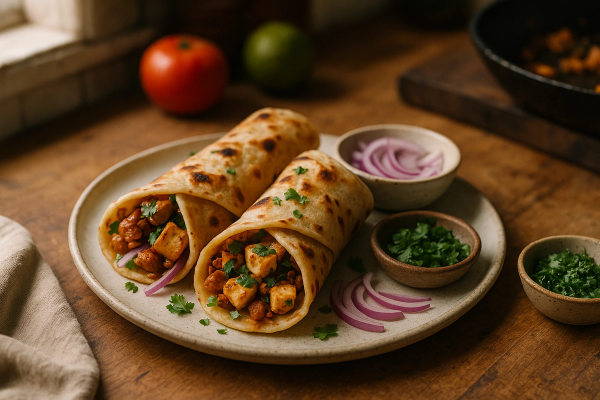
Since then I don’t take dal, chole, rajma, or anything gravy-heavy unless I have a container with a gasket I trust and a backup bag. Even then, I prefer thicker gravies. Dry aloo, paneer bhurji, methi thepla, masala idli, vegetable cutlets, stuffed paratha, and lemon rice are much calmer travel companions.
Bus travel is rougher than train travel, and your snack box knows it
#On trains, your food gets movement, but mostly a rhythmic kind. Buses are more personal. Sudden brakes, potholes, hairpin bends, overhead racks where bags slide around, and that one water bottle rolling under everyone’s feet. If I’m taking an overnight bus, I pack like the container will be shaken by a toddler for six hours.
For buses, I avoid glass unless it’s a very short trip and the container stays in my lap bag. Steel is my favorite here. A compact stainless steel snack box with a tight silicone-sealed lid feels more rugged. The only issue is that some steel tiffins are not truly liquid-tight, especially the traditional stacked ones. They’re amazing for dry sabzi and rotis, not always for rasam or curd.
Also, bus stops influence what I pack. If I know the route has good dhabas, I keep snacks light: nuts, fruit, maybe a cheese sandwich, something for emergency hunger. If the route is unknown or late-night, I carry a proper meal. I’ve been saved by homemade poha at 1:30 am when the only available food was a packet of chips and tea sweet enough to make your teeth file a complaint.
My favorite foods to pack for long journeys
#I have a rotating list, depending on weather and route. In summer, I avoid very dairy-heavy foods unless the journey is short or I have an insulated bag. In monsoon, I become paranoid about soggy snacks. In winter, I get ambitious and pack things like stuffed parathas and carrot pickle, then spend the whole trip feeling very pleased with myself.
- Thepla with dry garlic chutney or a small pickle jar. It travels like a champion and tastes good even at room temperature.
- Lemon rice or tamarind rice. South Indian train food magic, especially when packed after cooling properly. Add peanuts separately if you want crunch.
- Idli, but with chutney in a separate screw-top container. Never trust chutney inside the same box unless you enjoy suspense.
- Besan chilla rolls with dry filling. If adding chutney or paneer, I’m more careful in hot weather. For food safety around chilla and summer tiffins, Can Besan Chilla Stay Outside in Summer? Tiffin Safety Rules is worth reading before you pack like a fearless person.
- Roasted makhana, peanuts, chana, and dry fruits. Not glamorous, but they prevent bad decisions at random bus stops.
- Cut apples or guava with chaat masala kept separately. Watery fruits need more caution because juice finds corners.
The trick is to pack food that doesn’t punish you for delays. Trains run late. Buses stop for mysterious reasons. Your carefully planned 4-hour journey can become 7 hours, and suddenly that creamy sandwich feels less charming.
What I check before buying a leak-proof snack container
#I’m not loyal to fancy brands as much as I’m loyal to design. A container can look boring and be brilliant. It can also look like minimalist Scandinavian perfection and leak like gossip. Before buying, I check the lid. Does it have a removable silicone gasket? Can I clean under it? Are the clips strong or flimsy? Does the lid bend when pressed? Is the container too shallow for saucy food? Can it fit in my day bag without weird angles?
The gasket is important, but it also needs cleaning. Food can hide there. Pickle oil especially. If the seal is not removable, I get suspicious because after a few trips it may smell like everything you’ve ever packed. I once had a lid that permanently smelled like garlic chutney. Was it terrible? Not fully. But my apple slices did not appreciate it.
I also do the sink test. Fill with water, close, flip upside down, shake gently, then shake less gently. If it leaks at home, it will definitely leak on the road. If it passes, good, but I still test with thicker foods before trusting it with sambar. Water is actually thinner than many foods, but oily liquids behave differently, so pickle oil deserves special suspicion.
Tiny containers are the unsung heroes of food travel
#People obsess over the main lunch box, but the small containers make or break the meal. A good 50 ml or 100 ml jar for chutney, pickle, sauce, jaggery syrup, hummus, peanut butter, or salad dressing is gold. I prefer screw-top mini jars for liquids and clip-lock minis for semi-wet things. The lid should be easy to open, though. Nobody wants to wrestle with a chutney jar while the train is swaying and your co-passenger is watching.
One underrated move: pack condiments separately until eating. Thepla stays better when pickle oil isn’t soaking into it for hours. Idli doesn’t become damp. Salad doesn’t collapse. Khakhra remains khakhra, not a tragic soft disc. This is basic, but when you’re packing at 5 am, basic things vanish from the brain.
For kids or elderly travellers, I’d choose containers that open without too much force. Some leak-proof lids are so tight they require gym membership. Practical matters more than perfection. If someone can’t open the box comfortably, they may spill it anyway.
Station food, packed food, and the joy of mixing both
#I don’t believe in carrying every single bite from home. Part of the fun of travel is eating what the journey gives you. Vada pav at Mumbai stations. Kachori near Jaipur. Poha in Madhya Pradesh if you’re lucky and early. Banana chips in Kerala. Jhal muri on eastern routes. Tea everywhere, obviously. But packed snacks give you control, especially when station options are crowded, oily, too spicy, or just not what your stomach wants that day.
My ideal journey meal is half packed, half discovered. I’ll carry lemon rice and curd in a sealed container, then buy hot chai. Or pack plain parathas and pick up fresh curd from a decent stop. Or carry roasted peanuts and then buy local fruit. This way you still taste the route without being helpless when the only shop open has biscuits from another geological era.
One time on a Delhi to Amritsar trip, I packed aloo paratha rolls and bought lassi after reaching. Was the lassi technically not part of the travel segment? Maybe. But food memories don’t follow rules. The parathas survived because I wrapped them in butter paper first, then placed them in a steel box after cooling. No sogginess, no leak, no drama. I wish all my decisions were that sensible.
Food safety is not the sexy part, but it matters
#Leak-proof does not mean safe forever. This is where people get a bit careless, me included sometimes. A perfect container can prevent spills, but it can’t magically protect food from heat for unlimited hours. In hot weather, dairy, coconut chutney, egg, meat, fish, mayo-based fillings, and very moist foods need more caution. If the journey is long and the food can spoil, use an insulated bag with an ice pack or choose something more stable.
I try to follow a simple rule: if I would feel nervous eating it after sitting on a kitchen counter for hours in summer, I don’t pack it for a non-AC bus. Especially not for children or older family members. Dry snacks, whole fruit, parathas, thepla, dry sabzi, and rice dishes with enough oil and spices often travel better, but even then, freshness matters.
Smell is a clue, but not a perfect judge. Food can be unsafe before it smells bad. So I pack smaller portions, eat the most perishable items first, and keep backup dry snacks. It’s not glamorous advice, but neither is food poisoning in a bus toilet. Sorry, but true.
Cleaning containers while travelling, aka the part nobody posts on Instagram
#After the meal, the container has a second life as a dirty object in your bag. This is where leak-proof matters again. If you can’t wash it immediately, wipe it with tissue, close it properly, and keep it in a separate pouch. I carry a couple of paper napkins and sometimes a tiny bottle of dish liquid on longer trips, especially if I’m staying in budget hotels where the sink situation is unpredictable.
Steel cleans easiest in my experience, especially for oily Indian food. Glass cleans beautifully too, but again, weight. Plastic can hold stains and smells, particularly turmeric, pickle oil, and garlic. Silicone gaskets need extra attention. Remove them when you get home, wash, dry fully, then put back. If you store a damp gasket, it can get funky, and then your next trip starts with regret before you even leave.
One weird but useful habit: I carry one empty leak-proof box. It sounds silly until you buy fresh sweets, leftover pakoras, cut fruit, or that extra chutney packet you don’t want loose in your bag. An empty container creates options, and food travellers love options.
A few container mistakes I keep seeing people make
#The first mistake is overfilling. Leave space. Food expands, shifts, and presses against the lid. The second is packing oily pickle in containers meant for dry snacks. Pickle oil is basically a trained escape artist. The third is assuming all clip-lock boxes are equal. They are not. Some clips are decorative optimism.
Another mistake is mixing textures too early. Crunchy snacks with moist items. Fried cutlets with chutney. Khakhra with salad. It all sounds convenient until you open the box and everything has become one soft, confused dish. Separate containers may feel fussy, but they protect the joy of eating.
And please, don’t pack strong-smelling food in a container you haven’t tested. I love fish curry. I love garlic pickle. I love egg bhurji. But in a closed bus, strong smells become public events. If you’re carrying something aromatic, seal it properly, maybe double pack, and eat with some awareness of people around you. Travel food is personal, but also communal whether we like it or not.
My no-fuss packing routine before a long ride
#The night before travel, I decide what needs cooking and what can be packed dry. Morning-of cooking is fine for simple things, but I don’t like rushing with wet foods. Rushing causes loose lids. I cool cooked food properly, pack sauces separately, test lids, and place containers upright in the bag. Heavy boxes go at the bottom, delicate snacks on top. If carrying fruit, I keep it away from hot food.
Then I add a cloth napkin, spoon, wet wipes, a small trash pouch, and water. The spoon is important. I have eaten poha with a broken biscuit before. Not my proudest moment. Also, if you’re travelling with friends, label or at least remember what is in each box. Opening five containers in a moving train to find the pickle is funny once, annoying after that.
For longer journeys, I pack in meal order. What I’ll eat first stays easiest to reach. Emergency snacks go deeper in the bag. Chutney jars stay upright in a pouch. It sounds almost too planned, but it makes the trip calmer, and calm food is tasty food.
So, what container should you actually buy?
#If you want one starter setup for train and bus travel, I’d say get three things: one medium leak-proof steel or sturdy plastic box with a silicone seal, two tiny screw-top jars for chutney or pickle, and one airtight dry snack box. If you travel often, add an insulated food jar and a slim container for fruit or sandwiches. Don’t buy a huge set just because it looks pretty online. Buy for the food you actually eat.
For Indian travel, I personally rate these features highest: removable gasket, strong clips or screw lid, easy cleaning, compact shape, and the ability to survive being sideways. Microwave-safe is less important to me on journeys. Freezer-safe is nice but not urgent. Leak-proof confidence is everything.
Also, choose containers that fit your bag. A perfect box that doesn’t fit upright is not perfect. I’ve made this mistake with round containers. Round jars are great for chutney, but round lunch boxes waste bag space. Rectangular boxes pack better, especially when you’re carrying camera gear, books, shawls, chargers, and the random stuff travel somehow creates.
Final bites from the road
#Leak-proof snack containers are not glamorous travel gear, but they quietly decide whether your journey feels delicious or disastrous. The right box lets you carry idli without chutney anxiety, thepla without pickle stains, bhujia with its crunch intact, and fruit without juice pooling in your bag. It gives you freedom to eat well when the train is late, the bus stop is questionable, or your stomach just wants home food.
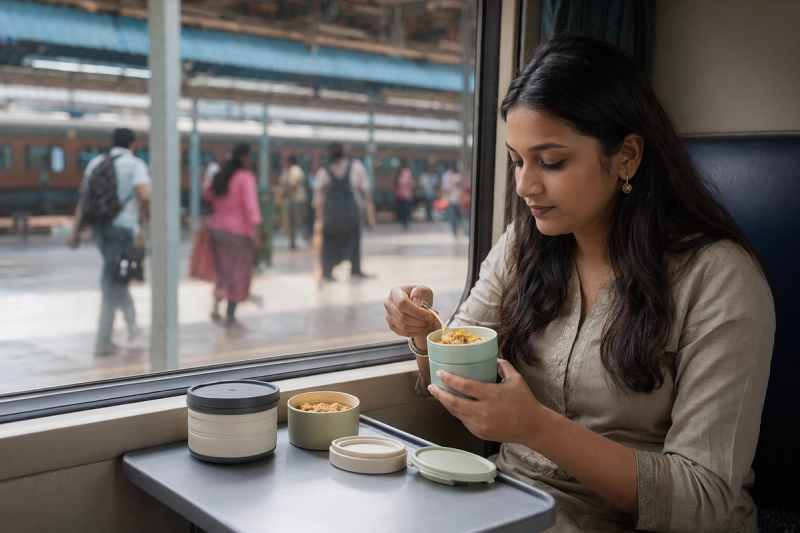
For me, food is half the reason to travel and half the thing that makes travel bearable. I want station chai, local snacks, dhaba meals, and random discoveries, yes. But I also want my own little dabba of something familiar, packed with care, opened somewhere between two cities while the world moves past the window. That’s the good stuff. And if you’re into this kind of practical, hungry, slightly messy travel talk, have a wander through AllBlogs.in sometime. There’s always something tasty to read there.