The steamy-pot problem nobody talks about enough
#I used to think cooling cooked food was one of those fussy little kitchen rules that only mattered in restaurant kitchens with clipboard people and hairnets. Like, yeah yeah, don’t leave soup out forever, got it. Then one summer I made the most gorgeous pot of chicken congee, silky and gingery, with scallions curling on top like they were posing for a magazine. I was tired, the kitchen was humid, and I left the whole pot sitting on the stove while I watched “just one episode” of a show. You already know where this is going. Three hours later the rice had thickened into a warm swamp, the lid was sweating, and my lovely dinner had turned into a food-safety guilt trip.
That was the night I learned that cooling food quickly is not boring. It’s not glamorous either, okay, but it’s the thing between “tomorrow’s lunch is amazing” and “why does my stomach hate me.” And if you cook the way I do, meaning big pots of dal, chili, stew, braised beans, baked pasta, coconut curries, fried rice, and the occassional ridiculous Sunday sauce, you need a plan for getting hot food cold-ish fast before it goes into the fridge properly.
The short version: don’t let cooked food hang around at room temperature for ages. Food safety guidance from agencies like the USDA says perishable cooked foods should be refrigerated within 2 hours, or within 1 hour if the room is hotter than 90°F. In commercial-style food safety language, hot foods should move from 135°F down to 70°F within 2 hours, then from 70°F down to 41°F within another 4 hours. At home, you probably don’t need to stand there with a thermometer every Tuesday night, but honestly? Knowing those numbers changed how I cook leftovers.
First, stop believing the fridge will magically fix a giant hot pot
#I love a fridge. I love opening it and seeing little containers stacked like treasure. But a refrigerator is not a blast chiller, and it is definitely not a wizard. If you shove a huge, deep pot of hot beef stew in there, the outside may cool while the middle stays warm for a long time. Also, that big hot pot can raise the temperature around it, which is rude to the yogurt, the milk, the leftovers, the fancy cheese you forgot you bought, all of it.
Now, tiny correction because people argue about this at dinner parties, and I have been one of those annoying people. You do not have to cool food completely to room temperature before refrigerating. That old advice gets repeated constantly, but it can backfire if “cool completely” turns into “sit on the counter until midnight.” Modern fridges can handle warm food better than old ones, especially if the food is portioned into shallow containers. The real trick is not leaving a big hot mass sitting around, either on the counter or in the fridge.
My kitchen rule now is: make the food smaller, shallower, and more exposed to cold. That’s basically the whole game.
Why big pots cool so slowly, aka soup has a stubborn personality
#Food cools from the outside in. That sounds obvious until you’re staring at a huge pot of gumbo and wondering why it’s still warm after an hour. Dense foods hold heat like they’re emotionally attached to it. Chili, mashed potatoes, rice, thick lentils, macaroni and cheese, pulled pork, custardy bread pudding, all those cozy foods we love are kind of the worst at cooling quickly because heat gets trapped in the center.
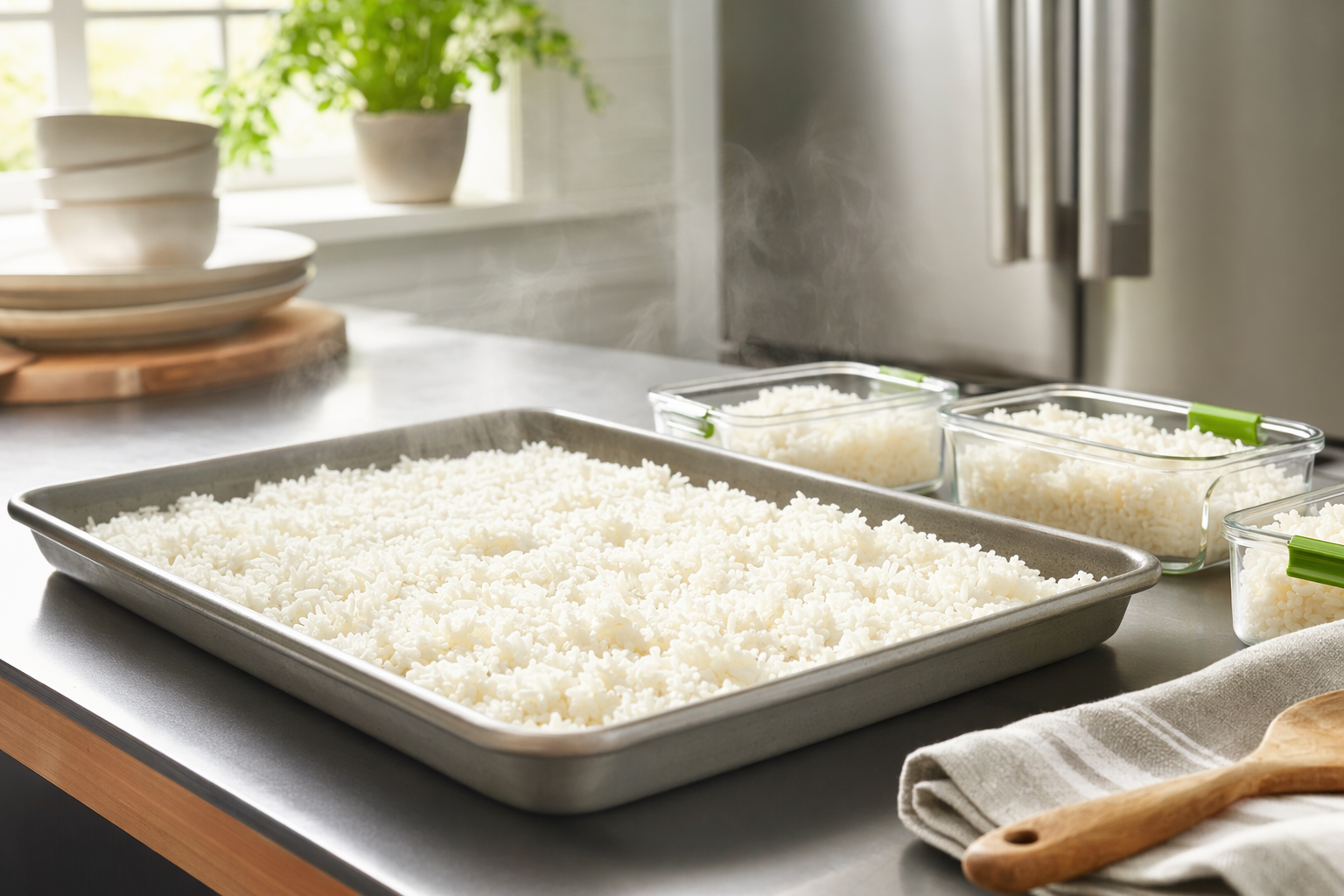
Liquid foods move heat around better if you stir them, which is why soup cools faster when you give it a stir every now and then. Thick foods, though, don’t move much unless you spread them out. A hotel pan of beans cools faster than a Dutch oven of beans. A shallow container of rice cools faster than a tall tub of rice. A tray of roasted vegetables cools faster than a mound of vegetables piled in a bowl like a compost hill. Sorry, not pretty, but true.
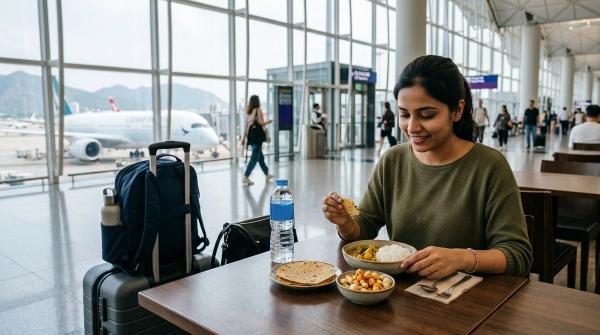
This is also where rice makes me twitchy. I adore rice. Jasmine rice with a fried egg, lemon rice, coconut rice, biryani leftovers eaten cold from the container, I am not above it. But cooked rice is one of those foods you want to cool and chill promptly because bacteria like Bacillus cereus can survive cooking as spores, then grow if rice sits warm too long. If you pack rice for lunch in hot weather, the cooling step matters even more. I wrote about that whole sweaty lunchbox situation in Cucumber Rice Lunchbox: Pack It, Chill It, or Skip It in Hot Weather, because cucumber rice is lovely until it’s been lukewarm in a backpack all morning.
My lazy-but-safe cooling routine after dinner
#Here’s what I actually do on a normal weeknight, not the fantasy version where I have a spotless kitchen and endless energy. The second dinner is done, I put away the serving spoon, grab clean containers, and portion leftovers before I sit down too hard on the couch. Because once I sit down? Goodbye. I become furniture.
- First, I turn off the heat and get the food out of the cooking pot if it’s a big batch. This is the step I used to skip because washing extra containers felt criminal, but it makes the biggest difference.
- Then I divide food into shallow containers, ideally no deeper than about 2 inches for thick stuff. Soup can be a little deeper, but I still keep it reasonable.
- If it’s very hot, I leave the containers loosely uncovered for a short bit so steam can escape. Not wide open next to the cat or under a dusty fan, just not sealed tight while it’s still puffing steam.
- For soup, curry, beans, or sauce, I use an ice bath when I’m being good. Container or pot goes into a larger bowl or sink with ice and cold water, then I stir. Stirring is annoyingly effective.
- Once the food stops steaming hard and feels warm rather than volcano-hot, it goes into the fridge with lids slightly ajar for a little while, then I close them once chilled. If your fridge smells like last night’s onions, you will learn this lesson fast.
Is this perfect restaurant procedure? No. Am I using a calibrated thermometer every time I save leftover minestrone? Also no. But this routine keeps me from wandering off and leaving food in that danger-zone-ish warm stage for half the evening. And it doesn’t make cooking feel like a lab assignment, which matters to me because I cook for joy, not because I want to cosplay as a health inspector.
The ice bath trick that saved my tomato soup phase
#A few winters ago I got very into tomato soup. Like, unreasonably into it. I roasted trays of tomatoes with garlic, blended them with basil and cream, made grilled cheese with too much butter, the whole cozy movie scene. The problem was I kept making giant batches and then standing there, sleepy and full, watching this red lava cool at the speed of a sleepy turtle.
Then a chef friend reminded me about ice baths in the tone people use when you’ve missed something obvious. Fill the sink or a big bowl with ice and cold water. Set the pot or a metal bowl of soup in it. Stir the soup often, and stir the ice water sometimes too. The heat moves out quicker, and suddenly you’re not babysitting soup until 11:30 p.m.
Metal containers help because they conduct heat better than thick plastic or ceramic. A wide stainless bowl in an ice bath is my favorite for sauces and soups. If I’m cooling something like homemade stock, I’ll sometimes split it into two metal bowls because one massive bowl still takes too long. Also, don’t let sink water slosh into your food. I have done it once with chicken broth and I’m still bitter. It was a tiny splash, but still. Emotional damage.
When ice baths are worth the bother
#- Big batches of soup, stew, chili, stock, curry, or beans, especially if they’re thick.
- Anything with rice or pasta mixed in, because those hold heat and keep cooking in a mushy, sad way.
- Creamy foods, coconut milk curries, custards, and sauces you really don’t want sitting warm.
- Hot weather nights when your kitchen feels like a laundry room in July.
And speaking of coconut milk, leftovers from an opened can are one of those sneaky perishables I used to treat way too casually. If you’re making a coconut dal or curry and you have half a can left, don’t let it hang out while you “decide what to do.” Portion it, chill it, freeze it if needed. I’ve got a more specific little guide here: How to Store Opened Coconut Milk Safely. Coconut milk can go weird fast, and the smell is not subtle.
A quick cheat sheet for different foods
#Different foods need slightly different handling, though the theme stays the same: smaller, shallow, cooler faster. I keep learning this the messy way. One time I packed leftover baked ziti into a deep container while it was still hot, sealed the lid, and the next day it had this watery, overcooked, steamed vibe. Still edible, but not the glorious cheesy slab I deserved. Cooling is not just safety, it’s texture. It’s flavor. It’s not ruining tomorrow’s lunch.
| Food | Best quick-cooling move | My real-life note |
|---|---|---|
| Soup or stock | Ice bath, stir often, split into shallow containers | Metal bowls are magic here. Plastic tubs are slower. |
| Rice | Spread on a clean tray or shallow container, chill promptly | Don’t leave a rice mountain on the counter. It stays warm inside. |
| Pasta or casseroles | Divide into shallow portions, vent steam, refrigerate | Deep lasagna bricks hold heat forever. Delicious little furnaces. |
| Beans, dal, chili | Shallow containers plus ice bath if it’s a big batch | Stir from the bottom because that’s where the heat hides. |
| Roasted meat | Slice or portion, don’t store as one giant hot roast | Smaller pieces cool faster and reheat better anyway. |
| Gravy or sauce | Pour into wide containers, ice bath if rich or creamy | A thin layer cools way faster than a jar filled to the top. |
The fridge part: lids, stacking, and not smothering your leftovers
#I used to stack hot containers like I was playing Tetris, then feel proud because everything fit. Cute, but not ideal. If containers are packed tight together, cold air can’t circulate well. So now I give them a little breathing room at first. I’ll put warm containers on an upper shelf with space around them, not shoved against the milk or nested in a hot tower. Later, once they’re chilled, I stack them like a normal person with limited fridge real estate.
For lids, I’m a loose-cover person during the first cooling stage. If you slap a tight lid on steaming food, condensation rains back down and the heat stays trapped. But I don’t leave food completely uncovered for hours either, because fridges have smells and life has dust and people open the door looking for pickles. So: loose lid, cracked corner, or parchment over the top for a short while, then sealed once cold.
Also, label things if you are a leftovers person. I know, it sounds unbearably organized. But I have absolutely played “is this black bean soup or mole sauce?” with a frozen container, and no one wins. A bit of tape with the date makes you feel like you have your life together, even if the rest of the kitchen says otherwise.
Restaurant habits I stole, minus the yelling and stainless-steel chaos
#I’ve had some of my best meals in tiny restaurant kitchens where everything is hot, loud, and somehow more organized than my entire adult life. One place I loved made seafood chowder in big batches, and I remember watching a cook pour it into wide shallow pans set over ice. He stirred it like he was mad at it. Not gently, not lovingly, just business. And the chowder the next day tasted fresh, not tired, because it had been cooled fast and reheated carefully.
Restaurants use shallow hotel pans, ice wands, blast chillers, thermometers, and logs. At home I use a sheet pan, a big bowl of ice, and whatever containers haven’t lost their lids. Same principle. Scale it down. The professional mindset is: don’t trust a big mass of hot food to cool on its own. Give heat somewhere to go.
If you make a lot of soups or sauces, an ice paddle is actually a cool tool. It’s basically a food-safe wand you fill with water and freeze, then stir through hot liquids. Do you need one? Probably not. Do I want one because gadgets make me happy? Obviously. But a frozen water bottle can be risky if it’s not food-safe or it leaks, so don’t just toss random freezer objects into your soup and hope for the best. I’ve seen people do stranger things, but still.
The danger zone, without making dinner sound scary
#The “danger zone” is usually described as 40°F to 140°F, the temperature range where bacteria can grow more quickly. That phrase sounds dramatic, like your casserole is wearing a tiny villain cape, but it’s useful. Food doesn’t become poisonous the second it hits 41°F, and nobody needs to panic because the mashed potatoes sat out while everyone got seconds. But time plus warmth plus moisture equals risk, especially with high-protein foods, cooked grains, dairy, and sauces.
The two-hour rule is the one I keep in my head. If food has been sitting out for more than 2 hours, I get cautious. If it’s a picnic, outdoor party, or kitchen-with-no-air-conditioning situation above 90°F, I think in terms of 1 hour. This is where my grandma and I disagree, by the way. She grew up leaving everything out longer, and she is still here, sharp as a chili flake. But “we always did it this way” is not the same as “it’s the safest way,” and I say that with love because she also makes the best tamarind rice I’ve ever had.
My favorite cooling setups, from very lazy to very responsible
#Some nights I am a responsible kitchen citizen. Some nights I am tired and wearing one sock. So I have levels. The lazy level is: divide into shallow containers immediately, loosely cover, refrigerate soon. This is already much better than abandoning a pot on the stove. The medium level is: shallow containers plus stirring once or twice while they steam off. The good level is: ice bath, stirring, thermometer if I’m cooling a massive batch or feeding other people.
For thick foods, I spread them out. Fried rice goes on a sheet pan for a few minutes, then into a shallow container. Pulled chicken gets shredded before chilling. Roasted vegetables get unpiled. Mashed potatoes get divided into smaller containers because they are secretly little heat batteries. For sauces, I use wide jars only after they’re not blazing hot, because pouring boiling sauce into glass can end in tears and tomato on the ceiling. Ask me how I know. Actually don’t, it was a bad day.
A few things I don’t do anymore
#- I don’t put a huge lidded stockpot straight into the fridge and call it done.
- I don’t leave rice on the stove while I “clean up later,” because later is a lie.
- I don’t seal steaming food airtight unless I want watery leftovers and a lid that pops like it’s haunted.
- I don’t cool food outside on the porch, even in winter, because animals, dirt, weird temperature swings, and my neighbor’s cat who has no boundaries.
But what about meal prep Sunday?
#Meal prep is where quick cooling really earns its keep. If you cook five lunches at once, you’re making enough food that the middle portions can stay warm for a surprisingly long time. I’ve watched a big tray of quinoa sit there feeling warm after I had already washed the pan, wiped the counter, made tea, and convinced myself I deserved a cookie. Grains hold heat. Beans hold heat. Saucy chicken holds heat. Everything good holds heat, apparently.
My meal prep rhythm is to finish cooking, spread hot components out separately, then assemble once they’ve cooled a bit. Rice in a shallow layer, roasted vegetables on their sheet pan, chicken sliced instead of whole, sauce in a wide bowl. Once the steam calms down, I portion into lunch containers and chill. If I’m packing lunches for the next morning, I want everything properly cold before it goes into a lunchbox with an ice pack. Hot food packed into a closed container can sweat, soften, and linger warm longer than you’d think.
And please, if you’re making creamy pasta salads, rice salads, mayo-ish chicken salad, or anything that gets eaten cold, cool the cooked parts first before mixing with the cold dressing. Warm pasta plus mayo is not my idea of living boldly. It also makes the texture kind of greasy and sad, which is maybe the bigger crime in my very food-motivated brain.
Thermometers are not just for roast chicken people
#I resisted using a thermometer for leftovers because it felt extra. Then I bought a cheap instant-read thermometer, and now I use it all the time like a person who has become slightly annoying but more accurate. You don’t need to temp every spoonful of lentil soup, but if you’re cooling a huge batch, it’s helpful to check the center. The surface can feel cool while the middle is still sitting there warm and smug.
When I’m being careful, I aim to get hot food down quickly, then into the fridge so it can get to refrigerator temperature. Home fridges should generally be at 40°F or below. If yours is warmer, leftovers won’t chill as well, and also your milk is probably having a rough time. A little fridge thermometer costs less than a mediocre sandwich in most places, and it tells the truth when the dial inside the fridge is being vague.
One more thing: don’t overload the fridge after a giant cook day. I know the satisfaction of putting twelve containers away, but if they’re all warm and jammed together, cooling slows down. Leave space, use smaller containers, and maybe stagger if you have to. Your fridge needs airflow the way a crowded elevator needs everyone to stop wearing heavy perfume.
What to do when you forgot food out
#We need to talk about the painful part. Sometimes you forget. You eat, you chat, you fall asleep, you drive someone home, you get distracted by dessert. Then you come back and the pot of curry is still on the stove. I hate this moment. I stand there bargaining with the universe like, “but it was expensive chicken” or “but I used the good saffron.” Food waste hurts, especially when you cooked with care.
But reheating does not fix everything. Some bacteria can produce toxins that aren’t reliably destroyed by reheating, especially in foods that sat warm too long. This is why the “I’ll just boil it again” trick isn’t the safety blanket people want it to be. If perishable food has been out past the safe window, especially overnight, I toss it. I complain while tossing it, obviously. I may say a few dramatic things. But I toss it.
The way I avoid that heartbreak is by setting a timer. Not a cute mental timer, a real one. If dinner is over and I know I’m not putting food away immediately, I set a 30-minute timer called LEFTOVERS in all caps because apparently I need to be shouted at by my phone. It works. Mostly.
Tiny cooling habits that make leftovers taste better too
#Food safety is the grown-up reason to cool cooked food quickly, but flavor is the reason I actually remember. Fast cooling protects texture. Rice stays fluffier. Pasta doesn’t keep steaming itself into softness. Vegetables don’t turn into army-green mush. Cream sauces don’t sit around separating and getting that weird oily edge. Even soups taste brighter when they don’t spend hours warm on the stove, slowly overcooking the herbs and garlic.
My best leftover lunches happen when I treat the cooling step as part of cooking, not as cleanup. Like when I make dal, I finish with tadka, eat what I want, then immediately move the rest to shallow glass containers. The next day it reheats beautifully, and the spices taste deeper instead of stale. When I make roast chicken, I pull the meat off the bone before chilling, then the bones go into stock or the freezer. When I make rice, I fluff it, spread it, cool it, then chill it. Future me is always grateful, and future me is kind of hard to impress.
The simple method I’d teach anyone
#If I had to teach this to a friend in my kitchen while we’re both standing around eating crispy bits from the pan, I’d say this: don’t wait. Don’t store deep. Don’t seal steam in. Use cold to your advantage.
- Get cooked food out of the hot pot and into shallow containers.
- For big or thick batches, use an ice bath and stir.
- Keep food loosely covered while the steam escapes, but don’t leave it forgotten.
- Refrigerate within 2 hours, or 1 hour if it’s really hot out.
- Once cold, seal properly, label if you can be bothered, and eat within a sensible leftover window.
That’s it. Not glamorous, not fussy, just practical. Cooling food quickly is one of those quiet kitchen skills that makes you a better cook without looking impressive on Instagram. No one applauds when you spread rice on a tray. Nobody says, wow, amazing airflow around those lentils. But the next day, when lunch tastes fresh and nobody gets sick, it feels like a win.
Final food thoughts from my slightly cluttered kitchen
#I still love big-batch cooking. I love the generosity of a pot that feeds you twice, the way chili tastes better on day two, the comfort of knowing there’s soup waiting after a long day. But I’ve stopped treating leftovers like an afterthought. Cooling cooked food quickly before refrigerating is now part of the recipe in my head, right there after seasoning and before washing the pan I don’t want to wash.
So next time you make a huge curry, a pan of baked pasta, a mountain of rice, or soup that fogs your glasses, give it a little cooling plan. Shallow containers. Ice bath if needed. Stir like you mean it. Fridge before the evening disappears. It’s not fancy, but honestly, some of the best food habits aren’t.
And if you’re the kind of person who loves these nerdy-but-useful kitchen details as much as the actual eating part, wander over to AllBlogs.in sometime. I always find something there that sends me back into the kitchen hungry, curious, and usually making more leftovers than I meant to.