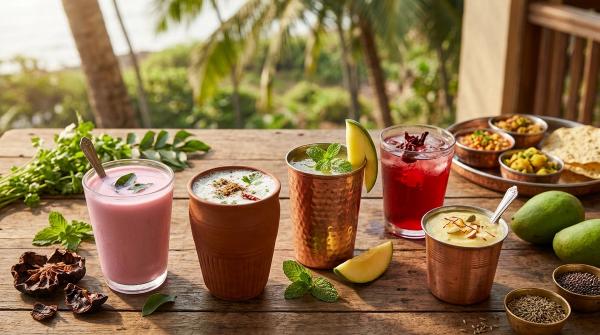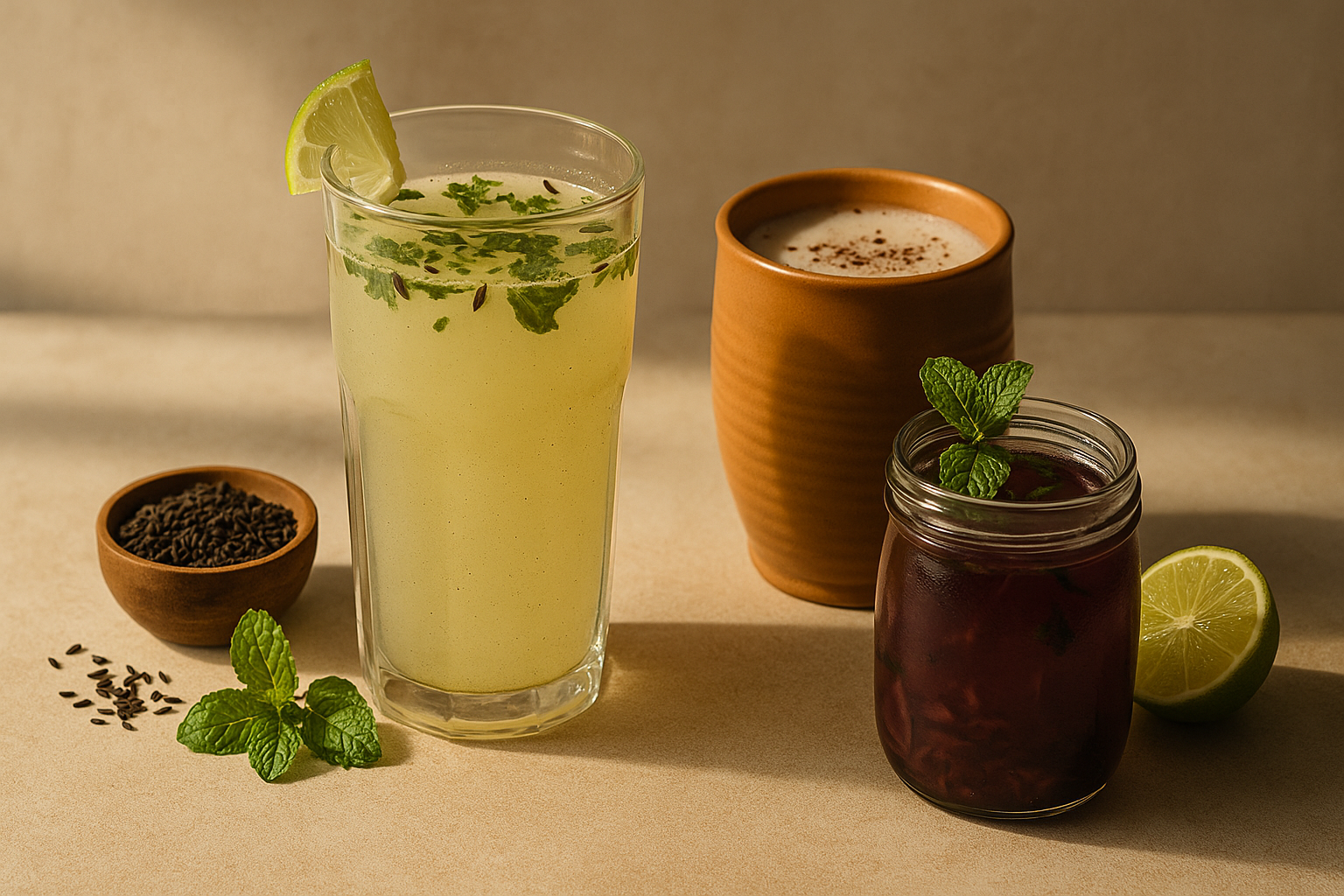
Every summer, like clockwork, somebody around me starts talking about electrolytes, gut health, cold-pressed this, probiotic soda that. And I’m just standing there thinking... yaar, we literally had all this already. In clay pots. In reused glass bottles. In steel lotas sweating on kitchen counters. India’s old fermented summer drinks were doing the most long before fancy labels and pastel branding showed up. Kanji, neer mor, panta bhaat water, handia-inspired rice ferments in tribal belts, fermented jaljeera-ish household brews, even mildly soured rice starch drinks your nani probably never called “functional beverages” because she had better things to do. They were cooling, salty, sour, alive, practical, cheap, and honestly kinda genius.
I got obsessed with this topic after one stupidly hot April afternoon in Delhi a few years back when I had black carrot kanji from an auntie near CR Park. Not in some curated heritage cafe, just outside a market lane, poured from a big glass jar. Sharp, mustardy, funky, cold-ish but not fridge-cold. It woke me up better than coffee, no joke. Since then I’ve been chasing these drinks in homes, on food walks, at regional restaurants, and in my own kitchen where, um, I have absolutely over-fermented things more than once. One batch basically smelt like a science experiment gone rogue. Still drank a little. Regretted nothing... well, almost nothing.
First, what do I even mean by “forgotten”?
#Not extinct. Just pushed to the side. That’s the thing. A lot of these drinks still exist in households, temple kitchens, village routines, and among older people who don’t feel the need to post every glass online. But in big cities we kind of replaced them with packaged coolers, café kombucha, energy drinks, and suspicious neon beverages pretending to be “summer specials”. Fermented Indian drinks aren’t always glamorous. Some look cloudy. Some smell a bit wild. Some need patience, and modern life is bad at patience. So they slipped out of the mainstream, except now they’re slowly creeping back in because gut health became trendy and everyone suddenly discovered microbes like they invented them.
The funniest part is this - if black carrot kanji was launched today in a matte bottle with the words artisanal, live culture, small batch, and heritage probiotic, people would happily pay 300 rupees for it.
The drinks I keep coming back to, and why they matter
#Kanji is probably the easiest entry point and maybe my favorite. In North India, especially around Holi and the warmer months, you’ll find versions made with black carrots, mustard powder, salt, water, sometimes beetroot when black carrots are hard to get. It sits in the sun for a few days and turns tangy, earthy, lightly pungent. That mustard kick? Addictive. Black carrots are rich in anthocyanins, which are antioxidant pigments, and the fermentation itself can encourage beneficial lactic acid bacteria. I’m careful here because people online oversell every fermented thing like it can solve your whole life. It can’t. But a properly made kanji can support microbial diversity in the diet, and compared with sugary sodas, it’s obviously a better summer friend.
Then there’s neer mor in Tamil homes and across the South, plus cousins of it like majjige, chaas, mattha, and spiced buttermilk all over India. Not every version is deeply fermented by the time you drink it, sure, but many traditional ones are made from slightly cultured curd, diluted and seasoned with curry leaves, ginger, asafoetida, green chilli, roasted cumin, sometimes crushed shallots. On scorching afternoons this stuff saves lives. Or at least moods. It gives hydration, sodium, potassium, some protein, and if the curd is cultured properly, live microbes too. I had an absurdly good version outside Kumbakonam once after a temple visit, served in a paper cup that barely held itself together. Thin, peppery, cold, sour. Better than half the tasting menus I’ve sat through, honestly.
Eastern India has some of the most under-discussed summer ferments. Panta bhaat in Bengal, poita bhat in Assam, pakhala in Odisha - usually fermented leftover rice soaked overnight in water, eaten the next day often with salt, green chillies, onion, curd, mashed potato, fried fish, or pickle. People talk about the rice, but the starchy soaking liquid matters too. It’s cooling, faintly sour, and deeply tied to heat management, farming rhythms, and frugal intelligence. There’s growing nutrition interest around these soaked-fermented rice foods because fermentation may improve digestibility and alter B-vitamin availability, though exact nutrient levels vary wildly by method. I had pakhala during a May trip to Bhubaneswar and it made complete sense in the weather. You stop fighting the heat and start working with it.
In parts of central and eastern India, tribal rice ferments and millet ferments deserve way more respect than they get. Some are lightly alcoholic, some more food than beverage, some deeply ceremonial, some everyday. Handia, for example, made from rice and herbal starters in Adivasi communities across Jharkhand, Odisha, Chhattisgarh and nearby regions, is culturally significant and not something to flatten into a cute trend piece. But from a food history angle, it shows just how advanced and localized India’s fermentation knowledge really was. The same goes for rice beer traditions in the Northeast - apong, judima, zu and others. These are not just drinks. They are community, climate adaptation, microbiology, memory. Also, they challenge the lazy idea that fermented beverage culture in India begins and ends with lassi.
Why these drinks feel so right in summer, like on a body level
#Okay, quick nerdy detour, but not too textbook-y because I can’t stand that tone. Summer in much of India means dehydration, appetite dips, salt loss through sweat, digestive sluggishness for some people, and just general crankiness. Traditional fermented drinks often tackle more than one of these at once. They hydrate. They replace some salts. Their sourness can stimulate appetite. Fermentation can partially break down compounds, making drinks feel easier on the stomach. Lactic acid fermentation may also create an environment that discourages harmful microbes, though obviously food safety still matters a lot. If water quality is bad or the vessel isn’t clean, don’t romanticize it. Bad fermentation is just bad fermentation.
There’s also the gut angle, which everybody in 2026 is talking about, sometimes sensibly and sometimes like complete lunatics. Current nutrition thinking still supports fermented foods as one useful piece of dietary diversity, especially when they contain live cultures and are part of an overall balanced diet with fiber-rich foods. We know more now about the gut microbiome than we did ten years ago, but we also know it’s complicated. A single glass of kanji won’t magically “heal your gut”. Still, regularly including varied fermented foods and drinks can be beneficial, especially homemade or minimally processed ones that haven’t been blasted sterile and then loaded with sugar. Basically, your dadi was onto something, but maybe don’t turn it into a cult.
The part that annoys me a little - the trend cycle in 2026
#Right now, in 2026, there’s a very obvious return to indigenous ferments in Indian food circles. You see it in zero-waste restaurant menus, in regional tasting experiences, in bottled savory coolers at gourmet stores, in chef pop-ups talking about “ancestral microbes” like they personally interviewed them. There’s also more interest in millet-based beverages because the post-International Year of Millets momentum never fully died, and climate-smart grains are still big in menu development. I’ve tasted some really clever fermented ragi coolers and jowar kanji-style drinks at food events in Bengaluru and Mumbai this year. Some were fab. Some tasted like someone dissolved a health lecture in water.
Restaurants are definitely leaning harder into regional beverage programs now. Across major cities, newer Indian restaurants and cafe kitchens are giving more menu space to brined, cultured, smoked, and fermented non-alcoholic drinks, partly because low- and no-alcohol dining is still growing, partly because diners want “story”. I don’t hate that. Story matters. But I do think homes and small community cooks rarely get enough credit. A chef can put fermented kokum rice water on a ceramic tray and suddenly everybody claps, meanwhile an elderly woman has been making a superior version in her backyard forever. You know what I mean.
A few places and food experiences that genuinely stayed with me
#I’m not gonna pretend every restaurant serves these drinks well, because many don’t. Some places make them too polished, too sweet, too timid. Kanji should have attitude. Neer mor should be refreshing, not a yogurt smoothie in disguise. Pakhala should taste lived-in, if that makes sense. Still, I’ve had some lovely experiences recently. In Bengaluru, the broader wave of region-first dining has made it easier to find serious traditional beverage pairings instead of the usual soda lineup. In Chennai, some newer South Indian restaurants are revisiting temple-town buttermilk styles with proper seasoning and less sugar nonsense. In Delhi NCR, seasonal pop-ups around Holi and summer markets have brought kanji back into conversation, often using black carrot when available and red carrot-beet blends when not.
But my most memorable drinks usually weren’t in big-deal openings. They were in homes, roadside setups, small thali joints, or after long drives when somebody’s mother said, wait, I made something cool, and came back with a steel tumbler. I remember one afternoon in Kolkata where lunch was simple - alu bhorta, green chilli, a little fish, and panta bhaat. The rice water was cloudy and cold from an earthen vessel and had this faint tartness that sounds boring till you drink it in actual heat. Then it becomes perfect. Like the body understands before the brain does.
- Kanji for when I want something punchy and alive
- Neer mor or chaas for pure relief, especially after travel or spicy food
- Pakhala or panta-related rice water when the heat is oppressive and food feels like work
- Millet ferments when made well, because they’ve got this earthy depth I really enjoy
If you want health benefits, here’s the unsexy truth
#These drinks can help with hydration, electrolyte replenishment, appetite, and bringing fermented foods into your routine. Depending on the base ingredient, they may also contribute antioxidants, calcium, some B vitamins, and easier digestibility. Curd-based drinks can offer protein and beneficial bacteria. Rice and millet ferments may become gentler on the gut for some folks after soaking/fermentation. Spices added to them - cumin, ginger, curry leaves, mustard, hing - may support digestion too, at least traditionally and anecdotally, and there’s some research around their bioactive compounds. But they are not miracle cures, and not everybody tolerates all ferments the same way. If you’ve got histamine sensitivity, severe gut issues, or hygiene concerns, go slow. This is one of those areas where common sense is deeply underrated.
- Use clean jars, clean water, and don’t wing sanitation just because your grandmother “never measured anything”
- Start with short ferments in hot weather because Indian summers can turn enthusiastic very fast
- Taste daily. Your best sour might be one day earlier than someone else’s best sour
- Salt matters more than people think. So does shade vs direct sun
- If it smells rotten rather than pleasantly sour, throw it out. Please. Be brave about discarding bad batches
My tiny kitchen experiments, including one near-disaster
#The first time I made kanji at home I was so smug about it. Black carrots sliced, mustard ground, jar sterilized, sunny window, whole thing very Pinterest except my kitchen is not cute and the dish rack was overflowing. Day one, fine. Day two, promising. Day three, gorgeous. Day four... too far. Way too far. It had become aggressively funky, almost bitter, and I’d forgotten to burp the jar properly so opening it was, um, dramatic. Purple splash. White shirt ruined. Countertop looked like a crime scene. But that batch taught me something useful. Fermentation is not a recipe so much as a relationship. Temperature, vegetable sweetness, salt, vessel, and your own patience all change the result.
Neer mor is more forgiving, thank god. I make it constantly in summer now, usually with day-old homemade curd if I have it, lots of water, crushed ginger, roasted cumin, salt, torn curry leaves. Sometimes coriander, sometimes a pinch of hing bloomed in a tiny drop of oil. If I’m being lazy, no tempering at all. Just whisk and drink. It’s one of the few things I can make half-asleep and still feel proud of. Also useful after a heavy biryani situation, which, if I’m honest, happens to me more often than it should.
Why younger eaters are finally paying attention again
#I think younger Indian diners are circling back for a bunch of reasons. One, heat waves are making everybody rethink what summer eating and drinking should look like. Two, there’s real fatigue around ultra-sweet packaged beverages. Three, regional Indian food has become cooler, in the best and worst ways. Four, wellness culture accidentally pointed people toward old wisdom, even if it renamed everything on the way. And five, chefs, home cooks, content creators, and fermentation nerds are documenting techniques that were once only passed orally. That last part matters a lot. If these drinks survive only as aesthetic menu inserts, we’ve failed. They need to survive in actual kitchens.
Also, there’s a sustainability angle nobody talks about enough. A lot of these drinks come from leftovers, dilution, seasonality, low-energy preservation, local grains, local dairy, earthen storage, practical spice use. In a time when food systems feel increasingly wasteful, that’s not quaint. That’s smart. Fermented rice water from last night’s meal isn’t “poor people food” to be looked down on. It’s efficient, ecological, and adapted to climate. Frankly, modern food innovation keeps rediscovering what traditional kitchens were already doing, just with worse naming.
If you want to start trying them, start here
#Don’t begin with the most extreme thing because then you’ll tell everyone you “don’t like fermented drinks” and that’ll be unfair. Start with spiced chaas or neer mor. Then try a well-made kanji in season. If you have Bengali, Odia, or Assamese friends, ask if they grew up with panta, pakhala, or poita bhat and whether they still make it in summer. Ask older family members too. You’ll be shocked how many food memories come pouring out once people realise you’re genuinely interested. Somebody always has a story about a grandmother’s clay pot, a train journey with salted buttermilk, a farm lunch with soaked rice, a village fair with local brew. Food conversations open doors that recipes alone don’t.
And if you see these drinks on restaurant menus in 2026, order them at least once, but ask questions. Is it actually fermented or just flavored to taste sour? How long is it cultured? Is it seasonal? Is the kitchen treating it like a living preparation or like a branding exercise? I know that sounds a bit snarky, and maybe it is. But when something this old and meaningful comes back into fashion, I want it handled with care, not just marketing copy.
Final sip
#For me, India’s forgotten fermented summer drinks are not really forgotten at all. They’re waiting. In family habits, in village routines, in regional memory, in old steel tumblers and ceramic bharanis, in the taste of something sour hitting your tongue on a blistering afternoon and making your whole body go yes, this. They remind me that smart food doesn’t have to be expensive, imported, or explained with a TED Talk. Sometimes it’s just yesterday’s rice, cultured curd, mustard, salt, sun, and time. Sometimes the best summer drink in the country is one your grandmother never thought to brag about because she assumed everybody already knew.
Anyway, that’s my rant-love letter for today. If you’ve grown up drinking any of these, I’d honestly love hearing about it, because every region seems to have its own little secret version. And if you want more warm, messy, food-obsessed reads like this, go wander around AllBlogs.in - there’s always some tasty rabbit hole to fall into.