Every year around peak summer, when the fan is whirring like it’s working overtime and even my water bottle feels warm five minutes after I fill it, I start thinking about Indian lunches that don’t fight the weather. You know what I mean. Not the heavy, celebration kind. I mean the meals that cool you down, wake your appetite back up, and somehow make sense when it’s 39°C outside and the idea of rich gravy at noon feels almost offensive. I’ve been mildly obsessed with this for years, honestly. Maybe because I grew up in a family where lunch changed with the season without anybody making a huge speech about it. The curd got thinner, the rice got softer, the vegetables got quicker, and suddenly the whole table felt smarter than the weather.
And Indian food is so, so good at this. We talk a lot about butter chicken and biryani and restaurant showstoppers, but summer lunches at home? That’s where the genius is. Across regions, people have figured out how to eat with the climate rather than against it: more buttermilk, more yogurt, more gourds and cucumbers, more lightly spiced dals, more steamed things, more fermented things, more rice in forms that actually feel kind to your body. I’ve eaten some version of these meals while sweating in Chennai, in a sleepy lane in Ahmedabad, at a friend’s auntie’s place in Kolkata, and standing in my own kitchen at 1 pm wondering why I ever bought okra when bottle gourd exists. And yeah, I have opinions.
What makes a proper hot-weather lunch, at least to me
#I don’t think a summer lunch has to be boring. Light does not equal sad. That’s the first thing. For me it needs a few things going on at once: hydration, tang, maybe a little bitterness, definitely some texture, and enough flavor that you still actually want to eat. Also, this is maybe not scientific-scientific, but Indian summer food traditions line up with what nutrition folks still say now in 2026: water-rich veg, fermented dairy, electrolytes, easier digestion, less greasy cooking in the middle of the day. There’s also been this big food trend lately, especially in Indian city cafes and modern regional restaurants, of “climate-smart comfort” menus. Basically chefs are taking old summer home-food logic seriously again. Good. Took them long enough.
- Curd rice with pomegranate, grated carrot, ginger, maybe cucumber if you’re feeling extra
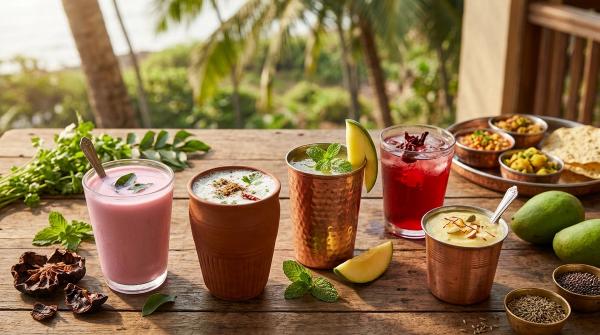
- Mattha, chaas, neer mor, solkadhi, sattu drinks... all the blessed things in glasses
- Steamed or lightly sautéed veg instead of super oily masala bombs
- Rice, millet, red rice, poha, hand-pounded grains that sit lighter than giant naan-at-noon situations
- Sharp little sides: pickle, kosambari, thoran, pachadi, kasundi, green chutney, roasted papad bits
Also I’m seeing more restaurants lean into millets, native rice varieties, and low-waste summer produce because sustainability is finally not just a buzzword on a menu card. In 2026, seasonal lunch thalis and regional summer specials are kind of having a moment in Bengaluru, Mumbai, Goa, Hyderabad, Delhi... not every place does it well, obviously, but the trend is there. A lot of chefs are using kokum, gondhoraj, raw mango, ash gourd, cucumber, jackfruit seeds, fermented rice water, local buttermilk. Basically grandma ingredients, but plated nicer and priced higher. Typical.
South India first, because honestly they have summer lunch figured out
#I know, I know, every region does. But on punishingly hot days I keep coming back to South Indian lunch ideas because they just make immediate sense. In Tamil Nadu, curd rice is the obvious hero, and I will defend it forever against people who call it plain. Plain? No. Good curd rice is subtle, which is different. The best version I had recently was in Chennai, at a no-fuss mess where they tempered mustard seeds, curry leaves, green chilli, ginger, and folded in enough milk so the curd didn’t turn sour too fast in the heat. It came with mango pickle and a tiny fried mor milagai and that was lunch sorted. I was weirdly happy.
Then there’s neer mor, which in my opinion should be sold on every street in May. Thin spiced buttermilk with curry leaves, hing, salt, maybe crushed ginger. In Kerala, summer lunches drift into red rice, olan, thoran, pulissery, cucumber pachadi, even simple moru curry with a vegetable side and something crunchy. Not heavy, but deeply satisfying. Andhra and Telangana go another route sometimes, brighter and sharper: perugu annam, majjiga pulusu, dosakaya pappu if made light, cucumber pachadi, steamed greens, and the life-saving presence of plain rice with ghee used carefully instead of recklessly. In Karnataka I love kosambari on hot days, especially the moong dal-cucumber one, with a little lemon and coconut. It feels almost too simple, then suddenly you’ve eaten the whole bowl.
The lunches I remember most from summer aren’t flashy ones. They’re the meals that made me feel human again after the heat had already won.
West coast lunches: sour, coconutty, cooling, and kinda perfect
#The west coast does this beautiful thing where lunch can taste bright and seaside and homey all at once. In Goa and the Konkan belt, solkadhi is the answer to more problems than we admit. If you’ve had a proper chilled pink solkadhi with coconut milk and kokum, you know. It cools, it perks you up, it makes fried fish make more sense, but it’s also great with just rice and a veg side. I had one in a small place near Panaji last year where the owner insisted theirs rested for a few hours before serving because the garlic had to settle in. Was he dramatic? Maybe. Was he right? Also yes.
Maharashtra has a whole summer lunch language I adore: varan-bhaat with lemon, kakdi koshimbir, taak, phodnicha bhaat made from leftover rice but lighter than you’d expect, and on really hot days even just amti toned down a bit with seasonal veg on the side. In coastal Maharashtra and Malvan, kokum appears everywhere for a reason. It’s tart, appetite-bringing, and honestly one of the smartest warm-weather ingredients around. Some newer restaurants are now doing kokum barley coolers, kokum millet kanji, and lighter fish curries for lunch service because diners are asking for food they can actually work after eating. Revolutionary concept, lol.
The East does soft textures and bitter-sour balance like nobody else
#I have such a soft spot for Bengali summer lunches. Maybe because one of my college friends used to drag me home during vacation and her mother fed us like we were both underweight and emotionally fragile. Lunch would begin with something bitter, maybe shukto, and on a hot day that slightly medicinal, gentle bitterness just worked. Then rice, a thin moong dal, maybe lau ghonto, cucumber, fried something small, and fish cooked in a mustardy but not too heavy style. At the end there’d be tok doi or a raw mango chutney if the day was really savage. It was balanced in this instinctive, old-school way.
Odisha, too, deserves more noise in this conversation. Pakhala bhata is one of India’s smartest heatwave foods and I will die on that hill. Fermented rice with water, often served cool, alongside fried or roasted veg, badi chura, green chilli, curd, maybe a little fish depending on the household. It’s hydrating, filling, tangy, and somehow both humble and genius. In recent years it’s moved from being dismissed by some city folks as too rustic to being proudly spotlighted. By 2026, a bunch of regional food pop-ups and even polished hotel restaurants have included pakhala-inspired summer plates. Good. About time people stopped pretending practicality isn’t culinary intelligence.
North Indian heat hacks are not all about lassi, though lassi obviously helps
#People outside India sometimes imagine North Indian lunch as always rich, creamy, heavy. But that’s such a half-story. In peak summer, homes across Punjab, Haryana, Delhi, UP, Rajasthan, Himachal all lighten up in very real ways. There’s boondi raita, lauki chana dal, tori sabzi, cucumber salads, pudina chaas, khichdi, kadhi made thinner for lunch, and rotis kept simple. In Punjab, I can demolish a bowl of chilled dahi with roasted jeera and black salt next to a light sabzi and phulka. In Rajasthan, ker-sangri gets the headlines, but I’ve also had wonderfully smart summer lunches built around chaach, bajra or jowar when it suits, and gatte prepared less aggressively than restaurant versions.
And then there’s UP and Delhi home cooking, which does incredible things with bottle gourd, pumpkin, arbi leaves, curd, mint, raw mango. My own nani used to make lauki in the least glamorous way possible, basically soft, gingery, barely spiced, and I complained about it as a kid because I was an idiot. Now? I crave it. Especially with thin moong dal and rice. Sometimes food maturity is just apologizing internally to vegetables you disrespected at age ten.
Western India in the dry heat: Gujarat and Rajasthan know what they’re doing
#If you’ve ever spent summer in Gujarat you know chaas is basically infrastructure. I mean that. It’s not a beverage, it’s a system of survival. Gujarati lunches can be surprisingly hot-weather friendly when they’re not festival-mode heavy. Think doodhi nu shaak, ringan bateta done lightly, moong, khichdi-kadhi, cucumber salads, sprouted farsan-type additions in moderation, and plenty of yogurt. There’s sweetness, yes, but also a practical understanding of digestion and heat. I had a thali in Ahmedabad where the server quietly refilled my chaas three times before I even asked, which felt like care disguised as routine.
Sattu, meanwhile, belongs in every Indian summer conversation even though we tend to associate it mostly with Bihar and eastern UP. A cold sattu drink with roasted gram flour, black salt, cumin, lemon, maybe green chilli if you like that punch, is one of the most sensible noon things ever invented. It’s had a bit of a 2026 wellness revival too, which is funny because village kitchens did not need a startup to explain sattu’s usefulness. Now you’ll see “protein-forward traditional coolers” in upscale cafés and I’m like... babe, that’s sattu.
A little table, because my brain likes categories even if my stomach doesn’t
#| Region | Classic summer lunch idea | Why it works in heat |
|---|---|---|
| Tamil Nadu | Curd rice, keerai, pickle, neer mor | Cooling, soft, probiotic, easy to digest |
| Kerala | Red rice, moru curry, thoran, cucumber pachadi | Light spice, yogurt-based curry, hydrating veg |
| Andhra/Telangana | Perugu annam, majjiga pulusu, dosakaya dishes | Tangy, appetite-friendly, not too rich |
| Karnataka | Kosambari, anna-saaru, buttermilk | Fresh, lentil protein, very lunchable |
| Bengal | Rice, shukto, thin dal, lau, fish, chutney | Bitter-sour balance, soft textures |
| Odisha | Pakhala bhata with sides | Cooling, fermented, deeply practical |
| Punjab/Delhi/UP | Phulka, lauki/tori, raita, chaas | Light veg, hydration, simple carbs |
| Gujarat | Khichdi-kadhi, doodhi, chaas | Gentle, soothing, heat-friendly |
| Konkan/Goa | Rice, veg/fish, solkadhi | Tart, cooling, digestive support |
| Bihar/Eastern UP | Sattu drink, simple sabzi, rice/roti, curd | Filling but not heavy, electrolyte-friendly |
The ingredients that show up again and again, and not by accident
#When you look across regions, certain ingredients keep appearing and it’s honestly beautiful how logical it all is. Curd and buttermilk, obviously. Raw mango in different forms. Kokum. Cucumber. Bottle gourd, ash gourd, ridge gourd. Light dals like moong. Coconut. Mint. Coriander. Jeera. Hing. Curry leaves. Steamed rice. Fermented rice. These aren’t random. They cool, hydrate, sharpen appetite, support digestion, and fit the kind of cooking that doesn’t require standing over a hot stove forever. In 2026, food media keeps talking about “micro-seasonality” and “functional ingredients”, and I’m over here like, yes, my aunties been knew.
Also, there’s growing interest in traditional fermentation again. Pakhala, pazhaya sadam, kanji-style drinks, naturally soured batters, set curd from local cultures. Partly gut-health fashion, partly climate awareness, partly nostalgia. Fine by me. If trends are what it takes for younger people to stop fearing soft rice and start respecting it, I’ll allow it.
Restaurants doing summer lunches better now, and where I think the scene is heading
#I need to be careful here because restaurant scenes change fast and cities are chaos, but one thing I’ve noticed through 2025 into 2026 is that more Indian restaurants, especially chef-led regional ones, are finally giving lunch its own identity instead of just shrinking the dinner menu. In Bengaluru and Chennai, there’s been more emphasis on seasonal saapadu and meal plates with neer mor, poriyal, rasam, curd rice finishes. Mumbai spots are doing coastal lunch menus with solkadhi, tisrya one day and vegetable ambat the next, lighter than the usual date-night stuff. Delhi’s regional restaurants have also leaned harder into summer thalis with chaas, kairi, kakdi, and home-style sabzis. Some places still over-style the food till it forgets its purpose, but others really get it.
I’m also weirdly into the rise of smart office lunch delivery menus built around regional summer food. Not the sad “healthy bowl” kind. I mean actual curd rice with proper tempering, millet-yogurt bowls inspired by mosaranna, pakhala sets, lauki chana dal with phulka, kosambari add-ons, and chilled chaas in reusable bottles. There’s a real opening there, I think. People want lunch that doesn’t knock them unconscious by 3 pm.
Stuff I make at home when it’s too hot to be ambitious
#My own hot-weather lunch rotation is not glamorous. Some days it’s curd rice with whatever crunchy things I can find, plus roasted peanuts if I need convincing. Some days moong dal khichdi made loose, with ghee only at the end and not a flood of it. I make cucumber kosambari a lot. Also solkadhi, though mine is inconsistant and I never seem to hit that ideal balance of kokum and coconut, but we persist. If I have leftover rice, I’ll do a quick tempering with mustard, curry leaves, grated carrot, coriander, maybe fold in curd later once it cools. And if I’m really, really done with the day, it’s just chaas, rice, alu-jeera made dry, and sliced onion with lemon. That counts. Don’t let Instagram tell you otherwise.
- Salt the curd dishes enough. Underseasoned “cooling” food is just depressing
- Temper in small amounts. Summer lunches shouldn’t taste like they’ve survived an oil spill
- Use texture. One crisp thing beside a soft dish changes everything
- Keep acidity bright but not punishing. Raw mango, lemon, kokum, tamarind... pick one lead voice
- Cold is nice, but not everything has to be fridge-cold. Slightly cool often tastes better
My most honest opinion: the best summer lunches are usually the least showy
#That’s probably the whole point of this ramble. The meals that save me in hot weather are rarely the ones trying hard. They’re regional for a reason, seasonal for a reason, and often built from repetition rather than novelty. Somebody’s mother or grandfather or local cook figured out decades ago what feels good at noon in that climate, and the meal stayed because it worked. Not because it was trendy, not because it photographed well, not because a chef called it deconstructed anything. It worked. There’s something deeply comforting about that.
So if you’re planning your own summer cooking, or traveling around India and wondering what to eat for lunch without melting into the pavement, maybe skip the heaviest thing on the menu just this once. Look for the curd rice, the pakhala, the kosambari, the chaas, the shukto, the thoran, the lauki, the solkadhi, the majjiga pulusu, the humble rice-and-dal combinations that seem almost too simple. They’re not simple, not really. They’re refined by weather, memory, and common sense. Which, frankly, is more than I can say for me and half my summer decisions.
Anyway, those are the hot-weather Indian lunches I keep coming back to, region by region, craving by craving. I could go on — and I probably will some other day — about summer pickles, mango sides, and the absolute emotional support role of papad. But for now I’m gonna go make chaas before I overheat thinking about it. If you like this kind of food rambling, poking around places like AllBlogs.in is actually pretty fun too.