The weird little luxury of ordering dinner to a hotel room
#I love a proper restaurant night when I travel. The whole thing. Walking too far in the wrong shoes, staring at a menu in a doorway, pretending I know what the waiter just said, then ending up with something smoky or garlicky or deep-fried that I will talk about for years. But honestly? Some of my best travel meals have arrived in a paper bag at a hotel lobby while I was wearing airplane socks and looking mildly defeated.
Food delivery to hotels is one of those modern travel habits that feels both brilliant and slightly chaotic. You land late in Lisbon, the hotel kitchen is closed, and suddenly there’s caldo verde and a bifana sandwich coming to you from some tiny place you would never have found on foot. Or you’re in Chicago during a sideways snow situation, and a hot Italian beef shows up like a personal rescue mission. It’s convenient, yes, but there’s a whole little dance to it: safety, hotel rules, lobby handoffs, cold fries, suspicious sauces, leftovers in mini fridges that barely chill anything. Not glamorous. Still very real.
My first lobby handoff disaster, because of course there was one
#I remember the first time I totally messed this up. I was in New Orleans, staying near the French Quarter, and I’d done the thing where I walked all day pretending beignets count as hydration. By 10 p.m. I was starving and too tired to sit anywhere with jazz and a waitlist. So I ordered gumbo, red beans and rice, and bread pudding from a local spot with great reviews. Easy, right? Nope.
I put the hotel address in, but not the hotel name. Then I forgot to add my room number because the app was being weird, and the driver called while I was in the elevator with no signal. By the time I got to the lobby, there were three delivery bags on a side table, two confused guests, one front desk clerk giving me the polite death stare, and my gumbo was somewhere between warm and emotionally unavailable.
It was still good, because New Orleans food has a way of forgiving human stupidity. The roux was dark and deep, the sausage had that smoky snap, and the rice soaked up everything like it had a job to do. But that night taught me the first rule of hotel delivery: don’t assume the handoff will magically work itself out. It won’t. Hotels are not your apartment building, and drivers aren’t mind readers.
Before you order, check the hotel vibe
#Hotels handle delivery differently. Some let drivers come up to your floor, some absolutely do not, and some say they don’t but then everyone kinda does anyway, depending on the night staff and the mood of the universe. In bigger city hotels, especially ones with key-card elevators, the lobby handoff is usually the default. Resorts can be even stricter, mostly for security and because nobody wants random scooters buzzing past the pool at midnight.
I usually ask the front desk one quick question when I check in: “If I order food later, should I meet them in the lobby?” It sounds basic, but it saves so much awkwardness. In Tokyo, one business hotel had a little delivery shelf near reception, neat as a library. In Miami, the clerk told me drivers weren’t allowed past the front doors and I needed to be downstairs when they arrived. In a small hotel in Porto, the owner just shrugged and said, “They call, you come,” which was honestly the whole policy.
- Put the hotel name in the delivery notes, not just the street address. This matters more than you think.
- Add a simple landmark if the hotel has a confusing entrance, like “use main lobby on King Street” or “not the garage door, please.”
- If your phone won’t work well abroad, connect to hotel Wi-Fi before ordering and don’t wander into the elevator right when the driver is close. I have done this. Regret.
- Tip clearly in the app or have local cash if tipping is normal where you are. Customs vary a lot, so don’t be that traveler who acts shocked by everything.
Safety isn’t dramatic, it’s mostly boring little choices
#People sometimes talk about food safety like it has to be scary, but most of it is boring and practical. Is the bag sealed or at least closed properly? Did the restaurant pack hot and cold items separately? Did your sushi sit in a warm car for 45 minutes while the driver made four stops? Does the soup container look like it lost a fight? These are the tiny things that decide whether your cozy hotel picnic is great or you spend tomorrow learning too much about the bathroom tile.
The basic food safety advice from public health agencies is pretty consistent: perishable food shouldn’t hang around in the temperature danger zone for too long. The USDA has long used the two-hour guideline for perishable foods at room temperature, and one hour when it’s really hot out, around 90°F or 32°C and above. That doesn’t mean you need to travel with a lab coat. It means if your biryani, poke bowl, butter chicken, or ramen has been sitting around for ages, don’t try to convince yourself it’s fine because you paid a delivery fee.
I get more cautious with certain foods when I’m traveling: seafood, creamy sauces, rice dishes that have been sitting, cut fruit, salads with protein, and anything raw. I still eat them. I’m not living a boiled-potato life. But I pay attention. If I order ceviche in Lima or oysters in Vancouver, I’m eating it right away, not saving half for breakfast like some kind of hotel-room goblin. For a deeper dive on this exact thing, I like this practical guide to Food Delivery Safety While Traveling Abroad, especially if you’re dealing with apps in a country where you don’t know the language well.
The lobby handoff: make it quick, kind, and not weird
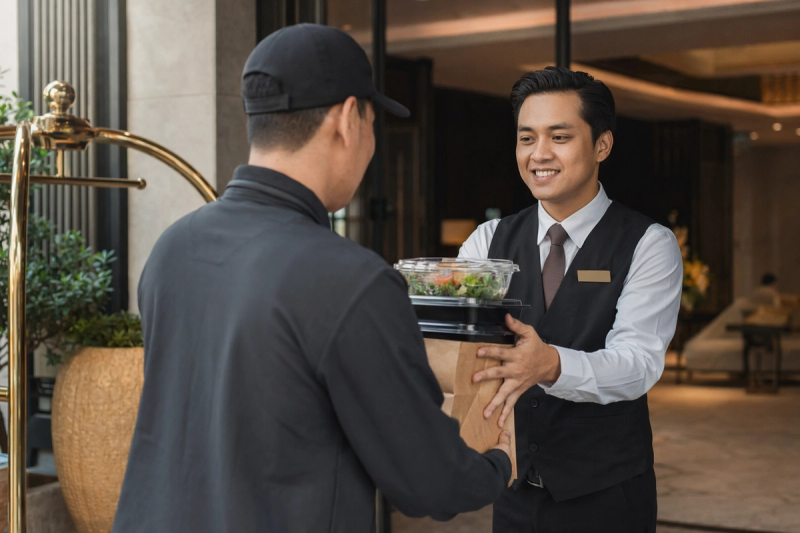
#The lobby handoff is a tiny social performance. You’re hungry, the driver is probably juggling six orders, the front desk is trying to keep the lobby from turning into a food court, and everyone just wants it done. My method now is boring but reliable: I go down when the app says the driver is two or three minutes away. I stand somewhere obvious but not blocking the door. I keep my phone in my hand. If it’s late, I don’t ask the driver to wander around trying to find me behind a plant.
This is also where personal safety comes in. I don’t give out my room number in public chat unless the hotel specifically allows door delivery and I’m comfortable with it. Usually I write, “I’ll meet you in the lobby by reception,” and that’s that. If a driver asks to come upstairs and the hotel doesn’t allow it, don’t make it a whole debate. Just say lobby is best. Also, if you’re traveling solo, especially late at night, meet in a well-lit public area. Common sense, but common sense gets sleepy after a long flight.
A good hotel delivery handoff should feel like picking up a coffee order, not negotiating a hostage release over pad thai.
What to order when you’re tired, jet-lagged, and maybe slightly feral
#Some foods travel beautifully. Others arrive as a sad version of themselves. I have learned this thru heartbreak. Fries are the classic tragedy. They leave the restaurant crisp and confident, then steam themselves into limp little memories. Pizza is more forgiving, especially Neapolitan-ish pizza if you eat it fast, or New York slices that can survive almost anything. Dumplings are great if packed well. Thai curries, Indian dals, Japanese katsu curry, Mexican pozole, Vietnamese pho kits where broth and noodles are separate, all strong hotel-room contenders.
In Bangkok, I once ordered khao man gai to a hotel after a day of temple-hopping and sweating through my shirt like a cartoon. Chicken rice is such a perfect delivery food when done right: tender chicken, fragrant rice cooked in stock and fat, cucumber on the side, that ginger-chili sauce that wakes up your entire personality. It came neatly packed, still warm, and I ate it sitting cross-legged on the bed watching Thai soap operas I did not understand. Was it the most refined culinary experience? No. Did I love it? Deeply.
In Mexico City, delivery tacos can be hit or miss because tortillas hate waiting, but a good al pastor place that packs salsa separately can still make you very, very happy. In Seoul, fried chicken delivery to a hotel is almost too easy, and the pickled radish situation deserves more respect worldwide. In London, late-night curry in a hotel room after a rainy train delay feels like civilization itself. The food changes, the ritual stays the same: shoes off, little desk cleared, towel as placemat because hotel tables are never big enough.
My lazy hotel ordering rules
#- Order foods that are meant to be saucy, stewy, wrapped, boxed, or reheated. Crispy-only foods are a gamble.
- Ask for sauces on the side if the app lets you. Soggy salad is a personal enemy of mine.
- Avoid giant orders if your room has no fridge. Ambition is how you end up staring at unrefrigerated noodles at midnight.
- If you’re in a place famous for a dish, try the local version even through delivery. Not every meal needs candles and a reservation.
The packaging inspection nobody talks about
#When the food arrives, I do a quick check before I fully relax. I’m not paranoid, I just don’t want to be dumb. Is the container cracked? Is hot soup leaking into the bag? Are cold items warm to the touch? Does anything smell off in a way that isn’t just unfamiliar spices? Travel already messes with your body enough, so I don’t like stacking risk on risk.
Seals are helpful, but they’re not magic. Some restaurants use tamper-evident stickers, some staple the bag, some just tie it tight. I don’t automatically reject food without a seal, especially in places where that’s not standard, but if the packaging looks opened or the order seems rummaged through, I contact the app or restaurant and don’t eat it. It feels wasteful, and I hate wasting food, but stomach trouble on a trip costs more than one rejected dinner.
| Hotel delivery situation | What I usually do | Why it matters |
|---|---|---|
| Driver arrives early and food is hot | Meet fast, eat soon | Best quality and safer timing |
| Food sat in lobby unknown time | Ask front desk when it arrived, use judgement | Time and temperature matter |
| Cold seafood or sushi feels warm | Skip it, sadly | Raw and chilled foods are less forgiving |
| Soup leaked everywhere | Check container, smell, and contamination | Leaking can mean poor handling or broken packaging |
| No fridge in room | Order smaller portions | Leftovers become a problem fast |
Leftovers: the emotional and logistical nightmare
#I am terrible at not ordering too much. I see local dishes and suddenly I become a committee. One main? No, obviously I need the regional appetizer, the dumplings, the salad, the dessert that reviewers keep mentioning, and maybe noodles because who knows when I’ll be here again. Then reality arrives in four containers and I’m in a hotel room with one tiny fridge already occupied by two minibar sodas that cost more than rent.
Leftovers can be fine, but hotel rooms make them tricky. The mini fridge may not be cold enough, or it may shut off when you remove the key card, or it may be packed with sensor-trigger minibar items you’re afraid to touch. If I plan to save food, I check the fridge first. Is it actually cold? Is there space? Do I have containers that close properly? If the answers are no, I eat what I can and let the rest go. Painful, yes. Better than carrying questionable shrimp pad thai into tomorrow.
The general rule I follow is refrigerate perishable leftovers within two hours, sooner in hot weather. I keep them in shallow containers if possible, because big deep tubs cool slowly. I also label things in my head by risk. Plain pizza? More forgiving, though still needs care. Creamy pasta with chicken? Needs the fridge quickly. Rice dishes? Don’t mess around, because cooked rice can be a food safety issue if held badly. Rotisserie chicken is another one travelers love because it’s easy and cheap, but it needs proper chilling and reheating, so this guide on Rotisserie Chicken While Traveling: Fridge & Reheat Safety is worth keeping in your back pocket.
Reheating in a hotel room without turning dinner into rubber
#If your hotel has a microwave, congratulations, you have entered the second chapter of leftovers. Reheating is not just about making food hot-ish. For safety, leftovers should be reheated thoroughly, and for happiness, they should not become shoe leather. I splash a little water into rice or noodles, cover loosely, and heat in short bursts. Stirring matters. Cold centers are sneaky. Pizza gets a damp paper towel nearby or, if I’m lucky enough to have an iron and a questionable level of confidence, I’ll do the old foil trick. Actually, don’t do that unless you know what you’re doing. Hotels probably hate me for even typing it.
Hotel microwaves are uneven little beasts. One corner of your curry may be volcanic while the other is still fridge-cold. If the room only has a coffee maker, I do not treat it like a kitchen appliance. I know people cook noodles in them and, okay, backpacker creativity is real, but I don’t want my pho tasting like old coffee and regret. If reheating is part of your travel style, this Hotel Microwave Meals While Traveling: Safe Reheating Guide is genuinely handy, especially for those extended-stay rooms where you’re basically camping with carpet.
Room service versus delivery, and why I still use both
#I have a soft spot for room service. The metal cloche, the tiny ketchup bottle, the absurd club sandwich at 11:30 p.m. It feels old-school and indulgent. But room service can be expensive, limited, and in some hotels it stops early or doesn’t exist anymore. Delivery gives you the neighborhood. It lets you eat jerk chicken in Brooklyn, laksa in Singapore, pierogi in Kraków, or a proper banh mi in Melbourne without waiting for a table when your social battery is dead.
That said, delivery can flatten a place if you let it. If every meal comes through an app, you miss the market sounds, the counter seats, the auntie telling you the spicy sauce is “not too spicy” when it absolutely is. I try to balance it. One night I’ll go out and eat where people are actually cooking and talking and clattering plates. Another night I’ll order in, especially after transit days. Travel doesn’t have to be a performance. Sometimes the most honest meal is eaten in bed with a plastic fork.
The etiquette bit, because hotel staff are not your food servants
#This sounds cranky, but please don’t treat the front desk like your personal delivery concierge unless the hotel offers that service. They’re checking people in, dealing with broken key cards, answering phones, and probably hearing complaints about air conditioning. If your food arrives, go get it. Don’t leave it sitting for half an hour making the lobby smell like garlic wings, even though garlic wings smell amazing and I support them spiritually.
I also try to clean up like a grown adult, imperfect as I am. Tie the bags, don’t pour soup into the bathroom sink, and don’t leave fish containers in the room trash for housekeeping to discover the next afternoon. If there’s a hallway trash room, use it. If not, seal the leftovers or ask the front desk where food trash should go. In hot climates, old food gets nasty fast. I once stayed in a beach hotel where someone left seafood pasta outside their door overnight and by morning it smelled like a haunted aquarium. Nobody needs that.
A few destination-specific things I’ve learned the tasty way
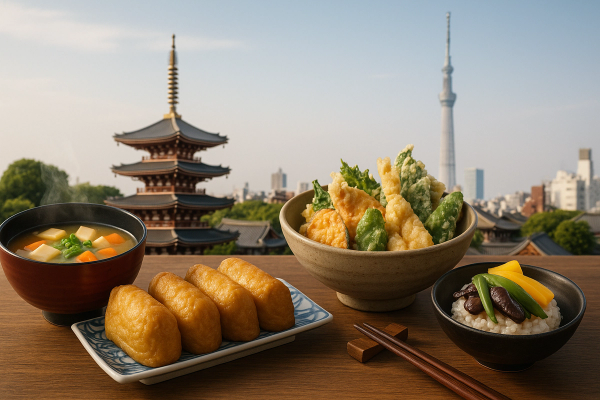
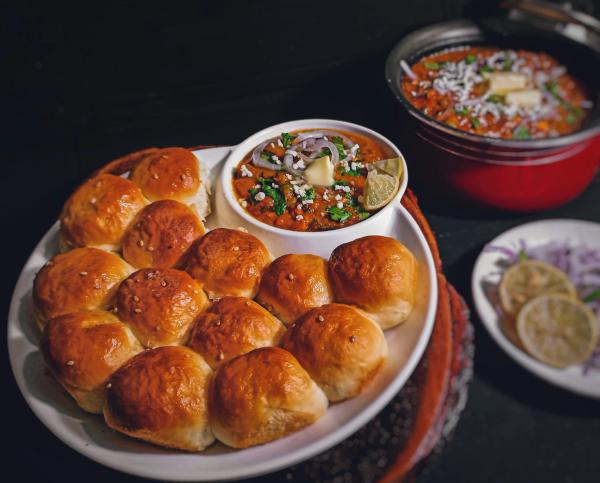
#In Japan, convenience stores are so good that delivery isn’t always necessary. A hotel dinner of onigiri, egg salad sandwich, miso soup, and pudding from 7-Eleven or Lawson can be weirdly perfect. In Italy, I’m less likely to order pasta delivery unless I know the place packs well, because pasta waits for no one. In India, delivery apps can bring incredible regional food to your hotel, but I’m careful with spice level after a long flight because my stomach and my confidence are not always aligned.
In the Gulf, I’ve had some of the best hotel delivery meals of my life: grilled meats, hummus, fattoush, mandi, shawarma still warm in the foil. In Spain, late dining hours mean delivery can rescue travelers who crashed at 7 p.m. and woke up ravenous at 10:30. In the U.S., portions are so huge that leftovers become part of the meal plan whether you asked for it or not. Every place has its own rhythm, and delivery is just another way to notice it.
My personal checklist before I hit order
#I don’t do this like a spreadsheet, don’t worry. But somewhere in my tired little travel brain, I run through a checklist. Do I know where to meet the driver? Can I recieve calls or messages? Is the hotel entrance obvious? Am I ordering something that will survive the ride? Do I have a fridge if there’s extra? Am I too tired to safely deal with bones, shells, or soup in a bed? That last one sounds silly until you spill ramen broth on a white duvet and briefly consider changing your name.
The best hotel delivery meals feel easy because you did the boring stuff upfront. Clear notes. Quick handoff. Eat hot food hot, cold food cold. Save leftovers only when you can chill them properly. Reheat like you mean it. And when in doubt, throw it out, which is annoying advice but true. I hate it too.
Final bites from the road
#Food delivery to hotels isn’t replacing the joy of wandering into a family-run noodle shop or sitting at a marble bar with a plate of anchovies and a cold drink. But it has its own travel magic. It’s the meal that meets you when your flight is delayed, when your shoes are soaked, when you’re too introverted for another conversation, when the city outside is still unfamiliar and your room finally feels like a small safe cave.
Some of my favorite travel memories are not postcard-perfect at all. Gumbo lukewarm in New Orleans. Fried chicken in Seoul with pickled radish balanced on a windowsill. Khao man gai in Bangkok while rain hit the glass. A half-reheated curry in London that tasted better than it had any right to. Delivery is messy, practical, sometimes a bit risky if you’re careless, but also deliciously human. Anyway, if you’re into food travel stories and the not-so-glossy details that actually help, poke around AllBlogs.in sometime. I end up there when I’m hungry for ideas and, honestly, just hungry.