The Day I Stopped Hating Those Spongy Little Nuggets
#I used to be one of those people who said, very confidently and very wrongly, that soya chunks taste like wet cardboard with gym socks energy. Sorry, but that’s honestly what I thought. My mum would make soya chunk curry on busy weeknights, and the whole kitchen had that weird beany smell, like something boiled too long and then gave up on life. I’d pick out the potatoes, leave the chunks, and act like I was full. Very dramatic child behavior. Then years later, in a tiny highway dhaba somewhere between Delhi and Jaipur, I had a soya keema so good I stopped mid-bite and just stared at the plate. It was smoky, masaledar, juicy, not smelly at all, and weirdly light. Not light like salad-light, but light like I didn’t need to lie down after eating it. That meal basically bullied me into learning how to cook soya chunks properly.
And that’s the thing nobody tells you. Soya chunks are not the problem. Bad prep is the problem. If you just throw them into boiling water, squeeze half-heartedly, and dump them into gravy, they’ll taste exactly like punishment. But if you rinse, soak, squeeze, season, and cook them like they deserve respect, they turn into this bouncy, protein-packed little sponge that drinks masala beautifully. I know “protein-packed” sounds like one of those gym bro captions, but it’s true in a normal kitchen way too. Most soya chunks are made from defatted soy flour, which is why packaged labels usually show a high protein content and very little fat compared with paneer or meat. But high protein plus fiber can feel heavy for some people, especially at night, so portion and prep matter. Like, a lot.
Why Soya Chunks Smell Funny in the First Place
#That smell. Let’s talk about it properly because pretending it doesn’t exist is silly. Soya chunks, also called textured vegetable protein in some places, are made from soy. Soy naturally has a beany aroma, and when chunks sit in hot water, that aroma wakes up and goes “hello, I am here.” Some brands smell stronger than others, and older packets can smell more stale too. I learnt this the hard way after buying a huge discount packet and wondering why every curry tasted like old cupboard. Never again. Now I smell the dry chunks before cooking. If they smell rancid, bitter, or dusty in a bad way, I don’t try to rescue them. Life is short and dinner should not be an emotional negotiation.
The heaviness is a seperate issue, though connected. Soya chunks are dense, and if you eat a big bowl with oily masala, rice, roti, and maybe a little pickle because we are all weak, it can sit in your stomach like a small sofa. Also, if they aren’t squeezed well after soaking, they hold onto that soaking water and release it into the curry, making the whole dish taste flat and kind of bloated. I know that sounds odd, but you can taste water that has been trapped in soya chunks. It’s bland, beany, and just... no. The goal is to remove that first soak smell, squeeze out the dull water, then make the chunks absorb something delicious instead.
My Basic No-Smell Soya Chunk Method, After Many Sad Curries
#This is the method I use 90 percent of the time. Not fancy. Not chefy. Just reliable. Put the dry soya chunks in a bowl and rinse them once under running water. Boil enough water with salt, a small piece of ginger, and either a splash of lemon juice or a spoon of vinegar. Add the chunks, switch off the heat after 2 to 3 minutes, cover, and let them sit for 8 to 10 minutes. Don’t boil them forever. I used to do that and they became weird rubber balls. After soaking, drain them and rinse under fresh water, then squeeze them firmly. Really squeeze. Like you are mad at an email. Then rinse and squeeze one more time if the smell is strong.
After that, I marinate them for at least 10 minutes, even if I’m hungry and being impatient. The smallest marinade works: curd or lemon, ginger-garlic paste, chilli powder, turmeric, coriander powder, a pinch of garam masala, salt, and a teaspoon of oil. If I’m making a dry sabzi, I sometimes add a little besan or rice flour so the masala clings. If I’m making curry, I keep them softer and let them simmer in the gravy only after the onions and tomatoes are properly cooked. That last bit matters. Raw tomato plus half-prepped soya equals that canteen smell. Cook your masala till it smells like food, not ingredients.
The Quick Formula I Keep in My Head
#- Rinse the dry chunks once, because dust and packet smell are real things.
- Soak in hot salted water with ginger and lemon or vinegar for 8 to 10 minutes, not half an hour.
- Drain, rinse, squeeze hard, then rinse and squeeze again if needed.
- Marinate before cooking, even if it’s just lemon, salt, chilli, and ginger-garlic.
- Cook in a strong masala, not watery gravy, and don’t drown it in oil thinking oil fixes everything.
The Squeeze Is Not Optional, Please Don’t Skip It
#I’m weirdly passionate about squeezing soya chunks. Maybe too passionate. But honestly, this is where most people mess up. You can do the perfect soak and still get that smell if you leave the soaked water inside. I usually cool them just enough so I don’t burn my fingers, then press them between both palms. If they’re big chunks, I cut them in half after squeezing because smaller pieces absorb masala better and feel lighter. Mini chunks are easier, but even those need a proper press. Some aunties use a strainer and press with a bowl. One of my cousins wraps them in a clean kitchen towel and twists it, which works but also looks slightly violent. Whatever method you use, the chunks should feel springy, not waterlogged.
There was this one dinner where I made soya pulao for friends and skipped the second squeeze because everyone was already sitting at the table and I was showing off, as one does. The pulao looked gorgeous. Cashews, peas, mint, the whole thing. But the first bite had that faint boiled-soy smell and I knew. I KNEW. Nobody complained because friends are polite when they want dessert, but I could see it. Since then, I would rather serve dinner ten minutes late than skip squeezing. Cooking teaches humility in the most annoying ways.
What to Add to the Soaking Water, and What Is Just Drama
#People add all kinds of things to soaking water: milk, tea leaves, whole spices, baking soda, bay leaf, cloves, even chai masala. I’ve tried many of them because I am curious and also easily influenced by reels. My honest opinion? Ginger, salt, and something acidic are enough for daily cooking. Lemon juice gives a cleaner flavor. Vinegar is stronger and useful if the brand smells very beany. A bay leaf is nice but not life-changing. Whole spices help if you’re making biryani-style soya or keema, but for regular curry they can be extra. Milk does soften the smell a bit, but then you have milky soaking liquid to throw away and I don’t love that waste. Baking soda can make chunks too soft and oddly slippery, so I avoid it.
| Problem | What probably happened | My fix |
|---|---|---|
| Strong beany smell | Chunks were not rinsed or squeezed enough | Hot soak with ginger-lemon, rinse twice, squeeze like you mean it |
| Rubbery texture | Boiled too long or cooked on high heat forever | Soak briefly, then simmer gently in masala |
| Heavy feeling after eating | Too many chunks, too much oil, or eaten late at night | Use smaller portions, add vegetables, keep gravy lighter |
| Bland inside | No marinade or weak masala | Marinate after squeezing, then cook with browned onions and spices |
| Watery curry | Chunks released trapped soaking water | Squeeze better before adding to gravy |
My Favorite Masala Base for Soya Chunks That Don’t Taste Like Diet Food
#A good masala base is what makes soya chunks actually exciting. I heat a spoon or two of oil, add cumin, then finely chopped onions. Not pale onions. Brown-ish onions. The kind that smell sweet and make someone walk into the kitchen asking what’s cooking. Then ginger-garlic paste, green chilli, tomatoes, salt, turmeric, chilli powder, coriander powder, and sometimes a tiny bit of kasuri methi. The tomatoes need to cook down until the oil looks like it’s separating, even if you use very little oil. Then I add the marinated chunks and toss them till they get a little color. Only after that do I add water, and not too much. Soya chunks don’t need to swim. They need to sit in masala and soak up flavor like gossip.
If I want a North Indian style curry, I finish with garam masala and coriander. If I want something more street-food-ish, I add pav bhaji masala or a pinch of chaat masala at the end. This is probably not traditional and someone’s grandmother may object, but it tastes great. For a South Indian-ish version, I temper mustard seeds, curry leaves, onions, and black pepper, then toss squeezed chunks with coconut and lemon. That one is brilliant with rasam rice, by the way. Not every soya dish needs to be red gravy. Actually, some of the best ones are dry, spicy, and eaten straight from the pan while pretending you’re just “checking salt.”
The Restaurant Plate That Changed My Soya Standards
#That dhaba soya keema I mentioned earlier still lives in my head rent-free. It came in a steel plate with two tandoori rotis, sliced onions, and a green chutney so sharp it made my eyes water in a nice way. The chunks were minced or maybe hand-crushed after soaking, because the texture was uneven, not factory-perfect. Some bits were chewy, some soft, some crispy at the edges. That’s when I realised restaurants often make soya taste better because they don’t treat it like a substitute. They treat it like its own ingredient. They toast it, fry it lightly, roast the masala hard, and balance it with acid. At home we sometimes make “healthy” mean sad, and then blame the ingredient. I’ve done it too.
A lot of casual North Indian and Indo-Chinese places use soya chaap now, which is not exactly the same as plain soya chunks, but it has definitely made people more open to soy-based dishes. Some chaap is made with soy and wheat, and some versions vary by brand or shop, so if you’re avoiding gluten you do need to ask. Plain soya chunks are usually simpler, but always check the packet ingredient list because brands differ. I like chaap in restaurants, especially malai chaap when it’s smoky from the tandoor, but at home I prefer chunks. They’re cheaper, easier to store, and less fussy. Also, they don’t demand a weekend mood. Tuesday dinner can handle soya chunks.
How to Make Soya Chunks Feel Lighter at Dinner
#This is where I’ve changed a lot. Earlier I’d make a thick, oily soya curry at 9:30 pm, eat it with three rotis, then complain that soya doesn’t suit me. Babe, that was not soya’s fault. Now, for dinner, I keep the portion smaller and add vegetables. Capsicum, beans, carrots, spinach, lauki if I’m feeling sensible, even cabbage works nicely. The vegetables break up the density and make the dish feel less like a protein brick. If it’s summer and the kitchen itself feels like a punishment, I do a lighter soya stir-fry with cucumber raita or dal-rice instead of heavy gravy. I also loved this piece on Light Indian Dinner Ideas for Summer Nights: What to Eat When It’s Too Hot, because honestly, hot weather dinners need a different brain.
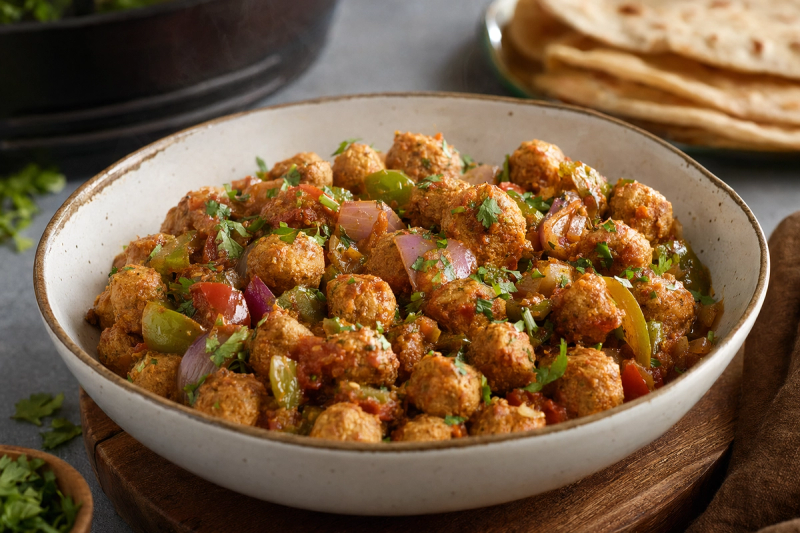
Another trick: don’t make the chunks huge. Big chunks can feel heavy because you chew and chew and they still feel like sponges. Cut them in halves or quarters after soaking. Or pulse them once in a mixer to make soya granules for keema. Soya keema feels lighter to me because the masala coats every tiny bit, and you don’t get those big bland centers. I make it with peas, onions, tomatoes, and lots of coriander, then eat it with phulka or stuffed into a toasted pav. Leftovers go into paratha filling next morning. Actually, soya keema paratha with pickle is one of those breakfasts that makes me feel like life is manageable again.
My No-Heaviness Soya Chunk Sabzi for Busy Nights
#Here’s the rough recipe I make when I want dinner fast but not boring. Take 1 cup dry soya chunks for 3 to 4 people, not 2 people unless everyone is very hungry. Soak with salt, ginger, and lemon, then rinse and squeeze. Cut them smaller. Marinate with 2 tablespoons curd, half teaspoon turmeric, 1 teaspoon chilli powder, 1 teaspoon coriander powder, half teaspoon cumin powder, salt, and a little ginger-garlic paste. In a pan, heat 1 tablespoon oil, add cumin, onions, green chilli, then cook till the onions soften and get golden at the edges. Add tomatoes and cook them down. Add capsicum or beans or whatever vegetable is lurking in the fridge. Add the chunks and toss for 5 to 7 minutes. Finish with garam masala, lemon, coriander, and maybe a spoon of water only if it’s sticking.
This sabzi doesn’t feel heavy because it’s not floating in oil, and the vegetables do half the work. The curd marinade gives tang and softness, but if you don’t eat dairy, use lemon juice and a teaspoon of oil instead. Sometimes I add crushed kasuri methi and it suddenly tastes like a restaurant side dish, which is hilarious because it took fifteen minutes. Eat it with phulka, not giant buttery parathas if you’re trying to keep things light. Or do eat the parathas. I’m not the roti police. Just don’t blame the soya chunks later.
Indo-Chinese Soya Chunks, Because We All Need Fun
#One of my favorite ways to convert soya haters is chilli soya. Not deep-fried necessarily, though deep-fried is obviously delicious because the universe is unfair. For a lighter version, soak and squeeze the chunks, then toss them with soy sauce, ginger-garlic, chilli sauce, vinegar, black pepper, and a little cornflour. Pan-fry till the edges get crisp. In another pan, stir-fry garlic, onions, capsicum, spring onions, and green chillies, then toss everything together. The vinegar and sauces completely kill any leftover beany smell, and the crisp edges make the texture less spongy. I once served this during a cricket match night and one friend thought it was boneless chilli chicken. I did not correct him immediately. Let people have wonder in their lives.
Just watch the salt, because soy sauce plus salted soaking water can get intense. I’ve ruined one batch this way and we ate it with plain rice like we were doing damage control. Also, Indo-Chinese soya is best eaten fresh. Once it sits, the crisp edges soften, still tasty but not the same. If you’re meal-prepping, keep the cooked chunks and sauce seperate, then toss before eating. Yes, I spelled separate wrong in my notes for years and now my brain refuses to cooperate.
Little Mistakes That Make Soya Chunks Taste Bad
#- Using an old packet that already smells stale before cooking. No spice mix can fully hide that.
- Boiling the chunks for ages. They only need hot water soaking, not a spa vacation.
- Skipping acid. Lemon, vinegar, tomato, curd, amchur, something tangy really helps balance soy’s beany flavor.
- Adding chunks to raw masala. Cook the onions and tomatoes properly first, please.
- Making the gravy too watery. Soya chunks love thick, clingy masala, not soup unless you’re doing a specific stew kind of thing.
- Eating a mountain of them and then saying they are heavy. Portion matters, especially if your stomach is not used to high-protein, high-fiber foods.
A Small Note on Nutrition Without Getting Boring
#I’m not a nutritionist, and I don’t like when food blogs suddenly start sounding like hospital pamphlets, but a little context helps. Soya chunks are generally valued because they’re rich in plant protein, and since they’re made from defatted soy flour, they’re usually low in fat. They also contain fiber, which is great for many people but can feel gassy or heavy if you eat too much too quickly. If soy doesn’t suit you, don’t force it just because the internet is excited. If you have a soy allergy or a medical condition where soy intake matters, follow proper medical advice. For everyone else, the practical kitchen rule is simple: start with smaller portions, cook them well, and pair with vegetables, rice, roti, or dal in a balanced way.
I also don’t buy into the idea that soya chunks must replace meat or paneer in every dish. Sometimes they do, sometimes they don’t. They’re their own thing. A soya matar keema is not mutton keema, and that’s fine. A soya curry is not paneer butter masala, and thank god, because paneer butter masala already exists. The happiest cooking happens when we stop making one ingredient wear another ingredient’s clothes. Let soya be chewy, masala-loving, slightly nutty, and filling. Just remove the smell and manage the heaviness, and suddenly it becomes a weeknight hero.
My Final Soya Chunk Rules, Written While Craving Keema Pav
#If you remember nothing else from this long soya rant, remember this: soak smart, squeeze hard, season boldly, and don’t overeat just because it’s “healthy.” The no-smell part comes from rinsing, hot soaking with salt-ginger-acid, and squeezing out that first beany water. The no-heaviness part comes from smaller portions, smaller pieces, enough vegetables, less oil, and not cooking it into a dense brick of masala. Once you get that rhythm, soya chunks become ridiculously useful. Curry, pulao, keema, cutlets, chilli soya, wraps, lunchbox sabzi, everything. I still have the occasional failed batch, usually when I’m rushing or trying to answer messages while cooking, but most days it works beautifully.
Soya chunks don’t need to smell weird or sit heavy. They just need a little respect before they hit the pan.
And honestly, I kind of love that. Food that asks for a tiny bit of technique always feels more personal to me. Like you earned the good bite. So if you’ve hated soya chunks till now, try them once this way before you banish them forever. Use fresh chunks, squeeze properly, make a loud masala, add lemon at the end, and eat while it’s hot. Maybe with soft phulkas. Maybe with pav. Maybe standing at the stove because you “just wanted to taste.” No judgement from me. For more cozy food rambling and practical kitchen ideas, I keep finding nice reads on AllBlogs.in, so wander there when you’re in that hungry-scroll mood.