The one hotel mistake that ruined my sleep, and taught me a lot
#I used to book hotels in a very typical Indian way. Open booking app, sort by price, check photos, see if breakfast is included, read two reviews, done. Bas. Then I learnt the hard way that a hotel can have clean bedsheets, nice staff, good AC, even decent poha in breakfast… and still destroy your trip if the room is noisy.
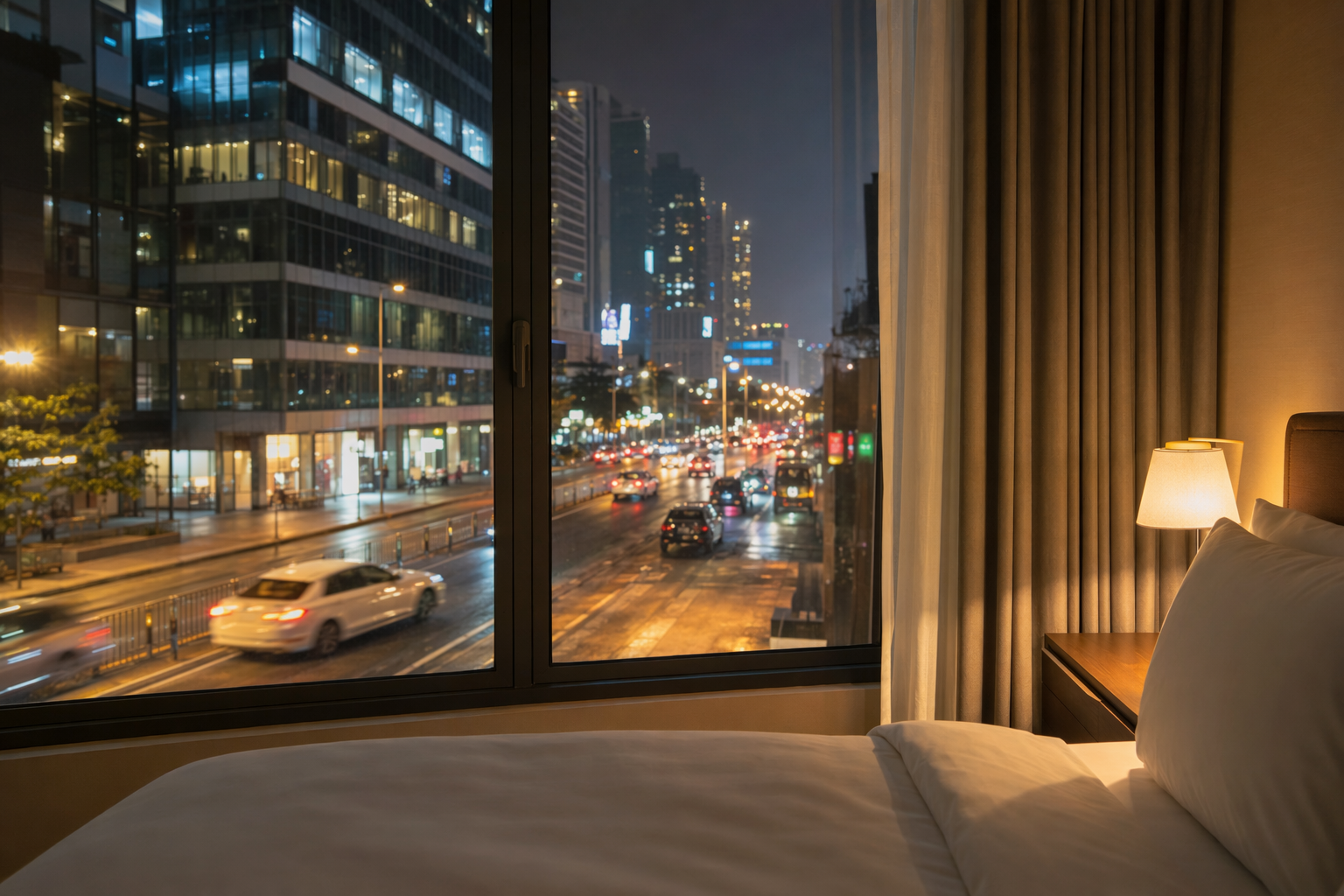
My worst one was in Mumbai, near a busy road. I had taken an overnight train, reached tired, had one meeting the next morning, and thought I was being smart by booking a “central location”. Central location, haan, very central to every honking taxi, bike, BEST bus, random truck reversing sound, and some late-night road work also. I slept maybe 2 hours. Next day my face was looking like I had attended a three-day shaadi without sleeping.
Since then I’ve become slightly obsessed with checking hotel noise before booking. Not in a fancy way. Just practical jugaad. Google Maps, reviews, calling the property, checking nearby roads, bars, metro lines, temples, banquet halls, all that. It sounds too much but honestly it takes 10 minutes, and it can save your whole trip.
First check the map, but don’t just check distance from tourist spots
#Most of us check location like this: “Is it near the beach?”, “Is it close to railway station?”, “How far from airport?”, “Can I get an auto easily?” All valid. But for noise, you have to look at the map like a detective. Zoom in properly. Is the hotel on a main road or inside a lane? Is there a flyover right next to it? Is it facing a railway track, bus stand, metro construction, market street, or a marriage garden?
In Indian cities, 200 metres can change everything. I stayed in Jaipur once where the hotel was technically near MI Road, but it was tucked inside a calmer lane. Lovely sleep. Another time in Delhi, the hotel looked nice in photos and was “near metro”, which I thought was a plus. It was near metro, yes, but also near the main road where horns started before sunrise. My fault only, I didn’t zoom properly.
- If the hotel sits directly on a national highway, arterial road, flyover, station road, or market road, assume traffic noise unless rooms are well soundproofed.
- If it is near a railway station or bus stand, check whether rooms face the road or inner side. Station areas are convenient but rarely peaceful.
- If you’re booking in Goa, Kasol, Rishikesh, Pondicherry, Manali, Jaipur, Udaipur, or any wedding-heavy destination, check for cafes, clubs, hostels, banquet lawns and rooftops nearby.
Btw, “near airport” also needs caution. Airport hotels are great for early flights, but some cheaper ones near airport roads can be noisy due to traffic and late check-ins, not just aircraft. The fancy airport hotels usually manage sound better, but budget ones can be hit or miss.
Read reviews like you are searching for gossip, not like a normal person
#Hotel reviews are gold, but only if you search properly. Don’t just read the top three reviews saying “good stay” and “staff behaviour nice”. Use the search bar inside reviews if the platform allows it. Type words like noise, noisy, loud, road, traffic, music, club, construction, lift, generator, dogs, train, mosque, temple, banquet, wedding, pub, DJ, and sleep. Yes, I search all these. My friends laugh at me, but they also ask me to book hotels now, so who won?
One thing I’ve noticed is that Indians often mention noise very directly in reviews. Like “too much sound from road”, “DJ till 12”, “room near lift was disturbance”, “outside dogs barking whole night”, “construction going on”, “market side room avoid”. These are not small clues. Believe them. Especially if multiple reviews say the same thing across different months.
At the same time, don’t panic over one random angry review. Some people are light sleepers, some had bad luck with one room, and sometimes a wedding night nearby can make even a decent hotel noisy for one evening. What you want is pattern. If five people mention traffic noise, it’s not a coincidence. If three people mention “thin walls”, then couples, families, kids in corridor, late check-in guests, everything will become your personal background music.
My review-search trick that actually works
#I open Google reviews and the booking site reviews side by side. Google reviews often have more local-style complaints, while booking platforms sometimes have room-specific comments from travellers. Then I check the newest reviews first, because old reviews may not show recent construction, a new rooftop bar, or metro work outside. I don’t need 100% perfect silence, but I want to know what I’m getting into.
Look at the hotel photos carefully, especially windows and room direction
#Photos are not just for judging bedsheets and bathroom tiles. Look at windows. Are they double-glazed or just normal sliding glass? Is the balcony facing a main road? Does the room open into an indoor corridor or directly toward an open courtyard? Are there restaurants or banquet spaces on lower floors? Is there a rooftop cafe above the rooms?
In many Indian hotels, especially mid-range ones, soundproofing is not always strong. A hotel can advertise “premium room” but still have thin doors where you hear every trolley bag in the corridor. I once stayed at a smart-looking business hotel in Pune where the room itself was good, but my room was opposite the lift. Whole night: ting, door open, people talking, ting again. Not dramatic, but enough to irritate when you have an early morning cab.
- Rooms facing inner courtyards are often quieter than road-facing rooms, unless the courtyard has a restaurant or party space.
- Higher floors usually reduce street noise, but if there is a rooftop bar or kitchen exhaust above, top floors can be worse.
- Corner rooms can be quieter because fewer neighbours share walls, but sometimes they are closer to service areas.
- Rooms near lift, staircase, housekeeping pantry, ice machine, reception, restaurant, or kids’ play area can be noisy even in a quiet locality.
If the listing shows only pretty bed photos and no exterior, no street view, no building surroundings, I become suspicious. Not always bad, but it means I need to call or check map more carefully.
Call the hotel before booking, but ask very specific questions
#This is where many of us feel awkward. We message “quiet room possible?” and the hotel replies “yes sir/madam, subject to availability”. Useless. Instead, call and ask direct questions. Politely, of course. Hotel staff usually knows which rooms are quieter, they just won’t volunteer it unless you ask.
What I say is something like: “Hi, I’m planning to book for two nights. I’m a light sleeper. Can you tell me if your rooms face main road or inner side? Do you have any construction nearby? Is there a bar, banquet, or event space in the hotel? Can you allot a room away from lift and restaurant?” Simple. No need to sound like CID.
If they answer confidently, good sign. If they say “all rooms are same only” or “no noise problem” too quickly, I ask again about road-facing rooms. Sometimes reception people are busy, I get that, but their reply tells a lot. Also, if you’re reaching early or leaving late, ask about storage and waiting options in the same call. I’ve used this habit after reading more about Can Hotels Hold Luggage After Checkout? Safety Guide, because luggage, early check-in, quiet room request, all these small hotel logistics are connected only.
Exact quiet-room request I usually send after booking
#After booking, I message this: “Please allot a quiet room, preferably on a higher floor, away from lift, staircase, housekeeping pantry, restaurant, banquet hall and main road. Non-connecting room if possible.” It sounds a bit extra, but it works surprisingly often. Add it in the booking notes and then call one day before arrival. Don’t wait until check-in when all rooms are already assigned.
Check what is around the hotel, not just inside it
#Noise often comes from outside the hotel. This is the part most people miss. A hotel can be perfectly decent but surrounded by chaos. In India especially, neighbourhood sound has its own personality. Morning temple bells, azaan, vegetable vendors, school buses, wedding bands, political rallies, dogs, construction, generator hum during power cuts, drunk tourist crowd in beach towns… it’s all part of travel, but you may not want it outside your window at 1 am.
I don’t say this in a negative way. Local sounds are also beautiful sometimes. In Varanasi, hearing the morning ghats slowly wake up was magical for me. In Madurai, temple sounds gave a lovely sense of place. But if you booked a room to sleep after a long drive, then “authentic local atmosphere” at 5 am may not feel so poetic, trust me.
- Near temples, mosques, gurudwaras, churches: expect devotional sounds at certain times, especially early morning or festival days.
- Near markets: daytime and evening noise, loading vehicles early morning, shutters opening, vendors calling out.
- Near beaches in party areas: music can travel far at night, especially in places like North Goa or busy shack zones.
- Near banquet halls and lawns: wedding season can mean DJs, dhol, baraat, fireworks, and traffic jams outside.
- Near schools or colleges: mornings can be noisy, and hostel-style areas may have late-night food stalls and students hanging around.
Use map labels also. If you see “lounge”, “club”, “banquet”, “bar and kitchen”, “marriage garden”, “function hall”, “pub”, “cafe open late”, “bus depot”, “petrol pump”, “hospital emergency”, “railway crossing”, just pause and think.
Season matters more than people realise
#Noise changes with season. This is very true in India. During wedding months, hotels with banquet halls can become full-on event venues. During long weekends, hill stations and beach towns get louder. During festival periods, streets may have processions, loudspeakers, late-night crowds, and extra traffic. During monsoon, some construction pauses in certain places, but generators, pumps, drainage work, and traffic jams can still create noise. It’s never one rule.
For example, Goa in peak winter season has a totally different sound compared to a quiet monsoon weekday. Manali during school holidays is not the same as Manali in a calmer shoulder season. Jaipur during wedding season can be gorgeous and chaotic together. Rishikesh near popular cafes can be peaceful in the morning and noisy in the evening. And in Mumbai, honestly, season or no season, traffic has its own permanent citizenship.
Best months if you want quieter stays
#If sleep is important, avoid major long weekends when possible. Shoulder months are often better, like just before or after peak tourist season. In hill stations, weekdays are calmer than Friday-Sunday. In beach towns, staying slightly away from the main nightlife belt helps a lot. In pilgrimage towns, check festival calendars before booking, because the town may be crowded and hotel corridors can be busy all night with early-morning departures.
Also check weather. If you’ll need AC all night, a sealed room with good AC may block more street noise. If you’re going to a cool hill place and want windows open, then even a “quiet” hotel can feel noisy because every dog bark and bike sound comes in. Small thing, but it matters.
Understand hotel types and what noise to expect
#Not all stays have the same noise profile. A luxury hotel may have better windows but also weddings. A boutique homestay may be peaceful but have wooden floors where footsteps travel. A hostel may be fun, social, cheap, and totally wrong if you need silent sleep. A highway motel may be convenient for road trips but trucks will remind you they exist. So choose according to your trip, not just budget.
| Stay type | Typical price range in many Indian destinations | Noise risk to check |
|---|---|---|
| Budget hotel | ₹800-₹2,000 per night | Thin walls, road-facing rooms, lift noise, generator sound |
| Mid-range hotel | ₹2,000-₹5,000 per night | Banquet halls, restaurant floors, traffic if central |
| Boutique stay or homestay | ₹2,500-₹8,000 per night | Neighbourhood sounds, pets, wooden floors, limited soundproofing |
| Hostel | ₹500-₹1,500 dorm bed, private rooms higher | Common room music, late-night guests, shared corridors |
| Luxury hotel | ₹8,000 and above, depending on city and season | Events, poolside music, kids in corridors, service area noise |
These ranges move a lot by city, season, brand and weekday versus weekend. A ₹3,000 room in Indore may feel great, while the same money in South Mumbai may get you something tiny and near traffic. In Goa during peak holiday weeks, prices can jump like anything. So don’t judge only by price. A quieter ₹2,500 homestay in a lane may beat a ₹6,000 road-facing hotel room.
Use transport clues to predict noise
#Transport access is important, especially for Indian travellers juggling trains, flights, family luggage, elderly parents, kids, and all. But transport convenience and noise are often fighting with each other. A hotel right outside New Delhi Railway Station is convenient, yes, but you’ll hear horns, announcements, autos, porters, late arrivals. Near metro is great, but check if the line is elevated and close to the room side. Near airport is practical, but road noise and late check-ins may disturb.
When I travel with family, I usually choose a place 5-10 minutes away from the main transport hub rather than directly outside it. Auto/cab cost becomes slightly more, but sleep improves. If you’re solo and arriving late, safety and easy access may matter more, so maybe you accept some noise. That’s the balance. Travel is never perfect only.
- For railway trips, avoid hotels directly facing station entry roads if you are a light sleeper.
- For metro cities, check if the room faces an elevated metro track or major junction.
- For road trips, don’t book exactly on the highway unless reviews confirm quiet rooms at the back.
- For beach destinations, check walking distance to nightlife streets, not just beach distance.
Also, if you’re using local transport like autos, taxis, bikes on rent, or app cabs, a slightly inside-lane hotel is usually still manageable. In places like Udaipur old city or Varanasi lanes, though, “inside lane” can mean you walk with bags because cars don’t enter. So ask the hotel about vehicle access too.
Food, culture, and noise are connected in funny ways
#This sounds odd, but local food areas can be noisy. The best kachori lane, dosa corner, momo street, seafood shack belt, night market, or chai tapri area will not become silent just because you want to sleep. I love staying near food streets when I’m travelling alone because late dinner becomes easy. But if I’m travelling with parents, I avoid rooms exactly above restaurants or near late-night food clusters.
In Lucknow, old food streets are full of life. In Amritsar near the Golden Temple area, you get amazing access and emotion, but lanes can stay active. In Indore near Sarafa side, food culture is the whole point, and night buzz is part of it. In Goa, a shack or cafe next door may be romantic in photos and irritating at midnight. In hill towns, cafes with live music can be lovely until your room is directly above the speaker.
Lesser-known spots often help. Instead of staying right in the most famous market or beach, stay one neighbourhood away. In Jaipur, a calmer residential pocket can still be a short cab ride from old city. In Pondicherry, not every good stay has to be inside the busiest White Town lane. In Rishikesh, being a little away from the loud cafe strip can give you the river vibe without the late-night crowd. You still eat the good food, you just don’t sleep inside the food court, basically.
Construction noise is the silent villain, except it’s not silent at all
#Construction is the one thing photos will never tell you. A hotel may have peaceful pictures from last year, and today there is drilling next door. Metro work, road repair, new building, renovation inside hotel, furniture work, painting, tile cutting, all these can ruin afternoon rest and work calls. And in India, construction timing can be unpredictable. Sometimes it starts early. Sometimes it goes late. Sometimes they say “only small work”, and then you hear hammering like a metal band.
Always check recent reviews for construction. Call and ask: “Is there any renovation or construction in hotel or nearby?” If they hesitate, note it. If you are booking non-refundable, be extra careful. I prefer free cancellation when I’m unsure about noise. It may cost slightly more, but peace of mind has value. Especially if you’re travelling for work, exams, medical visit, or with a baby.
A cheap non-refundable noisy room is not a deal. It is just a prepaid headache.
Don’t ignore internal hotel noise: lifts, kitchens, corridors, connecting rooms
#People always think noise means traffic. But hotel-inside noise is equally annoying. Corridors amplify sound. Kids run, guests talk loudly on phone, housekeeping trolleys move early, doors slam because those heavy hotel doors have no mercy. If your room is near the lift, you’ll hear everyone returning from dinner. If near the kitchen, morning breakfast prep can start before you are mentally alive.
Connecting rooms are another thing. They are useful for families, but if you’re not using both rooms, avoid them. The connecting door often lets sound pass. I had one in Bengaluru where the uncle next door watched TV till late night. Not even loudly maybe, but I could hear enough dialogues to feel included in their serial. Very unwanted subscription.
- Ask for a non-connecting room if you are not travelling as a group.
- Avoid rooms beside lift, staircase, reception, restaurant, banquet, service lift, pantry, laundry, or gym.
- If hotel has a pool, ask whether pool-facing rooms get noisy with families or music.
- If there is a rooftop bar, don’t take the floor just below it unless reviews say soundproofing is good.
What to do after booking, because the work is not fully over
#Once you book, don’t just disappear till check-in. Send a polite message with your quiet-room request. Then call the property one day before. If you are arriving late, tell them you still want the quiet room held. Sometimes hotels allocate better rooms to people who ask early and nicely. Not always, but it helps.
At check-in, repeat the request with a smile. “If possible, please give me a quiet room away from lift and road side.” If they offer an upgrade, still ask whether it is quiet. Sometimes the “better view” room faces the noisy road, while the boring back-side room is heaven. I’ll take boring view over honking view any day.
- Before paying final amount, ask if the room is road-facing or inner-facing.
- When you enter the room, stand silently for one minute. Listen for traffic, lift, kitchen, music, AC outdoor units.
- Check window closing properly. Small gaps can let in a lot of sound.
- If it feels bad, request a change immediately before unpacking everything.
I know some people feel shy asking for room change. Same here earlier. But you paid for a stay. Be polite, don’t shout, but ask. Most decent hotels will help if they have availability.
If you’re already stuck with a noisy room, do damage control
#Sometimes despite all research, you get noise. Maybe a wedding suddenly happens, maybe bikers arrive, maybe road work starts. Carry basic survival items if you’re a light sleeper. Foam earplugs weigh nothing. A white noise app or fan sound can mask small disturbances. I sometimes play rain sounds softly. Sounds silly but works. Keep windows fully closed, curtains drawn, and place a towel at the bottom of the door if corridor light and sound are coming in. Desi jugaad, but useful.
If music is too loud or construction is going on inside hotel at odd hours, complain to reception. For outside noise, they may not control it, but they can shift you to another side. If you booked through a platform, use their chat support if the hotel refuses reasonable help. Take short videos if needed, but don’t start fighting at 2 am unless it’s really unbearable. Tomorrow you still have to travel.
My simple noise-check checklist before I book any hotel now
#This is my practical routine. It takes maybe 10-15 minutes, less once you get used to it. And no, I don’t do it for every random one-night halt, but for proper trips, work stays, family trips, or early flights, I definitely do.
- Open map and check if hotel is on main road, station road, highway, market, beach party lane, or beside banquet hall.
- Search reviews for noise-related words like traffic, loud, music, construction, lift, thin walls, wedding, bar, dogs, train.
- Check recent reviews first, not only highest-rated ones.
- Look at photos for window type, balcony direction, rooftop restaurant, banquet areas, and room corridors.
- Call hotel and ask about quiet rooms, nearby construction, events, road-facing rooms, and room away from lift.
- Book free cancellation if there are any doubts.
- After booking, message your quiet-room request and call before arrival.
Also compare the hotel’s rating with the type of complaints. A 4.4 rating with many “noisy road” comments may still be bad for you. A 4.0 rating with complaints about slow breakfast but no noise issues may be better if sleep is priority. Ratings don’t understand your personal sleep needs.
Quiet booking is really about knowing your own travel style
#Some travellers can sleep through anything. My cousin can sleep in a bus with Bollywood music playing and one baby crying nearby. I’m not that person. I can enjoy chaotic markets, street food, local festivals, even loud train journeys, but when I enter my hotel room, I want peace. Not luxury necessarily. Just quiet enough that I don’t wake up angry.
For Indian travellers, especially, hotel choice is always a balance: budget, location, family safety, transport, food nearby, check-in timing, parking, breakfast, and now noise also. You don’t have to become paranoid. Just don’t book blindly because photos look cute. A calm room can make a budget trip feel premium, and a noisy room can make an expensive stay feel useless.
So next time before booking, zoom the map, stalk the reviews, call the hotel, and ask for that quiet room without feeling embarrassed. Your future sleepy self will bless you, sach mein. And if you like these practical, slightly trial-and-error type travel tips, keep browsing AllBlogs.in. I keep finding useful stuff there when planning my own trips too.