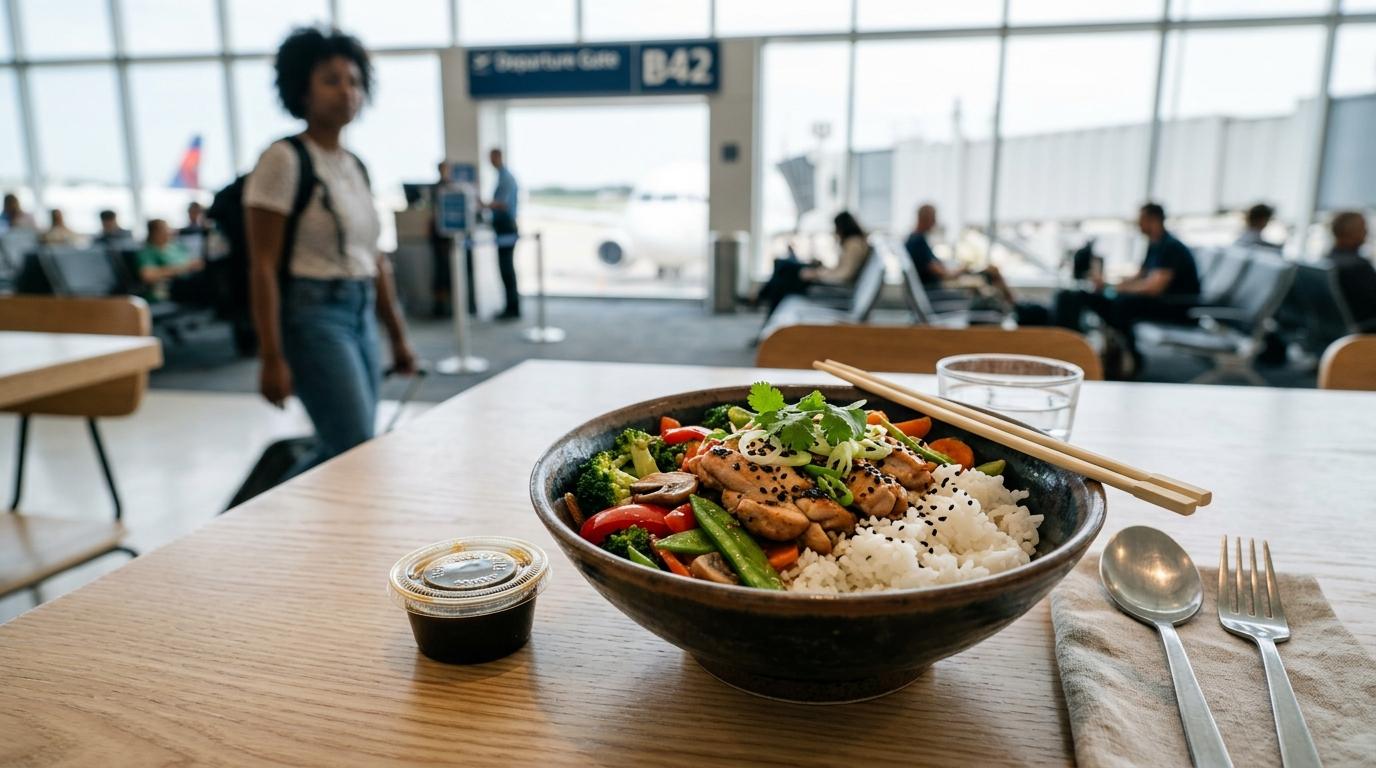
Airport food decisions always seem to happen at the worst possible moment.
You’re half-watching the gate screen, digging for your boarding pass even though it’s definitely on your phone, wondering if you have time to use the bathroom, and then suddenly you’re expected to choose a meal that won’t betray you at 35,000 feet.
That’s probably why rice bowls look so appealing. They feel like real food. Rice, protein, vegetables, sauce — simple enough, filling enough, and usually more satisfying than a bag of chips or an overpriced muffin.
But like a lot of airport meals, rice bowls can go either way. A fresh, hot bowl from a busy counter? Great. A lukewarm prepacked bowl with tired greens and mystery sauce? Maybe not the move.
This guide breaks down when to buy an airport rice bowl, when to split one, when to pack your own, and when it’s smarter to walk away and choose something else.
Quick Answer
#Buy an airport rice bowl if it’s made to order, served properly hot, or kept cold in a refrigerated case at a busy place where food is clearly moving.
Split one if it looks good but seems too big, too spicy, too rich, or just too much right before boarding.
Pack one if you want more control over the ingredients, but remember that sauces and dressings may count as liquids or gels at security. If you’re flying internationally, check customs rules too.
Skip it if the rice, protein, or vegetables look lukewarm, the cold case doesn’t feel cold, the container has been sitting out, or the bowl relies on raw seafood, wilted greens, or creamy sauces that look questionable.
So, are airport rice bowls safe before a flight? Sometimes, yes. But it depends on freshness, temperature, toppings, and timing.
Why Rice Bowls Are So Tempting at Airports
#When you’re trying to figure out what to eat before a flight, a rice bowl can feel like the responsible choice.
It’s more of a meal than a snack. It’s usually easier to eat than a messy sandwich. And compared with greasy fast food, it often looks lighter and more balanced.
Most rice bowls have some version of the same formula:
- Rice or grains
- A protein
- Vegetables
- Sauce
- Maybe a few toppings
That sounds pretty ideal when you’re about to sit on a plane for several hours.
There’s also something comforting about rice. It’s familiar, filling, and usually gentle enough if you don’t overdo the sauce or spice. At an airport, that counts for a lot. Most of us are not looking for a life-changing meal near Gate B12. We just want something that tastes decent and won’t make the flight miserable.
The catch is that rice bowls have a lot of parts. Cooked rice, meat or tofu, vegetables, chilled toppings, sauces, garnishes, maybe raw fish or fresh greens. The more ingredients involved, the more handling matters.
That doesn’t mean you need to panic over every airport bowl. Just give it a quick look before you order.
When to Buy an Airport Rice Bowl
#An airport rice bowl can be a solid choice when the food looks fresh and is being held at the right temperature.
Buy one when:
- The vendor is busy and food seems to be moving quickly.
- Hot ingredients are actually hot, steaming, or cooked to order.
- Cold bowls are stored in a proper refrigerated case.
- The container feels cold if it’s meant to be chilled.
- Staff are using clean utensils and the station looks reasonably tidy.
- Sauces are added fresh or given in sealed packets.
- The bowl is simple, with cooked protein and cooked vegetables.
Made-to-order bowls are usually easier to judge than sealed grab-and-go bowls. You can see what’s being added, how the food is being handled, and whether the ingredients look fresh.
A hot rice bowl with freshly cooked chicken, tofu, egg, or vegetables can be a good airport meal before flying — as long as it’s actually served hot and you eat it soon.
Cold rice bowls can be fine too, but they need to be properly cold. If the container feels barely cool, or like it has been hanging around at room temperature, skip it.
The food safety rule is simple: hot food should stay hot, cold food should stay cold, and perishable food shouldn’t spend too much time in the lukewarm middle.
What to Check Before Ordering
#Before you buy, take ten seconds and look around. Airport hunger can make almost anything look better than it is, but a quick scan helps.
Temperature
#If it’s a hot bowl, does the food look freshly hot or sad and lukewarm?
If it’s a cold bowl, is it sitting in a chilled case, or is it just out on an open counter?
Turnover
#A busy place isn’t a guarantee, but it’s usually a good sign. If there’s a steady line, ingredients are probably being replaced more often.
One lonely prepacked bowl sitting at the back of a quiet cooler deserves more caution.
The Rice
#Rice should not look dried out, crusty, watery, or strangely clumped together. You don’t need to inspect it like a health inspector. Just trust the obvious signs.
If it looks tired, it probably is.
The Protein
#Cooked proteins should look fresh and properly held. Avoid anything that looks grey, dry, rubbery, or half-warm.
Be especially cautious with seafood, particularly if it’s raw or only lightly prepared.
The Cold Case
#For grab-and-go bowls, the refrigerated case should feel genuinely cold. If the bowl feels room temperature or only slightly cool, choose something else.
Cleanliness
#Look at the counter, utensils, gloves, sauce bottles, and general setup.
A messy station doesn’t automatically mean the food is unsafe, but if you’re already unsure, it’s a warning sign worth listening to.
Packaging
#For prepacked bowls, avoid containers that are leaking, swollen, cracked, badly sealed, or sitting in condensation. If there’s a label with a date or time, check it.
The question is simple: does this look like food someone has been taking care of?
Toppings to Choose and Toppings to Skip
#With rice bowls, the toppings can make or break the meal. Sometimes the rice and protein are fine, but the greens, sauce, or extras are what turn it into a bad pre-flight idea.
Choose
#Cooked Proteins
#Grilled chicken, cooked tofu, cooked egg, and other fully cooked proteins are usually more practical before a flight than raw or delicate toppings.
They still need to be held properly, of course, but they’re generally easier to trust.
Cooked Vegetables
#Roasted, steamed, or stir-fried vegetables are often easier to judge than raw greens. They may also feel gentler if your stomach gets nervous when you travel.
Simple Sauces on the Side
#Sauce can make a rice bowl better, but too much of it can make the meal salty, rich, spicy, or heavy.
Getting sauce on the side lets you control how much you use.
Plain Rice or Simple Grains
#A plain base is often better before flying than rice that’s oily, heavily seasoned, or already mixed with a lot of sauce.
Simple is your friend here.
Sealed Sauce Packets
#If sealed sauce packets are available, they can be cleaner and easier than shared squeeze bottles or open sauce containers.
Skip
#Raw Seafood Unless You Really Trust the Place
#A raw fish rice bowl can be excellent in the right setting. But an airport is not always that setting.
If you’re unsure about freshness, turnover, or temperature, don’t gamble on it right before a flight.
Wilted Leafy Greens
#If the greens look limp, wet, bruised, slimy, or tired, skip them. This is especially true in prepacked bowls that may have been sitting for a while.
Creamy Sauces That Look Poorly Handled
#Creamy dressings and dairy-based sauces can feel heavy before a flight anyway.
If they look separated, crusty, warm, or like they’ve been sitting out too long, avoid them.
Very Spicy Toppings
#Spice is personal. Some people can eat chili oil before a red-eye and be completely fine. Others cannot.
If spicy food sometimes gives you reflux, bloating, or urgent bathroom needs, this is not the best time to test your limits.
Huge Portions
#A giant rice bowl can look comforting at the gate and then feel like a brick once you’re buckled into your seat.
If it looks too big, split it or eat part of it.
Packing Your Own Rice Bowl
#Packing your own rice bowl can be a great idea if you want more control. It’s especially useful if you have dietary needs, a tight connection, or a flight time that doesn’t line up well with airport food options.
Keep it simple. A homemade bowl with cooked rice or grains, cooked vegetables, and cooked protein is easier to manage than one with raw seafood, lots of dressing, or toppings that need careful chilling.
For airport security, solid foods are usually easier than liquids, gels, and pastes. In the United States, TSA guidance generally allows solid food through screening, while liquids and gels need to follow the usual small-container rules.
Rules can vary by country and airport, though, so check your airport, airline, or destination guidance if you’re not sure.
Carry-On Tips for Packed Rice Bowls
#- Pack sauces, dressings, dips, and hummus separately if they may count as liquids or gels.
- Use a secure, leakproof container.
- Keep the portion realistic.
- Keep perishable ingredients cold.
- Be careful with ice packs, since partially melted gel packs may be treated differently than fully frozen ones.
- For international travel, check customs and agricultural rules before carrying fresh produce, meat, dairy, or other restricted foods across borders.
A good rule for international flights: if you pack a rice bowl, plan to finish it before landing unless you are completely sure it’s allowed into your destination country.
How Timing Changes the Decision
#Timing matters more than people think.
A rice bowl that makes sense two hours before boarding may be a terrible idea if you’re shoveling it down while your group is already being called.
If you have plenty of time, a moderate bowl can work well. You can eat slowly, drink some water, and give your stomach time to settle before you’re stuck in a seat.
If boarding starts in ten minutes, be more careful. A large, spicy, saucy bowl eaten in a rush is much more likely to feel uncomfortable once you sit down.
For a short flight, a fuller meal might be fine if you know your stomach handles it well.
For a long-haul flight, it’s usually smarter to keep things simple and slightly smaller. Sitting still for hours can make a heavy meal feel even heavier.
Consider Splitting the Bowl If:
#- The portion is large.
- The sauce is rich or spicy.
- You’re about to board.
- You have a long flight ahead.
- You already feel stressed, bloated, or a little queasy.
- You’re not sure when bathroom access will be easy.
Skip the Bowl Completely If:
#- It looks unsafe.
- It smells off.
- It feels lukewarm when it should be hot or cold.
- You’re already having stomach trouble.
- You can’t eat it soon and can’t keep it at a safe temperature.
The goal is not to board hungry. It’s to board feeling steady, comfortable, and not worried about your lunch.
Better Alternatives If the Rice Bowl Looks Risky
#If the rice bowl doesn’t look right, don’t force it just because it seems like the “healthy” option.
A boring safe meal is much better than an exciting questionable one before a flight.
Try one of these instead.
A Protein Box
#A simple box with crackers, cheese, nuts, fruit, or cooked protein can be easier to inspect and portion.
If you want help choosing one, read AllBlogs’ guide to an Airport Protein Box Before a Flight.
Plain Toast, Oatmeal, or a Simple Breakfast Item
#Even later in the day, breakfast foods can be gentle and predictable.
Go for the simpler version rather than something loaded with cream, syrup, or too many toppings.
Packaged Snacks
#Nuts, crackers, plain chips, trail mix, or a sealed bar may not be thrilling, but they’re useful when the fresh food options look questionable.
A Simple Sandwich from a Chilled Case
#If it’s properly refrigerated and not packed with wet fillings, a basic sandwich may be easier to trust than a complicated rice bowl.
Fruit You Can Peel
#If it’s allowed for your route, peelable fruit can be a clean, simple option.
For international travel, remember to check customs rules.
Soup or a Hot Cooked Meal from a Busy Counter
#If the rice bowl station looks rough but another vendor is serving hot food with good turnover, just pivot.
There is no need to stay loyal to the first meal you saw.
Airport meals before flying do not have to be perfect. They just need to be safe enough, comfortable enough, and right for your timing.