The small pouch that honestly saves your overnight train journey
#If you’ve done even one proper overnight Indian train journey, you already know the truth: your toiletry kit matters more than your fancy neck pillow. I learnt this the slightly annoying way on a Delhi to Bhopal trip, when I packed two books, one extra kurta, charger, snacks, even a tiny dabba of homemade thepla... but forgot handwash. At 5:40 in the morning, standing near the coach door with sleepy eyes and that metal train-washbasin smell around me, I was ready to scold my past self. Indian trains are amazing, chaotic, emotional, cheap-ish, and somehow romantic also, but the toilet situation can go from “haan manageable” to “bhai why” very quickly. So this is my very practical, very Indian, overnight train toiletry kit checklist, written after too many sleeper and AC coach trips, too many station chai breaks, and one tragic incident involving a leaked shampoo sachet inside my backpack.
Why train toiletries in India need a separate plan
#See, packing toiletries for a hotel stay and packing toiletries for an Indian Railways overnight journey are two different sports. In a hotel, you have a sink, shelf, towel hook, maybe those tiny soaps nobody uses properly. In a train toilet, you have movement, wet floors, a hook that may or may not exist, a latch that needs trust, and sometimes a queue outside where uncles are coughing loudly to remind you other people exist. Even in better trains and AC coaches, cleanliness depends on route, crowd, timing, onboard housekeeping, and honestly luck. Many coaches now have bio-toilets and newer trains do feel cleaner compared to old days, but don’t assume too much. The safest mindset is: carry less, carry smart, keep it waterproof, and don’t take your full bathroom into the coach.
For overnight trains especially, your routine is simple: freshen up before sleeping, manage the toilet once or twice at night if needed, brush in the morning, wash face, maybe change clothes, and feel human enough when you reach your destination. That’s it. You don’t need a spa kit. You need survival with dignity. Also, if you are travelling in Sleeper Class in summer or during festival rush, multiply all hygiene planning by two. In 3AC and 2AC it’s usually more comfortable, but still, train toilets are shared toilets. Shared by a lot of people. That sentence itself should convince you.
My overnight Indian train toiletry checklist, the real one
#| Item | Why I carry it | Small packing tip |
|---|---|---|
| Toothbrush and mini toothpaste | Morning freshness, obviously | Use a brush cap or wrap in tissue, don’t let it touch pouch lining |
| Small face wash or soap strip | Train water plus dusty face is not a nice combo | Soap strips are lighter than a full soap bar |
| Hand sanitizer | For before eating, after toilet latch, after touching random surfaces | Keep one tiny bottle in pocket, not only inside bag |
| Liquid handwash or paper soap | Many train toilets don’t have soap when you need it | Paper soap is super useful but keep it dry |
| Wet wipes | For hands, face, seat area, emergency clean-ups | Choose unscented if strong smells give headache |
| Tissues or toilet paper | Not always available in trains | Flatten the roll or carry folded tissues in zip pouch |
| Small towel or quick-dry napkin | Face wash, sweat, accidental spills | Dark colour is better, white becomes sad quickly |
| Deodorant or roll-on | Overnight travel can get sweaty, even in AC sometimes | Roll-on is less irritating for co-passengers than spray |
| Comb and hair ties | Morning hair after upper berth sleep is comedy | Keep extra rubber band, they vanish |
| Lip balm and moisturiser | AC coach can dry skin badly | Tiny sample-size dabba is enough |
| Sanitary pads or menstrual cup supplies | Don’t depend on station shops at odd hours | Carry disposal bags too |
| Basic medicines | Motion sickness, acidity, headache, loose motions | Keep in a labelled mini pouch |
| Disposable toilet seat covers or newspaper | Useful if you prefer western toilet | Not compulsory, but very comforting |
| Flip-flops or washable sandals | Never go barefoot near train toilets, please | Bathroom slippers should be easy to wash |
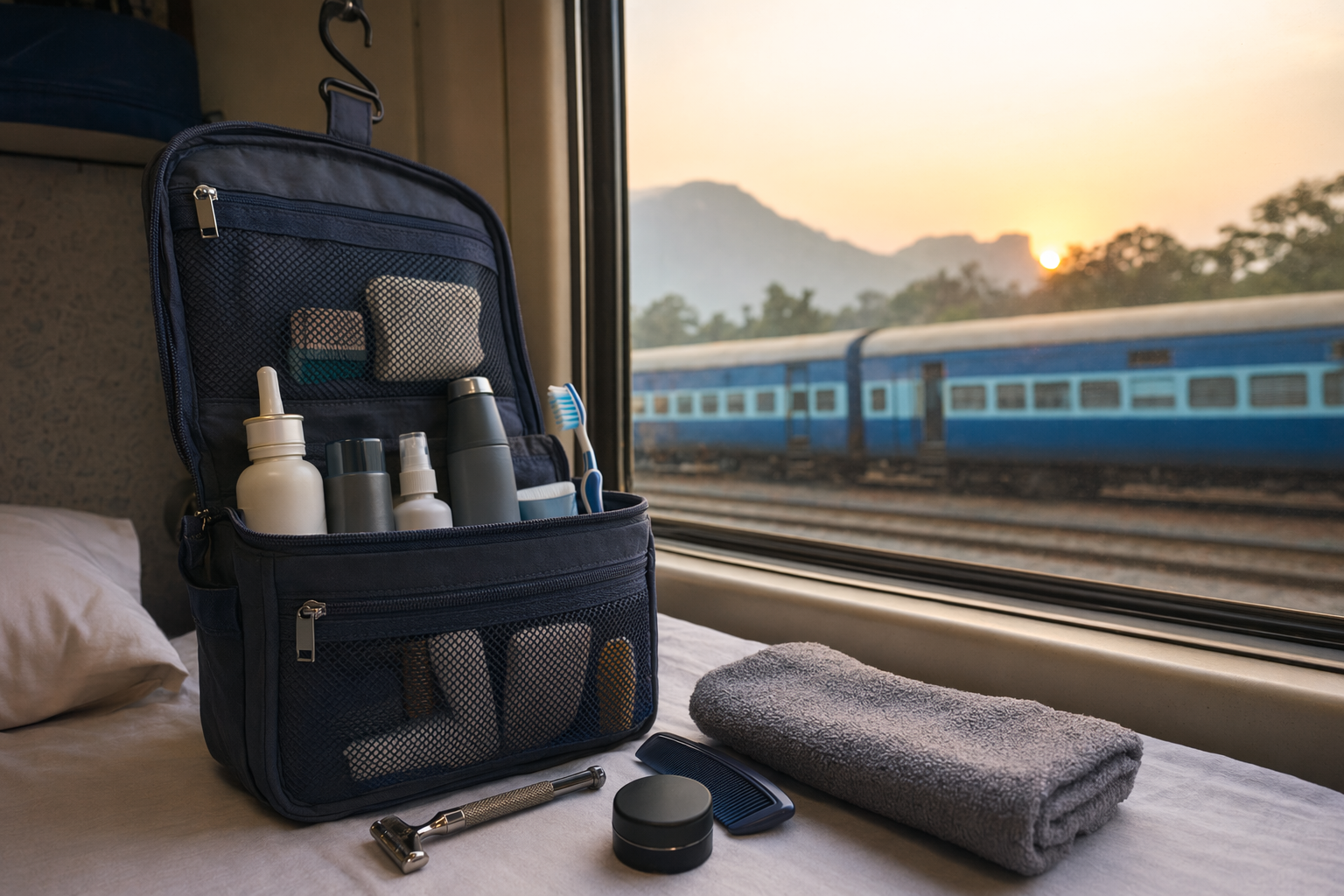
| Ziplock or waterproof pouch | To separate wet towel, leaks, used items | Double pack liquids if journey is long |
This looks like a lot when written in a table, but actually it fits in one medium pouch if you don’t carry full-size bottles like you’re shifting house. I usually keep my main toiletry pouch in the side of my backpack, and then one tiny “toilet run” pouch separately: sanitizer, tissue, paper soap, pad if needed, and a small towel. Because climbing down from upper berth at midnight and digging inside your big suitcase under the seat is not adventure. It is punishment.
The pouch itself: don’t make my leaking-shampoo mistake
#My best advice? Use a waterproof pouch, or at least a strong ziplock inside your toiletry bag. Indian train journeys have too many chances for things to leak: bag gets pushed under berth, bottle cap opens, someone keeps their steel tiffin on your bag, or you yourself sit on it because the side lower is crowded. I once opened my bag in Nagpur and found shampoo spread lovingly over my socks. Very nice fragrance, very bad mood. Since then, liquids go inside one small ziplock, and wet stuff goes in another. If you travel in monsoon, this becomes even more important because platforms, coach floors, and bags all get damp. Btw, if you’re confused between proper waterproof pouches and simple ziplocks, this comparison on Waterproof Phone Pouch vs Ziplock for Monsoon Travel is actually useful beyond phones also, because the same logic works for toiletries.
Try to avoid glass bottles. They feel nice at home, but on trains they are just drama waiting to happen. Use small plastic travel bottles with tight caps, or better, sachets for one-night trips. But sachets also create waste, so I don’t use them every time. Depends. For shampoo, if you’re just doing one overnight journey, honestly skip it unless you are reaching directly for a wedding or office meeting. Face wash, handwash, tissue, toothbrush, deodorant. These are enough. We Indians have this habit of packing “just in case” things till the bag becomes 12 kg, then we complain at platform stairs.
What to keep handy before sleeping
#Before the train lights go dim and everyone starts making their bed like it’s a joint family operation, take out your night essentials. Don’t wait till 11:30 pm when the middle berth is up, someone’s shoes are under your ladder, and your bag is trapped behind a giant suitcase from Kanpur. I usually brush before the rush if dinner is done early, or at least wash face and hands. Then I keep sanitizer, water bottle, tissues, phone, power bank, spectacles, and tiny toiletry pouch near my pillow or in a sling bag hooked to the berth. In AC coaches, especially 3AC, space is limited and people are adjusting. In Sleeper, more movement happens. So keep valuables and essentials close, but don’t create clutter on the berth. One sharp brake and your facewash will go for its own journey.
- Keep sanitizer in your pocket or small sling, not buried inside the main bag. You’ll need it more than you think, especially after touching toilet latches, berth chains, curtains, bottle holders, and that mysterious window area.
- Carry tissues even if you think you won’t need them. Train toilets may have water, but tissue helps for wiping hands, cleaning the washbasin edge, handling wet slippers, and random chai spills. It’s the most boring item but most useful.
- Don’t take your whole pouch into the toilet if it has your medicines, skincare, jewellery, etc. Take only what you need. Hooks are not always reliable and the floor is often wet. I’ve seen one poor guy drop his entire shaving kit. Painful silence followed.
- Use bathroom slippers or washable sandals. I know some people just wear their normal shoes, but then those same shoes come back near your berth and bedsheet. No thanks. Cheap rubber chappals are better for overnight trains.
Toilet strategy sounds funny, but it’s real
#Indian train toilet timing is an art. Early morning, especially one hour before major stations, everyone suddenly wakes up and remembers they are human. The queue starts. People brush at the basin, aunties send kids, uncles stand with towel on shoulder, and someone will always knock even when it’s clearly occupied. If your arrival is early morning, wake up a bit before the crowd. Not 10 minutes before station. Give yourself 35-45 minutes if you want to brush, wash face, change, pack bedding, and not panic. In AC coaches, the washbasin area gets crowded too. In Sleeper, the coach corridor becomes a mini traffic jam.
Western vs Indian toilet is another personal choice. I prefer Indian toilet on trains when possible because less contact, though it’s not always easy when train is shaking like it has opinions. Western toilets can be okay in newer or cleaner coaches, but I still carry seat sanitizer spray sometimes, or disposable seat cover if it’s a longer journey. Don’t flush plastic, pads, wipes, or tissue bundles down the toilet. Use disposal bags and dustbins where available. This is basic, but still needs saying because we all have seen what happens when people don’t care. Also, please don’t wash your feet in the washbasin. I know, I know, people do it. But yaar.
Women’s toiletry kit: a little extra planning helps
#For women travelling overnight, especially solo or with kids, the toiletry kit needs a few extra things. Sanitary pads or menstrual cup supplies, disposal bags, intimate wipes if you use them, extra underwear, and a long scarf or stole can make the journey less stressful. I keep one pad even when dates are not expected, because Indian travel has its own calendar sometimes. Station shops may have pads, but if your train reaches some small station at 2 am, don’t depend on it. In bigger stations you’ll usually find pharmacy stalls or general stores, but during short halts there’s no time to run around.
Safety-wise, most overnight train journeys are fine if you use common sense. Families, students, office travellers, army people, all kinds of normal crowd. Still, avoid going alone to the toilet at very odd hours if the coach feels empty or weird. Keep your phone with you, but don’t flash it near open doors. If you’re in Sleeper Class, try booking middle or upper berth if you want more privacy, or lower if you have mobility issues. In AC coaches, curtains are not always there now in some layouts, but bedding and enclosed feel helps. For solo women, 2AC feels calmer in my experience, 3AC is decent, Sleeper is doable but route and timing matter a lot.
Kids, elders, and the family version of the kit
#Travelling with parents or children changes the whole toiletry scene. With kids, carry extra wet wipes, small soap, diaper disposal bags if needed, ORS sachet, extra shorts, and one old towel that you don’t mind ruining. Kids will touch everything. Window bars, berth chains, floor, snack packets, your face. Accept it and keep cleaning items handy. For elders, keep medicines in a separate pouch with timing written if needed. Don’t pack tablets loose in random strips and then search under dim blue night light. Also keep a small torch or phone light ready, because some coach areas feel dark at night, and elders may need support walking to the toilet when the train is moving.
If someone has knee pain, Indian-style toilets can be difficult. Try to choose coaches and classes where western toilets are more likely available, usually AC coaches have them, though exact condition varies. Lower berth helps elders, but it’s not always easy to get confirmed. Book early, use senior citizen quota if eligible and applicable, and don’t hesitate to ask co-passengers politely for small adjustments. Most people help. Not everyone, but many do. That’s one sweet thing about Indian trains, there is chaos but also sudden kindness. Someone will hold the bottle, someone will adjust the bag, someone will offer banana chips. Then same person may snore like tractor, but okay.
Food, water, and hygiene go together
#Your toiletry kit is not separate from your food plan. If you’re eating oily station samosa, bread omelette, poori sabzi, or home-packed paratha, you need clean hands. Simple. I love train food culture, honestly. Chai in kulhad where available, cutlet from pantry, idli at South Indian stations, jhalmuri in eastern routes, vada pav if crossing Maharashtra side, aloo bonda somewhere unexpected... it’s half the joy. But I’ve also had one bad stomach situation after eating chutney that tasted suspicious. Since then, sanitizer before eating is compulsory, and I carry my own spoon. If you’re planning snacks for cleaner eating, especially on premium trains, this guide on Can You Carry Outside Food on Vande Bharat? Meal Rules, Snacks and Packing Tips has good practical points that also apply to general train comfort.
Carry your own water bottle and refill only from reliable sources, or buy sealed bottles from station vendors if needed. Don’t use toilet tap water for brushing if it looks doubtful, though many people do and survive. I use drinking water for brushing on overnight trains, just a little. Also, keep mouth freshener or chewing gum if you don’t want to brush late night after dinner. Not ideal, but practical. On long journeys, avoid too much spicy food before sleeping unless you enjoy visiting the toilet at 3 am while the train is swinging somewhere between Itarsi and nowhere.
Seasonal packing: summer, monsoon, winter, all have their own nonsense
#Summer train journeys need sweat management. Even in AC, boarding time, platforms, and station waiting rooms can be hot. Carry face wipes, deodorant roll-on, talcum powder if you like, and one extra cotton hanky. Sleeper Class in May-June can feel like a moving tandoor on some routes, so hydration and a small towel are important. Monsoon means damp floors, wet shoes, muddy platforms, and leaking bags. Waterproof pouch becomes non-negotiable. Keep one plastic bag for wet slippers or umbrella. Winter is different: AC coaches can get too cold, lips crack, skin dries, and you may not feel like washing face with freezing water at 5 am. Lip balm, moisturiser, and a small warm stole help more than expected.
Best months for comfortable train travel, if you have a choice, are usually post-monsoon and winter for most plains routes, say October to February-ish. But India is huge, so this changes. Rajasthan winter nights can be cold, Konkan monsoon is beautiful but messy, South India can be humid almost anytime, and hill-bound trains have their own weather mood. During festival seasons like Diwali, Chhath, Durga Puja, summer holidays, and year-end travel, trains are packed and toilets get used heavily. In those times, upgrade class if budget allows, carry extra tissue and sanitizer, and mentally prepare. Half of travel stress reduces when expectation is realistic.
Class-wise reality: Sleeper, 3AC, 2AC, 1AC and chair cars
#For overnight journeys, your toiletry kit changes slightly with class. Sleeper Class is budget-friendly and very Indian in the full sense: vendors, breeze, noise, families sharing food, and also more dust and crowd. Carry more wipes, a bigger towel, and maybe a face mask if dust bothers you. 3AC is the middle-class favourite for a reason, safer feeling, bedding included on many long-distance trains, less dust, but still crowded with three-tier berths. 2AC gives more space and usually calmer toilets, though not guaranteed. 1AC is expensive and limited, good if you want privacy or travelling with elderly, but many routes don’t make sense budget-wise. Typical fares vary wildly by distance, train type, dynamic pricing, and booking quota, but for many overnight routes, Sleeper can be a few hundred rupees to around the higher hundreds, 3AC often lands around the low thousands, and 2AC higher. Check IRCTC before planning, because prices change by route and availability.
Chair cars and Vande Bharat type journeys are different because they’re usually day trips, not proper overnight with brushing drama. Still, a mini hygiene kit helps: sanitizer, tissue, wet wipes, lip balm, and maybe mouth freshener. For overnight express trains, I always suggest a hanging toiletry pouch if you already own one. But don’t buy expensive travel gear just for one trip. A sturdy pouch from home, one ziplock, and common sense does the job. Indian travel has become very product-heavy on Instagram, like every reel wants you to buy 17 organizers. Nice to watch, not always needed.
What I don’t pack anymore
#Earlier I used to overpack like mad. Full shampoo, conditioner, face scrub, perfume bottle, nail cutter, big lotion, two towels, and some random “travel-size” things I never touched. Now my rule is: if I won’t use it between boarding and arrival, it stays home. I don’t carry shaving foam for one night. I don’t carry heavy perfume because strong smell in a closed AC coach is unfair to others. I don’t carry big soap bars because they become slimy and gross. I don’t carry white towels. Big mistake. I also avoid open baskets or cloth pouches for toiletries, because if the washbasin area is wet, cloth absorbs everything. Not nice.
One underrated item is a small garbage pouch. Not fancy, just a spare packet. Use it for used tissues, sanitary waste before proper disposal, empty medicine strips, or snack wrappers till you find a bin. Another underrated thing is a safety pin. It fixes broken pouch zip, loose kurta, torn packet, and sometimes your mood also. Keep two. And keep some cash coins or small notes, because station toilets outside platforms, retiring rooms, cloak rooms, and small vendors may not always work smoothly with UPI when network is acting funny. UPI is everywhere now, but railway stations still have their own attitude.
A simple packing order that works before boarding
#- Pack liquids first in tiny bottles, tighten caps, then put them inside a ziplock. Don’t fill bottles till the top because pressure and squeezing inside bags can cause leaks.
- Make one mini pouch for actual toilet visits: sanitizer, tissue, paper soap, pad if needed, and small towel. This is the pouch you can grab half-asleep without unpacking your life.
- Keep medicines separate from wet toiletries. Label them if travelling with family, especially for elders. Night train confusion is real and nobody wants to search for acidity tablet under berth.
- Place bathroom slippers near your berth before sleeping. Not in the main suitcase. If you have to go urgently, you don’t want to fight with luggage chains and sleeping co-passengers.
- Before arrival, pack wet towel separately, wipe any leaked bottles, and keep toothbrush dry. Small habits, but they stop your bag from smelling like a damp railway retiring room.
Small station and platform tips nobody tells properly
#If your train halts at a big junction for 10-15 minutes, that’s sometimes a better time to use platform facilities, especially if coach toilets are in bad shape. But don’t wander too far. Trains can leave suddenly after signal, and no toiletry emergency is worth missing your train. At major stations, paid toilets and waiting rooms are usually available, with cleanliness depending on station management and crowd. Retiring rooms and dormitories can be booked at some stations if you have a valid ticket, useful when arrival is too early and hotel check-in is later. Prices vary by station and room type, but they’re often cheaper than hotels nearby. For hotels around stations, budget lodges may start around ₹800-1500 in many cities, decent business hotels can be ₹2000-4000, and metro cities or tourist places go much higher. Always check recent reviews, especially for cleanliness and bathroom photos, because after a night train, bathroom quality suddenly becomes top priority.
Also, don’t brush at your seat using a bottle and spit into some random cup. I have seen this. Please no. Use washbasin, be quick, clean up after yourself. If the basin is crowded, wait. Indian trains work only when we all adjust a little. And keep your toiletry pouch away from the floor near coach doors. That area gets wet, dusty, and people step everywhere. If you’re sitting near the door in Sleeper because RAC or waiting-list jugaad became your reality, keep everything hanging or on your lap. Floor is not your friend.
My final overnight train toiletry kit, if you want the short version
#If I had to pack in five minutes for an overnight train today, I’d take: toothbrush, mini toothpaste, paper soap, sanitizer, tissues, wet wipes, small towel, deodorant roll-on, lip balm, basic meds, one extra underwear, bathroom slippers, and two ziplocks. If travelling during periods or with family, add pads, disposal bags, ORS, kid wipes, and elder medicines. That’s the core kit. Everything else is optional. The goal is not to look perfectly groomed when you step down at the destination. The goal is to feel clean enough, confident enough, and not irritated before your actual trip even begins.
Indian train travel is not about controlling everything. It’s about preparing for the messy parts so you can enjoy the good parts: chai at sunrise, strangers becoming temporary family, station names passing in the dark, and that strange happiness when your train reaches almost on time.
So yeah, next time you’re packing for an overnight train, don’t just think clothes and snacks. Think toilet latch, wet floor, morning queue, dry hands, clean mouth, and where your towel will go after use. Sounds unglamorous, but trust me, this is the stuff that makes a journey comfortable. And when you’re comfortable, you notice the nicer things too: the orange sky outside the window, the pantry guy shouting “chai-coffee”, the kid on upper berth asking every 20 minutes “station aa gaya kya?” That’s Indian rail travel. Little chaos, little poetry. For more practical travel stuff like this, I usually keep browsing AllBlogs.in, because sometimes one small tip saves the whole trip.