Quick answer: Clean mushrooms right before you cook them. Most grocery store mushrooms only need a quick wipe with a damp towel, a gentle brush, or a very brief rinse under cold running water. Don’t soak fresh mushrooms. Dry them well before cooking so they brown instead of steam. And in most cases, you do not need to peel mushrooms.
Mushrooms are one of those ingredients that can feel fussier than they really are. They’re grown close to soil or a growing medium, so a little grit is normal. But they’re also spongy and delicate, which means too much water or rough handling can turn them sad and soggy fast.
The goal isn’t to make every mushroom look spotless. It’s to remove grit, avoid adding extra moisture, and keep the texture as good as possible.
The basic rule
#Clean mushrooms right before cooking, not days ahead.
For firm, whole mushrooms like white button or cremini, a quick rinse is fine if they’re visibly dirty. Just keep it brief and dry them right away.
For delicate mushrooms, sliced mushrooms, or mushrooms with open gills, wiping or brushing is usually better. Water can collect in the gills or soak into cut surfaces, which makes it harder for the mushrooms to brown.
And fresh mushrooms should not be soaked in a bowl of water. A fast rinse is one thing. Letting them sit in water is another.
Wash, wipe, or brush?
#There’s no single best method for every mushroom. It depends on the type, how dirty it is, and how you plan to cook it.
When to wash mushrooms
#You can wash mushrooms when they’re whole, firm, and actually dirty. This works well for white button mushrooms and cremini mushrooms because they’re sturdy and compact.
Here’s the best way to do it:
- Put the mushrooms in a colander.
- Rinse briefly under cold running water.
- Toss them gently with your hands to loosen dirt.
- Stop as soon as the grit is gone.
- Dry them thoroughly right away.
The key word is briefly. Don’t let them sit under running water longer than necessary, and don’t wash them hours before you plan to cook.
Try to avoid rinsing pre-sliced mushrooms if possible. Once mushrooms are cut, they absorb moisture more easily.
When to wipe mushrooms
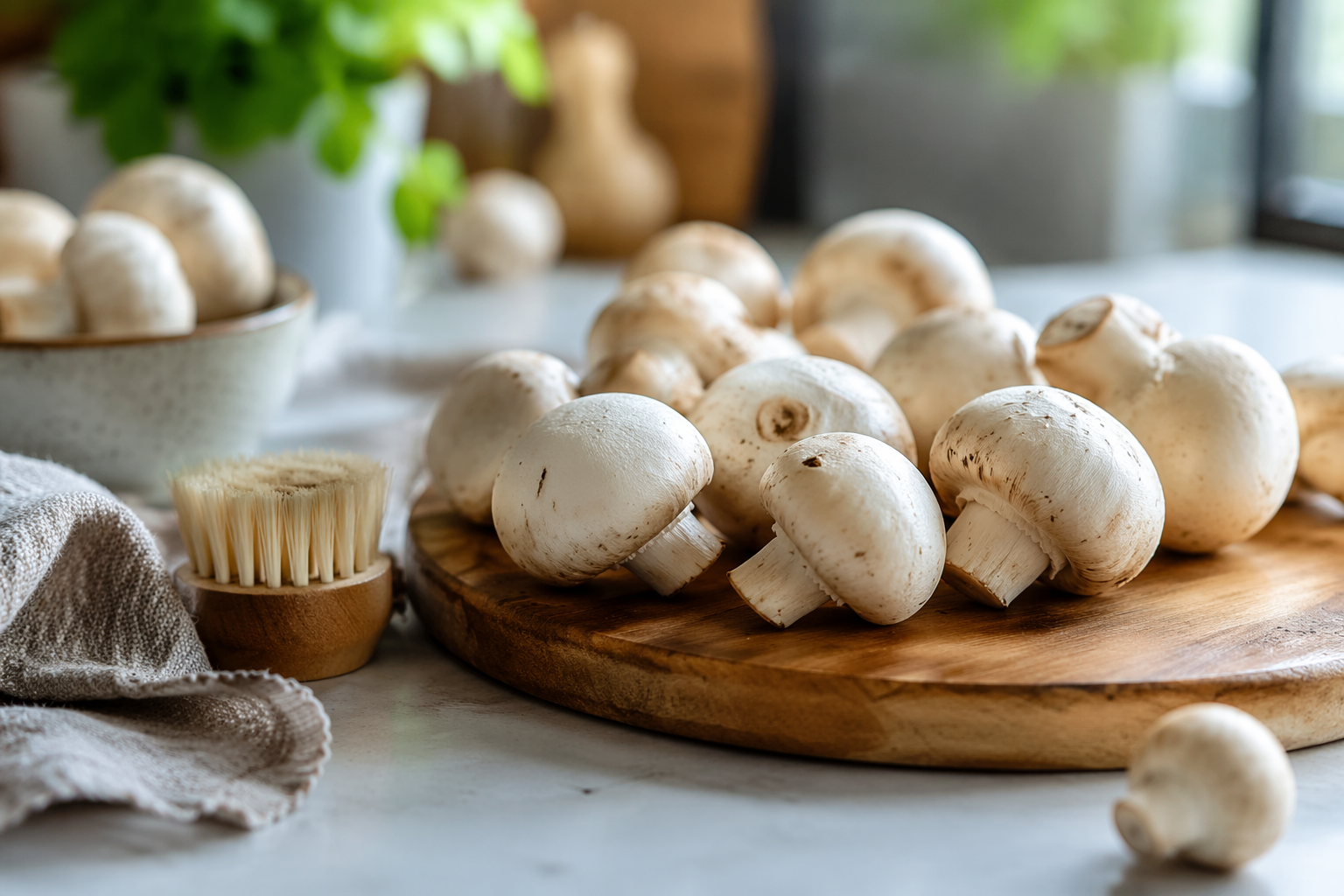
#Wiping is simple and reliable. Use a slightly damp paper towel or clean kitchen cloth, then gently rub the cap and stem to remove dirt.
This is a good choice when:
- You only have a small amount to clean.
- The mushrooms are only lightly dirty.
- You want them to brown well.
- The mushrooms are delicate or have open gills.
Wiping takes a little longer than rinsing, but it gives you more control and adds much less moisture.
When to brush mushrooms
#A soft mushroom brush, pastry brush, or clean soft-bristled brush is great for delicate mushrooms.
Brushing works especially well for:
- Oyster mushrooms
- Shiitake mushrooms
- Mushrooms with textured caps
- Mushrooms that are dusty rather than muddy
Use a light hand. Delicate mushrooms can bruise, tear, or break if you press too hard.
Should you soak mushrooms?
#No, not fresh mushrooms.
Soaking fresh mushrooms can make them take on extra water. That moisture comes back to haunt you in the pan. Instead of browning, the mushrooms may release water, steam, and turn limp or rubbery.
A quick rinse under running water is fine for some sturdy mushrooms. A soak is not the same thing.
The main exception is dried mushrooms. Dried mushrooms are soaked on purpose to rehydrate them before cooking. That’s part of the recipe, not a cleaning method for fresh mushrooms.
How to dry mushrooms properly
#Drying mushrooms is just as important as cleaning them.
If mushrooms go into a hot pan while they’re wet, the surface moisture has to cook off before browning can begin. That means you’re more likely to end up with pale, soft mushrooms instead of golden, flavorful ones.
After rinsing mushrooms:
- Spread them out on a clean kitchen towel or paper towels.
- Pat the tops, sides, and stems gently.
- Roll them lightly in the towel if needed.
- Let them sit for a few minutes while you prep other ingredients.
- Make sure the surface feels dry before slicing or cooking.
For a larger batch of sturdy whole mushrooms, you can use a salad spinner lined with paper towels. Spin gently, then pat them dry again if needed.
If you’re wiping or brushing mushrooms, they may not need much extra drying. Still, check for damp spots before they go into the pan.
How to clean different types of mushrooms
#Different mushrooms need slightly different treatment. Here’s a practical guide for the most common kinds.
White button mushrooms
#White button mushrooms are firm, easy to find, and usually simple to clean.
Best methods:
- Quick rinse, then dry well
- Damp towel wipe
- Soft brush for light dirt
If the stem ends look dry or tough, trim them slightly. You do not need to peel the caps.
Cremini mushrooms
#Cremini mushrooms, also called baby bellas, can be cleaned almost exactly like white button mushrooms.
Best methods:
- Brief rinse if they’re visibly dirty
- Damp towel wipe for light cleaning
- Brush if they’re just dusty
Dry them well before slicing, especially if you’re going to sauté them.
Portobello mushrooms
#Portobello mushrooms have large caps and open gills, so they need a gentler approach.
Best methods:
- Wipe the cap with a damp towel
- Brush away loose debris
- Avoid heavy rinsing, especially under the cap
The dark gills are edible, but they can darken sauces, fillings, or lighter dishes. If you want to remove them, gently scrape them out with a spoon. It’s optional and depends on what you’re making.
Trim the stem if it feels tough, woody, or dry.
Shiitake mushrooms
#Shiitake caps are tender, and the stems are usually tough.
Best methods:
- Wipe the caps with a damp towel
- Brush gently if needed
- Avoid soaking
Trim off and discard the woody stems before cooking. In most dishes, the caps are the part you’ll use.
Oyster mushrooms
#Oyster mushrooms are delicate and often come in clusters. They usually don’t need much cleaning.
Best methods:
- Brush gently
- Wipe lightly if needed
- Avoid rinsing unless they’re visibly dirty
If you do rinse oyster mushrooms, make it very quick and dry them carefully. Tear or trim away any tough base where the cluster was attached.
Mixed mushrooms
#For mixed mushrooms, don’t clean every type the same way. A sturdy button mushroom can handle a quick rinse. A delicate oyster mushroom probably should not.
A good approach:
- Brush or wipe first.
- Rinse only the firm, whole mushrooms that need it.
- Dry everything well before cooking.
Do you need to peel mushrooms?
#Usually, no.
Mushroom skins are edible, flavorful, and perfectly fine to cook. Peeling removes usable mushroom and adds extra work without really making them safer or better.
If you see a small bruised or damaged spot, trim it away. But if the mushroom is slimy, sour-smelling, sticky, moldy, or clearly spoiled, don’t try to save it by peeling or washing it. Throw it away.
Mushroom food safety and storage
#Good mushroom prep starts before you clean them.
Look for mushrooms that are firm, dry, and fresh-looking. They should smell mild and earthy. Avoid mushrooms that smell sour, fishy, musty, or unpleasant.
At home, keep these tips in mind:
- Clean mushrooms right before cooking.
- Don’t wash mushrooms before storing them.
- Store them in a breathable container or paper bag.
- Avoid trapping them in plastic with excess moisture.
- Throw away mushrooms that are slimy, sticky, moldy, badly shriveled, or sour-smelling.
Washing does not make spoiled mushrooms safe again. If they smell off or feel slimy, it’s better to toss them.
Best cleaning method by cooking plan
#If you’re sautéing mushrooms
#Keep them as dry as possible. Wipe or rinse briefly, dry thoroughly, then slice. Dry mushrooms brown better and develop deeper flavor.
If you’re adding mushrooms to soup or stew
#A little surface moisture matters less, but grit still matters. Wipe, brush, or briefly rinse as needed. Don’t soak them.
If you’re grilling portobellos
#Wipe the caps and remove the gills only if you want to. Dry the surface well so oil, seasoning, or marinade clings better.
If you’re roasting mushrooms
#Dry them carefully. Extra moisture can make mushrooms steam on the baking sheet instead of roast.
If you’re stuffing mushrooms
#Clean them before removing the stems or scooping anything out. Whole mushrooms are easier to handle and less likely to absorb water.
Final takeaway
#Cleaning mushrooms doesn’t need to be a whole production.
Wipe them if they’re only a little dirty. Brush delicate mushrooms. Quickly rinse sturdy whole mushrooms when they actually need it. Don’t soak fresh mushrooms. Don’t peel them unless you’re trimming away a damaged spot.
Most importantly, dry them well and cook them soon after cleaning. That’s the simple path to clean, safe mushrooms with better texture and better browning.