The Half-Can Problem That Keeps Haunting My Fridge
#I have a very specific kitchen weakness, and it is not chocolate or fancy olive oil or those tiny jars of chili crisp I keep buying like I’m stocking a bunker. It’s opened coconut milk. Half a can, usually. Sometimes three-quarters of a can if I got overexcited and then changed my mind halfway through making soup. It sits there in the fridge looking innocent, and then two days later I’m standing in the cold fridge light wondering, “Is this still okay, or am I about to ruin my Tuesday night curry and maybe my stomach too?” If you cook with coconut milk a lot, you know exactly what I mean. Thai-style curries, dal with coconut, rice pudding, creamy soups, coconut braised greens, little sauces for noodles... coconut milk is magic, but once it’s opened, it becomes food-safety business. Not scary business, just, like, pay-attention business.
I learned this the slightly gross way. Years ago I made a red curry after work, one of those meals where you’re tired and hungry and feeling dramatic about everything. I used an old half-can of coconut milk that had been in the fridge for... honestly, I don’t even know. A week? Maybe more? It smelled kind of okay, but also a bit like fridge air, which should have been my warning. The curry tasted flat and weird, not spoiled exactly, just wrong. I tossed the whole pot, ate toast, and sulked. Since then I’ve gotten a lot better about storing opened coconut milk safely, mostly because I hate wasting good food and I hate ruining dinner even more.
So, What Happens Once Coconut Milk Is Opened?
#Unopened canned coconut milk is shelf-stable because it’s been heat processed and sealed. Same general idea with many shelf-stable cartons. But once you open it, the cozy sterile world inside is gone. Air gets in, your spoon gets in, maybe your not-perfectly-clean measuring cup gets in, and then the coconut milk is just another perishable food. Rich, wet, low-acid, and full of fat. Basically a pretty nice place for microbes if you leave it hanging around too long.
And coconut milk can be sneaky. It naturally separates, especially the canned full-fat stuff. Thick cream floats up, watery coconut liquid sits below, and sometimes it looks a bit grainy. That is not automatically bad. Actually, I get excited when a can has that thick cap of cream because it fries up beautifully with curry paste. But normal separation is different from spoilage. Spoilage is sour, funky, fizzy, moldy, slimy, or just deeply suspicious. The annoying part is that sometimes it’s not obvious at first glance, so the storage part really matters.
My Simple Rule: Chill It Fast, Don’t Let It Loiter
#The basic food-safety rule I follow is the same boring rule that saves so many leftovers: get perishable food into the fridge within 2 hours. If the kitchen is hot, like picnic weather or a summer apartment with no mercy, make that closer to 1 hour. This isn’t just coconut milk, either. It’s the same reason I’m fussy about salads, cut fruit, creamy sauces, and all those lunchbox things that seem harmless until they’ve been warm too long. If you’re curious about that whole time-at-room-temp thing, I wrote about similar rules in Can Fruit Salad Stay Outside? Lunchbox, Picnic, and Travel Safety Rules, and honestly it applies to more foods than people think.
So if you open a can of coconut milk for dinner, don’t leave the rest sitting on the counter while you eat, scroll, wash one pan, forget the other pan, call your sister, and then remember it at 11:30. Been there. Not proud. Once you know you aren’t using the rest, move it to a clean container, cover it tight, label it, and put it in the fridge. I know labeling sounds like something organized people do, and I am not that person naturally. But a tiny strip of tape with “coconut milk, Monday” has saved me from so much fridge math.
The Best Way To Store Opened Coconut Milk In The Fridge
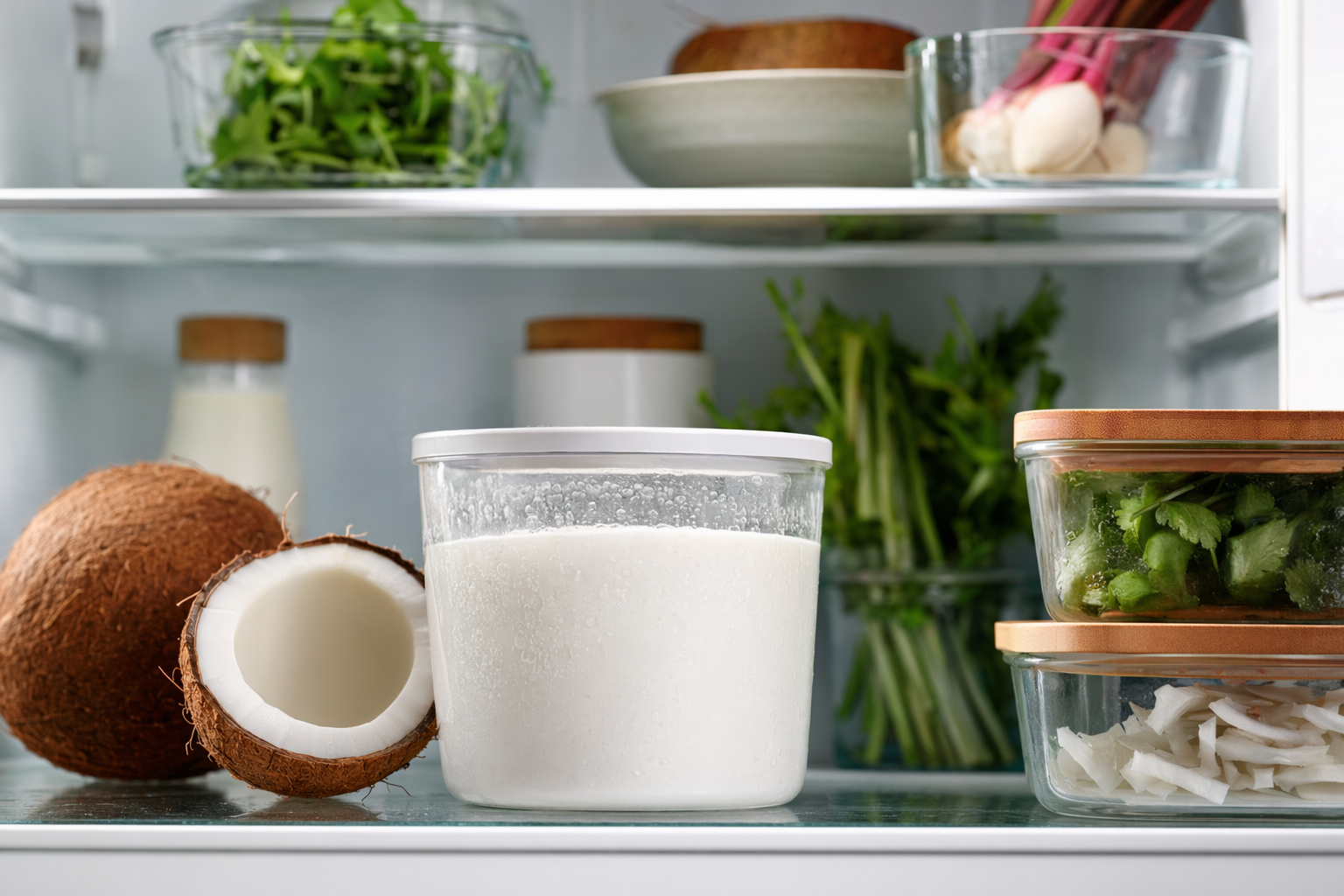
#Here’s my actual kitchen routine, and it’s not glamorous. I transfer leftover coconut milk into a clean glass jar or a small food container with a tight lid. I try not to store it in the opened can, mostly because cans can pick up fridge smells, the edges get messy, and it’s just harder to seal well. Also, if the can lining is damaged or the rim is rusty or dented, no thank you. A jar is easier. You can see what’s going on in there, shake it, sniff it, and not knock it over while reaching for pickles.
- Use a clean spoon or spatula. Don’t dip in the spoon you just used for curry paste, tasting, or whatever else. Cross-contamination is boring until it wrecks your food.
- Transfer the coconut milk to a clean airtight container, preferably glass or food-safe plastic. Leave a little headspace if you might freeze it later.
- Label it with the date opened. Not the date you think you’ll remember. You will not remember. I never remember, and I cook for a living-ish.
- Store it in the coldest part of the fridge, usually the back of a shelf, not the fridge door where temperatures swing everytime someone goes hunting for mustard.
- Use it quickly. Opened coconut milk is not a long-term fridge resident. It is a “cook with me soon” ingredient.
How Long Does Opened Coconut Milk Last?
#This is where labels matter, because brands vary and cartons are different from cans. But for everyday cooking, I use the conservative timing below. I’d rather be a little cautious than gamble on a coconut milk situation that smells “mostly fine.” Most food-safety guidance for opened canned coconut milk lands around a few days in the fridge, and many carton beverages give a longer window once opened, but you should always check the package because some say use within 7 days, some say 10, and homemade versions don’t get preservatives or factory processing to help them out.
| Type of coconut milk | Fridge life after opening | My honest kitchen note |
|---|---|---|
| Canned full-fat coconut milk | About 3 to 4 days | Best flavor in the first 2 days. After that I start planning soup or freezing it. |
| Canned light coconut milk | About 3 to 4 days | Same safety idea, just less fat. Don’t assume light means safer. |
| Shelf-stable carton coconut milk beverage | Usually 7 to 10 days, but follow the label | This is the thinner drinkable kind, not always great for curry. |
| Refrigerated carton coconut milk beverage | Follow the label, often around 7 days after opening | Keep it cold from the store to home. I treat it like milk. |
| Homemade coconut milk | About 2 to 3 days | Beautiful flavor, shorter life. Use it fast or freeze it. |
And yes, I know somebody’s auntie keeps opened coconut milk for a week and says it’s fine. I’m not arguing with aunties, they are powerful. But at home, especially if I’m cooking for kids, older relatives, pregnant friends, or anyone with a weaker immune system, I stick to the safer window. Food poisoning is not a vibe. Also coconut milk is not that expensive compared with losing a whole pot of laksa or spending the night regretting your confidence.
Can You Store It In The Opened Can?
#Technically, some people do. I did for years because I was lazy and thought plastic wrap over a can was good enough. But I don’t recommend it now. The can doesn’t seal airtight, it can tip, the rim can be grubby, and the coconut milk can absorb fridge odors. Once I had coconut milk that tasted faintly like onion and cold pizza. Truly depressing. Transfering it takes maybe 30 seconds, and it makes the whole thing safer and nicer.
Also, don’t pour it into a giant container if you only have half a cup left. Use the smallest clean container that fits. Less air space helps with freshness, and it just feels more intentional. I have a little collection of jars from mustard, jam, and overpriced olives, and they are perfect for this. My husband used to tease me about keeping every jar. Then one day he needed a jar for leftover coconut milk and suddenly my “jar problem” was a “useful system.” Funny how that works.
How To Tell If Opened Coconut Milk Has Gone Bad
#First, don’t taste questionable coconut milk to “check.” I know, I know. We all grew up seeing someone sniff the milk, shrug, and take a tiny sip. But tasting spoiled food is not a great test, and it’s not worth it. Use your eyes, nose, and common sense. And if your brain says, “Hmm, I’m not sure,” that usually means toss it. I hate waste too, but I hate being sick more.
- Sour or rancid smell. Fresh coconut milk smells sweet, creamy, nutty, maybe a little grassy. Bad coconut milk smells sharp, sour, stale, cheesy, or like old oil.
- Mold. Any fuzzy spots, colored specks, or strange growth on the surface or container means it’s done. Don’t scoop around it.
- Fizzing, bubbling, or pressure when you open the container. Coconut milk should not act like kombucha unless you were making something fermented on purpose, and you probably weren’t.
- Slimy texture or curds that don’t look like normal fat separation. Thick cream is normal. Weird clumps with a sour smell are not.
- It has been in the fridge too long or sat out too long. Even if it looks okay, time matters. This is the hardest one for me emotionally, but it’s true.
Normal Separation Is Not Spoilage, Thank Goodness
#Let me defend separated coconut milk for a second, because I have seen people toss perfectly good cans just because they opened it and found a thick white layer on top. That’s coconut cream. It’s the good stuff. Full-fat coconut milk often separates in the can or in the fridge. Just stir it, whisk it, or warm it gently and it comes back together enough for most cooking. Sometimes it stays a little grainy, especially if it got very cold, but in curry or soup that usually disappears.
One of my favorite little cooking tricks is using that solid cream first. Spoon it into a hot pan, let it bubble and split a bit, then fry curry paste in it until it smells like a tiny Thai restaurant just opened in your kitchen. I learned that from watching a cook in a tiny neighborhood place years ago. She didn’t measure anything. She just listened to the pan, which sounds dramatic but you could actually hear the change as the cream thickened. That meal ruined jarred curry sauce for me for a while, in a good way and a bad way.
Freezing Opened Coconut Milk, Because Future You Deserves Curry
#If I know I won’t use opened coconut milk within 3 or 4 days, I freeze it. Coconut milk freezes pretty well for cooking, though the texture can separate after thawing. That’s not usually a problem in soups, curries, smoothies, oatmeal, rice pudding, or sauces where it gets blended or simmered. I wouldn’t thaw frozen coconut milk and expect it to pour like fresh cream over berries, but for a Tuesday chickpea curry? Absolutely. Future me is always thrilled when she finds frozen coconut milk cubes.
My favorite method is an ice cube tray. Each cube is usually about 1 to 2 tablespoons, depending on the tray, which is perfect when a sauce needs “just a splash.” Freeze the cubes solid, pop them into a freezer bag or container, squeeze out extra air, label it, and use within about 2 to 3 months for best quality. It may be safe longer if kept frozen, but flavor can get tired and freezer-y. If you want more details on freezing and thawing without making your leftovers sad, this guide on How to Freeze, Thaw and Reheat Leftovers Safely is a good one to keep in your back pocket.
- Cool it first if it’s been warmed in a recipe. Don’t put hot coconut milk straight into a freezer container.
- Freeze in small portions. Half-cup portions are great for soups, tablespoon cubes are great for sauces.
- Thaw in the fridge when you can. If you’re in a hurry, add frozen cubes straight to a simmering pot.
- Whisk or blend after thawing if it looks broken. Separation after freezing is normal, not a disaster.
What I Make When I Have Leftover Coconut Milk
#This is the fun part, because honestly storing coconut milk safely is mostly about giving yourself more good meals. If I have a little left, I stir it into oatmeal with cinnamon and banana. It makes breakfast taste like vacation, even if I’m eating it standing at the counter in socks. Half a cup goes into lentil soup, tomato soup, or a quick peanut sauce for noodles. A full cup becomes coconut rice, which I will eat with almost anything: fried eggs, roasted sweet potatoes, leftover chicken, spicy cucumbers, whatever’s around.
My current lazy dinner is chickpeas simmered with garlic, ginger, curry powder, canned tomatoes, and coconut milk. Is it traditional? No. Is it delicious? Yep. I finish it with lime and cilantro if I have them, or just lime from one of those sad fridge halves if I don’t. Coconut milk is forgiving like that. It makes pantry cooking feel like you had a plan all along, even when the plan was basically “please let there be dinner.”
Coconut Cream, Cream Of Coconut, And Other Confusing Cousins
#Quick detour because labels can be chaos. Coconut milk is not the same as coconut cream, and neither is the same as cream of coconut. Coconut cream is thicker and fattier, great for rich curries or desserts, and once opened I treat it like canned coconut milk: transfer, refrigerate, use in a few days, or freeze. Cream of coconut is sweetened, the stuff people use in piña coladas and desserts. It has sugar, sometimes stabilizers, and often different storage directions, so read that label like it owes you money.
Then there’s coconut milk beverage, the carton kind people put in cereal or coffee. It’s usually thinner, often has added vitamins or gums, and it may last longer after opening than canned cooking coconut milk, depending on the brand. I don’t love it for curry because it can taste watery and sometimes a little “health food aisle,” if that makes sense. But for smoothies, it’s fine. Just don’t swap them blindly and then blame the recipe. I have done this. The soup was... not my finest.
Restaurant Memories That Made Me Respect Coconut Milk
#Some ingredients feel ordinary until you taste them in the hands of someone who really knows what they’re doing. Coconut milk is one of those for me. I remember a little Sri Lankan spot where the kiri hodi was so gentle and golden, not heavy at all, just warm with turmeric and curry leaves. I remember a Malaysian laksa place where the broth had this deep coconut richness but still somehow tasted bright and spicy. And I remember a Caribbean restaurant where coconut rice came out fragrant and soft and I almost ignored the main dish, which was rude but also understandable.
Those meals made me stop treating coconut milk like just a can from the pantry. It’s an ingredient with personality. It can be lush or delicate, sweet or savory, comforting or fiery. And because it’s so good, I think it deserves a little care after opening. Not fussy care. Just the normal respect we give ingredients we actually love. Put it away properly. Use it soon. Freeze what you can’t use. Don’t let it turn into a mystery jar behind the salsa.
My Real-Life Coconut Milk Schedule
#If I open coconut milk on Monday, I try to use it by Thursday at the latest. Monday night might be curry. Tuesday morning, a spoonful in coffee or oatmeal. Wednesday, coconut rice or a small soup. If Thursday comes and it’s still there, I freeze it or toss it if it seems off. This tiny schedule sounds strict, but it has made my cooking easier. I don’t buy as many cans, I waste less, and I don’t have that low-level fridge guilt that happens when containers start becoming “projects.”
One thing I don’t do anymore is combine old leftover coconut milk with new leftover coconut milk. I used to top off the jar like it was some endless coconut milk sourdough starter, which is honestly horrifying now that I think about it. Keep batches separate. Date them separately. Use the oldest first. If you pour fresh coconut milk into an older container, you’ve basically made the whole thing as old as the oldest bit. Nobody wants that math.
Mistakes I’ve Made, So Maybe You Don’t Have To
#I’ve left opened coconut milk out overnight. Tossed it. I’ve stored it uncovered in a bowl because I was “just going to use it tomorrow.” It tasted like fridge and regret. I’ve frozen it in a glass jar filled all the way to the top, and yes, it cracked because liquids expand when they freeze, a fact I apparently forgot despite being an adult. I’ve also kept a carton because the date on the package was still far away, not realizing that date was for unopened product. Once opened, the clock changes.
The biggest mistake, though, is trusting vibes over timing. I love intuitive cooking. I love measuring garlic with my heart. But food safety is not the place where I want to be poetic. If it has been warm too long, toss it. If it’s past the safe fridge window, toss it. If it smells wrong, toss it. You can be creative with recipes and still be boring about storage. Actually, that’s probably the best combo.
Opened coconut milk is wonderful, but it is not immortal. Treat it like a perishable leftover, not a pantry item that happens to be sitting in the fridge.
A Few Tiny Habits That Make This Easier
#- Buy smaller cans if you often waste half. They can cost a little more per ounce, but wasting food costs money too, and it annoys me more.
- Plan a second coconut milk meal when you open a can. Curry today, coconut rice tomorrow. Soup today, smoothie cubes later. Nothing fancy.
- Keep freezer tape and a marker near the fridge. If the marker lives in a drawer across the kitchen, I won’t label anything. Know thyself.
- Smell it when it’s fresh so you know what “normal” smells like. Fresh coconut milk should be mild, creamy, and slightly sweet, not sharp.
- Don’t use leftover coconut milk in no-cook dishes if you’re unsure. Cooking doesn’t fix everything, but simmered dishes are where frozen or slightly separated coconut milk performs best.
The Quick Answer, For When You’re Standing At The Fridge
#Opened canned coconut milk should go into a clean airtight container and be refrigerated within 2 hours, sooner if your kitchen is hot. Use it within about 3 to 4 days. Don’t store it in the open can if you can help it. Freeze leftovers in small portions if you won’t use them in time. Separation is normal, but sour smells, mold, fizzing, slime, or too many days in the fridge mean it needs to go. Carton coconut milk beverages may last longer after opening, often around 7 to 10 days, but the label wins every time.
And please, please date the container. I say this as someone who has played “what day did I make this?” more times than I’d like to admit. A label is not you becoming a different, more organized person. It’s just a note to future you, who is tired and wants dinner without detective work.
Final Coconutty Thoughts
#Coconut milk is one of those ingredients that makes everyday food feel generous. A splash turns lentils silky, a cup makes rice smell amazing, and a whole can can carry dinner from “meh” to “oh wow, we’re eating properly tonight.” But once it’s opened, it needs the same care as any perishable leftover: cold, covered, dated, and used soon. Not complicated. Just respectful.
I still get a little thrill when I open the freezer and find coconut milk cubes waiting for me, like a tiny gift from a more responsible version of myself. If you cook with coconut milk a lot, start doing the jar-and-label thing and you’ll probably waste less, cook better, and stop sniffing mystery containers with fear in your heart. Anyway, that’s my coconut milk sermon for today. For more food rambles, kitchen lessons, and practical stuff that still feels like real cooking life, I’ve been enjoying AllBlogs.in lately.