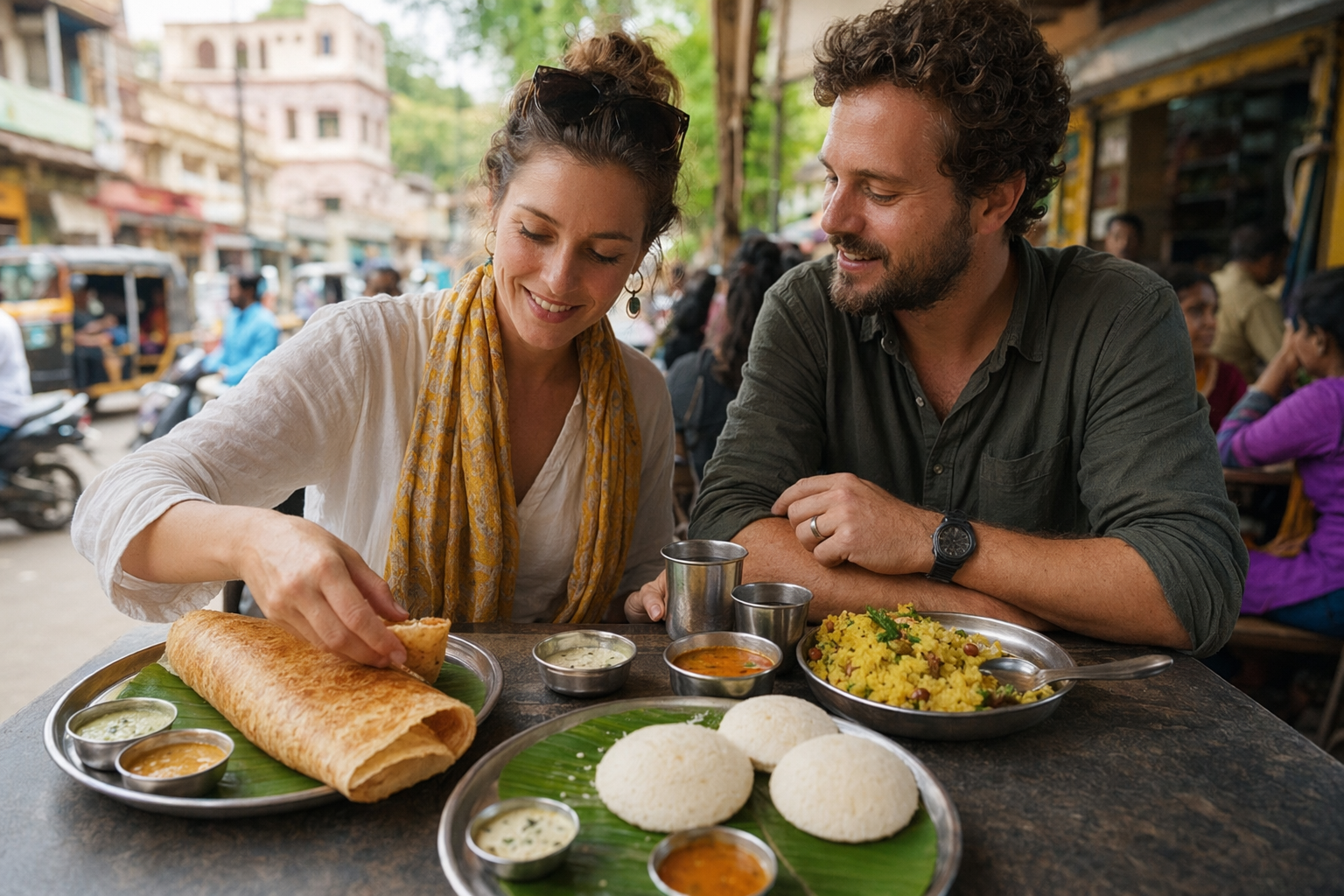
The first breakfast I ever properly fell in love with in India was not in a fancy hotel, not on one of those polished tasting menus, not even at a place with a menu I could fully read. It was on a slightly chaotic morning in Bengaluru, standing outside a busy darshini with one hand holding a stainless-steel plate and the other trying not to spill coconut chutney on my shoes. I had just landed the night before, slept badly, woke up too early because of jet lag, and someone at the guesthouse said, “Go eat idli. Your stomach will thank you.” They were right. Soft idli, hot sambar, coconut chutney, filter coffee that tasted like it had strong opinions... honestly, that breakfast did more for me than sleep.
Indian breakfast can feel intimidating if you’re a foreign traveller. There are names you may not know, spice levels that can surprise you, street stalls that look a bit too adventurous, and then there’s the big tourist fear: will my stomach survive this? But breakfast is actually one of the gentlest and most rewarding ways to enter Indian food culture. Idli, dosa, poha, upma, paratha, appam, vada, chai, filter coffee, misal, jalebi with poha if you’re in central India and feeling brave at 8 a.m. It’s a whole universe. And in 2026, breakfast travel in India is becoming a thing in itself, not just the meal you eat before sightseeing. Food walks are starting earlier, boutique hotels are offering regional breakfast tastings, UPI payments are making tiny eateries easier for visitors, and travellers are hunting for old-school breakfast counters as much as they hunt for monuments.
Why Breakfast in India Feels Like a Travel Experience, Not Just a Meal
#In a lot of countries, breakfast is kind of functional. Coffee, bread, maybe eggs, done. In India, breakfast has geography. It changes every few hours by train. In Chennai, mornings smell like sambar, ghee roast dosa, and filter coffee. In Mumbai, you’ll see office workers crushing plates of poha and vada pav before the local train swallows them whole. In Indore, poha comes fluffy and yellow with sev on top, and somehow jalebi nearby makes complete sense. In Bengaluru, you can build an entire itinerary around idli, vada, khara bath, kesari bath, and coffee, and you won’t even feel silly doing it.
What I love is the rhythm. Breakfast spots open early, people eat fast, nobody is performing for tourists, and you get this tiny glimpse of normal life. A man reading the paper while tearing dosa. Students sharing one extra vada. A grandmother insisting the chutney is better at the older branch, not this new one. That kind of stuff. It’s travel gold, really. And the best part is, Indian breakfast is often vegetarian, freshly cooked, and cheap compared to many global food destinations. You can eat incredibly well for the price of a coffee back home, though yes, please don’t brag about that loudly while someone is working hard over a hot tawa.
Idli: The Soft Landing for Nervous Stomachs
#If you’re new to Indian food, start with idli. I know dosa gets all the drama because it’s crisp and huge and looks amazing in photos, but idli is the quiet hero. It’s a steamed cake made from fermented rice and urad dal batter, usually served with sambar and chutneys. Because it’s steamed, mild, and not oily, idli is often the safest first breakfast for travellers who are still adjusting. The fermentation gives it that gentle tang, but it’s not sour in a scary way. More like, “hello, I have character.”
My favorite idli memory is from Chennai, near a place where I was sweating before 9 a.m. like I had done something wrong. I ordered two idlis and a vada at Murugan Idli Shop, mostly because everyone around me seemed to be eating the same thing. The idlis came soft enough to break with a spoon, and the chutneys had different moods: coconut was soothing, tomato was bright, mint was fresh, and one spicy chutney basically woke me up better than coffee. Ratna Cafe in Triplicane is another classic Chennai stop if you want old-school sambar-soaked comfort. Their sambar has this rich, slightly sweet depth that makes you understand why people argue about breakfast so seriously here.
- Good first order: two idlis, sambar, coconut chutney, and filter coffee if you drink coffee.
- Ask for “less spicy” if you’re nervous, but remember sambar can still have a kick.
- Eat idli in the morning when turnover is high. Fresh idli is dreamy, old idli is just... sad.
Dosa: Crispy, Addictive, and Slightly Dangerous to Your Plans
#Dosa is where many travellers lose control of the itinerary. You think you’ll have one breakfast, then suddenly you’re comparing ghee roast, masala dosa, paper dosa, set dosa, benne dosa, rava dosa, neer dosa, and you’re googling whether Mysuru is too far for lunch. A dosa is made from a fermented rice-lentil batter spread thin on a hot griddle. It can be plain, stuffed with spiced potato, soaked in butter, folded like a golden triangle, or served soft and thick depending on where you are.
Bengaluru is my dosa weakness. Vidyarthi Bhavan in Basavanagudi is famous for its masala dosa and old-world energy, with waiters balancing stacks of plates like they’ve been training since birth. Central Tiffin Room, usually called CTR, in Malleshwaram has a benne masala dosa that is crisp, buttery, and honestly a bit emotional. MTR near Lalbagh is another legend, especially if you like the whole heritage restaurant feeling. It’s not just food, it’s a little time machine. You may wait, you may share a table, you may feel confused for 10 minutes, and then the dosa arrives and everything becomes clear.
One thing tourists sometimes don’t realise: dosa is best eaten immediately. Don’t spend five minutes photographing it from every angle while it goes limp. Take one photo, fine, we all do it. Then tear it, dip it, eat it. The potato masala inside can be mild or spicy depending on the city. In Karnataka it often has a softer, turmeric-heavy comfort. In Tamil Nadu, chutneys and sambar may lead the flavor. In Mumbai’s Udupi cafés, dosa becomes part of the city’s quick-service breakfast culture, eaten by office workers, students, aunties, and lost foreigners like me.
Poha: The Breakfast That Looks Simple Until You Miss It Back Home
#Poha is flattened rice cooked with turmeric, mustard seeds, curry leaves, onions, chilies, and usually peanuts or sev depending on the region. It looks humble. Almost too humble. The first time I ate it in Mumbai, I thought, okay, nice, light breakfast. Then two weeks later I was craving it in a way that felt unreasonable. Good poha is fluffy, not mushy, with lemon squeezed over the top and little crunchy bits that keep you interested.
For poha, you should really look at Madhya Pradesh and Maharashtra. Indore is famous for poha-jalebi, especially around Chappan Dukan and Sarafa-side morning stalls, though Sarafa is more famous as a night food market. Indori poha often comes with sev, pomegranate sometimes, coriander, and a sweet-spicy balance that feels very local. In Nagpur, tarri poha brings a spicy gravy on the side, and if you aren’t ready for heat at breakfast, go slow. Mumbai has excellent everyday poha in small Maharashtrian eateries and old vegetarian places. Prakash Shakahari Upahar Kendra in Dadar is a classic for Maharashtrian snacks, and while people talk about their sabudana vada and misal, breakfast there gives you that very Mumbai feeling of eating quickly but happily.
If idli is the gentle hug, dosa is the crispy adventure, and poha is the quiet friend you underestimate until you’re back in your hotel room thinking, wait, why was that so good?
Where I’d Send a First-Time Visitor for Breakfast in 2026
#If a friend landed in India tomorrow and said, “Plan me a breakfast route,” I’d build it around cities, not just dishes. Chennai for idli, vada, pongal, filter coffee, and those serious old restaurants where breakfast feels almost sacred. Bengaluru for dosa culture, darshinis, and the joy of standing at a counter with office workers at 8:30 a.m. Mumbai for Udupi cafés, poha, bun maska in Irani cafés, and the constant mash-up of regional Indian breakfasts. Indore for poha-jalebi and a city that really understands snacking. Kochi or Alleppey for appam, puttu, kadala curry, and coconut-heavy Kerala mornings. Jaipur or Delhi for kachori, chole bhature, paratha, though that’s a heavier breakfast and maybe not day one if your stomach is still negotiating.
| City | Breakfast to try | Places or areas I’d look at | Why it works for travellers |
|---|---|---|---|
| Chennai | Idli, vada, pongal, filter coffee | Murugan Idli Shop, Ratna Cafe, Mylapore cafés | High turnover, classic South Indian flavors, mostly vegetarian |
| Bengaluru | Masala dosa, idli-vada, khara bath | Vidyarthi Bhavan, CTR, MTR, Brahmin’s Coffee Bar | Legendary breakfast culture and easy morning food walks |
| Mumbai | Poha, dosa, upma, bun maska | Matunga, Dadar, Fort, old Udupi cafés | Lots of regional variety and good public transport access |
| Indore | Poha-jalebi, kachori | Chappan Dukan, local morning stalls | Unique sweet-spicy breakfast identity |
| Kochi | Appam, puttu, kadala curry | Fort Kochi cafés, local Kerala restaurants | Coconut, rice, and gentler spice options if chosen carefully |
The 2026 Breakfast Travel Trends I Keep Seeing
#Food travel in India has changed a lot even over the last few years. The big trend now is hyperlocal breakfast. Travellers don’t just want “Indian food” anymore, which is good because that phrase is way too broad. They want Bengaluru darshini breakfasts, Tamil tiffin, Maharashtrian poha, Kerala puttu, Assamese pitha, old Delhi nihari, Goan poi with bhaji, all of it. Hotels are catching on too. More boutique stays and homestays are serving regional breakfasts instead of the boring toast-cereal-omelette buffet. Thank god, honestly.
Another thing is digital convenience. UPI-style payments are everywhere in India now, and foreign travellers have more options than before through travel payment products and international card acceptance in bigger cities, although cash is still useful at tiny stalls. QR menus are common in urban cafés. Food walks are starting earlier to catch fresh batches of idli and poha. There’s also a strong millet and fermented-food wave that kept growing after India’s big millet push in 2023. You’ll see ragi dosa, millet idli, jowar upma, and “gut-friendly” breakfasts on modern café menus. Some of it is marketing, sure, but some of it is genuinely rooted in older food habits. India was doing fermented breakfast long before it became wellness content.
Safety: How to Eat Adventurously Without Ruining Your Trip
#Okay, let’s talk about the thing everyone whispers about: stomach trouble. Yes, it can happen. No, it doesn’t mean you need to live on hotel toast. The safest breakfast foods are usually hot, freshly cooked, and served at busy places. Idli is steamed, dosa is cooked on a very hot griddle, poha is cooked fresh in batches, and chai is boiled. These are your friends. The risk goes up with cut fruit sitting out, chutneys that have been exposed too long, unfiltered water, ice of unknown origin, and food from a stall with low turnover.
I use a simple rule: busy, hot, and visible. Busy means locals are eating there and the food is moving fast. Hot means cooked right now, not lukewarm. Visible means I can see the kitchen or at least the cooking area and it doesn’t look neglected. I’m not precious about street food, but I am picky. There’s a difference. I’ll happily eat dosa from a crowded stall where batter is hitting the tawa nonstop. I’ll avoid a lonely tray of chutney that looks like it has had a long emotional day in the sun.
- Drink sealed bottled water or properly filtered water, and check the seal.
- Skip ice unless you’re in a reliable hotel or restaurant.
- Carry oral rehydration salts, hand sanitizer, and any personal stomach meds you normally use.
- If you have allergies, write them down clearly. In India, “no nuts” must include peanuts, cashews, and sometimes peanut oil.
- Go easy on raw chutneys at very small stalls until your stomach settles. Coconut chutney is delicious but it spoils faster than people think.
How to Order Without Feeling Like a Total Clown
#Most people are kinder than your anxiety tells you. If you stand near the counter looking confused, someone will often help, sometimes too much. In South India, many fast breakfast places work with tokens. You pay first, get a receipt or token, then collect food at the counter. In older places, someone may take your order at a shared table. In Mumbai cafés, menus might be in English, but specials may be shouted verbally. Just ask, “What is fresh now?” or “What do you recommend?” That question has saved me many times.
Useful words: idli is usually safe and soft. Vada is fried lentil doughnut, amazing but heavier. Sambar is lentil-vegetable stew. Chutney can mean coconut, tomato, mint, peanut, or something fiery. Masala dosa has potato filling. Plain dosa has no potato. Ghee means clarified butter. “Less spicy” helps, but doesn’t guarantee mild. “Parcel” means takeaway in many places. And if someone asks if you want coffee, in South India they probably mean filter coffee, which is sweet, milky, strong, and served in a steel tumbler and dabarah. Pouring it back and forth to cool it is optional, but fun if you don’t splash yourself, which I absolutely have done.
Vegetarian, Vegan, Gluten-Free, and Allergy Notes
#Vegetarian travellers will have a very good time. Much of Indian breakfast, especially in the south and west, is vegetarian by default. Vegan travellers need to watch for ghee, butter, curd, and milk in coffee or chai. Plain idli is usually vegan, many dosas are vegan if no ghee or butter is used, and poha is often vegan unless garnished with dairy or cooked in ghee. But ask. Recipes change by household, region, and restaurant.
Gluten-free travellers may find idli, dosa, appam, puttu, and poha useful because they’re usually rice-based, but cross-contamination is common in busy kitchens. Rava dosa contains semolina, so it is not gluten-free. Upma is often made with semolina too. Paratha, puri, bhature, and many breads are wheat-based. Peanut allergies are serious because peanuts appear in poha, chutneys, oils, and snack toppings. Cashews show up in upma and sweets. If your allergy is severe, don’t rely on casual verbal checks in a crowded shop. Use a translated allergy card and eat at places that can slow down enough to understand you.
A Few Breakfast Combos I’d Repeat Anytime
#If you only have a week in India, don’t try to eat everything. That way madness lies, plus indigestion. Pick a few classic combinations and enjoy them properly. My personal top breakfast combos are: idli-vada-sambar with filter coffee in Chennai, benne masala dosa with strong coffee in Bengaluru, poha with jalebi and chai in Indore, appam with vegetable stew or kadala curry in Kerala, and bun maska with chai in an old Mumbai café when I want something slower and nostalgic.
One morning in Matunga, Mumbai, I ate at a South Indian place where the tables turned over so fast I barely had time to sit before my dosa arrived. A stranger across from me saw me struggling with the chutney-to-dosa ratio and said, “More sambar, otherwise dry.” He was right. We talked for maybe four minutes about trains, breakfast, and why tourists always go to Goa first. Then he left. That’s the thing about breakfast travel in India. You get these tiny human moments tucked between bites.
My Honest Advice for Your First Indian Breakfast Week
#Start gentle on day one. Idli, plain dosa, pongal, or poha. Don’t go straight for the spiciest misal pav after a 14-hour flight unless you enjoy gambling. Eat where locals eat, but choose busy and clean-ish over famous and chaotic if you’re tired. Carry small cash even if digital payments are common. Don’t over-order. Portions can be sneaky, and breakfast hopping is more fun when you’re not painfully full by 9:15. Also, learn to love stainless-steel plates. They are everywhere, they make sense, and now when I see one I get hungry.
And please don’t treat Indian breakfast like a checklist. Yes, try idli, dosa, poha. But sit with it a little. Notice the auntie packing tiffins, the coffee guy pouring from a height, the smell of curry leaves hitting hot oil, the way sambar differs from one city to another. Breakfast is one of the best windows into India because it’s ordinary and extraordinary at the same time. That sounds dramatic, but I mean it.
Final Bite
#Indian breakfast can be soft and soothing, crisp and buttery, sweet and spicy, safe and adventurous all at once. For foreign tourists, idli, dosa, and poha are perfect starting points because they’re widely available, usually affordable, and deeply tied to place. Be careful, yes. Use common sense with water, chutneys, hygiene, and spice. But don’t be so cautious that you miss the joy of a fresh dosa at a crowded counter or a plate of poha eaten while a city is still waking up. Those are the breakfasts you remember years later, maybe even more than the monuments. If you’re planning more food-first travels and want casual guides that don’t feel like they were written from a hotel lobby, have a wander through AllBlogs.in sometime.