Quick answer: Cold soup makes a great hot-weather lunch when it’s bright, well-seasoned, properly chilled, and finished with enough toppings to feel satisfying. Start with fresh summer produce, add lemon juice or vinegar for lift, blend in a little olive oil, avocado, or yogurt for body, then chill it until it’s genuinely cold. Gazpacho, cucumber soup, and chilled corn soup are three easy, no-fuss options. For a full lunch, add toppings like croutons, avocado, herbs, seeds, yogurt, or serve it with bread on the side. And if you’re packing it for work or a picnic, keep it cold.
Hot weather changes the whole idea of lunch.
Suddenly, a big meal sounds exhausting. Turning on the stove feels rude. Even a salad, as crisp and fresh as it can be, doesn’t always hit that deep, cooling spot you’re looking for in the middle of a sticky day.
That’s where cold soup lunches come in.
They’re light without feeling flimsy. Refreshing without being bland. And with a blender, a few good vegetables, and a couple of toppings, you can turn gazpacho, cucumber soup, or chilled corn soup into an actual summer meal instead of a polite little starter.
The best part is that cold soup doesn’t have to be precious or complicated. Think of this as a flexible guide to making cold soup recipes for hot weather using whatever looks good at the market, whatever is already in your fridge, and however much effort you feel like giving lunch today.
The Cold Soup Lunch Formula
#A good cold soup needs more than vegetables and a blender. Since it’s served chilled, the flavors need a little help. Without enough salt, acid, and texture, cold soup can taste watery or flat.
Here’s the basic formula that works almost every time.
1. Start with a produce base
#Use vegetables that bring juiciness, sweetness, freshness, or body.
Good options include:
- Ripe tomatoes
- Cucumbers
- Sweet corn
- Bell peppers
- Avocado
- Fresh herbs
- Garlic or scallions
Tomatoes and cucumbers make a cool, juicy base. Corn, avocado, and peppers add more substance, which helps the soup feel like lunch instead of something you sip and immediately forget about.
2. Add acid
#Cold soup needs brightness. A splash of acid wakes everything up.
Try:
- Lemon juice
- Lime juice
- Sherry vinegar
- Red wine vinegar
- White wine vinegar
Start small, blend, taste, and add more if the soup needs it. Chilled food often tastes a little muted, so don’t be surprised if it needs more vinegar or citrus than you expected.
3. Add a little fat
#A small amount of fat gives cold soup a smoother, more finished texture. Olive oil is the classic choice, especially for gazpacho, but there are plenty of options.
You can use:
- Extra-virgin olive oil
- Avocado
- Greek yogurt
- Sour cream
- A spoonful of tahini, if it fits the flavor
You don’t need much. The goal is to round things out, not make the soup heavy.
4. Season it properly
#Salt matters a lot in cold soup. It brings out the sweetness in tomatoes, corn, cucumbers, and peppers.
You can also add:
- Black pepper
- Jalapeño or another fresh chile
- Cumin
- Smoked paprika
- Fresh basil
- Cilantro
- Mint
- Chives
One of the best habits with cold soup is to taste twice: once right after blending, and again after chilling. After a few hours in the fridge, it may need one more pinch of salt or splash of vinegar.
5. Finish with toppings
#This is what makes cold soup feel like a real lunch.
Try to add at least one crunchy thing, one creamy thing, and one fresh thing. Croutons, toasted seeds, diced avocado, herbs, yogurt, chopped vegetables, or a good piece of bread on the side can completely change the meal.
A plain bowl of cold soup can feel a little too light. A topped cold soup bowl feels intentional.
Gazpacho Lunch Bowls
#A gazpacho lunch is the natural place to start.
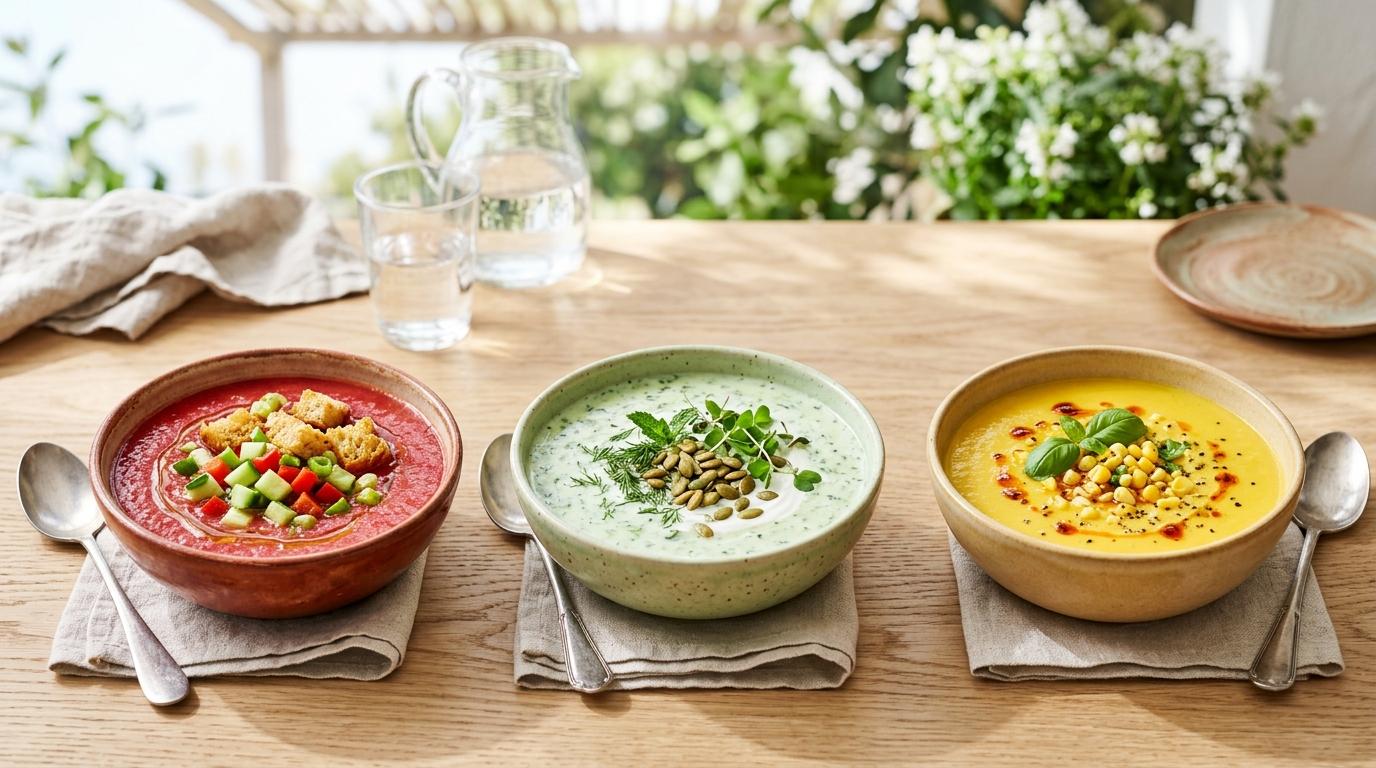
Classic gazpacho is usually made with ripe tomatoes, cucumber, peppers, garlic, olive oil, vinegar, and salt. It’s served very cold, and it’s best when the tomatoes are juicy and flavorful enough to carry the bowl.
For lunch, though, I like gazpacho with a little more going on. Not so much that it becomes fussy, but enough that it eats like a meal.
A simple gazpacho bowl idea
#Blend:
- Ripe tomatoes
- Cucumber
- Bell pepper
- Garlic
- Olive oil
- Sherry vinegar or red wine vinegar
- Salt and pepper
Chill until very cold.
Before serving, top with:
- Diced cucumber
- Diced tomato
- Fresh corn kernels
- Avocado
- Croutons
- Basil or cilantro
- A drizzle of olive oil
The toppings are not just decoration. They add texture, richness, and enough chew to make the bowl satisfying.
If your tomatoes are especially juicy, you may not need to add any water. If the soup turns out too thick, blend in a small splash of cold water until it’s where you want it.
Cucumber Cold Soup
#A cucumber cold soup is the one to make when you want something that tastes extra cool, clean, and refreshing.
Cucumbers are mild and full of water, which makes them perfect with creamy, tangy, herbal ingredients. You can make cucumber soup with yogurt, avocado, fresh herbs, lemon, lime, or a little chile if you want some heat.
A simple cucumber cold soup idea
#Blend:
- Chopped cucumbers
- Greek yogurt or avocado
- Lemon or lime juice
- Olive oil
- Salt
- Fresh herbs such as mint, dill, cilantro, or basil
- A small piece of garlic or scallion, if you like
Chill until very cold.
Top with:
- Diced cucumber
- Toasted seeds
- Chopped herbs
- A spoonful of yogurt
- Black pepper
- A few drops of olive oil
For a brighter, spicier version, add jalapeño. Remove the seeds and ribs for gentle heat, or leave some in if you want more bite.
One small trick: lightly salt the chopped cucumber and let it sit for a few minutes before blending. It draws out some moisture and makes the cucumber flavor taste a little fuller.
Chilled Corn Soup
#Chilled corn soup is sweet, sunny, and surprisingly creamy, even without much dairy.
Fresh sweet corn has natural starch and sweetness, so it blends into a soup with real body. It’s especially good with lime, herbs, cucumber, yellow bell pepper, and a little chile.
A simple chilled corn soup idea
#Blend:
- Fresh sweet corn kernels
- Yellow bell pepper
- Cucumber
- Olive oil
- Lime juice or sherry vinegar
- Salt
- A little garlic or scallion, if you want
Chill thoroughly.
Top with:
- Extra corn kernels
- Diced cucumber
- Basil or cilantro
- Croutons
- Avocado
- Pepitas or sunflower seeds
- A small spoonful of yogurt or sour cream
Corn soup is a good choice when you want a cold soup that feels a little more filling. It’s also nice for anyone who finds tomato gazpacho too sharp or acidic.
You can blend it completely smooth or leave it slightly textured. If it tastes too sweet, add more lime or vinegar. If it tastes flat, add salt a little at a time and taste again.
Toppings and Sides That Make Cold Soup More Filling
#Cold soup is refreshing, but lunch still needs to carry you for a while. The easiest way to make cold soup lunches more satisfying is to build up the bowl with toppings and, if needed, add a simple side.
Add crunch
#Try:
- Garlic croutons
- Toasted pumpkin seeds
- Sunflower seeds
- Chopped cucumber
- Diced bell pepper
- Toasted bread crumbs
Crunch makes cold soup feel more like food and less like a smoothie with vegetables.
Add creaminess
#Good options include:
- Diced avocado
- Greek yogurt
- Sour cream
- Olive oil
- A little soft cheese, if it fits the soup
Creamy toppings are especially good with gazpacho and chilled corn soup because they balance the acidity and sweetness.
Add freshness
#Cold soup loves herbs, so use them generously.
Try:
- Basil with corn soup
- Mint or dill with cucumber soup
- Cilantro with gazpacho or corn soup
- Chives with yogurt-based cucumber soup
A handful of herbs can make a chilled bowl taste brighter almost instantly.
Add a side
#For a more filling no-cook summer lunch, serve cold soup with:
- Crusty bread
- Toasted sourdough
- Crackers
- A small pasta salad
- A simple sandwich
- A boiled egg, if you already have one cooked and chilled
The soup can stay cool and light, while the side makes the meal feel complete.
Make-Ahead and Chilling Tips
#Cold soups are great for make-ahead lunches because they often taste better after they sit for a bit. The garlic mellows, the vinegar settles into the vegetables, and the whole soup tastes more balanced.
Here’s an easy make-ahead plan:
- Wash and prep your vegetables.
- Blend the soup until smooth or slightly chunky, depending on what you like.
- Taste for salt and acid.
- Transfer to an airtight container.
- Chill in the refrigerator.
- Taste again before serving and adjust if needed.
If the soup thickens as it chills, stir in a splash of cold water. If it tastes muted, add a little more salt, lemon, lime, or vinegar.
For the best texture, keep crunchy toppings separate until you’re ready to eat. Croutons, seeds, diced vegetables, and herbs are all better when added at the last minute.
If you’re packing cold soup for work or a picnic, chill it first. Don’t pack it warm or freshly blended at room temperature and expect the container to cool it down quickly. It usually won’t.
Food Safety and Storage Cautions
#Cold soups are easy and convenient, but they still need to be handled carefully.
Many of these soups are raw and unheated, which means there is no cooking step to reduce bacteria. Keeping them cold is important.
A few things to remember:
- Store cold soup in the refrigerator soon after blending.
- Keep it in an airtight container.
- Don’t let cold soup sit out at room temperature for long.
- Bacteria grow more easily between 40°F and 140°F, or 4°C to 60°C.
- For best safety and freshness, use refrigerated cold vegetable soups within 3 to 4 days.
- Keep toppings like dairy, avocado, and croutons separate when possible.
Packing cold soup safely
#If you’re taking cold soup for lunch, use a pre-chilled insulated container or thermos. Pack it in a cooler bag with ice packs and keep it cold until you eat.
This matters even more for soups with yogurt, sour cream, avocado, or other perishable toppings. Add those toppings right before eating if you can.
If the soup no longer feels properly chilled, it’s better to be safe and skip it.
How to Choose the Right Cold Soup for Your Lunch
#Not sure where to start? Let the weather, your appetite, and what’s in your fridge decide.
Choose gazpacho if you want something bold, tangy, and savory. It’s great with croutons, avocado, corn, and herbs.
Choose cucumber cold soup if you want something very cooling and light. It works beautifully with yogurt, mint, dill, lemon, and seeds.
Choose chilled corn soup if you want something sweet, creamy, and a little more filling. It pairs well with lime, basil, cilantro, cucumber, and crunchy toppings.
For a lighter lunch, keep the soup simple and finish it with lots of herbs. For a fuller lunch, add avocado, seeds, croutons, yogurt, and bread on the side.
The Takeaway
#Cold soup lunches are one of the easiest ways to eat well when it’s hot and you don’t feel like cooking. Start with fresh produce, add acid and a little fat, season more than you think, and chill the soup until it’s truly cold.
Gazpacho brings bold tomato flavor. Cucumber cold soup is crisp and cooling. Chilled corn soup is sweet, creamy, and a bit more filling. Add a few good toppings and maybe some bread on the side, and you’ve got a summer lunch that feels refreshing, practical, and genuinely satisfying.