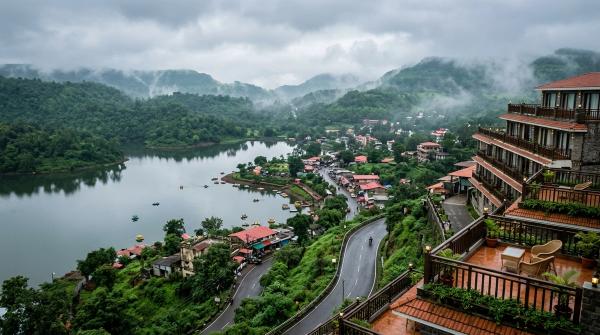
I’ve always thought Goa tastes different in the monsoon. Not just looks different, tastes different. The coconut feels sweeter, the fish curry feels more serious, the bread smells warmer, and even a cup of black coffee in a damp little cafe somehow becomes a whole mood. I did this Old Goa food trail during the rains with a half-broken umbrella, wet sandals, and that overconfident traveller energy where you think, yeah yeah, I can handle a little rain. Then the sky opened up near the Basilica of Bom Jesus and I was basically marinated by lunchtime.
Old Goa itself isn’t like Panjim or Assagao where every second lane has a stylish cafe with plants, sourdough, and someone photographing an iced latte. It’s quieter. More historical. More church bells, laterite walls, moss, school kids, old houses, wet roads, and the Mandovi moving around in the background. So my version of an Old Goa monsoon food trail stretched a little, from the heritage core around the churches to Ribandar, Divar island, and Panjim’s old food spots. Purists may complain. Let them. Food trails don’t care for municipal boundaries when your stomach is leading.
Why Old Goa in the Monsoon Feels Like the Right Kind of Hungry
#The first thing you notice in Old Goa during monsoon is the smell. Wet earth, old stone, incense from churches, frying onions from somewhere you can’t quite locate, and that sharp green smell of rain hitting overgrown grass. I started at the Basilica of Bom Jesus because, obviously, it’s the big one. The 16th-century church, the crowds, the polished floor, the hush inside, and then outside, vendors selling tea and snacks under plastic sheets that flap around like they’re also tired of the rain.
What I like about eating in this part of Goa is that it forces you to slow down. You can’t do that manic checklist tourism thing in heavy rain. You wait. You duck into a cafe. You order another tea because the rain refuses to stop. You talk to the person at the counter. You notice what locals are ordering, which is almost always more useful than any viral reel. And in 2026, honestly, that’s the food travel trend I’m seeing everywhere: slower, smaller, more local. Less “top 10 must-eats” and more “what’s hot, clean, open, and cooked by someone who cares.”
Monsoon food in Goa is not just comfort food. It’s survival food with coconut, spice, vinegar, kokum, and a lot of common sense.
My Rough Route: Churches, Ribandar, Divar Ferry, Panjim Cafes
#I began around Old Goa’s church complex, walked past the Se Cathedral and the Archaeological Museum area, then took the road toward Ribandar. If you’ve never done that road in the rain, it’s lovely in a messy way. Puddles everywhere, trees dripping like leaky taps, scooters going too fast, and the Mandovi peeking in and out. Ribandar is one of those places travellers pass through without thinking, but I find it beautiful. Old houses, river views, small bakeries, and locals who seem mildly amused that you’re walking in weather when even dogs are hiding.
From there, I hopped toward the ferry point for Divar Island. The Divar ferry is one of my favourite tiny Goa experiences. It costs almost nothing, the ride is short, and yet it gives you that little thrill of going somewhere separate. Divar in monsoon is green to the point of showing off. Paddy fields, churches, sleepy roads, and those old Goan homes that make you wonder why you ever agreed to live in a city apartment. Food options are fewer, so don’t arrive starving and dramatic. Carry a banana, or better, plan your proper meal back in Panjim or with a pre-booked local home-style place if you’ve arranged one.
| Stop | What I’d eat there | Monsoon note |
|---|---|---|
| Old Goa church area | Hot tea, pakoras, simple snacks from busy stalls | Choose places with fast turnover and covered food |
| Ribandar | Poee, omelette, tea, small bakery bites | Good for slow wandering, not fancy dining |
| Divar Island | Pre-arranged Goan meal or light snacks | Check timings because rain changes plans |
| Panjim or Fontainhas | Fish curry rice, xacuti, bebinca, coffee | Best base for cafes and reliable restaurants |
Cafe Stops: Not Always Fancy, Mostly Necessary
#The cafe culture around Old Goa is not the same as North Goa’s influencer-cafe scene, and I mean that as a compliment. You won’t always get a perfect flat white with latte art. Sometimes you get steel-tumbler tea and a plate of something fried, and that is exactly correct for the weather. But because many travellers base themselves in Panjim, I usually combine Old Goa with Panjim cafes and bakeries. It makes practical sense, especially in monsoon when you need dry shelter every 45 minutes.
In Panjim, I still have a soft corner for old-school places. Confeitaria 31 de Janeiro, in the Fontainhas area, is the kind of bakery where time behaves differently. You go in for one thing, come out with bebinca, dodol, patties, maybe a little regret but not really. Cafe Bodega has that art-cafe energy, good for coffee and sitting still after church-hopping. Viva Panjim is cozy and very Goan in spirit, tucked into a heritage lane. Ritz Classic is famous for fish thalis, and yes, it gets crowded, but sometimes crowded is a good sign if you’re thinking hygiene and turnover. Kokni Kanteen is another dependable name people keep recommending for Goan meals, and I get why.
One thing I’ve changed about how I travel in 2026 is that I don’t chase only viral cafes anymore. The trend now, at least among food people I know, is hyperlocal and hygiene-aware. We check recent reviews, ask if seafood is fresh that day, look at how drinking water is handled, and yes, we still take photos, but not before the food goes cold. QR menus, UPI payments, digital waitlists, and Google review sorting by “latest” have become part of the modern food trail. Not romantic, maybe, but very useful when your stomach is sensitive and the rain is doing suspicious things to drains.
Curry Weather: Fish Curry Rice, Xacuti, Cafreal, and That Vinegar Kick
#If you come to Goa in monsoon and don’t eat fish curry rice at least once, I don’t know what we’re doing here. Goan fish curry has that beautiful balance of coconut, chilli, turmeric, tamarind or kokum depending on the kitchen, and the fish itself. In the rains, some seafood availability can shift because of fishing restrictions and rough seas, so I try to ask what’s fresh rather than ordering whatever sounds glamorous. A good server will tell you. A very good server will tell you not to order something. Listen to that person.
My best rainy lunch was not in a fancy setting. It was a plate of rice, fish curry, a small fried fish, kismur, pickle, and vegetable on the side, eaten while rain hit a tin shade so loudly that conversation became mostly nodding. The curry was thin but powerful, the kind that goes into the rice and disappears, then suddenly the whole plate is alive. There was kokum in there, I think, giving it that sour edge. I had planned to eat half because I had “more stops” written in my notes. I ate everything. Travel planning is cute until curry arrives.
Then there’s chicken xacuti, with roasted spices, poppy seeds, coconut, and a depth that feels almost smoky. Cafreal, with coriander, green chilli, garlic, and lime, is brighter, more herbaceous, especially good when the chicken has been marinated properly and not rushed. Pork vindaloo, when done well, is not just “spicy curry” like many outside Goa assume. It’s vinegar, garlic, chilli, fat, and patience. Sorpotel is another serious dish, rich and tangy, not for everyone but definitely for me on a rainy evening with sannas if I can find them.
Bread, Bakeries, and the Monsoon Joy of Poee
#Goan bread deserves its own travel trail. Poee, the local whole-wheat pocket bread, is one of those simple things that becomes addictive when fresh. In the morning, if you’re lucky, you’ll hear the poder’s horn in some neighbourhoods, though in busy areas this tradition is changing. I bought warm poee near Panjim and ate it with an omelette and too much butter, standing under a shop awning while my phone kept warning me about heavy rainfall. Very helpful, phone. I was already wet.
The bakery side of Goa tells you so much about its Portuguese-influenced food history without making it feel like a museum lesson. Bebinca is the obvious dessert, layered, buttery, patient. Dodol is darker and stickier with coconut and jaggery. Bolinhas, those coconut cookies, are dangerous because you think you’ll have one and suddenly the packet is giving you judgemental empty looks. During monsoon festivals and local celebrations, you may also come across patoleo, turmeric-leaf steamed rice parcels with coconut and jaggery, especially around the August festive season. The smell of turmeric leaf steaming in rain weather is honestly unfair. Too good.
Markets, Ingredients, and What Actually Feels Local
#I always try to visit a market when I’m doing a food trail because restaurants show you the finished story, but markets show you the grammar. Panjim market is the practical choice if you’re around Old Goa. You’ll see kokum, dried prawns, spices, vegetables, fish counters, sausages, and all those ingredients that explain why Goan food tastes the way it does. The dried fish smell can be intense, especially in damp weather, but that’s part of it. Don’t make faces. Or at least don’t make obvious faces.
Goan chorizo is another monsoon friend, especially stuffed into pao or cooked with potatoes. It’s smoky, spicy, vinegary, and not shy at all. I had a chorizo pao one drizzly evening and it was messy in the best way, oil staining the bread, chilli hitting late, rain cooling everything around me except my mouth. That’s the kind of snack I remember more than many polished tasting menus. Though, to be fair, I like tasting menus too. I’m not pretending to be above tiny plates and edible flowers. I just think chorizo pao in the rain has better emotional range.
- Look for kokum-based drinks or solkadi when the humidity is being rude.
- Ask what fish is fresh instead of insisting on kingfish every time.
- Try local breads early in the day, because fresh bread waits for nobody.
- Keep cash, but UPI works in many places now, even tiny ones. Network may still act moody in rain.
Hygiene in the Monsoon: The Unsexy Part That Saves Your Trip
#Let’s talk hygiene, because food bloggers sometimes act like stomach problems are a personality test. They are not. Getting sick on a food trip is miserable. Goa in the monsoon is beautiful, but rain also means waterlogging, humidity, slower drying, and food that can spoil faster if not handled properly. I’m not paranoid, but I am careful. There’s a difference. I eat street snacks, yes, but I choose stalls where food is cooked hot in front of me and where lots of locals are eating. I avoid chutneys sitting open in the rain, cut fruit exposed to flies, and anything that looks like it has been waiting since yesterday for a second chance.
For water, I stick to sealed bottles or properly filtered water from places I trust. I carry ORS, hand sanitizer, and basic meds. Boring? Completely. Worth it? Also completely. In restaurants, I do a quick scan. Are tables being wiped with a clean cloth or the same ancient wet rag? Is seafood kept chilled? Are staff handling money and food without washing hands? Is the bathroom in a state that makes you question the kitchen? None of these things guarantee perfection, but they help. In 2026, with food travel getting more popular and people booking food walks through apps, hygiene transparency is becoming a big deal. Travellers are reading recent reviews for cleanliness, not just taste, and I’m very much one of them.
- Eat hot food hot. This is the golden monsoon rule.
- Pick busy places, especially for seafood and thalis.
- Avoid raw salads unless you fully trust the kitchen.
- Don’t overdo alcohol with rich food and humidity. Goa will humble you.
- Carry a light rain jacket, because eating while soaked sounds romantic only for five minutes.
Food Walks, Local Hosts, and the New 2026 Travel Mood
#One of the nicest shifts in food travel recently is the rise of small-group food walks and home dining experiences. Not huge bus-tour things where everyone gets the same rehearsed speech, but smaller, neighbourhood-led trails where someone explains why a dish matters, where the bread comes from, what changes during monsoon, and which family still makes sweets for feast days. Around Goa, especially Panjim, Fontainhas, and heritage villages, these kinds of experiences are becoming more common. I like them when they’re respectful and not treating local homes like Instagram props.
There’s also more interest now in sustainable and seasonal eating. Travellers want local fish instead of imported seafood, local produce, less plastic, refill water stations, and restaurants that don’t waste half the menu. Some newer cafes in Goa are leaning into plant-forward plates, millet, fermented drinks, local coffee roasters, sourdough, and kombucha. I enjoy that stuff, but in Old Goa monsoon mode, I still want curry first. Give me innovation, sure, but don’t take away my rice and recheado masala.
A Rainy Evening in Fontainhas After Old Goa
#After one long wet day, I ended up in Fontainhas just before dark. The coloured houses looked extra saturated from the rain, like someone had turned up the contrast. I ducked into a bakery, bought bebinca, then wandered until I found dinner. This is my favourite way to travel, honestly. Not totally unplanned, but loose enough that the day can surprise you. My shirt was damp, my notebook pages were curling, and I had that tired-happy feeling you get after walking too much in a place you like.
Dinner was Goan fish curry rice again because I am predictable when happy. I added prawn balchao on the side, sharp and fiery with vinegar, the kind of pickle-like dish that wakes up everything. The rice was plain, the curry was generous, and there was a vegetable preparation I didn’t pay enough attention to because the balchao was stealing the scene. Outside, scooters hissed through wet lanes. Inside, people talked loudly over plates. Not cinematic exactly, but real. Better than cinematic.
What I’d Skip, What I’d Repeat
#I’d skip trying to do too many places in one day. In monsoon, movement is slower and digestion is also, let’s be honest, not a machine. Three proper food stops are enough if you’re tasting rich Goan food. I’d also skip any place that looks empty at peak meal time unless it’s a known reservation-only spot. Empty restaurants in the rain make me nervous, especially for seafood. Maybe unfair, but my gut has opinions.
I’d repeat the Old Goa to Ribandar stretch, the Divar ferry if the rain isn’t too wild, and a late lunch in Panjim. I’d repeat bakery-hopping in Fontainhas. I’d repeat poee with omelette every morning if society allowed. I’d also spend more time asking locals about seasonal monsoon foods. Goa has festival calendars, Catholic and Hindu home traditions, village feasts, and seasonal snacks that don’t always show up on restaurant menus. The best bites are sometimes the ones you can’t just order from a QR code.
Final Thoughts: Come Hungry, But Come Sensible
#The Old Goa monsoon food trail is not a neat, packaged thing. It’s damp, slow, slightly chaotic, and full of detours. You go for churches and history, but you remember the curry. You plan cafes, but you remember the tea from a stall. You think hygiene will be a boring side note, and then you realise it’s what lets you enjoy the whole trip without spending a day negotiating with your stomach. That’s the truth of food travel, no? Pleasure and caution sharing the same plate.
If you’re going, base yourself in Panjim or nearby, start early in Old Goa, carry rain gear, eat hot and local, ask what’s fresh, and don’t be shy about walking away from food that doesn’t feel right. The monsoon makes Goa softer, greener, and in some ways more intimate. It also makes you crave curry like a person possessed. I came back with damp shoes, too many bakery packets, and a renewed belief that the best travel days are the ones where weather ruins your plan but improves your appetite. For more food trails and travel stories that go beyond the usual checklist, I’d casually point you toward AllBlogs.in.