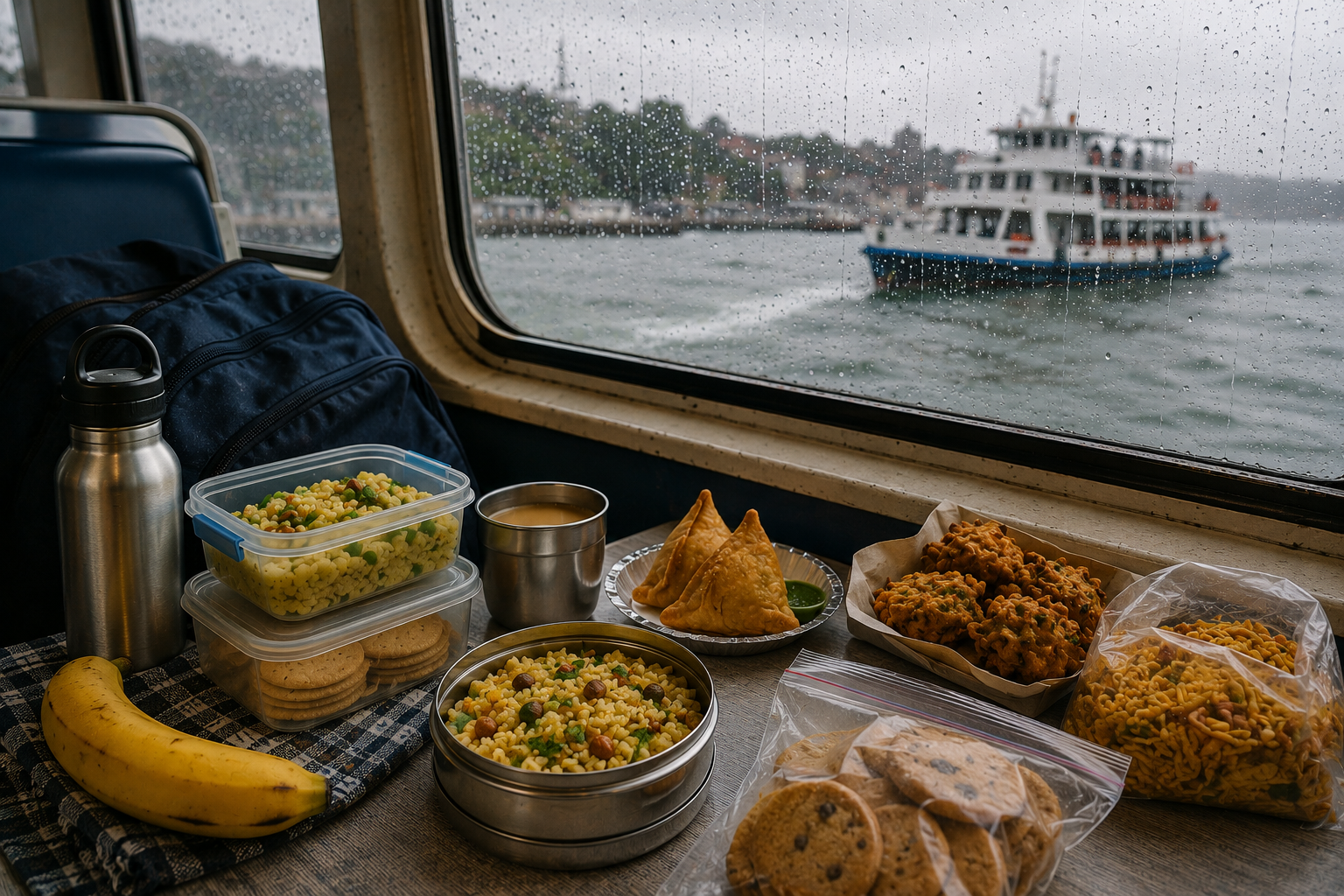
There’s a very specific kind of hunger that arrives on an Indian ferry during monsoon. It’s not the tidy airport hunger where you pretend a sandwich in plastic is dinner. It’s wetter, louder, and more dramatic. Your shirt is sticking to your back, the river is the color of strong tea, someone’s child is eating banana chips out of a steel dabba, and suddenly the smell of hot chai from the ferry canteen feels like a spiritual event. I’ve travelled by ferries in Kerala, Goa, Mumbai’s harbour routes, Assam’s Brahmaputra crossings, the Sundarbans, and a few rain-battered jetties where I never fully knew the name of the place. And food was always part of the trip. Sometimes the best part. Sometimes the reason I spent the next day regretting my confidence.
So this is not a fancy “best restaurants near ferry terminals” list, although I’ll mention some. This is more like a food-traveller’s survival note for Indian ferries in the rains: what I pack, what I buy, what I avoid, and why monsoon ferry food can be both incredibly comforting and a little risky if you act like your stomach is made of stainless steel.
Why Monsoon Ferry Food Hits Different
#Monsoon changes the entire mood of travel in India. A ferry in May can feel like transport. A ferry in July feels like a movie scene. The sea is moody, rivers rise fast, ferry schedules shift, and everyone suddenly becomes a weather expert. Food becomes practical and emotional at the same time. Hot snacks are not just snacks, they’re insulation. Chai is not chai, it’s courage in a paper cup. Even a simple vada pav at the Mandwa jetty before the Mumbai ferry tastes better when rain is blowing sideways and the boat staff are calmly doing their work like this is all perfectly normal.
By 2026, food travel in India has gone much more hyperlocal. People don’t just want “seafood” anymore, they want the exact creek crab from one village, the homestay pickle made with a family recipe, the millet laddoo from a women’s self-help group near a jetty. UPI has made buying from small stalls ridiculously easy in many ferry towns, even the aunty selling boiled peanuts near a landing point may have a QR code taped to a biscuit tin. But monsoon also exposes the weak spots: wet packaging, reheated oil, unsafe water, uncovered chutneys, and seafood that has been sitting around too long because ferry timings went weird.
The Ferry Routes Where I’ve Eaten the Most Memorable Rain Food
#My soft corner is Kochi. The public ferries and the newer Water Metro routes have made the city feel even more deliciously connected, like you can ride between islands and food moods. Fort Kochi gives you peppery fish fry, warm pazham pori, and strong tea. Vypin and nearby coastal areas are for toddy-shop style meals, kappa, meen curry, and that red chilli heat that sneaks up after two bites. If I have time before or after ferry rides, I still like old Kochi names such as Kayees for biryani, Grand Hotel for Kerala meals and seafood, and the whole Mattancherry-Fort Kochi stretch for small cafes, spice shops, and fish that tastes of the coast without trying too hard.
Mumbai to Mandwa is a different creature. The ferry itself is short enough that you think you don’t need food, then you reach the jetty and immediately want something fried. Alibaug trips have become weekend rituals for Mumbai people, especially during light monsoon breaks. I’ve had excellent fish thalis at Sanman in Alibaug, and I still think the simplest coastal meal after a ferry ride is often better than the “curated beach brunch” places that look perfect on Instagram but taste like the menu was written in Bandra and cooked by committee. Sorry, but it’s true.
Then there’s Goa, where river ferries are still one of the loveliest ways to move around when you’re not in a hurry. Ribandar to Chorao, Divar Island crossings, little ferry moments where you smell wet earth, diesel, and someone’s fish curry packed for lunch. In Panaji, I’ll happily eat a fish thali at Ritz Classic or go more slow and old-school at Bhatti Village if I’m in the area. In monsoon, Goa gets quieter, greener, and frankly more interesting for food than the peak-season party version. Xacuti, recheado, poi bread, cafreal, patoleo around feast days, kokum drinks, urrak if you’re careful. It’s a whole other Goa.
Assam’s Brahmaputra ferries are the ones that made me respect water the most. The river is huge, not scenic in a postcard way, but alive and serious. On the way to Majuli, I’ve eaten pitha, bananas, tea, and a very humble packet of muri with mustard oil and onion that tasted better than it had any right to. Around Majuli, food is subtle compared to coastal spice bombs: rice, fish tenga, herbs, black sesame, bamboo shoot, smoked pork if you eat it, and seasonal greens. The ferry food itself is simple, but the meals after landing can be unforgettable.
What I Pack Before a Monsoon Ferry Ride
#I used to overpack food like I was crossing the Arabian Sea for three weeks. Now I pack smaller but smarter. Monsoon ferry travel is about moisture control. If your food packaging fails, everything becomes sad. Biscuits become paste. Thepla turns sweaty. Your carefully packed sandwich starts smelling like regret. So I use a small waterproof pouch or a dry bag, and inside that, a steel or hard plastic box. Not glamorous, but effective.
| Pack This | Why It Works in Monsoon | My Small Warning |
|---|---|---|
| Thepla, paratha rolls, or chapati with dry sabzi | Travels well, filling, doesn’t collapse in humidity | Avoid watery pickle inside the roll |
| Roasted chana, peanuts, makhana, dry chivda | Crunchy, cheap, good when ferries get delayed | Keep it sealed or it becomes damp fast |
| Bananas or oranges | Easy to peel, safer than cut fruit | Don’t carry overripe bananas unless you enjoy chaos |
| Electrolyte sachets | Useful when it’s humid and you’re sweating under a raincoat | Use safe bottled or filtered water |
| Ginger candy or jeera goli | Good for nausea, especially on rough water | Not a cure for actual seasickness |
| Steel bottle with safe water | Reduces plastic and saves money | Refill only from reliable sources |
| Small spoon, tissue, hand sanitizer | Basic, but you’ll thank yourself | Sanitizer doesn’t replace washing hands when possible |
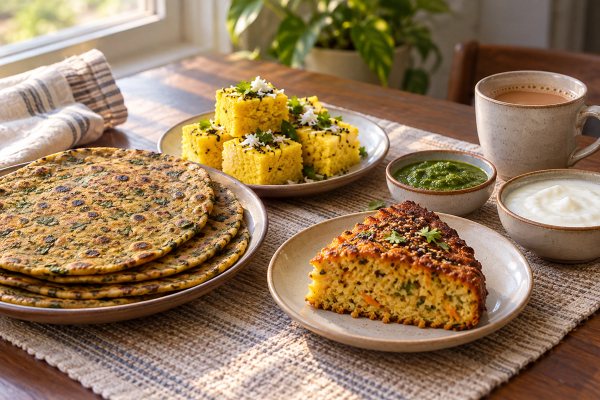
My most dependable ferry food is still a rolled thepla with dry aloo or methi, wrapped in butter paper and then boxed. Gujaratis figured out travel food long before the rest of us started calling it “portable cuisine”. I also like lemon rice, tamarind rice, or coconut rice for longer rides, especially in the south, but only if it’s freshly made and not drowned in wet coconut chutney. For overnight or long river journeys, I add boiled eggs if I can eat them early, not six hours later in humid weather. That’s where people get brave and then suffer.
What I Buy at Ferry Terminals, Happily and Without Drama
#My rule is simple: buy hot, buy busy, buy visible. If a stall has a fast turnover and the food is being cooked in front of you, I’m much more relaxed. A fresh vada pav at Gateway or near ferry points around Mumbai? Yes. Hot bhutta rubbed with lime, chilli, and salt at a jetty when rain has just stopped? Absolutely. Pazham pori and parippu vada in Kerala if they’re coming straight out of oil? I’m not pretending to have discipline. In Bengal, fresh telebhaja with muri near ferry ghats is the kind of snack that makes the grey sky feel poetic.
Chai is the great ferry equalizer. I’ve had cutting chai before the Mandwa ferry, tiny glasses of sweet tea in Assam, and black tea in Kerala that was strong enough to wake up my ancestors. I buy tea when it’s boiling hot and served fast. If milk has been sitting open in a warm, wet stall, I skip it. Same for coffee, unless it’s freshly made. Tender coconut is also excellent when cut fresh in front of you, although in heavy rain I sometimes avoid it simply because I don’t want to juggle an umbrella, backpack, ticket, and coconut like a circus act.
- Freshly fried snacks are usually safer than snacks fried hours ago and left uncovered.
- Whole fruit is better than cut fruit. Always. I know watermelon looks tempting in humidity, but no.
- Bottled drinks are okay if sealed properly, but I check the cap because I’ve learned things the annoying way.
- Local sweets like peda, ladoo, or dry coconut sweets travel better than cream-filled anything.
Seafood in Monsoon: My Love Story With Footnotes
#This is where I contradict myself a bit. I love seafood in the rain. Fish curry during monsoon is one of life’s big pleasures, especially on the west coast. But I’m also cautious. India’s fishing seasons vary by state, and many coastal regions have annual monsoon fishing bans to protect breeding fish and keep fishermen safe. That means the freshest catch may not always be what a menu implies. Some restaurants use frozen fish, some use inland or farmed options, and some are honest about it. The good places will tell you what’s available that day.
In Kerala and Goa, I often choose fish curry meals from places that are busy and local, not empty touristy shacks with a laminated menu promising everything from kingfish to lobster in the middle of a storm. In Bengal, monsoon and hilsa have an emotional relationship, and bhapa ilish or ilish paturi can be glorious, but only if the fish is handled well and the restaurant knows what it’s doing. In the Sundarbans belt, crab curry and river fish can be beautiful, but I’m careful about hygiene because travel there often involves boats, mud, humidity, and long waits.
My seafood rule on ferry trips: eat it hot, eat it at a trusted place, and don’t order expensive “fresh catch” from a sleepy stall where the cook looks surprised you came.
What I Avoid, Even When I’m Tempted
#I avoid cut fruit almost everywhere near wet ferry terminals. Not because vendors are bad people, but because water, knives, flies, and humidity are a risky combination. I also skip raw chutneys that have been sitting out, especially coconut chutney in coastal humidity. Green chutney can be fine in a clean restaurant, but that open tub next to pakoras at a crowded jetty? I admire it from a distance. Pani puri near ferry points during monsoon is another one. I love pani puri. I have defended pani puri in many arguments. But ferry-day monsoon pani puri is a gamble I no longer take.
I’m also careful with pre-packed sandwiches from small counters, cream rolls, mayonnaise-heavy snacks, and anything with chopped onion that has been sitting for ages. The issue is not just dirt, it’s time and temperature. Monsoon delays make it worse. A ferry that was supposed to leave at 3 might leave at 5:30, and suddenly your egg puff has had a whole second life in a warm display case. I’ll eat an egg puff if it’s hot and moving fast. I won’t eat the lonely one under a fogged-up plastic cover.
The New 2026 Ferry Food Mood: Local, Cashless, Less Plastic
#One thing I’ve noticed more and more in 2026 is how ferry food is becoming part of the travel experience, not just background noise. Homestays in Kerala backwaters will ask on WhatsApp if you want meals ready when you arrive. Small operators near island routes in Goa and Assam are pushing local breakfasts, village lunches, and cooking experiences instead of generic “sightseeing packages”. Travellers are also carrying reusable bottles and tiffins more seriously now, partly because plastic waste around water bodies has become impossible to ignore. You see it floating near ghats, and it kills the romance very quickly.
UPI has changed everything too. I’ve paid for chai, ferry tickets in some places, banana chips, and even a last-minute rain poncho by scanning QR codes that looked like they had survived three cyclones. Still, I carry some cash. Network disappears at the exact moment you are most confident. That is one of the laws of Indian travel.
There’s also a growing interest in millets and regional grains, not just because they’re trendy but because they travel well. Ragi biscuits, millet laddoos, jowar crackers, and dry snack mixes are showing up in airport shops, highway cafes, and local stores near tourist circuits. Some are overpriced, yes, but some are actually good ferry food. They don’t leak, don’t smell weird, and don’t need refrigeration.
My Favorite Monsoon Ferry Food Memories
#The best ferry snack I remember was not fancy. It was on a grey afternoon in Kochi, when rain had paused just long enough for everyone to come out from under roofs. I bought pazham pori from a stall that was doing frighteningly brisk business. The banana was sweet, the batter was crisp at the edges, and the tea was so hot I had to hold it by the rim and make those small foolish sipping noises people make when they refuse to wait. I ate it standing near the water, watching ferries slide in and out like they had all the patience in the world.
Another time, on the Brahmaputra, I had packed what I thought was a very sensible lunch. Parathas, dry pickle, peanuts, the works. Then a man sitting beside me opened a tiffin of rice, fish tenga, and some mashed potato with mustard oil and green chilli. The smell was unreal. He saw me looking, laughed, and offered a little. I know travellers romanticize these moments too much, but honestly, that bite taught me more about Assamese food than any polished tasting menu could. Sour, light, sharp, comforting. River food.
And in Goa during a wet, lazy ferry crossing to Divar, I once ate fresh poi with a little chorizo filling bought before boarding. Probably not traditional ferry food, but it was perfect. Rain on the river, church bells somewhere in the distance, and that smoky, spicy pork tucked into bread. Travel food doesn’t always need to be “authentic” in a museum sense. Sometimes it just needs to belong to the moment.
If You’re Travelling With Kids, Parents, or a Sensitive Stomach
#Monsoon ferry travel with family needs a calmer food strategy. I carry plain khakra, curd rice only if it will be eaten soon, bananas, glucose biscuits, and ORS sachets. For older parents, I avoid too much fried food before rough crossings because acidity plus boat movement is a bad duet. For kids, I pack familiar snacks because a hungry child on a delayed ferry can turn a scenic journey into a hostage situation. I’ve seen it happen.
For sensitive stomachs, don’t try to prove anything. Eat local, yes, but choose cooked foods. Ask for less chilli if needed. Skip raw salads. Drink safe water. If you’re going to a remote island or backwater stay, check in advance about meals, especially in monsoon when supplies may depend on boats. Some of the best food I’ve eaten came from homestays, but you need to tell them your arrival time and dietary needs. They’re cooks, not magicians.
A Quick Buy-Avoid Guide by Region
#| Region or Route | Buy | Avoid or Be Careful With |
|---|---|---|
| Kochi and Kerala backwaters | Pazham pori, parippu vada, hot tea, appam and stew after landing, fish curry meals at trusted places | Coconut chutney sitting out, old seafood fry, watery salads |
| Mumbai to Mandwa or Alibaug | Vada pav, hot chai, roasted corn, seafood thali in Alibaug restaurants | Cut fruit, stale sandwiches, seafood from empty monsoon shacks |
| Goa river ferries | Poi, cafreal, fish thali, xacuti, kokum drinks from clean places | Uncovered fried snacks, questionable shellfish, ice in roadside drinks |
| Brahmaputra and Majuli ferries | Tea, pitha, bananas, muri mixes, simple local meals after landing | Unsealed water, raw chutneys, food exposed during long delays |
| Sundarbans and Bengal ghats | Telebhaja, muri, hot tea, cooked fish or crab curry from trusted kitchens | Cut cucumber, old sweets with cream, raw river-water preparations |
Final Thoughts: Eat Brave, Not Foolish
#Indian ferry food in monsoon is one of those travel pleasures that doesn’t always photograph well. The light is grey, your hands are wet, the plate may be paper, and the ferry horn will probably blast just as you take a bite. But it stays with you. A hot pakora near a river ghat can feel more meaningful than a five-course meal if the weather, hunger, and place line up right.
My advice is simple. Pack dry, dependable food. Buy what’s hot, busy, and local. Avoid raw, stale, and suspiciously ambitious food near wet terminals. Respect the water, respect your stomach, and leave room for surprise. Because somewhere between the rain clouds and the ferry engine, there will be a cup of chai, a fried snack, or a fish curry that makes the whole messy journey worth it.
And if you’re planning your own food-led ferry trip through India this monsoon, keep notes. The best meals are often the ones you almost forget to write down. For more travel-food stories and practical trip ideas, I usually send people to AllBlogs.in, because it’s the kind of place where you can fall into one article and come out with three new journeys in your head.