That awkward moment when the counter guy says, “Payment nahi aaya”
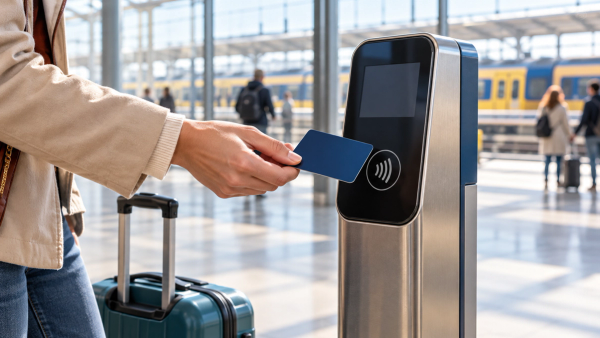
#If you travel in India even a little bit, you’ve probably had this mini heart attack. You scan the QR at a bus booking counter, railway cloakroom, hotel reception, ferry ticket window, airport snack shop, wherever. UPI app says processing... then something weird happens. Your bank SMS comes saying money debited, but the person at the counter looks at their phone and goes, “Sir/Madam, not received. Pay again.” Bas. Mood off. Suddenly you are not thinking about your trip anymore. You are thinking whether ₹280 or ₹2,800 just vanished into digital hawa.
This happened to me at a travel counter in a hill station bus stand, and honestly it was not even a big amount, but the stress was very real. I had paid for two seats on a shared cab going towards a popular trail point. The network was doing that typical mountain drama, one bar then no bar, then E suddenly appearing like it’s 2009. My UPI app froze after I entered PIN. I got a debit message from the bank. Counter uncle’s app showed nothing. Behind me there were people waiting, one guy was already making that impatient clicking sound with his tongue, and the driver was saying “jaldi karo bhai, late ho raha hai.” In that moment, paying again feels easier than arguing. But should you?
Short answer: don’t blindly pay again, but also don’t block your whole trip for ₹100
#I know that sounds like a very Indian answer, but travel is like that only. If UPI fails at a travel counter and your money is debited, first check whether the transaction is showing Success, Failed, or Pending in your UPI app. If it is clearly failed and money is not debited, pay again. If it is pending or debited but merchant has not recieved it, pause for a few minutes, take proof, and talk calmly. If it’s a small urgent amount and missing the bus/train/entry slot will cost you more, you may choose to pay again, but only after noting the transaction ID and getting the counter person’s number or receipt. If it’s a larger amount like hotel advance, flight baggage fee, taxi package, or activity booking, don’t rush. Ask them to check settlement or wait.
The annoying thing with UPI is that it usually works so smoothly that one failure feels personal. We are used to scan-pay-walk-away. But travel counters are not always in perfect network zones. Railway stations get crowded, bus stands have weak signals, airport basements can be patchy, mountain towns have sudden downtime, and some small operators use one personal QR for ten different services. So when a UPI transaction gets stuck, the counter staff may genuinely not see it, even if your bank has debited the money. Not everyone is cheating you. But also, don’t be too innocent. Both things can be true.
What actually happens when UPI shows pending or failed?
#UPI has a few moving parts: your app, your bank, the receiver’s bank, NPCI’s switching system, and the merchant app or QR account at the other end. When everything talks properly, payment is instant. When one part times out, your screen may show pending, the merchant may not get confirmation, and the bank may still debit your account temporarily. Most failed or timed-out UPI debits are reversed automatically by the bank as per regulated timelines, but the exact timing can vary. Sometimes it comes back in minutes. Sometimes later. Occasionally it takes a complaint through your UPI app or bank.
What you should not do is assume that “debited means paid.” At a counter, the practical proof is usually merchant confirmation. Their app notification, their transaction history, receipt, booking PNR, printed ticket, hotel booking entry, something. Your debit SMS is proof that money left your account, yes, but it doesn’t always prove the merchant got it. This is why that five-minute wait matters. I know, waiting at a hot bus stand with backpack straps cutting into your shoulder is not spiritual. But wait anyway.
The first 5 minutes: my exact travel-counter routine now
#- I stop pressing buttons. Seriously. No back-back-back, no repeated PIN, no trying three apps at once while panicking.
- I take a screenshot of the UPI screen, even if it says processing or pending. If screenshot is blocked, I note the UPI reference number or transaction ID from history.
- I check bank SMS or app notification. If the bank has not debited, it’s usually safe to retry after a minute or two.
- I ask the counter person to refresh their app or check transaction history, not just notification. Notifications fail more than people admit.
- If it’s debited from my side, I don’t pay again immediately unless the travel loss is bigger than the payment amount.
This sounds very organised now, but I learnt it after doing the opposite. At that hill bus counter, I paid again after hardly 30 seconds because driver was shouting. Later both payments were not counted, only one got reversed after some time, and I spent half the ride checking my bank app instead of looking at the valley. Waste of a good view, honestly.
When paying again makes sense, and when it’s a bad idea
#Let’s be real. If you’re buying a ₹40 tea and bun at a railway platform and UPI is stuck, don’t start a legal case with the tea guy. Pay cash if you have it, or pay again if you’re okay with possible temporary double debit. But if you’re paying ₹3,500 for a hotel room, ₹7,000 for a trek permit group booking, or a big taxi advance from Manali to Leh type scene, paying again without paperwork is risky. Travel counters are busy places. Staff changes. The person who said “refund ho jayega” may not be there in the evening.
| Situation | What I usually do | Why |
|---|---|---|
| Small amount under ₹100-₹200 | Pay cash or wait 2-3 minutes, then decide | Not worth missing transport or fighting |
| Train/bus ticket counter with queue | Ask for receipt only after confirmed payment | Ticket must be generated, debit SMS alone won’t help |
| Hotel or hostel check-in | Don’t pay again quickly if debited | Larger amount, easier to verify with manager |
| Airport counter fee | Wait and ask for supervisor or card option | Time pressure is high but receipts matter |
| Remote hill/beach area with weak signal | Prefer cash or card backup | UPI failures are more common when network is moody |
My personal rule is simple: if paying again will not hurt me and losing time will hurt more, I pay again but collect proof. If the amount hurts, I wait. And if the counter guy is acting too casual about a big double payment, I become very uncool very fast. Polite, but firm.
The proof you should collect before leaving the counter
#Before you walk away, collect something. Anything proper. Screenshot of your UPI transaction with date, time, amount, receiver name, UPI ID, and transaction reference number. A photo of the QR code can help too, especially if it’s a shop QR at a bus stand or cloakroom. If the counter person says payment not received, ask them to write “not received” on a slip with their phone number if the amount is large. They may laugh, but ask. At hotels, ask them to keep a note in the booking register or WhatsApp you that they didn’t recieve the first transaction. WhatsApp chats have saved me twice.
For railway station cloakrooms and newer digital luggage locker services, I’m extra careful because you may pay at one counter and collect from another person later. If you use station storage often, this comparison on Digital Luggage Lockers vs Railway Cloakrooms India is useful, especially for planning cash and ID proof before dumping bags and running for your train. In crowded stations, payment confusion plus luggage anxiety is a terrible combo. Been there, not fun.
Why travel counters are more prone to UPI drama
#UPI itself is solid most of the time. The problem is the travel environment. You are moving. The seller is rushed. Network is bad. The QR may be old or belongs to “Raju Travels” but the counter board says “Himalaya Tours & Taxi Union.” Sometimes the person taking payment is not the account owner. At tourist spots, one QR may be shared by brothers, cousins, staff, and the owner sitting somewhere else. In hotels, the reception phone may be logged into one app but the actual account belongs to the company account, so confirmation takes a minute.
- Hill stations: network congestion during weekends, rain, snow, and peak holiday rush can make UPI slow.
- Beaches and island routes: ferry counters and parking areas may have patchy signal, especially early morning or late evening.
- Railway stations: crowd load, basement counters, and fast-moving queues make people impatient.
- Airports: UPI usually works well, but some counters may prefer cards or cash for faster reconciliation.
- Highway dhabas and fuel stops: QR may work, but bank server issues at night are not unheard of.
Also, Indian travel has become very digital. Small homestays in Himachal, hostels in Goa, auto drivers in Jaipur, boat guys in Varanasi, everyone has QR now. That’s great. But it makes us overconfident. I’ve seen people travel with ₹120 cash and three UPI apps like that is a financial plan. Bro, no. Keep cash.
Cash, card, UPI: the backup triangle that saves trips
#For Indian trips, especially if I’m going beyond metro cities, I now carry three payment layers. UPI as main, debit or credit card as backup, and cash as emergency. Cash doesn’t have to mean carrying a thick bundle like some 90s movie villain. Even ₹2,000-₹5,000 split in different pockets/bag sections can save you during taxi strikes, network outage, temple town parking chaos, or early morning bus counters where the machine is “not working since yesterday.”
For budget stays, many hostels and basic lodges still accept UPI happily. Dorm beds in popular backpacker towns can be roughly ₹400-₹1,200 depending on season and location, while clean budget rooms often start around ₹1,200-₹2,500. In metro airports or tourist-heavy areas, don’t be shocked if basic hotels ask ₹3,000-₹6,000 and still have a receptionist saying “scanner slow hai.” Homestays in hill regions may ask advance by UPI and balance in cash after check-in. Always confirm payment mode before arrival, especially if you’ll reach late night.
A tiny habit: test your UPI before you really need it
#Before entering a remote route, I do one small payment somewhere safe: water bottle, chai, parking, whatever. It tells me if my SIM data is working, bank server is behaving, and UPI PIN is not locked. This is more important when you changed phones, installed a new UPI app, or switched SIM. If you’re travelling abroad and still depend on Indian SIM OTPs for UPI, bank alerts, or WhatsApp login, read this practical eSIM OTP Abroad Guide for Indian Travelers. Even within India, the same idea applies: don’t discover OTP problems at the counter when everyone is staring at you.
Seasonal travel tips because payment problems get worse in peak time
#Peak season doesn’t just mean higher hotel prices. It means loaded mobile towers, long queues, tired staff, and less patience everywhere. In hill stations, summer holidays and long weekends are the worst for last-minute cab and hotel payments. In Goa and coastal places, December-New Year period can be chaotic, with restaurants and shacks pushing quick payments. In pilgrimage towns, festival days and weekends see big crowd surges, and even buying locker tokens or prasad coupons can become a full mission. During monsoon, network and power cuts can hit smaller towns suddenly.
Best months depend on where you’re going, of course. For Rajasthan and central India, winter months are easier for comfort and sightseeing. For Himachal, Uttarakhand, Sikkim and other mountain areas, spring and autumn often feel calmer than peak summer holiday rush, though weather can still flip. For Kerala and Goa, shoulder seasons are nice if you don’t want peak prices. But payment-wise, my advice is same everywhere: before peak travel days, withdraw some cash, update UPI apps on Wi-Fi, keep bank customer care numbers saved, and don’t wait till the last petrol pump before a mountain climb to test your card.
At airports: don’t let UPI failure become a bigger mess
#Airport counters are a seperate kind of pressure. Excess baggage, seat change, food court bill, lounge access, cab kiosk payment, anything can trigger a failed transaction. The issue is time. You may have boarding closing, security line waiting, and one failed UPI can make you sweat like you ran from Andheri to T2. At airports, I prefer card for larger counter payments because receipts are clearer and charge dispute process is more formal. UPI is fine, but if it fails and money is debited, ask for a payment failure note or supervisor instead of just paying again and running.
Also, if you’re already dealing with airport counter stress, like online check-in not working or passport/name mismatch stuff, don’t stack payment confusion on top. This guide on International Flight Online Check-In Not Working? Passport, Visa & Name Fixes for Indian Travelers is worth reading before international trips. Reaching the airport early sounds boring until one small issue eats 40 minutes.
How to raise a complaint if the money doesn’t come back
#If your UPI payment was debited but not received by the merchant, first check transaction status in the same UPI app after some time. Many apps have “Raise dispute,” “Report issue,” or “Get help” inside transaction details. Use that, not random customer care numbers from Google search. Fake helpline scams are very common, and they love panicked travellers. Never share UPI PIN, OTP, card PIN, or screen-sharing access. No bank needs your UPI PIN to refund money. Please tattoo this in your brain.
When raising the complaint, keep it boring and factual: amount, date/time, transaction ID, receiver UPI ID/name, status shown, and whether merchant confirms not received. If you paid again, mention both transaction IDs. Banks and UPI apps generally route it through the proper dispute system. If the app says wait for settlement, wait. If the amount is big and delay is long, contact your bank through official app/website number. For travel, I also keep a note in my phone called “Payment issues” because after two days of sightseeing, all transaction times start looking same only.
One thing I’ve learnt: panic makes you pay twice, anger makes you forget proof, and overconfidence makes you travel with no cash. All three are expensive.
Food counters, local transport, and the small payments nobody thinks about
#UPI failures are not only about tickets and hotels. They happen at momo stalls, auto stands, parking gates, boating counters, ropeway snack shops, museum cafeterias, temple shoe stands, and those tiny “entry fee ₹20” counters where they have one faded QR pasted under plastic. Local food is honestly where I use UPI the most while travelling. Poha in Indore, litti chokha near railway stations in Bihar, thukpa in mountain markets, fish thali in coastal Karnataka, bun maska in old Irani cafes, all these small stops are part of the trip. But small vendors may not have time to verify pending payments. If they say not received and your app is stuck, either pay cash or wait aside without blocking their business.
Auto and taxi payments are another headache. If UPI fails after the ride, you’re standing on the roadside with luggage, driver wants to leave, you want to check-in, everyone is irritated. I usually ask before starting: “UPI chalega? Network hai kya?” If it’s late night arrival, especially at railway stations or bus stands, I keep cash ready. Safety-wise also, don’t stand too long outside arguing about payment with bags open and phone in hand. Move to a lit area, hotel lobby, or near security if needed.
What if the counter person pressures you to pay again?
#This is the tricky human part. Some counter people are helpful. Some are tired. Some act like your failed UPI is your moral failure. Don’t get bullied, but don’t become dramatic either. Say clearly: “Amount debit ho gaya hai, please check once. If not received, I’ll note both transaction IDs and pay again.” That one sentence shows you’re not refusing payment, you’re just protecting yourself. If they still push, ask for a receipt for the second payment and write down the first failed transaction reference. If they refuse to give any receipt for a big amount, red flag.
In tourist-heavy places, I’ve also noticed a funny thing. The moment you say “transaction ID note kar leta hoon,” people suddenly check properly. Not always, but many times. Because now it’s documented. Again, most folks are honest, but travel is messy and cash counters are messy. Documentation is your seatbelt.
My final rulebook, after too many scanner moments
#- If UPI says processing, wait. Don’t keep retrying like you’re playing a mobile game.
- If money is debited, collect proof before paying again.
- For small urgent payments, pay again only if you can afford temporary double debit.
- For hotel, tour, cab, airport, or large booking amounts, ask for manager/supervisor and written acknowledgement.
- Keep cash. Not optional, especially outside big cities.
- Use official app dispute options. Don’t call random “UPI refund” numbers online.
- Save screenshots when network returns. Sometimes apps don’t load history properly in low signal.
So, pay again or wait?
#My honest answer: wait first, verify, then decide based on amount and urgency. UPI failure at a travel counter is not rare, and it doesn’t automatically mean your money is gone. But paying again without proof is how small travel stress becomes a proper headache. If your bus is leaving and it’s ₹80, fine, be practical. If it’s your hotel bill or cab package, slow down. Your trip matters, but your money also matters. Both can be protected with a little patience and screenshots.
These days, when I travel, I still use UPI everywhere because it’s too convenient yaar. But I don’t treat it like magic anymore. I carry cash, I keep a card, I test my apps, and I don’t feel shy asking counters to check properly. That one awkward minute can save you hours of follow-up later. Anyway, if you’re planning trips around India and like these practical, slightly real-world travel tips, keep browsing AllBlogs.in. There’s always some small lesson from the road that nobody tells you until it happens to you.