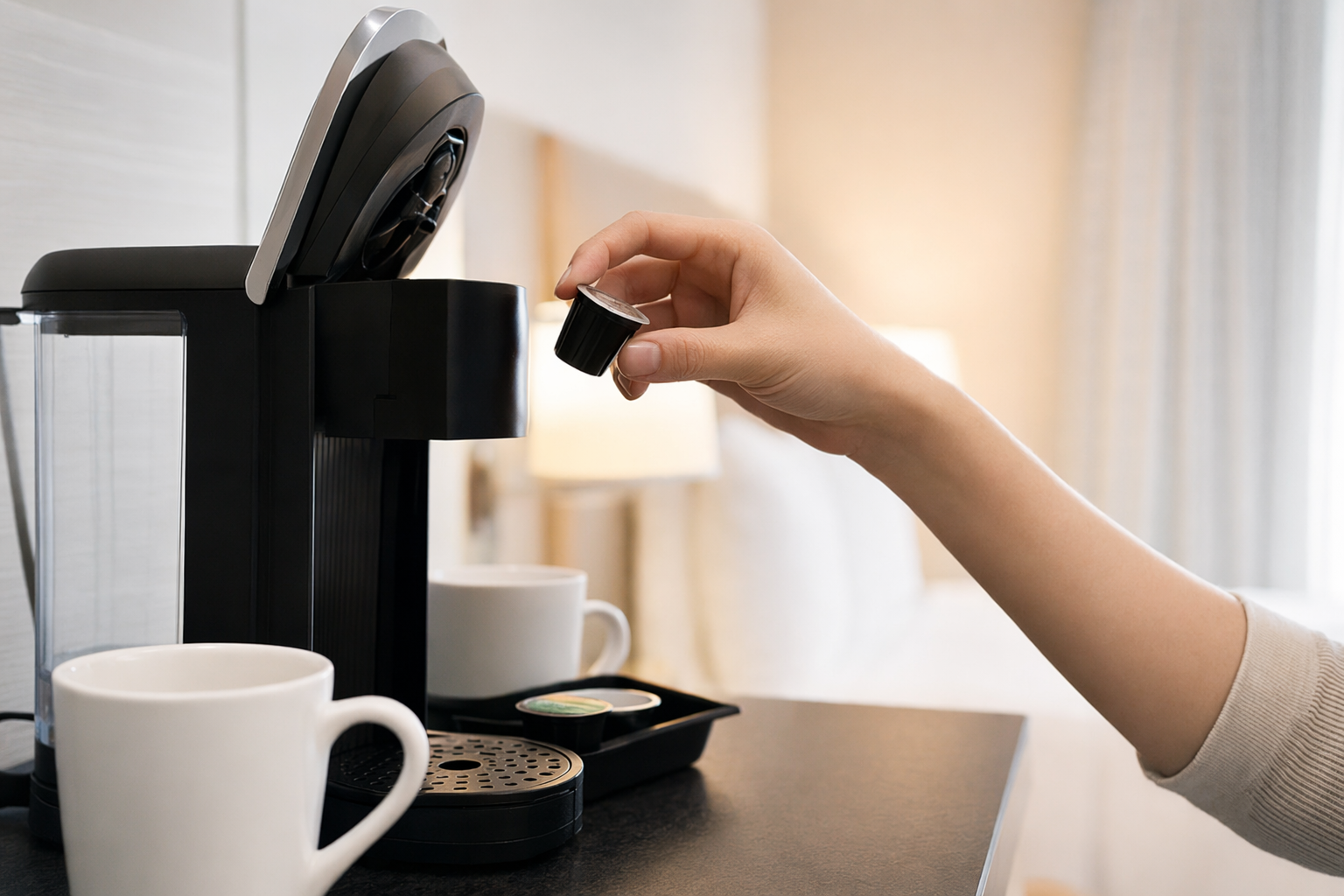
I have a slightly embarrassing travel habit. Before I check the view, before I test the bed, before I even figure out where the weird light switch is hiding, I walk over to the hotel coffee maker and stare at it like it owes me money. Because honestly? Sometimes it does. That little machine can be the difference between a dreamy first morning in Lisbon with a custard tart in hand, or me wandering around half-awake, trying not to snap at a perfectly innocent bakery clerk because I haven’t had caffeine yet. I love food travel with my whole heart, but hotel-room coffee is where romance and reality crash into each other. It’s convenient, yes. It’s also kind of suspicious. Safe or skip? My answer has changed over the years, and not because I became fancy. Well, maybe a tiny bit fancy.
The short version: I don’t automatically trust hotel coffee makers anymore. I don’t automatically avoid them either. It depends on the machine, the room, the trip, and frankly how desperate I am. A clean-looking kettle in a Japanese business hotel? Probably fine after a rinse and boil. A dusty pod machine sitting beside the bathroom sink in a roadside motel after a ten-hour drive? Absolutely not, my friend. I’ll drink gas station coffee first, and I’ve had some gas station coffee that tasted like it was filtered through a sad sock.
The Morning in Portland That Ruined Me a Little
#Years ago in Portland, Oregon, I stayed in this cute little boutique hotel that had local art on the walls, a lobby that smelled like cedar, and a room coffee setup that looked adorable from across the room. Tiny ceramic mugs. A local roaster’s name printed on the packet. Very charming. Then I opened the water reservoir. There was a faint musty smell, like a wet towel forgotten in a gym bag, and a tiny ring of mineral gunk around the inside. Not dramatic. Not horror-movie level. Just enough to make me go, nope. I put on shoes and walked six blocks in the rain to a cafe instead. Best decision. I had a silky cappuccino and a breakfast sandwich with jammy egg, sharp cheddar, and some kind of peppery aioli I still think about when I’m bored in airport lounges.
That’s when I started paying attention. Not in a paranoid way, although my friends say I do have strong opinions about damp plastic. But I realised that coffee makers are basically little warm, wet caves. Water reservoirs, drip trays, pod chambers, tubing you can’t see. If hotel housekeeping is stretched, and let’s be real, they often are, that machine may not be getting the deep clean it needs. The room can look spotless and the coffee maker still be the forgotten corner of the whole operation.
So, Are Hotel Coffee Makers Actually Gross?
#They can be. That doesn’t mean every cup is dangerous. It means the risk is uneven. Coffee makers have areas that stay damp, and damp plus warmth is where mold, yeast, and bacteria can hang out. The water gets hot, sure, but most machines are designed to brew coffee, not sterilize mystery grime. A proper brewing temperature makes better coffee, but it doesn’t magically disinfect every inner tube, splash zone, and reservoir wall. If the machine has old water sitting in it, or coffee residue in the pod chamber, or a drip tray that looks like it hosted a science fair, I’m skipping it.
There’s also the human factor, which is where travel gets messy. People use hotel coffee makers for things that are not coffee. Instant noodles. Oatmeal. Heating water for baby bottles. I have even heard stories of people running weird stuff through them to clean things, and I wish I could un-know that. Food allergies matter too. If someone brewed flavored pods, tea, or who-knows-what, residue may be left behind. Most healthy adults probably won’t get sick from a normal hotel coffee maker that’s been reasonably maintained, but if you’re pregnant, immunocompromised, traveling with a baby, or just prone to stomach issues on the road, I’d be more cautious.
My Little Coffee Maker Inspection Ritual
#I’m not traveling with test strips or anything. I’m not that person. But I do a quick five-minute check, and it has saved me from some truly questionable cups. First, I look inside the reservoir if it opens. Clear plastic should look clear, not cloudy or slick. Then I smell it. I know that sounds dramatic, but the nose knows. Musty, sour, burnt plastic, old coffee stink? Skip. I check the pod area or basket for old grounds, stains, dried splatter, or that crusty brown film that looks like someone abandoned espresso syrup in there. Then the drip tray. If the tray is gross, I assume the rest is not lovingly maintained.
- If there’s standing water in the reservoir, I dump it and think twice.
- If the machine is in the bathroom, especially near the toilet, I usually skip. Sorry, but no.
- If the cups are unwrapped and dusty, I wash them or use my own bottle.
- If the hotel provides a kettle and it looks clean, I prefer that over a pod machine.
- If anything smells like mildew, I’m out. I don’t negotiate with mildew.
When I do use it, I run one or two plain-water cycles first. With a kettle, I boil and dump the first round. If removable parts can be washed with soap, I wash them. Sometimes I use bottled water, especially in places where the tap water isn’t recommended for visitors. None of this makes it laboratory-perfect, but travel is about managing risk, not living in a bubble. I’ve eaten grilled sardines with my fingers on a dock in Portugal and drank fermented mare’s milk in Central Asia once, so clearly I am not against adventure. I just don’t want adventure growing inside a coffee reservoir.
The 2026 Coffee Travel Thing: We’re All Pickier Now
#One thing I’ve noticed in 2026 food travel is that people care way more about morning drinks than they used to. Breakfast isn’t just a hotel buffet anymore. Travelers are building whole mornings around coffee walks, bakery maps, matcha bars, neighborhood markets, and local roasters. Specialty instant coffee has gotten shockingly good. Coffee bags, the kind that steep like tea, are everywhere in carry-ons. I’ve met travelers who pack collapsible pour-over cones, hand grinders, and little tins of beans from home like they’re smuggling treasure. Honestly, I respect it.
Hotels are trying to keep up. More places are partnering with local roasters, putting proper espresso bars in lobbies, or offering better in-room capsule systems with compostable pods. Some luxury hotels now treat coffee like wine, with origin notes and brewing methods and all that delicious nerdy stuff. At the same time, budget hotels still often rely on machines that get heavy use and not enough love. That’s the split. Travel coffee has improved massively, but the hygiene gap is still real. The same trip can give you a perfect flat white in a lobby cafe and a suspicious in-room brewer upstairs.
When I Skip the Machine and Go Eat the City Instead
#Skipping the hotel coffee maker has led me to some of my favorite food memories. In Mexico City, I left my room uncaffeinated and slightly grumpy, then ended up with cafe de olla served in a clay cup, sweet with piloncillo and cinnamon, next to a plate of chilaquiles verdes that woke up my entire soul. In Rome, I ignored the little capsule machine and stood shoulder-to-shoulder at a bar for espresso and a cornetto, doing that awkward tourist thing where you’re not sure if you pay first or after. In Hanoi, I went out for egg coffee, thick and sweet and almost dessert-like, and then followed it with pho because breakfast rules are fake when you travel.
And in Tokyo, forget it. I am not wasting my morning on a hotel pod when I can sit in a kissaten with dark wood walls, toast cut thick as a paperback, butter melting into every corner, and coffee poured like the person making it has all the time in the world. That’s the thing about food travel: inconvenience often becomes the point. A five-minute walk turns into a market. A market turns into a snack. A snack turns into a conversation with someone who tells you where to get lunch. Suddenly the hotel coffee maker has lost its power over you.
But Sometimes You Need Room Coffee, and That’s Okay
#I don’t want to be smug about this. There are mornings when leaving the room is not cute. Early flights. Rain that sounds personal. Kids still asleep. Work calls with people in three time zones. That time in Reykjavik when the wind was hitting the window so hard I thought the building was being personally insulted by the weather. On those mornings, if the machine passes my little inspection, I’ll use it. I’ll run hot water through it, make the coffee, and be grateful. Not every travel moment has to be artisanal. Sometimes you just need caffeine in pajamas.
The safest hotel-room option, in my opinion, is a clean electric kettle with sealed tea or coffee bags. Kettles are easier to inspect, easier to rinse, and boiling water gives me more confidence than a machine pushing hot water through hidden parts. My travel kit now includes a few single-serve specialty instant packets, herbal tea, and sometimes instant miso soup, because a salty little cup of miso at midnight can feel like a hug after a delayed flight. I also carry a lightweight reusable cup. Not glamorous, but useful.
Food Safety Rules I Actually Follow, Not the Fantasy Ones
#Here’s where I land after years of eating my way through cities and occasionally making bad beverage choices. If the coffee maker looks clean, smells neutral, has no old water, no visible buildup, and I can run a few water cycles, I’ll probably use it. If I’m in a well-kept hotel where housekeeping standards seem solid, that helps. If I’m already dealing with jet lag, a sensitive stomach, or a packed food itinerary, I’m more conservative because nothing ruins a culinary trip like spending the afternoon near a bathroom while your friends eat dumplings without you.
- Use your senses first. Look, smell, and don’t ignore slime, film, stains, or funky odors.
- Run plain water through before brewing, especially with pod machines.
- Use sealed cups or wash mugs with hot water and soap if you can.
- Don’t use hotel coffee makers for baby formula, medical needs, or anything where cleanliness really matters.
- If the room feels poorly cleaned overall, trust that clue. The coffee maker is probably not the exception.
My rule is simple: if I wouldn’t drink from it at a friend’s house, I’m not drinking from it in a hotel room just because I’m wearing slippers.
The Weirdest Coffee Setup I’ve Seen
#In a hotel near a train station in Belgium, I found a pod machine wedged on a shelf directly above the minibar, with the cord stretched behind a curtain and the water tank half full. The pods were nice, actually, from a recognizable European brand, and for one second I thought, maybe. Then I opened the pod chamber and saw old punctured foil bits and a brown sticky smear. I laughed out loud, which is maybe not normal behavior alone in a hotel room, but travel makes you strange. I skipped it and walked to a bakery where I got coffee and a warm waffle with pearl sugar that crackled between my teeth. That waffle was better than any room coffee could have been. Like, not even close.
Another time in Singapore, the room had a spotless kettle, sealed TWG tea bags, instant coffee sachets, and little packets of kaya for toast. That felt different. I made coffee in the room while looking out at the city, then went downstairs later for kaya toast and soft-boiled eggs with soy sauce and white pepper. That morning reminded me that hotel-room drinks aren’t always the villain. Sometimes they’re just the opening act.
Local Breakfasts Beat Mystery Machines Almost Every Time
#If you’re traveling for food, breakfast is where the good stuff hides. In Istanbul, go find simit, menemen, olives, cheese, honey, and tea in tulip-shaped glasses. In Oaxaca, get tamales from a morning market and drink hot chocolate made with water, not milk, if you want it the local way. In New Orleans, yes, get chicory coffee and beignets, but also go deeper: shrimp and grits, biscuits, gumbo if you can handle it early, which I absolutely can. In Copenhagen, I still think about cardamom buns and filter coffee so clean it tasted like someone had polished the morning.
This is where the newer travel trend of “eat the neighborhood” really makes sense. People aren’t just chasing famous restaurants anymore. They want the bakery with a line of locals, the market stall with one dish, the roaster tucked behind a bike shop, the hotel concierge’s actual favorite noodle place rather than the polished recommendation card. Skipping in-room coffee can nudge you outside, and outside is where travel begins. Slightly annoying before caffeine, yes, but worth it.
What About Fancy Hotels?
#Fancy doesn’t always mean clean, but it usually means better systems. I’ve stayed in higher-end hotels where the coffee station was immaculate, with sealed capsules, fresh bottled water, wrapped cups, and housekeeping clearly checking the machine daily. I’ve also stayed in a beautiful hotel where the lobby had marble everything but the in-room brewer had old water inside, so there you go. My judgement is not based on price alone. It’s based on evidence. Is the machine maintained? Are the supplies sealed? Is there dust? Does it smell okay? Does the hotel seem to care about small details?
A lot of upscale properties are also moving toward lobby coffee service, partly because it’s better hospitality and partly because it avoids the sad little in-room pod situation. I love this. Give me a proper cappuccino downstairs, maybe a pastry from a local baker, and I’ll forgive a lot. Hotels that connect travelers to local food culture win me over fast. A croissant from a nearby bakery in Paris, pão de queijo in Brazil, congee in Hong Kong, idli and filter coffee in South India. That’s what I want from a hotel breakfast now: place, not just calories.
My Packable Coffee Backup for Food Trips
#Because I’m ridiculous but practical, I now pack a tiny caffeine emergency kit. Nothing huge. A few good instant packets, coffee bags, sometimes a tea I actually like, and electrolytes because travel dehydration is sneaky. If I’m going somewhere known for great beans, like Colombia, Ethiopia, Japan, or Australia, I leave extra space because I know I’ll bring coffee home. In Melbourne, I bought beans after one flat white and acted like I had discovered fire. In Colombia’s Coffee Triangle, drinking coffee near where it grows made hotel coffee taste even more tragic afterward. Once you’ve had fresh coffee in the hills around Salento, a dusty room pod is a tough sell.
The other backup is asking the front desk. People forget this. If the machine looks grim, ask if they can replace it or clean it. Sometimes they will. Sometimes they’ll send up a kettle. Sometimes they’ll point you to free coffee in the lobby, which might be fresher anyway. Be nice, obviously. Hotel staff are not personally responsible for your caffeine crisis, even when your brain says they are.
Safe or Skip? My Honest Verdict
#So, hotel coffee maker hygiene: safe or skip? For me, it’s “inspect, then decide.” Safe-ish if the machine is clean, dry, odor-free, maintained, and you run a rinse cycle. Skip if it’s dirty, damp, musty, in the bathroom, full of standing water, or if you’re traveling with anyone vulnerable. Skip if you’re going to use the hot water for baby formula or anything medical. Skip if your gut says no. Your gut is useful before it becomes the problem.
But also, don’t let fear steal the joy from travel. Food travel is always a dance between curiosity and caution. I’ll eat street food when it’s hot and busy and beloved by locals. I’ll try unfamiliar dishes. I’ll sit at counters, point at menus, and make a fool of myself ordering in languages I barely speak. But I am not obligated to drink stale coffee from a machine that smells like a basement. There are better adventures waiting outside the hotel door.
Final Sip
#My best advice is this: make the hotel coffee maker earn your trust. If it passes, fine, enjoy that quiet pajama coffee. If it doesn’t, take it as a sign to go find the city’s real breakfast. Some of my favorite travel meals started with me rejecting a questionable machine and walking out hungry: egg coffee in Hanoi, espresso in Rome, cardamom buns in Copenhagen, kaya toast in Singapore, cafe de olla in Mexico City. A clean cup matters, but so does the story around it. And honestly, the story is usually better once you leave the room. If you’re into these slightly obsessive food-and-travel rabbit holes, I’d poke around AllBlogs.in too, there’s always something there to make you hungry for the next trip.