
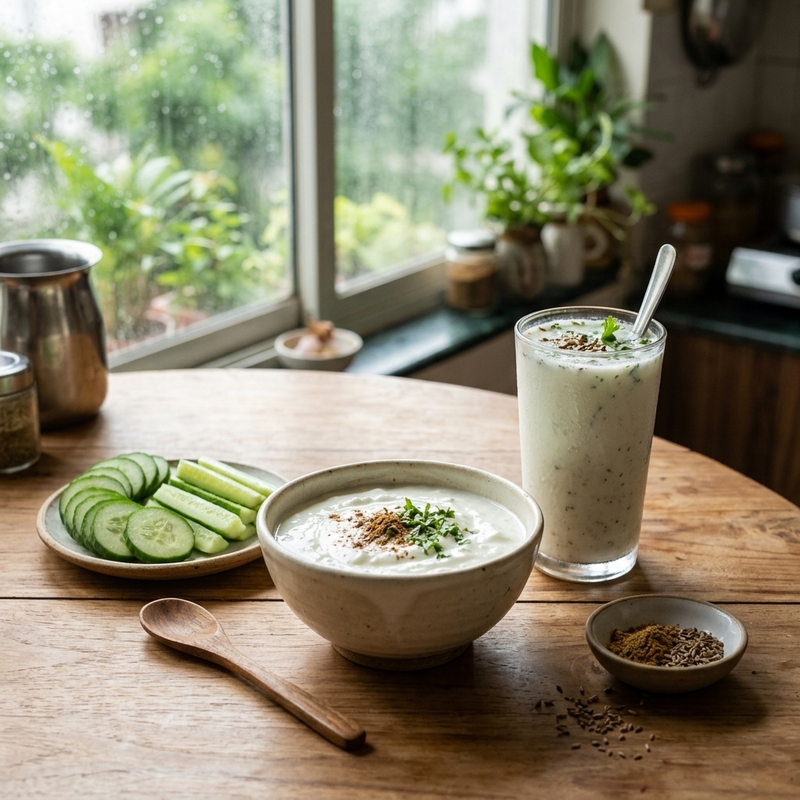
Curd, or dahi, belongs in almost every Indian kitchen. It cools down spicy meals, becomes raita, turns into chaas, completes curd rice, and somehow appears whenever lunch feels incomplete. But the moment summer turns humid or monsoon begins, the same bowl becomes confusing: is curd heat or cold for the body?
The practical answer is simple: curd feels cooling when you eat it, but it is not always cooling for digestion. Fresh curd, especially when eaten during the day or diluted into chaas, can feel light and soothing for many people. But Ayurveda often treats curd as heavy, sour, fermented, and potentially heating after digestion, especially when it is thick, sour, chilled, eaten at night, or eaten during damp weather.
Quick answer
#Curd is cold in feeling, but not always cooling in digestion. It feels cool because it is moist, soft, often refrigerated, and commonly mixed with rice, cucumber, mint, coriander, water, or roasted cumin. That is why curd rice, raita, and chaas feel so comforting in hot weather.
But Ayurveda looks beyond first sensation. It considers taste, heaviness, fermentation, and the post-digestive effect. From that view, dahi can be heavy and heating for some people. The safest everyday approach is fresh curd or chaas in small daytime portions, while avoiding sour, stale, chilled, or night-time curd if you have acidity, mucus, cough, or weak digestion.
Why curd feels cooling
#Most people eat curd cold or cool. When cold curd touches the tongue, throat, and stomach, it naturally gives a cooling sensation. That physical cooling is real, but it is temporary. It does not always mean the curd will be light or easy to digest later.
Curd is also rarely eaten alone in summer. It becomes cucumber raita, curd rice, chaas, or a cooling side with pulao or paratha. In those dishes, the cooling effect often comes from the full combination: water, rice, cucumber, mint, cumin, coriander, and a smaller amount of curd.
Chaas is usually lighter than thick curd because it is diluted and churned. If your goal is hydration and digestive comfort in hot weather, lightly spiced chaas may suit you better than a large bowl of plain dahi. For a closer comparison, read the AllBlogs guide on buttermilk vs curd in summer.
Why Ayurveda may call curd heating
#Ayurveda does not treat milk and curd as the same food. Once milk becomes curd, its qualities change. Curd is fermented and mildly sour when fresh. If it becomes old or very sour, it can feel sharper and may trouble people who are sensitive to acidity, heat, or digestive discomfort.
Curd is also denser than chaas. A few spoons with lunch may be fine, but a big bowl of thick curd after a heavy meal can feel too much. If your digestion is slow, or if you eat curd late at night, you may notice heaviness, burping, bloating, acidity, sleepiness, or a coated feeling in the throat the next morning.
Some people also notice more mucus, cough, blocked nose, or throat irritation after eating chilled curd. Curd does not cause cough or cold in everyone, but if your body repeatedly reacts that way, especially during monsoon or at night, it is sensible to reduce or avoid it.
Curd in summer
#Curd in summer can be useful when it is fresh, mildly set, and eaten in the right quantity. The mistake is assuming that more curd means more cooling. A big bowl of thick, sour curd may actually feel heavy or acidic for some people.
Choose fresh curd, avoid curd that smells too sharp or tastes very sour, and eat it during the day rather than late at night. Lunch is usually the best time because digestion is more active and the body has time to process it before sleep.
If chilled curd irritates your throat, let it come closer to room temperature or choose chaas instead. Do not force cold curd just because it is popularly called cooling.
Curd in monsoon
#Curd in monsoon needs more care. The rainy season is humid and damp, and many people experience slower digestion, cough, throat irritation, or stomach infections. This does not mean everyone must stop curd completely, but freshness, timing, and quantity matter more.
Avoid sour, stale, or poorly stored curd. Avoid thick chilled curd at night. If you still want curd in monsoon, have a small daytime portion and add simple digestive spices like roasted cumin, black pepper, ginger, coriander, or curry leaves. For a deeper seasonal guide, see the AllBlogs article on whether curd is safe to eat in monsoon.
Best time to eat curd
#The best time to eat curd is usually during the day, preferably with lunch. Morning curd may suit some people in small amounts, but avoid it if it causes mucus, acidity, or heaviness. Evening and night are less ideal for thick curd, especially if digestion is slow or the curd is chilled or sour.
You do not need a large bowl daily. A few spoons of fresh curd, a small serving of raita, or a glass of chaas may be enough. If you are eating curd mainly for cooling, chaas is often the lighter choice.
How to eat curd without upsetting digestion
#Keep curd fresh, keep the portion small, and dilute it when possible. If plain curd feels heavy, churn it with water into chaas. Add roasted cumin, coriander, ginger, mint, or a pinch of salt if those suit your body. Skip spices that worsen your acidity.
Avoid sour curd if you have acidity, heartburn, reflux, sour burps, throat irritation, or bloating. Fresh chaas may suit some people better, but if even that causes discomfort, avoid it and speak to a doctor if symptoms keep returning.
When to choose buttermilk instead of curd
#Choose chaas instead of thick curd when the weather is very hot, when you want something hydrating, when thick curd feels heavy, when you are prone to acidity after sour foods, or when it is monsoon and you still want something dahi-based. But freshness still matters: chaas made from sour or spoiled curd is not a good idea.
Cautions
#This article is for general health information only. It is not a diagnosis, treatment plan, or replacement for medical advice. Curd may be easier to digest than milk for some people, but it is still dairy. If you have lactose intolerance, dairy allergy, recurrent acidity, severe diarrhea, vomiting, fever, suspected food-borne illness, or persistent symptoms, get medical guidance.
Do not treat curd like medicine. It may support digestion for some people, but it should not be used as a treatment for severe illness, dehydration, or food poisoning symptoms.
Conclusion
#So, is curd heat or cold? The most useful answer is: curd feels cooling, but it is not always cooling for digestion. It feels cool because it is soft, moist, often chilled, and commonly eaten with rice, cucumber, mint, or water. But Ayurveda may describe it as heating because it is sour, fermented, and heavy after digestion.
For everyday eating, keep it simple: eat fresh curd, prefer daytime, avoid sour or stale curd, keep portions small, and choose chaas when you want something lighter. Be extra careful during monsoon, at night, during acidity, or when you have cough, mucus, or throat congestion.