I used to think jet lag was just being sleepy on vacation. Like, okay fine, have a coffee, power through the museums, done. Nope. Not even close. The first time I flew from India to Europe for a work trip, I landed feeling weirdly confident and by 3 pm local time I was basically a zombie standing in front of a very beautiful church with a headache, dry skin, zero apetite, and that floaty feeling where your brain is awake in one timezone and your body is absolutely not. Then Japan happened later, and wow... eastbound travel really humbled me. If you're flying from India to Europe or Japan, the time shift doesn't look massive on paper every time, but it can still mess with sleep, digestion, mood, blood sugar, workouts, and honestly your whole vibe.
This post is my practical, slightly obsessive, health-nerd guide for Indian travelers. Not doctor advice, obviously. But I do read a lot, I test things on myself probably more than I should, and I've tried to keep this grounded in current sleep and circadian health research that's still being talked about in 2026. The short version is this: jet lag is a circadian rhythm mismatch. Your internal clock is still on India time while the sun, meals, social cues, and bedtime at your destination are saying something else. Newer sleep medicine guidance still keeps coming back to the same pillars - light timing, sleep timing, meal timing, movement, hydration, and cautious use of melatonin. Kinda boring, maybe. But boring things work.
First, the India to Europe vs India to Japan thing is not exactly the same
#This matters more than people think. Flying from India to most of Europe usually means going west by about 3.5 to 4.5 hours depending on daylight saving time and where in Europe you're headed. That can still be annoying, but westward travel is often easier because you're basically stretching the day a bit. Your body tends to handle a longer day better than forcing sleep earlier. India to Japan is the opposite direction and usually about 3.5 hours ahead of IST, and eastward travel is the annoying cousin. You need to fall asleep earlier than your body wants to, and for a lot of us that is the hard part.
I know, 3.5 or 4.5 hours doesn't sound as dramatic as India to the US. But even a shift of 2 to 3 hours can hurt sleep quality and daytime performance, and newer discussions in travel medicine keep emphasizing that 'mild' jet lag is still jet lag if you've got meetings, long train rides, a wedding schedule, or you're trying to enjoy your holiday without feeling half-dead. Also, Indian travelers often take overnight flights, airport meals are random, and many of us start the trip already underslept. So the problem begins before takeoff, basically.
What I do 3 days before flying, and yeah this part actually helps
#The biggest mistake I made for years was trying to fix jet lag after landing. By then, you're already behind. Now I start 2 to 4 days before departure, depending on how important the trip is. If I'm going to Europe, I shift my bedtime and wake time a little later by maybe 30 to 45 minutes per day if possible. If I'm going to Japan, I do the opposite and move both earlier. Not perfectly. Life happens. But even a small shift helps reduce the shock.
- For Europe: I get a bit more evening light, avoid going to bed too early, and don't force a 5 am wake-up the week before
- For Japan: I start dimming lights earlier, cut late-night scrolling, and try to wake a bit earlier so the destination bedtime doesn't feel impossible
- I also stop pretending I can 'bank sleep' in one night. What helps more is getting decent sleep for several nights before travel, because sleep debt makes jet lag feel worse
There've also been a lot of 2025-2026 wellness conversations around circadian-friendly routines, and honestly some of it is trendy packaging around old science, but not all of it is fluff. Morning light exposure, consistent sleep/wake time, and limiting bright light at the wrong time are still among the most evidence-backed tools we have. Fancy supplements are less impressive than your own eyeballs seeing natural light at the right time. Thats just true.
The flight itself - my not-fancy routine for arriving less wrecked
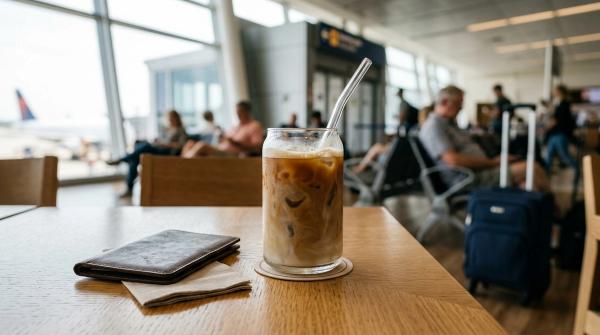
#I used to treat flights like a free-for-all. Movies till 4 am, salty snacks, one tiny water, then coffee, then another coffee because airport coffee somehow doesn't count in our heads. Terrible idea. Cabin air is dry, usually around very low humidity, and that contributes to dehydration-ish symptoms like dry mouth, fatigue, headache, and crankiness. Dehydration is not the same thing as jet lag, but it makes jet lag feel nastier. So now my in-flight goal is simple: keep the basics stable.
- I drink water regularly, not in a heroic gallon-chugging way, just steadily
- I limit alcohol. Honestly this was painful to accept because airport wine feels glamorous for about 12 minutes. But alcohol worsens sleep quality and can increase nighttime wakeups
- I go easy on caffeine in the second half of the flight if I need to sleep soon after landing
- I wear compression socks on longer flights because swollen ankles are gross and because movement + circulation matter, especially if you're sitting for hours
- I get up, stretch, rotate ankles, walk a bit when safe. Not because I'm some inflight yogi, just because my back starts filing formal complaints otherwise
For meals, I try to eat in a way that roughly matches the destination clock by the second half of the flight. Research is still evolving on meal timing and circadian alignment, but more sleep specialists now talk about food timing as one of the 'secondary time cues' for the body. It's not magic, though. Don't force a giant meal if your stomach is upset. I usually choose lighter, protein-plus-carb meals and skip super greasy stuff. Indian stomach + travel stress + weird airplane timing is... not a graceful combo.
Should you sleep on the plane? Um, maybe. Depends when you land
#This is where people want a one-line answer and I annoyingly don't have one. If I'm landing in Europe in the morning or midday after an overnight flight, I try to get some sleep on the plane, even if it's ugly broken sleep with an eye mask and neck pillow that's never as comfy as the ads promise. If I'm landing in Japan and it's evening local time, I don't want to overdo plane sleep and then be wide awake at 1 am in Tokyo staring at the hotel ceiling thinking about ramen.
A rough rule that helps me: sleep on the plane if it supports the first night at destination, not just because you're tired in the moment. Eye mask, earplugs or noise-canceling headphones, neck support, and a hoodie have made a bigger difference for me than any 'sleep hack' from social media. Also, if you snore badly, gasp in sleep, or are constantly exhausted after flights and at home too, it might be worth asking a doctor about sleep apnea. Travel can expose sleep issues you already had.
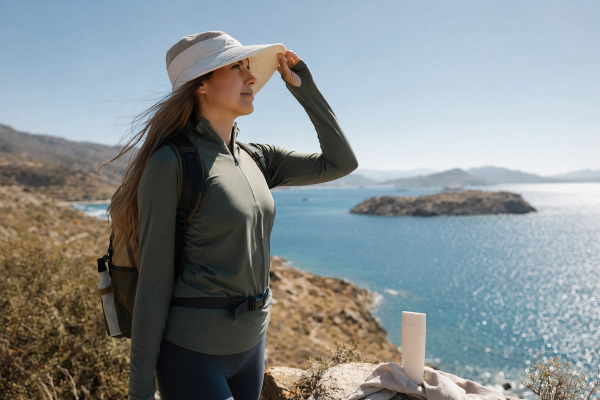
The single biggest lever after landing is light. Seriously, light.
#If you remember only one thing from this whole ramble, make it this. Light is the strongest signal to your brain's circadian clock. Recent guidance in circadian and sleep medicine still puts timed light exposure right at the center of jet lag management in 2026. Morning light generally helps shift you earlier, evening light helps shift you later. Which one you need depends on direction of travel and when you want your body clock to move.
For Europe from India, because you're usually going west, getting some later-day light can help if you're trying to stay up till local bedtime. For Japan from India, morning light after arrival often helps advance your clock earlier. But here's the tiny caution - the exact ideal timing can vary, and if you do bright light at the wrong time it can push your clock the wrong way. For a 3.5 to 4.5 hour shift, you do not need to become a circadian mathematician. Keep it simple: get outside in local daylight early in the day for eastward trips, and stay active with afternoon/evening light for westward trips, while avoiding super bright light late at night when you're trying to sleep.
My personal rule is stupid-simple: after landing, I go outside as soon as practical. No sunglasses for a short while if it's comfortable and safe, face the daylight, walk a bit, let my brain get the memo that we are not in India anymore.
What about melatonin? Helpful sometimes, but don't treat it like candy
#Melatonin is probably the most talked-about jet lag supplement, and also one of the most misunderstood. It's not a knockout sleeping pill. It's a hormone signal that can help tell your body it's nighttime, and it tends to work best for shifting timing, especially for eastward travel like India to Japan. Lower doses often make more sense than mega-doses. A lot of sleep doctors still lean toward small doses taken at the right local time rather than randomly taking a huge tablet and hoping for unconsciousness.
What I've done, after reading way too much and discussing it with a clinician once, is use a low dose close to local bedtime for the first few nights when traveling east. For Europe, I usually don't need it unless my sleep gets really messy. But please, if you have epilepsy, are pregnant, take blood thinners, have autoimmune issues, take sedating meds, or have any condition where supplement interactions matter, ask a doctor or pharmacist first. Also buy it from a reliable source because supplement quality can be all over the place. That's still a problem in 2026, unfortunatly.
Naps are tricky little devils
#I love a nap. Spiritually, emotionally, deeply. But naps can either save your day or destroy your night. If I land and feel disgusting, I let myself do a short nap, around 20 to 30 minutes, maybe 90 minutes if it's truly desperate and early enough in the day. What I don't do anymore is the accidental 4-hour coma from 5 pm to 9 pm, followed by being fully alert at 2 am and questioning every life choice that brought me there.
For Europe, a short nap on arrival day can be okay if it helps you make it to local bedtime. For Japan, where I often need to sleep earlier than my body wants, late naps are even riskier. If you can safely stay awake till a reasonable local bedtime with daylight, movement, and a normal meal, that's usually better. Usually. Travel days are chaotic and sometimes survival mode wins.
Food, gut health, and why jet lag messes with your stomach too
#This part gets ignored, and I kinda hate that. Jet lag is not just about sleep. Your digestion has circadian rhythms too. Which explains why I can be starving at weird hours, constipated on travel days, bloated after landing, or hungry at 3 am for no sane reason. There is growing interest in the gut-circadian connection, and by 2026 it's pretty mainstream in wellness circles, though some people overstate it. Still, the practical takeaway is solid: your stomach likes routine more than airports do.
- Try to eat according to the destination clock as soon as you can
- Aim for a normal breakfast in local morning time, especially after eastbound travel
- Include fiber, fruit, yogurt/curd if available, oats, eggs, dal, rice, soup - simple things your gut won't fight you on
- Go easy on very spicy, deep-fried, or super sugary meals the first day if your stomach is already off. I say this as an Indian who loves spicy food, so this advice pains me lol
I also carry easy backup snacks from home or the airport - nuts, roasted chana, a protein bar I know my body tolerates, maybe plain crackers. Because arriving hangry in a new city is where all wellness plans go to die.
Exercise helps, but please don't try to punish the jet lag out of your body
#For some reason I once thought landing in Europe and immediately doing a hard gym workout would 'reset' me. It reset me into soreness and rage, that's what it did. Movement helps with circadian adaptation, mood, stiffness, and blood sugar, yes. But the keyword is movement, not punishment. Newer wellness trends are very into zone 2, recovery walks, and nervous-system-friendly training, and honestly for travel days I think that's smart. Save the heroic workout for when you've actually slept.
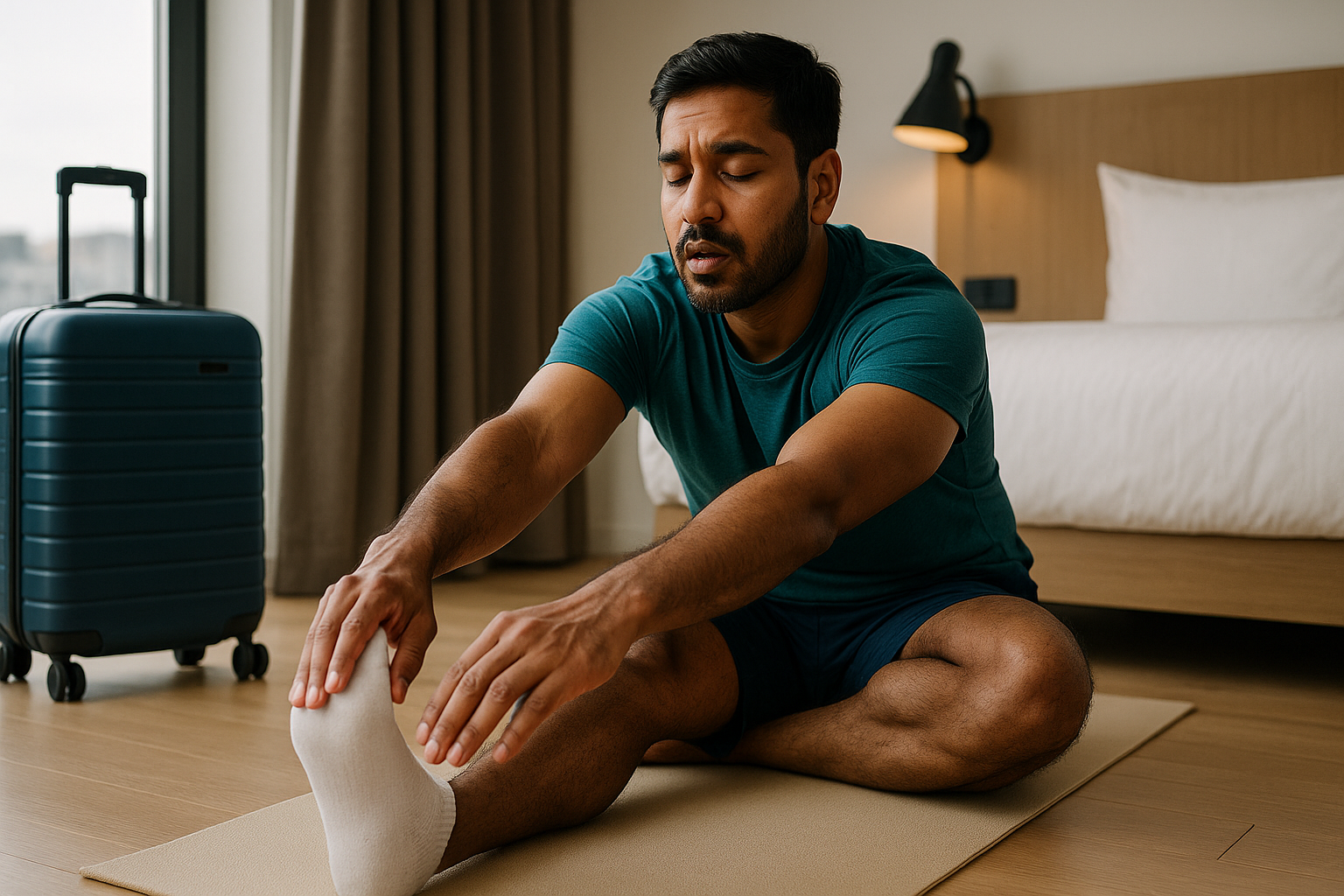
My ideal landing-day movement is a brisk walk outside, stairs if available, gentle mobility in the hotel room, maybe a light run the next morning if I feel okay. Morning exercise may help reinforce wakefulness after eastbound travel, and daytime movement in general seems to improve sleep pressure by night. But if you're dizzy, dehydrated, feverish, or have a medical issue, don't force it. Rest is also a health tool, people forget that.
Caffeine is useful... until it turns on you
#As an Indian traveler, chai is emotional support. Coffee too. So I am not here to tell you to become a caffeine-free monk. Timed caffeine can improve alertness and help you function after a bad flight. The problem is people use it at the wrong time and then wonder why they can't sleep at local bedtime. Guilty. Very guilty.
My rough approach: if I need caffeine, I use it in the local morning or early afternoon. Not all day. Not after dinner because 'I'm still tired.' Of course you're still tired, your body thinks it's another timezone. A lot of travel health experts still recommend stopping caffeine at least 8 hours before your planned bedtime if you're sensitive, and honestly some of us need even longer. Also remember energy drinks can hit harder than expected, especially when dehydrated.
If you have diabetes, thyroid issues, anxiety, PCOS, migraines, or just generally dramatic hormones - jet lag can hit different
#This is the empathetic section because I don't think enough travel advice accounts for real human bodies with actual health stuff going on. If you have diabetes or insulin resistance, disrupted sleep and odd meal timing can affect glucose. If you get migraines, sleep disruption and dehydration are classic triggers. If you deal with anxiety, jet lag can make your heart and thoughts feel weirdly buzzy. If you've got IBS, hello chaos. And if you take medicines at fixed times, crossing time zones can get complicated fast.
Please don't wing medication timing based on a random blog, including mine. For prescriptions like insulin, thyroid meds, anti-seizure meds, oral contraceptives, psychiatric meds, blood pressure meds, or anything timing-sensitive, ask your doctor or pharmacist before the trip. It makes such a difference. I know that's not the cute influencer answer, but it's the responsible one. Also, if jet lag seems extreme, lasts more than expected, or you feel confused, faint, very short of breath, chest pain, severe leg swelling, or anything alarming after flying, get medical help. Not everything after a flight is 'just jet lag'.
My actual sample routine for Europe and Japan
#People always ask for specifics, so here's my imperfect template.
- India to Europe: a few days before, I push sleep a bit later if possible. On flight day, I hydrate, eat lightly, and try to sleep if the arrival time makes sense. After landing, I get daylight and walk. Short nap only if needed. I hold caffeine to local morning/early afternoon. I eat dinner at local time and try to stay awake till a sensible bedtime, even if I feel a little unhinged.
- India to Japan: a few days before, I shift sleep earlier and reduce late-night screens. On the plane, I avoid oversleeping if I'm landing in the evening. Once there, I get morning daylight the next day, keep evening lights dim, and sometimes use low-dose melatonin near local bedtime for the first nights if appropriate for me. Big thing is no late caffeine and no giant nap. That's where I usually mess up.
And yeah, it still isn't perfect every time. Sometimes your flight is delayed, your hotel room isn't ready, your child is cranky, your boss has scheduled a 9 am meeting, and all the circadian wisdom in the world is hanging by a thread. That's okay. The goal isn't perfection. It's reducing the damage.
Last thing - be kind to yourself the first 48 hours
#This maybe sounds soft, but I mean it. We talk about travel like it's glamorous and efficient, but long-haul flying is physically stressful. Your sleep is off, your skin is dry, your routine is gone, your digestion is confused, and your brain is trying to recalibrate. If day one feels fuzzy, that does not mean you 'failed' jet lag management. It means you're a mammal with a body clock. Congrats, I guess.
So yeah, my best jet lag advice for Indian travelers going to Europe or Japan is weirdly simple: start adjusting before you fly, use light on purpose, respect local meal and sleep times, hydrate, go easy on alcohol, use melatonin carefully if needed, and don't overdo naps or caffeine. That's the real stuff. Not sexy, not revolutionary, but it works more often than not. And if you like this kind of practical health rambling, you can find more wellness reads over at AllBlogs.in.