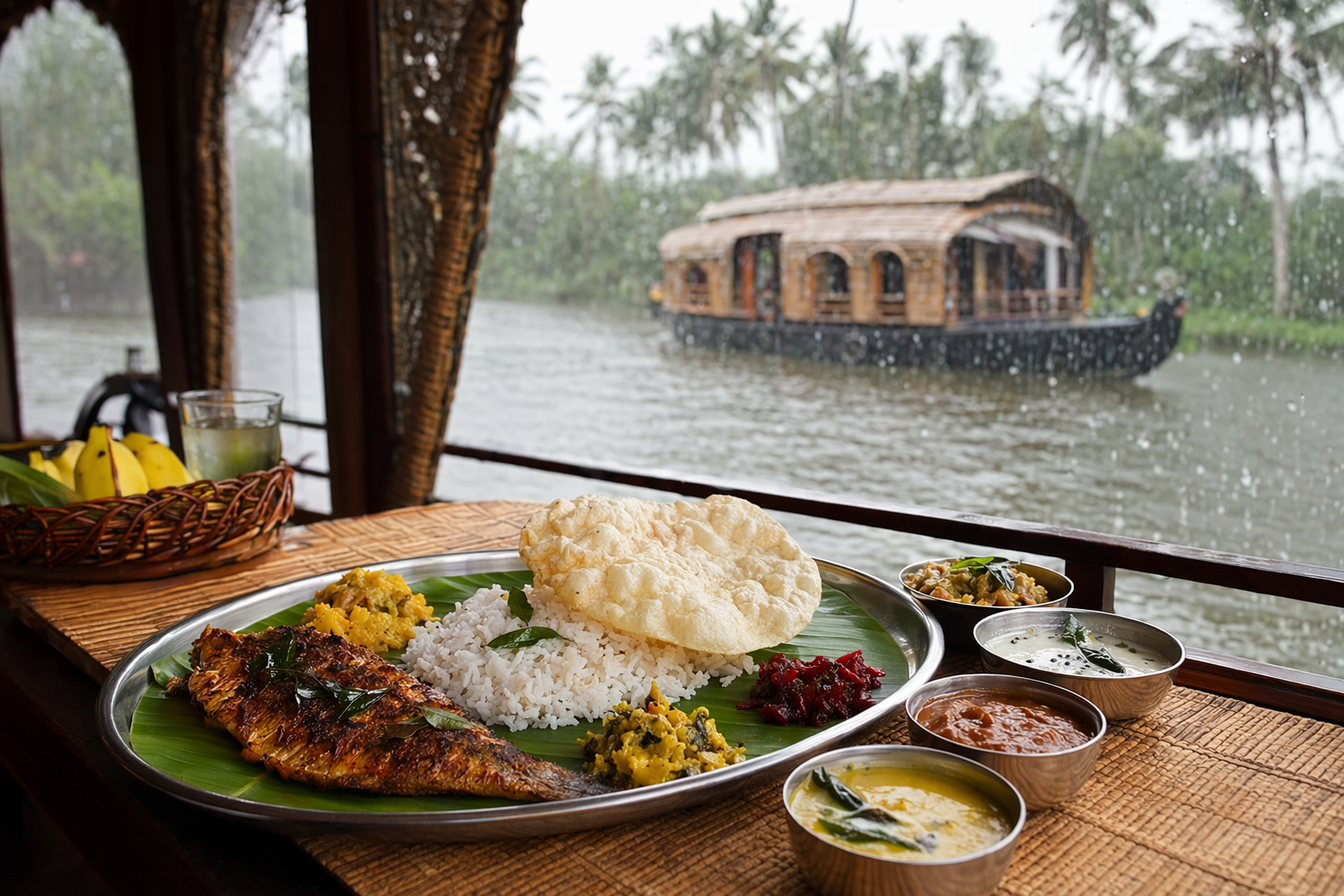
I’ll say this straight away: eating lunch on a Kerala houseboat while monsoon rain taps on the roof is one of those travel memories that sticks to your ribs. Like good fish curry. I’ve done the Alappuzha backwaters in sunny weather and in proper grey, dramatic, coconut-tree-bending rain, and honestly… monsoon has a mood that summer just can’t fake. The canals go silver, the paddy fields look impossibly green, and the smell of wet coir ropes, frying curry leaves, and steamed rice somehow makes you feel like you’ve stepped into someone’s old family story.
But, and this is a big but, monsoon houseboat meals need a bit of common sense. Not panic. Not over-planning till the joy dies. Just a few safety checks, especially around food, water, weather, and the boat itself. Because one bad prawn or one slippery deck can ruin what should be a gorgeous slow-travel food trip. I learnt that the slightly embarassing way, standing barefoot near a kitchen hatch, holding a plate of karimeen pollichathu while the boat tilted just enough for my dignity to leave the chat.
Why Monsoon Houseboats Feel So Different
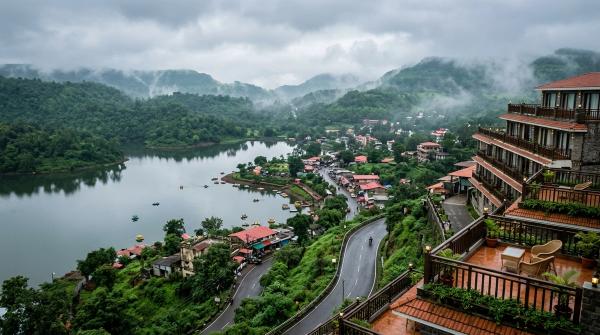
#Kerala’s main southwest monsoon usually runs from June to September, with another rainy spell from the northeast monsoon around October and November. This matters because houseboat routes in places like Alappuzha, Kumarakom, Punnamada Lake, Vembanad Lake, and Ashtamudi don’t feel the same in every month. In the rain, the backwaters are quieter, the heat drops, and meals feel slower. You don’t just eat, you sit there watching rain stitch patterns into the water while someone brings you hot rasam or black tea with banana fritters. It’s ridiculous in the best way.
The 2026 food-travel vibe, at least from what I’m seeing and hearing from other travellers, is very much about slow, local, low-waste eating. People don’t just want a buffet anymore. They want the cook to explain why toddy-shop fish curry tastes sour, why kokum or kodampuli is used, where the prawns came from, and whether the banana leaf is from nearby. Kerala fits this beautifully, especially on houseboats where lunch is often cooked right there in the tiny onboard kitchen. Tiny kitchen, huge flavours. That’s basically Kerala in one line.
My First Monsoon Meal on a Houseboat
#My first proper monsoon houseboat meal started near Alappuzha after a morning where the sky looked like wet cement. We boarded around noon, and the boat owner did that very Kerala thing of being calm about everything. Rain? Normal. Thunder? Normal. Me worrying about motion sickness? Also normal, apparently. The cook, who I still remember because he had the most serious face until he started talking about fish, asked if we wanted spicy food “tourist spicy” or “Malayali spicy.” I said somewhere in between, which was a lie because there is no in between once the green chillies show up.
Lunch came on a banana leaf: Kerala matta rice, sambar, cabbage thoran, beetroot pachadi, pappadam, mango pickle, avial, and a whole karimeen cooked in banana leaf with shallots, chilli, turmeric, curry leaves, and coconut oil doing their holy work. The rain got louder exactly when the fish arrived, which felt staged but wasn’t. I remember pulling the banana leaf parcel open and getting that smoky, spicy smell and thinking, yep, this is why people travel for food. Not for fancy plating. For this.
The Food Is Fresh, But Ask the Right Questions
#Houseboat food in Kerala can be amazing, but freshness is not something you should blindly assume, especially in wet weather. Most decent boats buy fish, prawns, vegetables, eggs, and fruit in the morning before boarding. Some operators will also let you visit the local market with them if you ask ahead, which I love because you get to see the produce and also because I’m nosy about ingredients. In Alappuzha market, I’ve seen glossy purple brinjals, bunches of curry leaves, green bananas, heaps of shallots, and fish so fresh it still looked annoyed.
- Ask when the seafood was bought. Same morning is what you want, especially for prawns, crab, mussels, and pearl spot.
- Ask if the drinking water is sealed bottled water or filtered RO water. Don’t be shy. Your stomach has rights.
- Check if food is cooked onboard and served hot. Hot food is your friend in monsoon.
- If you have allergies, say it twice. Coconut, fish, shellfish, peanuts, cashew, mustard seeds, and sesame can appear quietly in Kerala cooking.
One thing I’ve noticed lately is that better houseboat operators are leaning into curated menus: vegan sadya-style lunches, seafood tasting meals, Syrian Christian-style duck roast add-ons near Kumarakom, toddy-shop inspired menus without actually getting everyone tipsy at noon, and even millet or red-rice wellness menus for travellers who want “gut-friendly” food. Some of it is marketing, sure. But some of it is genuinely delicious, and I’d rather have a thoughtful local menu than yet another sad continental toast situation floating on a lake.
Monsoon Food Safety: What I Actually Check Before Eating
#I’m not a germaphobe. I eat street food, I drink chai from tiny stalls, I have made questionable snack decisions at bus stands. But on water, in monsoon humidity, food safety matters more. Kitchens on houseboats are small. Storage space is limited. Rain can make surfaces damp. And if you get sick on a boat, there’s no romantic way to say this, it’s just awful.
- I check the kitchen area without making it weird. Just a quick glance. Is it reasonably clean? Are raw fish and cooked food kept apart? Is there a covered bin? Are utensils being washed with clean water?
- I avoid raw salads unless I’m sure they’ve been washed in safe water. Cooked thoran beats suspicious cucumber slices every single time.
- I eat seafood only if it smells clean and sea-like, not strong or sour. Fresh fish should not smell like punishment.
- I don’t let cooked food sit around for hours. If lunch was served at 1, I’m not picking at fish curry at 5 unless it has been reheated properly.
- I carry ORS, basic stomach meds, hand sanitizer, and a small soap strip. Very unglamorous. Very useful.
Also, monsoon appetite is tricky. Rain makes you want fried everything. Pazham pori, parippu vada, hot cutlets, banana chips, all of it. But on a houseboat, I try not to go completely wild before a seafood-heavy lunch. Not because I’m disciplined, I’m not, but because coconut-rich curries plus bumpy water plus three cups of tea can get… complicated.
Weather Safety Before Food Romance, Sorry
#This is the part people don’t like talking about because houseboat photos are all soft rain and dreamy canals. But please check weather alerts before you go. During monsoon, the India Meteorological Department issues rain warnings, and Kerala authorities may advise against boating during rough conditions, strong winds, or red/orange alert days. A good operator will not pressure you to sail in bad weather. If they do, that’s a red flag with a motor attached.
Before boarding, I ask about life jackets, route, emergency contacts, and whether the boat is licensed and maintained. Kerala has loads of registered houseboats, but quality varies. I prefer operators recommended by local hotels, responsible travel groups, or travellers who have actually gone recently, not just a glossy website with 2017 photos. If you’re staying in Kochi first, places like Grand Hotel on MG Road, Fort House Restaurant near Fort Kochi, Dhe Puttu, and Kayees Rahmathulla Cafe in Mattancherry are good for easing into Kerala food before the boat. In Kumarakom, resort restaurants often do refined versions of backwater dishes, though I still like the simpler local meals better, when you can get them.
The best Kerala houseboat meal is not the one with the longest menu. It’s the one served hot, cooked cleanly, timed with the rain, and eaten without worrying if the boat should even be moving.
What To Eat on a Monsoon Houseboat
#If you’re doing one night on a houseboat, don’t waste the main meal. Ask for a Kerala-style lunch rather than generic “veg/non-veg meal.” The classics are classics for a reason. Karimeen pollichathu is the famous one, especially around Vembanad Lake, where pearl spot has almost celebrity status. It’s usually marinated in chilli, turmeric, ginger-garlic, sometimes pepper, then wrapped in banana leaf and pan-cooked. The banana leaf traps steam and gives the fish this earthy fragrance that makes you eat slower without even trying.
Then there’s meen curry with kodampuli, that smoky-sour Malabar tamarind that makes fish curry taste like it has weather inside it. I love it with kappa, boiled tapioca mashed with coconut and spices. It’s not fancy. It looks humble. But when rain is falling and the curry is sharp and red and oily in that coconut-oil way, kappa and fish curry can beat any tasting menu, sorry.
- For breakfast: appam with vegetable stew, puttu with kadala curry, idiyappam with egg curry, or dosa if the cook is set up for it.
- For lunch: matta rice, sambar, avial, thoran, pachadi, pickle, pappadam, fish fry or pollichathu, and maybe prawn roast.
- For tea: pazham pori, parippu vada, ela ada, or just banana chips with strong chaya.
- For dinner: chicken curry, fish molee, veg kurma, chapati, rice, dal, or a lighter stew if lunch was heavy.
Vegetarians shouldn’t worry either. Kerala vegetarian food is not an afterthought when done properly. Avial, olan, erissery, kalan, beetroot pachadi, long beans thoran, raw banana mezhukkupuratti, moru curry… it’s a whole world. And if you’re vegan, Kerala is surprisingly workable because coconut milk and coconut oil are everywhere, though you still need to check for ghee, curd, and buttermilk.
My Slightly Chaotic Market Stop in Alappuzha
#On one trip, I asked if we could stop before boarding to buy extra prawns. The boat guy laughed and said something like, “Madam, already enough food,” which was correct, but I have a problem when seafood is involved. We went through a wet market lane where rainwater ran along the edges and vendors were shouting over each other. I bought small bananas, a packet of banana chips, and prawns I definitely did not need. The cook made them later as chemmeen roast with shallots, curry leaves, black pepper, and coconut slices. I still think about that dish more than I think about some people I went to college with.
This is the kind of food-travel moment that’s becoming more popular now: ingredient-first travel. Travellers in 2026 seem more interested in meeting farmers, fishers, toddy tappers, spice growers, and home cooks than just ticking off “best restaurants.” In Kerala, that makes sense. The story of the food is right there: black pepper from the hills, fish from the backwaters or coast, coconut from every second tree, rice from Kuttanad’s below-sea-level paddy fields. You taste geography in the meal, which sounds poetic but also, like, it’s true.
The Slippery Deck Problem Nobody Puts on Instagram
#Monsoon houseboats are beautiful and also slippery little beasts. The deck, steps, and narrow side passages can become slick fast. Wear sandals with grip, not cute smooth-bottom flip-flops that turn you into a cartoon character. I’ve seen one person nearly slide into a chair while carrying tea, and me and him both pretended it didn’t happen because travel dignity is fragile.
Also don’t wander near the kitchen when the cook is frying fish. Space is tight, oil is hot, and the boat can move unexpectedly. If you’re travelling with kids, keep them away from the stove area and the open edges. Ask if there are railings, life jackets in child sizes, and a covered dining area. Some newer premium boats have better safety features, cleaner washrooms, solar panels, improved waste systems, and more comfortable dining spaces, which is part of the newer responsible-luxury trend in Kerala. But again, premium doesn’t automatically mean safer. Check, don’t assume.
Responsible Eating on the Backwaters
#This bit matters. Kerala’s backwaters are not a theme park. People live there, fish there, farm there, commute there. Houseboats create jobs, yes, but waste and fuel pollution are real concerns. I try to choose boats that don’t dump waste into the water, use proper sewage holding tanks, reduce single-use plastic, and serve local seasonal food instead of flying in random luxury items just so tourists can feel fancy. Honestly, I don’t need imported berries on Vembanad Lake. Give me pineapple, banana, jackfruit, tender coconut, and payasam and I’m happy.
Ask operators about waste disposal. If they act offended, that tells you something. Carry a refillable bottle if safe filtered water is available, but if you’re unsure, sealed water is better for your health. Don’t throw anything into the water, not even food scraps. I know people think banana peel is “natural,” but the backwaters don’t need your snack leftovers.
Best Monsoon Routes for Food Lovers
#Alappuzha is the classic, busy but atmospheric, with narrow canals, paddy fields, and lots of houseboat options. Kumarakom feels a bit calmer and greener, especially if you like birdlife and quieter luxury stays. Ashtamudi near Kollam has a different feel, wider water, fewer crowds in some stretches, and lovely seafood if you plan well. I’d pick Alappuzha for first-timers who want the iconic experience, Kumarakom for couples or slow travellers, and Ashtamudi if you want something less obvious.
In monsoon, I prefer shorter cruising hours and more anchored time. Sounds boring? It isn’t. Sitting still while rain falls around the boat, eating hot fish curry and watching canoes pass is half the point. A day cruise can be safer if weather is uncertain, while overnight trips are magical if you’ve got a reliable operator and forecasts look okay. I don’t recommend chasing the cheapest deal online. Cheap houseboats often cut corners exactly where you don’t want corners cut: maintenance, food storage, staffing, and cleanliness.
A Simple Pre-Booking Checklist
#| Question to ask | Why it matters |
|---|---|
| Is the boat licensed and insured? | Basic safety and accountability, especially in monsoon. |
| Are life jackets available for every guest? | You don’t want to discover this after boarding. |
| What happens during orange or red weather alerts? | A responsible operator should reschedule or modify plans. |
| Is food cooked onboard or pre-cooked? | Freshly cooked hot food is safer and tastier. |
| Can they handle allergies or vegan/vegetarian meals? | Kerala food uses coconut, seafood, nuts, curd, and spices in many dishes. |
| How is drinking water provided? | Avoid waterborne stomach issues. |
| What is the waste disposal system? | Responsible travel, not just pretty views. |
I’d also ask for recent photos of the dining area, bedroom, bathroom, and kitchen. Not just the front deck. Everybody photographs the front deck. Nobody photographs the sink unless you ask, and sometimes the sink tells the real story.
What I Pack for a Monsoon Food Cruise
#Packing for this is not glamorous but it saves the trip. I bring a light rain jacket, quick-dry clothes, mosquito repellent, waterproof pouch for phone, hand sanitizer, ORS, basic meds, and one warm layer because rain plus fan plus wet hair can suddenly feel chilly. For food, I carry a few safe snacks but not too many, because the boat meals are usually generous. If you’re prone to motion sickness, take whatever works for you before the boat starts moving, not after you already feel weird.
One small thing: bring your appetite but also bring patience. Monsoon slows everything. Boats may delay departure, rain may change the route, tea may arrive ten minutes later because someone is securing a tarp. If you’re the kind of traveller who needs every minute optimized, Kerala rain will humble you. In a good way, maybe.
Final Thoughts: Eat Well, But Don’t Be Careless
#A Kerala houseboat meal in monsoon is one of my favourite food-travel experiences in India. It’s not just the karimeen or the coconut oil or the banana leaf lunch. It’s the whole scene: rain on the roof, warm rice, green banks sliding past, the cook asking if you want more curry even though your plate is already full, and that sleepy post-lunch feeling while the boat rocks softly. It’s comfort and adventure together, which is a rare combo.
Just don’t let romance make you careless. Check the weather. Choose a proper operator. Eat hot, fresh food. Be careful with water. Respect the backwaters. And if the cook offers you second helpings of prawn roast, say yes unless your stomach is already waving a white flag. That’s my very professional advice.
If you’re planning your own Kerala food trip, especially around Alappuzha, Kumarakom, Kochi, or Kollam, keep some flexibility in the plan and let the rain do what it does. Sometimes the best meal happens because the boat had to anchor early and the cook had extra time. Travel is funny like that. For more food-and-travel rambles, local guides, and delicious little detours, I’d casually point you toward AllBlogs.in.