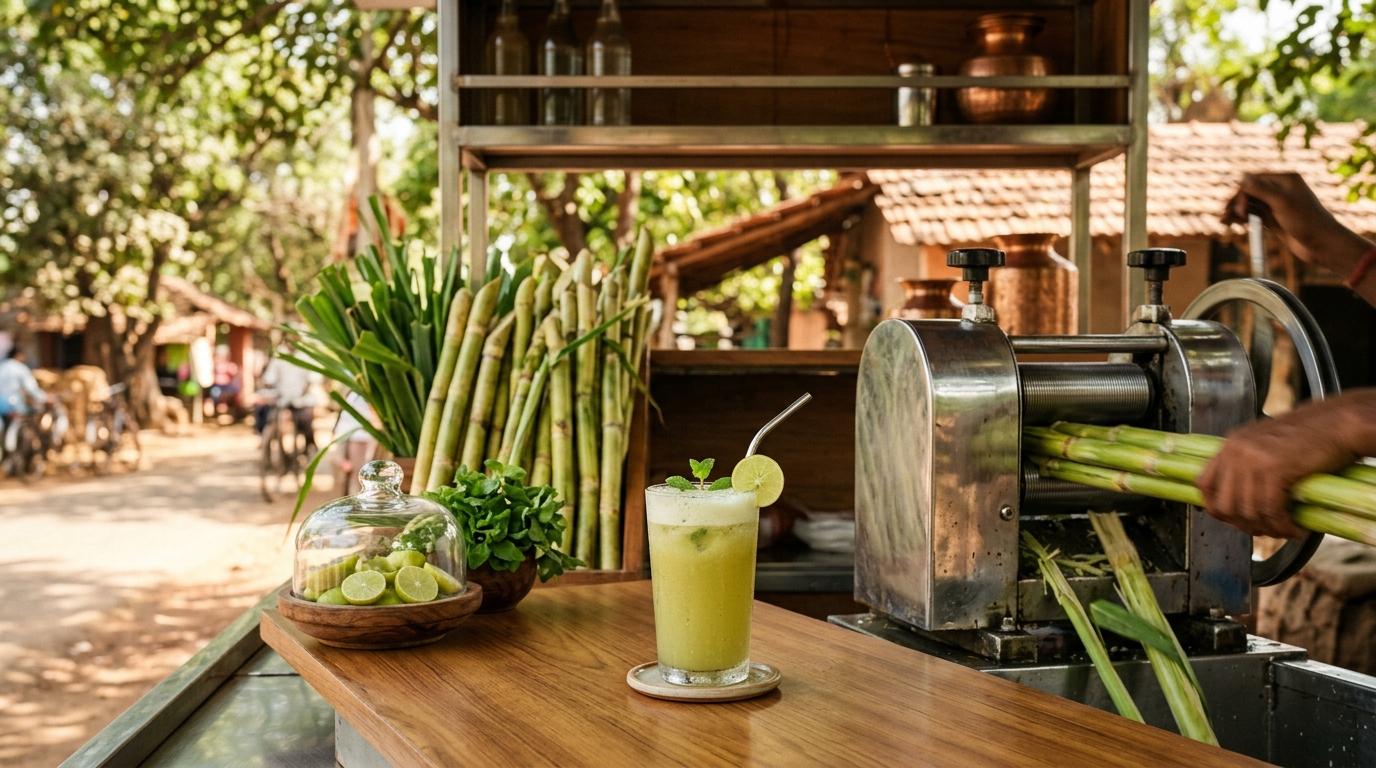
There are some summer sounds you can recognise instantly in India. The whirr of a cooler. The honk of traffic in the afternoon heat. And, of course, that loud crushing sound from a ganne ka juice machine at a roadside stall.
You see the vendor feeding sugarcane into the rollers, adding a squeeze of lemon, maybe a little ginger, dropping in ice, and handing over a chilled glass in seconds. When the sun is blazing and you are tired, sweaty, and thirsty, it honestly looks perfect.
But then another thought pops up: is street sugarcane juice actually safe in summer?
The honest answer is: it depends.
Sugarcane juice by itself is refreshing, hydrating, and loved for a reason. The real concern is usually not the cane alone. It is everything around it: the machine, the ice, the water, the glasses, the lemon, the mint, and how cleanly the vendor handles it all.
So before you order that cold glass, take a quick look around. A few simple checks can help you decide whether to drink it happily or walk away.
Quick Answer: Can You Drink Street Sugarcane Juice?
#Yes, you can drink street sugarcane juice in Indian summer if the stall looks clean, the juice is crushed fresh in front of you, and you avoid anything that looks risky, especially questionable ice.
Skip it if the machine is sticky and dirty, the ice is lying open, glasses are being rinsed in murky water, flies are sitting on lemon or mint, or the vendor is handling cash and ingredients with the same unwashed hands.
A simple rule works best:
Fresh juice. Clean machine. No doubtful ice. Clean cup. If something feels off, don’t drink it.
Why Sugarcane Juice Feels So Good in Summer
#Sugarcane juice is one of those drinks that feels made for Indian summer. It is cold, sweet, quick, affordable, and available almost everywhere, from busy markets to roadside corners near offices, schools, and bus stops.
After a long commute or a walk in the heat, one chilled glass can feel like instant relief. Many people also see it as a more “natural” option compared to packaged soft drinks. It is commonly thought of as a summer cooler, and people often talk about its minerals and hydrating effect.
But natural does not automatically mean safe.
The safety of roadside sugarcane juice depends heavily on hygiene. From a distance, most stalls may look similar. But once you stand near the counter for even half a minute, you can usually spot whether the vendor is careful or careless.
The Main Risk Is Usually the Stall Setup
#Street juice stalls work fast, especially in summer. During peak hours, one vendor may make glass after glass without much of a break. That speed is convenient, but it can also mean cleaning gets ignored.
Some common hygiene issues include:
- Machines that are not cleaned properly
- Old cane pulp stuck near the rollers
- Ice made from unsafe water or stored carelessly
- Glasses rinsed repeatedly in the same dirty bucket
- Lemon, mint, and ginger kept uncovered
- Vendors touching cash, cane, cups, and ingredients with the same hands
- Juice crushed earlier and kept in a jug for later serving
This does not mean every sugarcane stall is unsafe. Many vendors are careful and maintain a neat setup. The trick is to pause for a moment and notice the signs before ordering.
5 Hygiene Checks Before You Drink Sugarcane Juice
#1. Look at the Sugarcane Machine
#The machine is the heart of the stall, so start there.
Sugarcane juice is sticky. If the machine is not cleaned regularly, old juice, pulp, dust, and grime can collect around the rollers and tray. That can attract flies and make the whole setup unhygienic.
Drink if:
- The machine looks recently wiped
- The juice tray is not full of old pulp
- There is no dark, sticky buildup around the rollers
- The vendor removes leftover cane fibre regularly
Avoid if:
- The machine looks greasy, blackened, or moldy
- Old pulp is stuck near the crushing area
- Flies are sitting on the machine
- Cane is being crushed through visibly dirty rollers
A busy stall is not always a bad sign. In fact, high turnover can mean the cane is being used fresh. But even a busy stall should have basic cleanliness.
2. Be Very Careful With Ice
#This is one of the biggest safety points.
A glass with lots of ice feels amazing in May or June, but roadside ice can be risky. You may not know what water was used to make it, how it was transported, or where it was stored. Sometimes ice blocks are kept on dirty cloths, in open tubs, or close to dusty roads.
And no, freezing does not automatically make dirty water safe.
Drink if:
- Ice is stored in a clean, covered container
- The vendor uses tongs or a clean scoop
- The ice is not touching the ground or dirty surfaces
- The stall looks clean overall
Avoid if:
- Ice is lying openly on the ground or on a dirty cloth
- It is being broken with a rusty or dirty tool
- The vendor touches ice with bare hands after handling cash
- Melted ice water looks dirty
The safest thing to say is simple: “Bina barf.”
Even if the juice is not ice-cold, it is better than adding ice you do not trust.
3. Check the Glass or Cup
#Many of us grew up drinking sugarcane juice in those thick glass tumblers. There is definitely some nostalgia attached to it. But during summer rush, shared glasses can become a hygiene problem if they are not washed properly.
Watch how the vendor cleans the glasses. It tells you a lot.
Drink if:
- Glasses are washed with clean running water
- Cups are dry and kept in a clean place
- The vendor uses fresh disposable cups
- You can use your own clean bottle or tumbler
Avoid if:
- Glasses are dipped again and again in the same cloudy bucket
- Used glasses are mixed with clean ones
- The rim looks sticky
- Glasses are wiped with a dirty cloth
If you are unsure, ask for a disposable cup. If you often buy roadside drinks, carrying your own clean steel tumbler is actually a smart habit.
4. Notice the Lemon, Mint, and Ginger
#Lemon, mint, and ginger can make sugarcane juice taste even better. A little lemon adds freshness, mint gives it a cooling feel, and ginger adds that sharp kick.
But these extras also need to be clean.
A lemon wedge lying uncovered for hours is not the same as a freshly cut lemon. Mint sitting near traffic, dust, flies, or open drains is not something you want in your drink.
Drink if:
- Lemons look fresh and are kept covered
- Mint and ginger look clean
- The vendor uses clean hands or a clean tool
- Ingredients are not soaking in dirty water
Avoid if:
- Flies are sitting on lemon, mint, or ginger
- Lemons look dry, old, or dirty
- The vendor touches cash and then squeezes lemon into your glass
- Add-ons are kept open near garbage, drains, or heavy dust
If the juice stall looks fine but the add-ons look doubtful, just order plain sugarcane juice. It still tastes good.
5. Check the Sugarcane Stalks
#The cane itself matters too.
Sugarcane stalks should look fresh, firm, and reasonably clean. They should ideally be kept off the ground and away from dirty water, garbage, or drains. At many roadside stalls, cane is stacked right beside the machine, so take a quick look before you order.
Drink if:
- Cane stalks look fresh and firm
- They are kept away from drains and dirty water
- Peeled cane is covered
- The vendor cuts away visibly dirty parts
Avoid if:
- Cane is lying directly on a dusty road
- Peeled cane is exposed to flies
- Stalks look dry, spoiled, or dirty
- The storage area smells bad or looks unhygienic
You do not need to inspect the place like a food safety officer. Just look for a few seconds. Usually, your eyes will tell you enough.
When You Should Skip Street Sugarcane Juice
#Sometimes the best choice is to not order at all.
Skip roadside sugarcane juice if:
- The machine has old, sticky residue
- Ice is stored openly or looks dirty
- Glasses are washed in the same murky water
- Flies are sitting on the machine, cane, lemon, mint, or cups
- The vendor handles cash and ingredients without washing or wiping hands
- Juice has already been made and stored in a jug
- The stall is next to garbage, dirty water, or an open drain
- The vendor refuses to make it fresh
- You are unsure about the water or ice
- The area around the stall smells unpleasant
Also, avoid it if your stomach is already upset that day. In peak summer, it is better to choose something you fully trust.
Safer Ways to Order Sugarcane Juice
#You do not have to give up ganne ka juice. Just order it more carefully.
Ask for Fresh Juice
#Say: “Fresh nikaal ke dena.”
Avoid juice that is already sitting in a jug, even if it looks cold. When the juice is crushed in front of you, you can see the cane, machine, cup, and handling.
Say No to Ice
#The easiest safety upgrade is: “Bina barf.”
If you are unsure about the ice, skip it. You can always chill the juice later at home or office if needed.
Choose a Smaller Glass
#Sugarcane juice is naturally sweet, so you do not always need a large serving. A small glass is often enough, especially if you are drinking it quickly during a commute.
Use a Clean Cup
#Choose a clean disposable cup if available. Better still, carry your own clean tumbler if you regularly buy roadside drinks.
Skip Add-ons If They Look Unclean
#Lemon, mint, and ginger are optional. If they are uncovered, dusty, or surrounded by flies, avoid them.
Choose the Stall Carefully
#Do not choose only by crowd or popularity. A cleaner stall is always better than a famous stall where hygiene is being ignored.
Look for vendors who:
- Keep ingredients covered
- Wipe the machine regularly
- Use clean cups
- Store ice properly
- Crush juice fresh
- Keep the surrounding area tidy
Good hygiene is usually visible if you take a moment to look.
Who Should Be Extra Careful?
#Street sugarcane juice hygiene matters for everyone, but some people should be more cautious.
People With Diabetes or Blood Sugar Concerns
#Sugarcane juice is naturally high in sugar. If you have diabetes, prediabetes, or have been advised to manage blood sugar, ask your doctor or dietitian before drinking it.
Do not treat it like plain water just because it is natural.
People With Low Immunity
#If you have immunity-related health issues, are recovering from illness, or have been told to avoid risky outside food and drinks, be extra careful with roadside juices.
In such cases, homemade drinks or sealed beverages may be safer.
Pregnant Women
#Pregnancy often comes with stricter food safety advice. If you are pregnant, avoid stalls where you cannot trust the water, ice, glasses, or handling.
When in doubt, skip it.
Children and Older Adults
#Children and older adults may be more sensitive to poor food hygiene. Be especially careful about ice, glasses, and machine cleanliness before buying sugarcane juice for them.
A child asking for a cold glass after school is understandable. Just make sure the stall is clean.
Quick Sugarcane Juice Safety Checklist
#Before you order, ask yourself:
- Is the machine clean?
- Is the cane stored properly?
- Is the juice being made fresh?
- Can I avoid the ice if I am unsure?
- Are the glasses or cups clean?
- Are lemon, mint, and ginger protected from flies?
- Is the vendor handling ingredients hygienically?
- Is the stall away from garbage, drains, and dirty water?
If most answers are yes, you can consider drinking it. If two or three things look wrong, it is better to walk away.
Final Takeaway
#So, is sugarcane juice safe in summer?
It can be, as long as the stall is clean and the juice is made fresh. The real issue is not sugarcane juice itself, but the hygiene around it. Dirty machines, unsafe ice, unclean glasses, exposed lemon or mint, and careless handling can turn a refreshing summer drink into a bad idea.
Enjoy your ganne ka juice, but let your eyes decide before your thirst does.
Freshly crushed, clean machine, no doubtful ice, and a clean cup — that is the safest way to enjoy sugarcane juice in Indian summer.