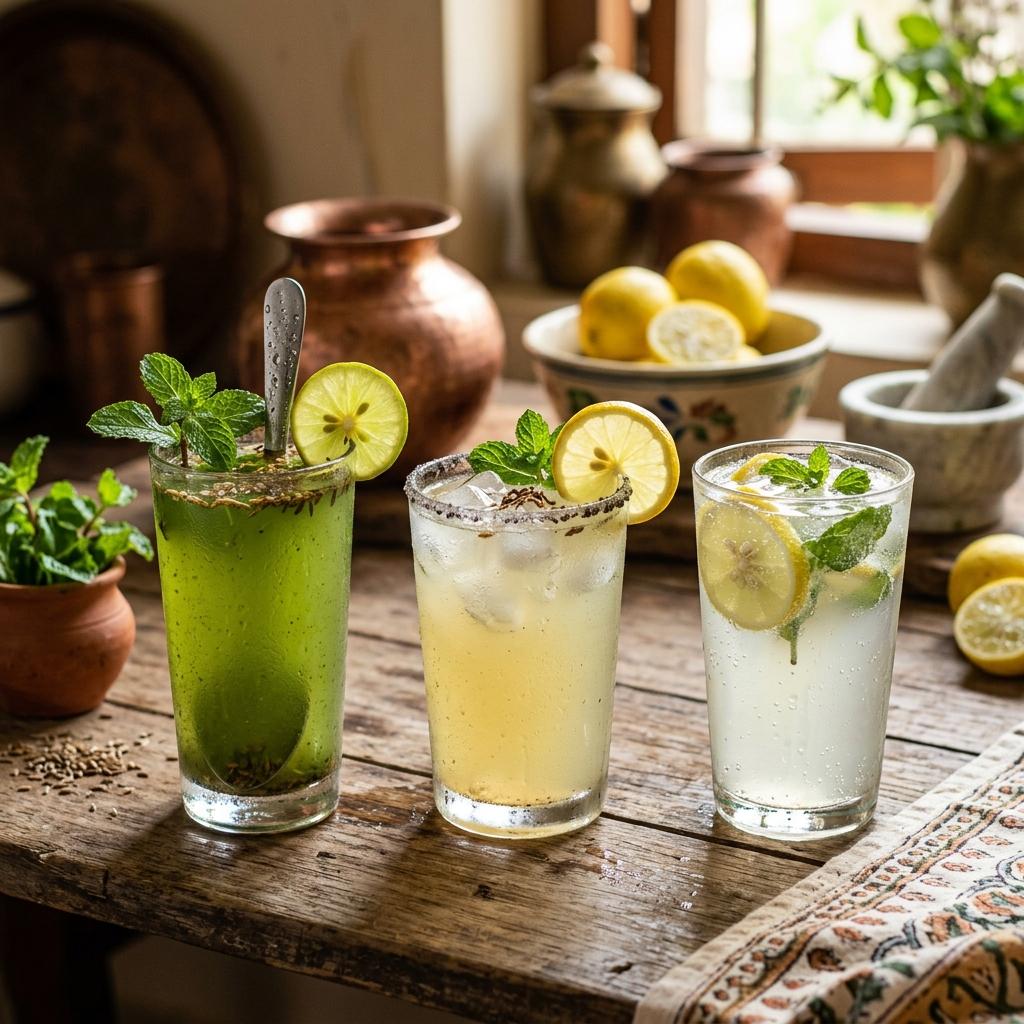
Indian summer has a way of making every cold glass look like a good idea. A roadside shikanji cart. A jug of jaljeera before lunch. A quick nimbu pani at home after coming back from the market. They all feel familiar, all look refreshing, and all get described as “cooling” drinks.
But they are not the same drink.
If you are choosing between jaljeera, shikanji, and nimbu pani, the best answer depends on what your body is asking for: plain refreshment, sweet-salty lemon comfort, a savoury pre-meal drink, less sugar, safer street hygiene, or something gentle after a heavy lunch.
Quick answer: which one should you choose?
#Choose nimbu pani when you want the simplest lemon-water drink and full control over sugar and salt. Choose shikanji when you want a more flavourful sweet-salty spiced lemonade. Choose jaljeera when you want a tangy, cumin-mint drink that works better before food or with chaat-style snacks.
For everyday summer drinking, especially in very hot weather, the safest choice is usually the cleanest homemade version: safe water, fresh lemon, moderate sugar, and just enough salt for taste. A drink can be traditional and still become a problem if the water, ice, or handling is poor.
The basic difference in one table
#That is the clean version. In real life, every home, stall, city, and family has its own version. Some people make shikanji almost like nimbu pani. Some make jaljeera so spicy it feels closer to pani puri water. Some add soda to everything. Some add no sugar at all.
So instead of arguing over one “correct” recipe, it is better to understand the role each drink plays.
What exactly is nimbu pani?
#Nimbu pani is the simplest of the three. At its most basic, it is lemon or lime juice mixed with water. Salt, sugar, black salt, cumin, mint, or soda may be added, but they are not necessary.
That simplicity is its biggest strength.
When you make nimbu pani at home, you can adjust it for the day. If you have been outdoors and sweating, you may want a small pinch of salt. If you just want something refreshing with lunch, you can keep it mostly lemon and water. If you are avoiding sugar, you can reduce it without ruining the drink.
Nimbu pani is also the least confusing option for children, elders, and anyone who does not enjoy strong spices. It does not have to be fancy. A clean, lightly salted lemon water is often more useful than an over-sweet “summer cooler” that leaves you thirstier later.
What makes shikanji different?
#Shikanji is usually a spiced North Indian-style lemonade. It commonly includes lemon juice, sugar, salt or black salt, roasted cumin powder, and sometimes chaat masala. In some places, soda makes it fizzy. In other homes, it stays still and simple.
The main difference is flavour depth. Shikanji is not just lemon water; it has a sweet-salty-spiced balance. The roasted cumin gives it warmth, black salt adds that familiar street-drink sharpness, and the sweetness rounds off the sour lemon.
This is why shikanji works so well as a summer guest drink. It feels more “made” than nimbu pani but is still quick. It pairs nicely with poha, pakora, light sandwiches, roasted makhana, chivda, or a small evening snack.
The catch is sugar. Street or bottled shikanji can be much sweeter than you expect. At home, that is easy to fix. Outside, ask for less sugar if the stall allows it.
If you enjoy summer drink comparisons, you may also like AllBlogs’ guide to fresh lime soda vs virgin mojito, because the same sweet-sour-soda confusion happens there too.
What makes jaljeera different?
#Jaljeera is more savoury than the other two. The name itself points to water and cumin, but a typical jaljeera taste comes from more than cumin alone: mint, lemon, black salt, ginger, dry mango powder, pepper, or chaat-style spices may be involved.
A good jaljeera wakes up your mouth. It is tangy, salty, minty, and a little spicy. That is why many people prefer it before a meal, with chaat, or on days when heavy food sounds too dull without something sharp next to it.
Jaljeera is not really a “sip all day” drink for everyone. The salt and spice can be high, and some versions may feel too strong if your stomach is already irritated. But as a small glass before lunch, or with a snack plate, it makes sense.
Think of it this way: nimbu pani refreshes, shikanji refreshes with spice, and jaljeera refreshes with savoury punch.
Which one is better for hydration?
#For normal summer thirst, the biggest hydration factors are not the drink’s name. They are:
- clean water
- reasonable salt
- not too much sugar
- not relying on soda as your main fluid
- drinking enough plain water through the day
A lightly salted nimbu pani can be very practical after sweating. A balanced shikanji can also work if it is not too sugary. Jaljeera can feel refreshing, but because it is often saltier and spicier, many people enjoy it as a smaller serving rather than a large hydration drink.
If you are dealing with serious dehydration, heat illness symptoms, vomiting, diarrhoea, faintness, confusion, or very low urine output, do not treat these drinks as medical solutions. Use proper medical advice. For routine summer thirst, though, a clean homemade lemon-salt drink is a sensible everyday option.
AllBlogs already has a broader comparison of chaas, sattu, ORS, nimbu pani and coconut water if you want to compare these drinks with more practical heat-day options.
Which is better for digestion comfort?
#Jaljeera wins on flavour association here because cumin, mint, black salt, and sourness are all linked in Indian homes with “digestive” comfort. It is the drink many people want before chaat or after a rich snack.
But comfort is personal.
If you have acidity, reflux, mouth ulcers, or a sensitive stomach, a very sour or spicy jaljeera may irritate you. Shikanji can also feel uncomfortable if it is too lemony, fizzy, or sugary. Nimbu pani is easiest to make gentle because you can keep it diluted and low-spice.
A good rule: if your stomach already feels angry, go simpler. Choose diluted nimbu pani or plain water instead of a very spicy jaljeera.
Which one has more sugar?
#Homemade versions can be whatever you make them. Street versions are different.
Nimbu pani and shikanji are often sweetened because sugar balances lemon sourness. Shikanji may taste especially easy to drink because the sugar, salt, and spice hide each other. Jaljeera is usually more savoury, but packaged mixes and commercial versions can still include sugar.
If you are watching sugar intake, ask for:
- “less sugar”
- “no syrup”
- “plain water, not soda”
- “extra lemon, less sweet”
At home, start with less sugar than you think you need. Stir, taste, and only then add more. Most people oversweeten summer drinks because they taste them warm, then chill them later. Once cold, the drink may feel more balanced.
Which one has more salt?
#Jaljeera often has the most noticeable salt because black salt and spice mixes are central to its taste. Shikanji can also become salty, especially if both regular salt and black salt are added. Nimbu pani gives you the most control.
This matters if you have been advised to reduce sodium. It also matters if you are drinking several glasses a day. A pinch in one glass is one thing; repeated salty drinks plus salty snacks are another.
If you are making drinks for the whole family, keep the base low-salt and let people add a tiny pinch to their own glass. That small habit prevents the entire jug from becoming too strong.
Street-stall safety: what to check before you drink
#A summer drink can be perfect on paper and risky in a glass if the stall is careless. Water and ice are the two biggest practical concerns.
Before ordering jaljeera, shikanji, or nimbu pani outside, look for these signs:
- The stall is busy enough that drinks are made fresh.
- Lemons are cut fresh or kept covered.
- The vendor uses clean-looking utensils and glasses.
- Ice is stored separately, not handled repeatedly with bare hands.
- The drink is not sitting pre-mixed in the sun for hours.
- Mint and garnishes are not lying exposed to dust.
- The water source looks reliable.
If you are travelling, have a sensitive stomach, or are drinking near a railway station, fair, bus stand, or crowded market, be stricter. A sealed bottle of water plus a fresh lemon may be less exciting, but sometimes it is the smarter choice.
For more food-safety style reading, AllBlogs’ Indian summer no-fridge travel food guide follows the same practical logic: heat, time, water, and handling matter.
When to choose nimbu pani
#Choose nimbu pani when you want something simple and adjustable.
It is a good pick when:
- you are making a quick drink at home
- you want less spice
- you are serving children or elders
- you want to control sugar and salt
- you need something gentle after coming in from the heat
- you do not want soda
A good home version is not complicated: safe water, fresh lemon, a little salt, and optional sugar. If you want it cooler without making it watery, chill the water first instead of adding too much ice.
When to choose shikanji
#Choose shikanji when you want a more festive summer drink without turning it into a mocktail project.
It is a good pick when:
- guests are coming over
- you want something sweet, salty, and spiced
- you are pairing it with evening snacks
- you enjoy roasted cumin and black salt
- you want a drink that feels more satisfying than plain lemon water
If you are making a jug, keep the soda separate. Add soda only to individual glasses just before serving. Otherwise, the fizz goes flat and the drink starts tasting dull.
When to choose jaljeera
#Choose jaljeera when you want a savoury, appetite-friendly drink.
It is a good pick when:
- you are serving chaat, tikki, pakora, or roasted snacks
- you want a small pre-meal drink
- you like mint, cumin, and black salt
- you want less sweetness
- you prefer tangy over sugary
Keep the serving size modest. Jaljeera is not meant to be a giant tumbler of spice water. A small chilled glass is usually enough.
Which one is best for travel days?
#For train, bus, and road-trip days, homemade nimbu pani is easiest only if you can keep it cold and drink it soon. But lemon drinks can change in taste if carried too long, especially in heat.
For travel, the safer approach is:
- carry plain water as your main drink
- carry whole lemons separately if practical
- carry a small dry mix only if you trust the ingredients
- avoid pre-mixed dairy-free drinks that sit warm for hours
- be careful with ice at roadside stops
- choose sealed drinks when hygiene is doubtful
Jaljeera powder sachets can be convenient, but read the label if you care about sodium, sugar, or additives. A powder mix is not automatically healthier just because it tastes traditional.
What about bottled versions and ready mixes?
#Ready mixes are useful when you want speed, but they are not all equal. Some are mostly salt and spice. Some contain sugar. Some taste great but make you drink more sodium than you planned.
Check three things:
- Sugar — especially in shikanji-style mixes.
- Sodium — especially in jaljeera mixes.
- Serving size — the label may describe a smaller serving than the glass you actually make.
If using a mix, start with half the recommended quantity. Add fresh lemon, mint, or roasted cumin if needed. You can always make the flavour stronger; you cannot remove excess salt once it is in the jug.
The best drink by situation
#A practical home formula without turning this into a recipe post
#This is not a recipe article, but a rough ratio helps.
For one glass, begin with chilled safe water, a squeeze of fresh lemon, a tiny pinch of salt, and a small amount of sugar only if needed. From there:
- For nimbu pani, stop early and keep it clean.
- For shikanji, add roasted cumin and black salt.
- For jaljeera, add mint, cumin, black salt, and a little tangy spice.
Taste before chilling more. Cold drinks can hide sweetness and saltiness at first, then feel heavy halfway through the glass.
My honest pick
#If I had to choose one for daily summer use, I would choose simple nimbu pani at home because it is the easiest to keep clean, light, and adjustable.
If I were serving snacks to guests, I would choose shikanji because it feels cheerful without much effort.
If I were eating chaat or a rich lunch, I would choose jaljeera, but in a small glass and not too salty.
That is probably the most practical way to think about these drinks. There is no single winner. There is only the right glass for the right moment.
Final verdict
#For hydration control, choose nimbu pani. For summer refreshment with more flavour, choose shikanji. For savoury, digestive-style pairing with food, choose jaljeera.
Just do not ignore the boring details: clean water, safe ice, moderate sugar, moderate salt, and fresh ingredients. In Indian summer, those details decide whether a drink actually helps you feel better—or just tastes good for five minutes.
If you want to explore more regional options beyond these three, AllBlogs’ traditional Indian summer drinks guide is a good next read.