Some lunches are meant to be exciting. Others are meant to quietly save the day.
On hot, sticky afternoons, you usually want the second kind: something warm and comforting, but not heavy. Filling, but not oily. Easy enough to make without turning the kitchen into a project.
That is where barley khichdi fits in beautifully.
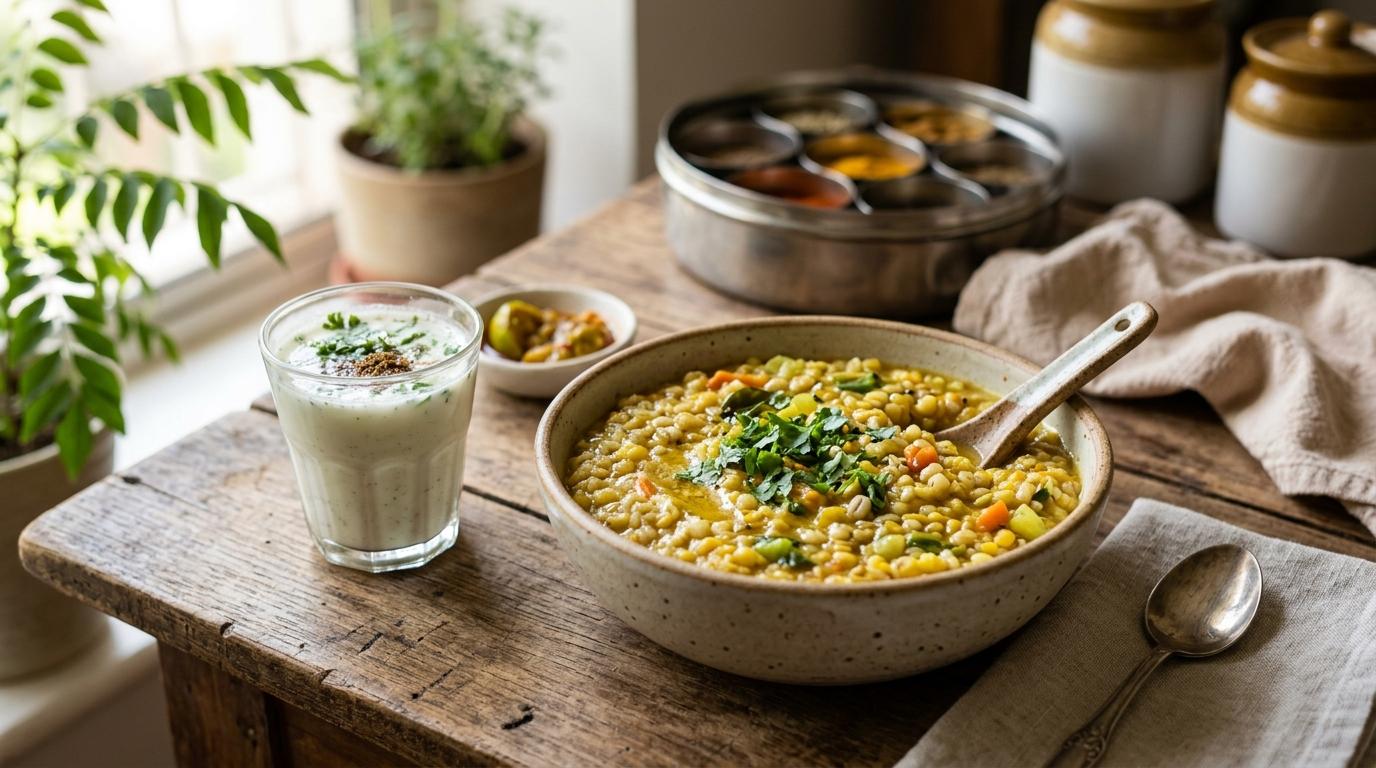
Also called jau khichdi, this is a simple one-pot khichdi made with barley, yellow moong dal, mild spices and soft vegetables like lauki, carrot and beans. It has the familiar comfort of regular khichdi, but the barley gives it a slightly chewy, earthy bite that makes it feel more satisfying.
It is especially good as a light summer lunch, a simple dinner, or even as barley khichdi for tiffin if you pack it a little loose. If rice khichdi feels too soft, pulao feels too much, and you still want proper Indian home food, this is a good middle path.
For more seasonal ideas, you can also browse these cooling Indian lunch recipes for summer.
Quick Answer
#Barley khichdi is a one-pot Indian meal made with soaked barley, yellow moong dal, mild spices and optional vegetables. Since barley takes longer to soften than rice, it cooks best in a pressure cooker.
For a soft, porridge-style khichdi, soak the barley and moong dal for 30 to 45 minutes. Cook them with 3.5 to 4 cups water, cumin, turmeric, hing, black pepper and salt. Add lauki, carrot or beans if you want it to feel more like a complete lunch.
Serve it warm with plain curd, cucumber raita or chaas. In hot weather, cool leftovers quickly and refrigerate within 1 to 2 hours. When reheating, add extra water because barley thickens a lot as it sits.
This is not a rich masala khichdi. It is a calm, light, everyday bowl for days when you want comfort without heaviness.
Why Barley Works So Well in Khichdi
#Barley, or jau, behaves very differently from rice.
Rice softens quickly and almost melts into the dal. Barley takes more time and keeps a gentle chew even after it is cooked. That chew is exactly what makes this khichdi feel filling without needing too much ghee, oil or masala.
Yellow moong dal balances it nicely. It cooks down into a soft, creamy base and gives the khichdi that familiar comfort-food texture. So you get the softness of dal, the bite of barley and the warmth of a simple tadka.
Vegetables help too, especially in hot weather. Lauki becomes soft and almost blends into the khichdi. Carrot adds a little sweetness. Beans give a small bite. You do not need a long list of vegetables, and you definitely do not need heavy spices.
The main thing is to get the basics right:
- Soak the barley.
- Use enough water.
- Keep the spices gentle.
- Let the cooker release pressure naturally.
Once you do that, jau moong dal khichdi becomes one of those dependable meals you can make again and again.
One important note: barley contains gluten. If you avoid gluten for medical or personal reasons, this recipe is not suitable as written.
Recipe Details
#- Recipe name: Barley Khichdi, Jau Moong Dal Khichdi
- Course: Main course, light lunch
- Cuisine style: Indian home cooking
- Diet: Vegetarian
- Servings: 2 to 3
- Prep time: 10 minutes
- Soaking time: 30 to 45 minutes
- Cook time: About 20 minutes in a stovetop pressure cooker
- Total time: About 1 hour, including soaking
- Best for: Light lunch, simple dinner, office tiffin, hot weather meals
To make it vegan, use a neutral cooking oil instead of ghee.
Step-by-Step Method
#1. Wash the Barley and Moong Dal
#Add the barley and yellow moong dal to a bowl. Rinse them 3 to 4 times with water, rubbing gently with your fingers.
The water will look cloudy at first. Keep rinsing until it looks mostly clear.
2. Soak Them
#Cover the washed barley and moong dal with fresh water. Soak for 30 to 45 minutes.
This step makes a real difference. Barley is much firmer than rice, so soaking helps it soften properly. It also helps the dal and barley cook more evenly together.
Without soaking, the dal may become mushy while the barley still feels too chewy.
If you are using hulled barley, soak it for longer if possible.
3. Chop the Vegetables
#While the barley and dal are soaking, chop the lauki, carrot and beans into small pieces.
Small pieces are better for khichdi because they soften into the dish. Large chunks can feel separate and a little awkward in the final texture.
4. Make a Gentle Tadka
#Heat a pressure cooker on medium flame. Add ghee or oil.
Add mustard seeds and let them crackle. Add cumin seeds and let them sizzle for a few seconds.
Add hing and turmeric. Stir briefly. Do not let the spices burn.
If using ginger or green chilli, add them now and sauté for a few seconds.
5. Add the Vegetables
#Add the chopped lauki, carrot and beans. Stir for 1 to 2 minutes.
You are not trying to brown the vegetables. Just coat them lightly with the tadka so the flavour starts building.
6. Add the Soaked Barley and Dal
#Drain the soaking water from the barley and moong dal.
Add them to the cooker and stir for about a minute, so everything mixes well with the vegetables and spices.
7. Add Water, Salt and Pepper
#Add 3.5 cups water for a thicker khichdi.
Use 4 cups water if you want it softer and more porridge-like.
Add salt and black pepper. Stir once.
If you are making this for tiffin, lean towards the softer side. Barley continues to absorb water as it cools, so a loose khichdi in the morning often becomes just right by lunchtime.
8. Pressure Cook
#Close the pressure cooker.
Cook on medium-high heat for 3 to 4 whistles. Turn off the heat and let the pressure release naturally.
Do not open the cooker immediately. That resting time helps the barley soften further.
9. Stir and Adjust
#Once the pressure has dropped, open the cooker.
Stir the khichdi well with a ladle. The moong dal will break down and make the mixture creamy.
If it looks too thick, add hot water and simmer for 2 to 3 minutes. If it looks too watery, simmer uncovered for a few minutes, stirring often.
Finish with chopped coriander if you like.
Pressure Cooker, Open Pot and Electric Cooker Methods
#A pressure cooker is the easiest way to make barley khichdi, but you can also make it in an open pot or electric pressure cooker.
Stovetop Pressure Cooker Method
#This is the most practical method for most Indian kitchens.
Follow the recipe as written. After adding water, salt and pepper, pressure cook for 3 to 4 whistles on medium-high heat. Let the pressure release naturally.
The khichdi should be soft and creamy, with the barley still having a gentle bite. It should not feel hard.
Open Pot Method
#If you do not have a pressure cooker, use a heavy-bottomed pot with a tight lid.
Make the tadka in the pot. Add vegetables, then the soaked barley and dal. Add water, salt and pepper.
Bring everything to a boil. Lower the heat, cover and cook until the barley softens. This can take 40 to 50 minutes, sometimes more depending on the barley.
Check every 10 to 15 minutes. Stir and add hot water as needed.
Try not to keep adding cold water, because it slows down the cooking.
The open pot version may stay a little more grainy and less creamy than the pressure cooker version, but it still tastes very good.
Electric Pressure Cooker Method
#Use the sauté function to make the tadka and cook the vegetables briefly.
Add the soaked barley, moong dal, water, salt and pepper. Cook on high pressure for about 12 minutes. Let the pressure release naturally.
Open, stir well and adjust the texture with hot water if needed.
For more simple one-pot ideas, you may also like this guide to Indian khichdi recipes.
How to Serve Barley Khichdi in Hot Weather
#This kind of hot weather khichdi tastes best with simple cooling sides. You want the meal to feel complete, not heavy.
Good pairings include:
- Plain curd
- Thin cucumber raita
- Chaas with roasted cumin
- Kachumber salad with cucumber, tomato and lemon
- A small spoon of pickle
- Roasted papad for crunch
On very hot days, avoid oily fried sides. They can make the meal feel much heavier.
For tiffin, pack the khichdi slightly loose. If reheating before packing, add a splash of water, heat it well and then pack it in an insulated container.
Digestion Notes
#Barley has more fibre than white rice, so it can feel different if you are not used to eating it often.
That does not mean it is difficult for everyone, but it is sensible to start with a moderate portion the first time. Do not make a huge bowl and expect your stomach to adjust immediately.
A few things help:
- Soak the barley properly.
- Cook it until fully soft.
- Use hing in the tadka.
- Keep the spices mild.
- Drink enough water through the day.
Moong dal is commonly used in lighter khichdi recipes because it cooks softly and is usually gentler than heavier dals. Still, everyone’s digestion is different. If lentils usually bother you, start with a smaller serving.
Also, do not treat barley khichdi as a cure or medical food. It is simply a wholesome, practical meal option.
Variations You Can Try
#Once you understand the basic recipe, you can easily adjust it based on the season, your mood or what is in the fridge.
Plain Jau Khichdi
#Skip the vegetables. Use only barley, moong dal, cumin, turmeric, hing, salt and pepper.
This version is very mild and comforting.
Lauki Barley Khichdi
#Use more lauki and skip the beans. Lauki softens beautifully and makes the khichdi feel lighter.
Ginger-Pepper Barley Khichdi
#Add grated ginger and a little extra black pepper.
Keep it gentle, especially if you are eating it for lunch on a hot day.
Thicker Dinner-Style Khichdi
#Use 3.5 cups water and cook until thick.
Serve with curd, salad and maybe a small piece of roasted papad.
Soupier Lunch Khichdi
#Use 4 cups water, or add more hot water after cooking.
This version works especially well for tiffin and hot afternoons.
Food Safety: Storing Leftovers in Hot Weather
#Khichdi may look harmless sitting on the counter, but cooked grains, dal and vegetables need careful handling, especially in warm weather.
Cool It Quickly
#If you have leftovers, transfer them to a shallow container instead of leaving them in a deep cooker.
A shallow container helps the khichdi cool faster.
Do not close the lid tightly while it is still steaming hot. Let the steam reduce first, then cover and refrigerate.
Refrigerate Within a Safe Window
#In normal weather, refrigerate cooked khichdi within 2 hours.
In very hot weather, try to refrigerate it within 1 hour.
Do not leave it out overnight.
Use Within 1 to 2 Days
#Because this khichdi has dal and vegetables, it is best eaten within 1 to 2 days when refrigerated properly.
If it smells sour, looks slimy or tastes off, throw it away.
Reheat Properly
#Barley khichdi thickens in the fridge, so add water before reheating.
On the stove, place it in a pan with a splash of water. Heat on low to medium, stirring often, until it is steaming hot throughout.
If reheating for tiffin, make it slightly looser than you want. It will thicken again as it cools.
Common Mistakes to Avoid
#Skipping the Soak
#This is the biggest mistake. Barley needs time to soften. Without soaking, it can stay too chewy even after pressure cooking.
Using Too Little Water
#Barley absorbs a lot of liquid. If you use the same water ratio as regular rice khichdi, the final dish may become dry.
Adding Too Many Spices
#This is meant to be a light khichdi. Keep the tadka simple and gentle.
Cutting Vegetables Too Large
#Large vegetable pieces do not blend well into khichdi. Small pieces cook more evenly and give a better texture.
Opening the Cooker Too Soon
#Let the pressure release naturally. That extra resting time helps the barley finish cooking.
Final Thoughts
#Barley khichdi is the kind of meal that does not shout for attention, but you are glad you made it.
It is familiar like regular khichdi, but the barley gives it a nice change in texture. It feels filling without becoming heavy, which makes it especially useful for hot afternoons, simple dinners and office lunches.
Soak the barley, keep the spices mild, use enough water and serve it with curd, raita or chaas if you like.
That is really all this jau khichdi needs.