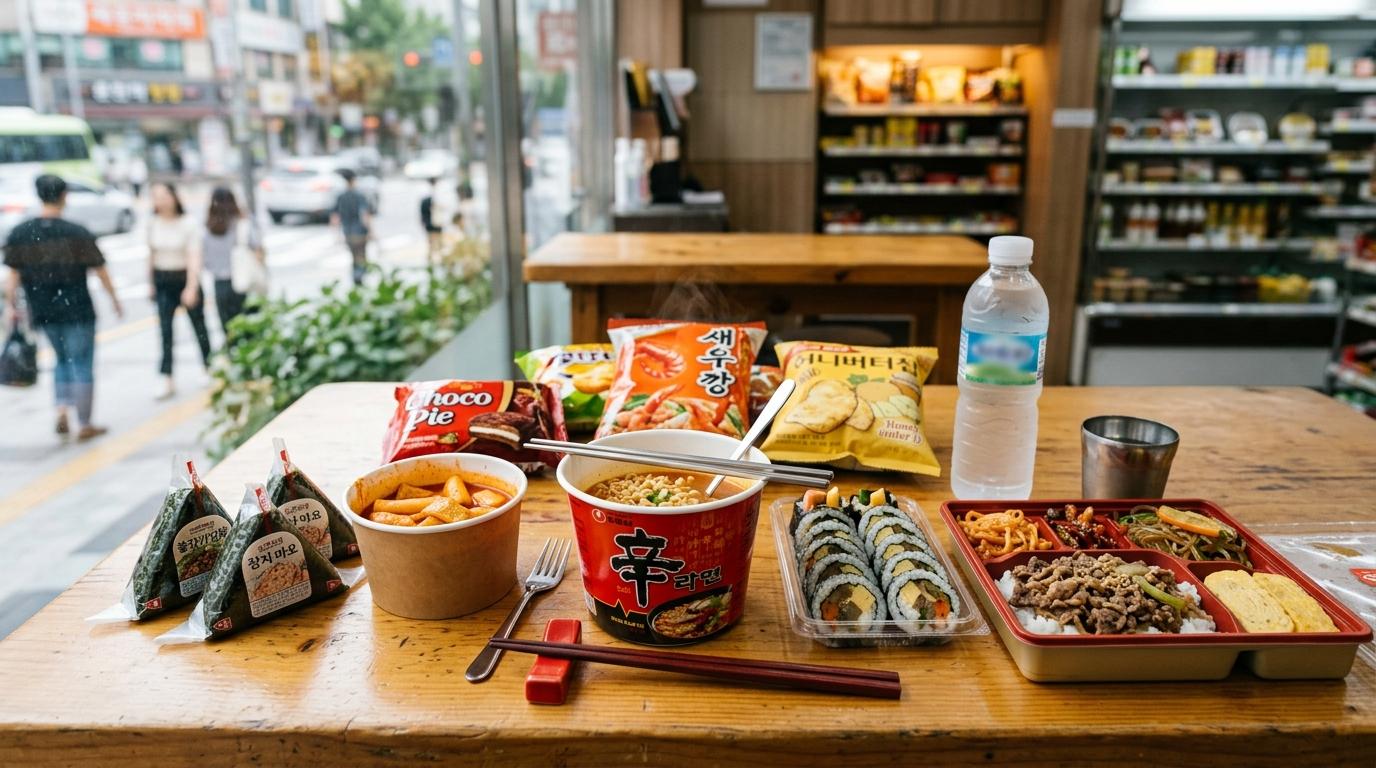
There comes a point in almost every Korea sightseeing day when you suddenly realize you are starving.
Maybe you have been walking around a palace for hours. Maybe you are halfway through a shopping street. Maybe you just got off the subway, your feet hurt, and the idea of figuring out a restaurant menu feels like too much work.
That is when a Korean convenience store lunch is honestly a lifesaver.
CU, GS25, 7-Eleven, and Emart24 are not just places to grab a soda. In Korea, convenience stores are more like tiny food stops. You can find rice balls, kimbap, lunch boxes, cup noodles, microwaves, hot water machines, coffee, snacks, and drinks all in one place. For travelers, they are quick, affordable, and much less stressful than sitting down at a restaurant when you just need food now.
The only catch is knowing what to buy.
Some items need to be heated. Some are better cold. Some look simple but may contain pork, seafood, beef extract, fish sauce, or spicy seasoning. And if you cannot read Korean, the labels can feel a little intimidating.
So here is a practical, traveler-friendly guide to building a good lunch from a Korean convenience store.
Quick answer
#If you need lunch from a Korean convenience store right now, keep it simple:
- Best quick buy: samgak gimbap, also called triangle rice balls, plus a drink.
- Best filling meal: a dosirak lunch box, heated in the store microwave.
- Best comfort pick: cup ramyeon with hot water from the dispenser.
- Best easy combo: tuna mayo samgak gimbap + mild cup ramyeon + bottled water.
- Best thing to check: the expiry date on fresh food, and whether it should be kept cold or reheated.
- Biggest caution: labels are usually mostly in Korean. Hidden pork, seafood extract, beef extract, or broth seasoning can show up in foods that look simple.
- What to skip on busy sightseeing days: very spicy challenge noodles, messy soup foods when there is nowhere to sit, and anything you cannot safely identify if you have allergies or dietary restrictions.
A good convenience store lunch in Korea does not need to be complicated. Pick one rice item, one warm item if you want something hot, and one drink. Keep cold foods cold, heat hot foods properly, and do not carry fresh rice rolls or sandwiches around in a warm bag for half the day.
Why Korean convenience stores are so good for lunch
#If you come from somewhere where convenience store food mostly means candy, chips, and questionable sandwiches, Korean convenience stores might surprise you.
In South Korea, they are part mini-market, part quick restaurant, part coffee stop, and part emergency travel fuel station.
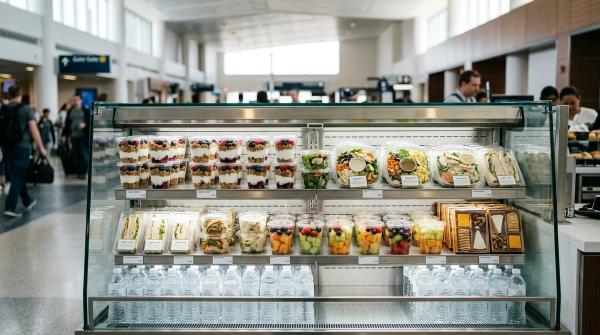
Walk into a CU, GS25, 7-Eleven, or Emart24 and you will usually see refrigerated rice balls, kimbap rolls, dosirak lunch boxes, sandwiches, salads, cup ramyeon, tteokbokki cups, hot snacks, bottled drinks, iced coffee pouches, and ready-to-heat meals. Most stores also have a microwave, hot water dispenser, disposable chopsticks or spoons, and sometimes a small counter or outdoor table.
That makes them incredibly useful when you are traveling.
Maybe you are between museums. Maybe your hotel room is not ready yet. Maybe you just finished a hike. Or maybe you are simply too tired to sit through a proper restaurant meal. A Korean convenience store lunch lets you see what you are buying, check the price, pay quickly, and eat without committing to a full sit-down meal.
It is also budget-friendly. A light lunch can be just a triangle rice ball and a drink. A bigger meal might be a dosirak lunch box or a cup ramyeon combo. Prices are clearly marked, there is no tipping, and you do not have to wait for a table.
Still, the food section can feel overwhelming if you do not know what you are looking at. Here are the main lunch options worth knowing.
Best lunch picks
#Samgak gimbap
#Samgak gimbap is one of the easiest Korean convenience store foods for travelers. It is a triangle-shaped rice ball wrapped in seaweed, usually with a savory filling inside.
The clever part is the packaging. The seaweed is separated from the rice until you open it, so it stays crisp instead of getting soggy. Most packages have numbered tabs that show you how to unwrap it. The first time can feel a bit confusing, but just follow the numbers and it usually works.
Common fillings include:
- Tuna mayo
- Jeonju bibimbap-style filling
- Spicy tuna
- Bulgogi-style meat
- Kimchi or spicy pork-style fillings
For many travelers, tuna mayo is the safest first choice. It is mild, filling, and easy to understand. Jeonju bibimbap flavors are also popular, though they can be a little spicy depending on the brand.
Samgak gimbap is best when you want something cheap, compact, and not too messy. It is especially useful if the store has no seating and you need to eat quickly.
Kimbap
#Kimbap, also spelled gimbap, is the long seaweed rice roll sliced into bite-sized pieces. Convenience store versions usually come in plastic trays or tube-like wrappers.
A typical kimbap roll may include rice, seaweed, pickled radish, carrot, egg, and a protein such as ham, bulgogi-style beef, tuna, or another filling. It feels more like a small meal than a snack, especially if you pair it with soup, ramyeon, or a drink.
Kimbap is a good pick when you want something cold, tidy, and more filling than a triangle rice ball. It is also easy to share if you are traveling with someone.
One important note: do not assume vegetable-looking kimbap is vegetarian. It may still contain egg, ham, fish cake, meat seasoning, or seafood-based ingredients.
Dosirak lunch box
#A dosirak lunch box is the closest thing to a full convenience store meal. It usually comes in a tray with separate sections for rice, a main protein, and side dishes.
Typical dosirak items may include:
- Rice
- Fried chicken, spicy pork, beef bulgogi, or another main protein
- Kimchi
- Stir-fried vegetables
- Rolled omelet or egg side dishes
- Small banchan-style sides
Dosirak is best when you are properly hungry and have access to a microwave. Most dosirak boxes are meant to be eaten warm, so check the package and use the store microwave if needed.
Before heating, remove or loosen the lid according to the instructions. If there is sauce, make sure the container sits flat in the microwave. Convenience store microwaves get used constantly, so try not to leave a mess. If something spills, wipe it up before the next person uses it.
Cup ramyeon
#Cup ramyeon is one of the most familiar Korean convenience store meals, and there is a reason it is so popular. It is hot, cheap, fast, and comforting.
The basic process is simple:
- Open the lid halfway.
- Add the seasoning packets.
- Place the cup under the hot water dispenser.
- Fill to the line inside the cup.
- Close the lid and wait for the time shown on the package.
The spice level varies a lot. Some cups are mild and brothy. Others are seriously spicy. If you are not sure, avoid anything that looks like a fire noodle or challenge noodle, especially before a long walk, bus ride, or subway transfer.
Cup ramyeon goes really well with samgak gimbap because the rice makes the meal more filling and helps balance the salty broth. Just make sure you have somewhere safe to sit or stand. A full cup of hot soup is not something you want to juggle on a crowded sidewalk.
Tteokbokki cups
#Tteokbokki cups are microwaveable cups of chewy rice cakes in a spicy sauce. They are a convenient way to try a Korean street-food flavor without ordering from a stall.
They can be very satisfying, but they are also heavier and often spicier than they look. If you are sensitive to spice, start small or pair them with a mild drink. Some people like adding cheese or eating them with something creamy, but only do that if your stomach handles rich food well while traveling.
Tteokbokki is best as a snack-style lunch or a shared add-on. It is not always the best only meal before a long afternoon of walking.
What to drink
#Drinks are part of the fun of Korean convenience store lunches.
Common choices include:
- Bottled water, the safest choice with spicy food
- Iced coffee pouches poured into a separate cup of ice
- Banana flavored milk
- Bottled teas or soft drinks
If your meal is spicy, water or a sweet milk drink can help. If you are eating ramyeon or tteokbokki, be careful about adding too many heavy or sweet drinks unless you know your stomach will be fine while you are out sightseeing.
Easy lunch combinations
#The easiest way to build a satisfying Korean convenience store lunch is to think in threes:
One main item + one supporting item + one drink.
Here are a few combinations that work well.
1. The classic traveler lunch
#- Tuna mayo samgak gimbap
- Mild cup ramyeon
- Bottled water
This is the reliable, no-fuss lunch. The rice makes the noodles more filling, and the water helps if the broth turns out saltier or spicier than expected.
Best for: quick meals, subway-area stores, budget lunches, cooler days.
2. The filling sightseeing lunch
#- Beef bulgogi or fried chicken dosirak lunch box
- Iced coffee pouch with an ice cup
- Optional bottled water if you are walking a lot
This feels closer to a proper meal. Heat the dosirak properly, sit down if there is seating, and give yourself a few minutes instead of rushing through it.
Best for: long sightseeing days, bigger appetites, lunch between major stops.
3. The no-microwave lunch
#- Kimbap roll
- Bottled tea or water
- Fresh fruit or another simple cold side if available
Choose this when the store is crowded, the microwave line is long, or there is no seating. Kimbap is much easier to eat neatly than soup or saucy food.
Best for: park benches, train station areas, quick outdoor lunches.
4. The spicy snack lunch
#- Tteokbokki cup
- Mild drink
- Samgak gimbap or another rice item
The rice helps balance the spice and makes the meal more filling. This is better when you can sit down, because tteokbokki sauce can get messy quickly.
Best for: trying Korean convenience store food with a street-food feel.
5. The light lunch
#- Samgak gimbap
- Boiled egg or simple cold side
- Water or tea
This is useful when you are not very hungry, have dinner plans, or just want something easy before a tour.
Best for: short breaks, light eaters, travel days.
What to skip
#Convenience stores are convenient, of course, but not every item is ideal for a travel lunch. Some foods are better saved for your hotel room or for a day when you have more time and less walking ahead.
Ultra-spicy noodles
#Spicy Korean noodles can be delicious, but the ultra-spicy challenge-style cups are risky during a sightseeing day. If you have low or medium spice tolerance, skip them for lunch. A burning stomach before a walking tour, bus ride, or long subway ride is not worth it.
If you still want ramyeon, choose a milder-looking cup and pair it with rice and water.
Messy soup foods without seating
#Cup ramyeon is great when you have a counter, table, or safe place to stand. It is much less great when you are balancing luggage, shopping bags, and a boiling-hot soup cup.
If the store is tiny and has no seating, choose kimbap, samgak gimbap, or a sandwich-style item instead.
Fresh foods you cannot eat soon
#Avoid buying refrigerated kimbap, tuna rice balls, egg sandwiches, or similar fresh foods if you plan to carry them around for hours. Cold items should stay cold. They are meant to be eaten soon after purchase, not slowly warmed up in your backpack.
Items with unclear labels if you have restrictions
#If you have allergies or dietary restrictions, avoid anything you cannot verify. That includes sauces, broths, seasoning packets, and mixed fillings.
This is especially important for:
- Shellfish allergy
- Fish allergy
- Pork avoidance
- Vegetarian or vegan diets
- Severe spice sensitivity
A package may look plain from the outside, but the seasoning can still include meat or seafood extracts.
Deals that slow you down
#Korean convenience stores often have “1+1” or “2+1” deals. They can be good value, but the items usually need to match the promotion exactly.
If you are in a rush, do not build your lunch around a deal you are not sure about. Buy what you actually want and keep moving.
Vegetarian, allergen, and spice cautions
#Dietary restrictions are probably the hardest part of Korean convenience store meals for travelers. The food is convenient, but labels are often mostly in Korean, and hidden ingredients are common.
Labels are not always traveler-friendly
#Some front labels may include English product names, especially on popular items. But detailed ingredient lists and allergen information are usually in Korean.
Use a camera translation app to scan:
- The front label
- The ingredient list
- The allergen section
- The cooking instructions
- Any sauce or seasoning packet details
Do this before buying, not after heating. It can feel like a hassle, but it is much better than realizing too late that something contains an ingredient you cannot eat.
Pork can appear where you do not expect it
#Pork is common in Korean convenience store food. Sometimes it is obvious, like spicy pork, ham, or sausage. Other times it may appear as pork fat, meat seasoning, or broth flavoring.
If you avoid pork, be careful with:
- Kimbap
- Dosirak lunch boxes
- Instant noodles
- Dumpling-style foods
- Sauces and seasoning packets
- “Vegetable” items with broth seasoning
Do not rely only on the front photo.
Seafood and shellfish are common flavor bases
#Seafood ingredients can show up in obvious ways, like tuna mayo or fish cake. They can also appear as fish extract, shrimp extract, anchovy broth, or seafood-based seasoning.
Be cautious with:
- Tteokbokki sauce
- Ramyeon seasoning
- Kimbap fillings
- Processed side dishes
- Broth-based foods
- Fish cake items
If you have a severe fish or shellfish allergy, avoid pre-mixed sauces and processed items unless you can clearly confirm the ingredients.
Vegetarian and vegan choices are limited
#Some convenience store foods may look vegetarian, but true vegetarian or vegan meals can be hard to confirm. A roll may look vegetable-based and still contain egg, ham, fish cake, or broth seasoning.
Safer simple options, if you can verify the label, may include plain rice, sweet potatoes, fruit, or other minimally mixed items. But the key phrase is if you can verify. When in doubt, do not guess.
Spice levels are easy to underestimate
#Korean convenience store packaging often makes spicy foods look fun and exciting, but spicy can mean genuinely hot. Tteokbokki cups, kimchi-flavored items, spicy pork dosirak, and some ramyeon cups may be stronger than expected.
If you are spice-sensitive:
- Start with tuna mayo samgak gimbap, mild kimbap, or a non-spicy dosirak.
- Avoid fire-themed noodle packaging.
- Pair spicy items with rice and water.
- Do not test your spice limit right before a subway ride, bus ride, or walking tour.
Food-safety checklist
#Korean convenience stores are generally set up for quick meals, but you still need to make smart choices. Think like a traveler: you may be walking, waiting, carrying bags, and eating in a hurry.
Keep hot food hot and cold food cold
#Refrigerated foods should stay cold until you eat them. That includes kimbap, samgak gimbap, sandwiches, salads, and fresh lunch boxes before heating.
Do not buy a tuna rice ball or egg sandwich in the morning and carry it around in a warm daypack until late afternoon. Buy fresh foods when you are ready to eat.
Hot foods should be eaten hot after reheating. If you heat a dosirak, do not let it sit around while you continue sightseeing.
Check expiry dates
#Fresh convenience store foods usually have date and time information printed on the package. Look for the expiry marking before you buy.
Store staff are usually careful about rotating fresh food, and some systems may block expired items at checkout. Still, it is smart to check for yourself, especially with refrigerated rice, egg, tuna, or meat-based items.
Reheat dosirak properly
#For dosirak lunch boxes, follow the microwave instructions on the package when you can read or translate them.
Basic habits:
- Remove or loosen the lid before microwaving, according to the package.
- Do not microwave sealed plastic unless the instructions say it is safe.
- Keep sauce containers stable.
- Heat for the suggested time.
- Be careful when opening after heating, because steam can be hot.
If the package instructions are unclear, use a translation app before heating.
Use the microwave cleanly
#Convenience store microwaves are shared. Basic manners matter.
- Do not overfill soup containers.
- Watch saucy foods while reheating.
- If something spills, wipe it up.
- Do not leave packaging, chopsticks, or napkins around the microwave area.
It is a small thing, but it keeps the meal area usable for everyone.
Be careful with hot water
#The ramyeon hot water dispenser uses very hot water. Place the cup flat under the spout, fill only to the marked line, and carry it carefully.
If the store is crowded, wait until you have a stable surface before adding water. A full cup of hot soup is not something you want to balance while opening chopsticks or checking your phone.
Throw away trash properly
#Many convenience stores have separate bins for liquids, plastics, general waste, and sometimes food waste. Before throwing away a ramyeon cup, pour leftover soup into the correct liquid disposal area if one is provided.
If you eat at the store, clean your spot before leaving.