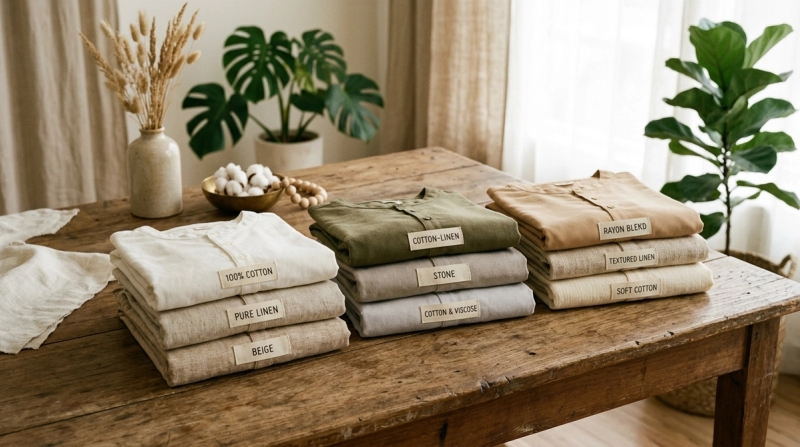
Quick answer: For humid weather, a lightweight cotton kurta is still the easiest everyday choice. It handles sweat better, feels familiar on the skin, and works for long commutes, college, errands, and regular office days. For office wear, cotton-rich blends or cotton-linen blends are a smart middle path. Linen kurtas feel airy, but they wrinkle quickly and can show sweat. Rayon, viscose, and modal kurtas look soft and polished, but they are better for indoor, AC, or lighter-sweat days because they can feel clingy in sticky weather.
Buying a summer kurta looks simple until you actually wear it outside.
On the website, it may look breezy and effortless. Then you step out into humid weather, sit in a crowded metro, wait for an auto, ride a two-wheeler, or walk ten minutes in the sun — and suddenly the fabric starts telling the real story.
In Indian humidity, “summer ethnic wear” is not enough of a promise. The better question is:
Will this kurta still feel comfortable after sweat, travel, office AC, repeated washing, and slow monsoon drying?
That is where fabric makes a huge difference. You do not need to become a textile expert, but knowing the basics can save you from buying kurtas that look pretty and feel terrible after one wear.
This AllBlogs guide compares cotton, linen, rayon, viscose, modal, and blends for real-life comfort, sweat, care, budget, and everyday use.
First, what does breathable fabric actually mean?
#A breathable fabric allows some air to pass through the garment. That is helpful in summer, but in humid weather, breathability alone is not the full story.
Humidity makes sweat dry slowly. So even if a kurta is “breathable,” it can still feel damp, heavy, or sticky if the fabric holds moisture close to your skin. This is why something that feels lovely in dry heat may feel annoying during coastal summers or monsoon weather.
For humid weather, think about fabric in a more practical way:
- Does it allow some airflow?
- Does it absorb sweat without becoming heavy too fast?
- Does it dry properly after washing?
- Does it suit your actual day, not just the product photo?
Now let’s compare the fabrics you will usually see while shopping for kurtas.
Cotton kurta: the safest everyday choice
#A lightweight cotton kurta is usually the most reliable option for humid Indian weather. Cotton is a natural fibre, feels comfortable on the skin, and absorbs sweat well. For college, errands, public transport, casual office wear, and long daytime use, cotton is hard to beat.
But all cotton kurtas are not the same.
A soft mulmul kurta and a thick cotton slub kurta may both say “cotton” on the label, but they will feel completely different in May heat or monsoon humidity. Fine cotton, mulmul, cambric, and lighter everyday cottons are usually more comfortable than dense, heavy weaves.
Cotton does have its downsides. Once it gets fully soaked with sweat or rain, it can stay damp for a while. During monsoon, this can become irritating because clothes already take longer to dry. Cotton can also shrink after washing, and yes, it wrinkles more than many blended or synthetic fabrics.
Still, for daily humid-weather wear, cotton is the fabric most people can trust.
Best for: daily wear, college, errands, commutes, casual office wear, long daytime use.Watch out for: thick fabric, tight fits, shrinkage, and sweat marks on some colours.
Linen kurta: airy and beautiful, but a little high-maintenance
#A linen kurta has a very particular charm. It feels airy, slightly crisp, and relaxed. Because linen has structure, it often sits a little away from the body instead of clinging to it. In dry heat, that can feel wonderful.
But humid weather changes the experience.
Linen absorbs moisture and can show sweat patches clearly, especially around the underarms, back, and waist. It also wrinkles very quickly. Some people love that relaxed, lived-in linen look. Others feel untidy within an hour. Honestly, both reactions are fair.
Pure linen also costs more than regular cotton or rayon. So if you are buying linen for daily rough use, ask yourself if you are okay with ironing, wrinkles, and visible sweat marks.
A linen kurta is lovely, but it is not always the most practical choice for a sweaty commute or a long day outdoors.
Best for: dry heat, relaxed weekends, short outings, casual office looks where wrinkles are acceptable.Watch out for: visible sweat, heavy wrinkling, and higher prices.
Rayon and viscose kurta: great drape, better for AC days
#A rayon kurta or viscose kurta often looks more polished than its price tag. The fabric falls nicely, which is why it is common in printed kurtas, straight cuts, flowy styles, and slightly dressier everyday wear.
One important label note: rayon and viscose are not cotton. Under textile labelling rules such as FTC/eCFR rules in the US, fibre content labels matter. Rayon and viscose are regenerated cellulose fibres. That means they are man-made fibres produced from cellulose sources such as wood pulp.
In normal shopping language, viscose is a type of rayon. Both can feel smooth, cool, and soft when you first touch them. But in heavy humidity, they may start clinging to the body or feel damp against the skin.
That does not mean rayon and viscose are bad. They can be very useful if your day includes air-conditioned classrooms, offices, cars, malls, restaurants, or evening plans. They are just not always the best choice for long, sweaty outdoor hours.
Care is also important. Rayon and viscose can become weaker when wet, so rough washing and harsh wringing are not ideal.
Best for: AC offices, evening wear, budget-friendly dressy kurtas, soft drape.Watch out for: clinginess when sweating, gentle washing needs, and listings that say “cotton feel” even when the fabric is not cotton.
Modal kurta: soft, smooth, and comfortable indoors
#Modal is another regenerated cellulose fibre. It is known for feeling soft, smooth, and drapey. In some kurtas, modal can feel more refined than regular rayon.
But modal still does not behave like crisp cotton. It is comfortable for indoor wear, travel, relaxed evenings, and days when you are not sweating heavily. For long outdoor days in humid weather, cotton or cotton-rich blends are usually safer.
Think of modal as a comfort fabric for softer, easier days — not necessarily your best friend for a packed summer commute.
Best for: soft casual kurtas, indoor wear, AC settings, travel with limited outdoor time.Watch out for: cling, unclear blends, and care instructions.
Blends: often the most practical middle option
#Blends can be genuinely useful, especially when the label is clear.
A cotton-linen blend can give you some of linen’s airy structure with the comfort of cotton. A cotton-viscose blend may drape better than pure cotton while feeling less clingy than full viscose, depending on the ratio and weave.
The key is to read the label properly.
“Linen look” does not mean linen.“Cotton feel” does not mean cotton.“Summer fabric” does not automatically mean breathable.
A useful label should clearly mention fibre percentages, such as:
- 100% cotton
- 70% cotton, 30% linen
- 60% cotton, 40% viscose
- 80% cotton, 20% polyester
Blends are not automatically better. A polyester-heavy blend may dry quickly, but it can feel warmer and less comfortable in sticky weather. For daily humid-weather use, cotton-rich blends are usually the safest place to start.
Best for: office wear, repeat use, balancing comfort and drape.Watch out for: vague labels, polyester linings, unclear fibre percentages.
Comparison table: cotton, linen, rayon/viscose, modal, blends
#Best fabric by situation
#For daily commute
#Choose lightweight cotton or a cotton-rich blend. Avoid tight cuts, thick fabric, and heavy linings. A straight kurta or A-line kurta with side slits usually feels easier than something fitted.
If your commute is long, cotton really helps. Especially if you walk, use public transport, or ride a two-wheeler, comfort around sweat matters more than the fabric looking perfect in a product photo.
For office in humid weather
#Cotton, cotton-rich blends, and cotton-linen blends are practical for office wear. They look neat enough and still feel wearable through the day.
If your office is strongly air-conditioned and your commute is short, rayon, viscose, or modal can also work well. Just be careful if you have to travel in peak afternoon heat before reaching office.
For college wear
#Cotton is usually the easiest choice for college. It is washable, breathable, and generally budget-friendly. Printed cotton kurtas are especially useful because they hide small sweat marks better than plain, light-coloured fabrics.
You can also try cotton-rich blends if you want something that wrinkles a little less.
For evening outings
#Rayon, viscose, modal, and soft blends can look more dressed up because they fall nicely. They work well for dinners, small gatherings, casual parties, or indoor events.
If the outing is outdoors, avoid very clingy fabrics or kurtas with heavy lining. A beautiful kurta can become uncomfortable very quickly if it traps heat.
For monsoon
#Choose lighter cottons and blends that dry reasonably well. Very thick cotton and layered kurtas can take too long to dry indoors.
And if clothes do not dry properly, they can start smelling musty. No one wants that.
Checklist for buying kurtas online or in-store
#Use this before adding another “summer kurta” to your cart.
- Read the fibre label carefullyLook for clear percentages. For example, 100% cotton, 70% cotton 30% linen, or 60% viscose 40% cotton. Avoid vague words like “cotton feel” or “linen look” if you actually want those fibres.
- Check the liningA breathable outer fabric can still feel hot if the lining is synthetic or heavy. In humid weather, the lining matters as much as the main fabric.
- Feel the thicknessTwo cotton kurtas can feel totally different. Lighter, looser weaves usually feel better in summer than dense, thick ones.
- Do not buy everything in the same fabricYou do not need every kurta to be cotton, linen, or rayon. Keep cotton for daily heat, blends for office, and drapey fabrics for indoor or dressier days.
- Choose a little ease in fitHumidity needs airflow. A slightly relaxed straight kurta, A-line kurta, or kurta with side slits is usually more comfortable than a tight fit.
- Think about your commuteIf you walk, use public transport, or ride a two-wheeler, prioritise sweat comfort. If you mostly move between AC spaces, drape and wrinkle resistance may matter more.
- Check wash instructions before buyingIf a kurta needs delicate care and you know you will machine-wash it every week, skip it. Daily wear should match your real laundry routine.
- Hold it against light in-storeVery thin cotton may need a slip. That means one more layer, and in humid weather that extra layer changes everything.
- Check return rules onlineFabric feel is hard to judge from photos. If you are trying a new brand, buy one piece first instead of ordering five.
Care tips for humidity, sweat, and monsoon drying
#Good care makes summer ethnic wear last longer and feel fresher.
Wash sweaty kurtas quickly
#In hot and humid weather, do not leave sweat-soaked kurtas in the laundry basket for days. Cotton and linen can hold sweat and odour. Wash after wearing, especially after commuting or spending time outdoors.
Use gentle soaking when needed
#For underarm odour, a short soak before washing can help. Use mild detergent and follow the garment care label. Avoid harsh scrubbing, especially on rayon, viscose, embroidery, or printed fabric.
If you notice rashes, itching, or allergic reactions after wearing a garment, stop using it and speak to a doctor.
Dry with space between clothes
#During monsoon, clothes need airflow. Do not crowd all your kurtas on one rack. Hang them with space between pieces, ideally near a fan or in a ventilated room.
Run an extra spin cycle
#For machine-washable cotton kurtas, an extra spin cycle can remove more water before drying. This helps when there is no proper sunlight. Check the care label first.
Do not harshly wring rayon and viscose
#Rayon and viscose can become weak when wet. Do not twist them aggressively. Gently squeeze out extra water, then hang or dry flat as the label suggests.
Iron cotton and linen slightly damp
#Cotton and linen are easier to iron when they are not fully dry. If they are already dry, use a light water spray before ironing. Be careful with prints, embroidery, and embellishments.
Store only when fully dry
#This is especially important during monsoon. Even slightly damp kurtas can start smelling musty inside cupboards.
Simple buying formula
#If you want a simple wardrobe plan for humid weather, try this:
- Daily wear: cotton kurta
- Office wear: cotton-linen or cotton-rich blend
- Dressy indoor wear: rayon kurta, viscose kurta, or modal
- Dry heat or relaxed outings: linen kurta
- Monsoon: lightweight cotton and clearly labelled quick-drying blends
You do not need to buy everything at once. Start with what your actual day needs. A kurta that works for your commute, laundry routine, and weather will always be more useful than one that only looks good on a hanger.