Monsoon and shoes have a complicated relationship.
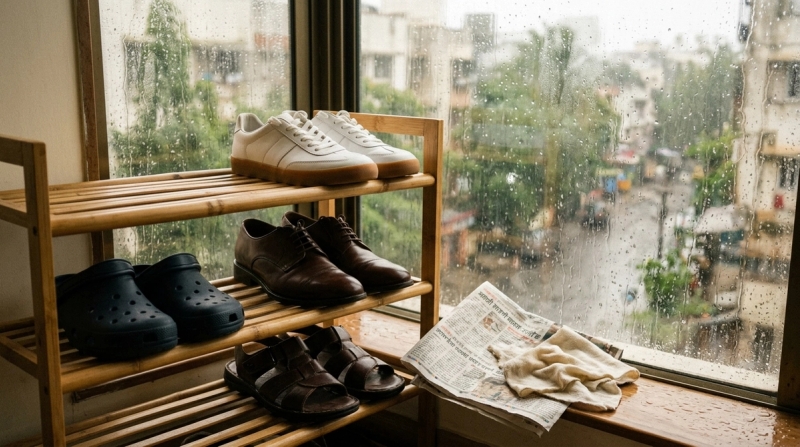
You leave home with clean sneakers, and by the time you reach office or college, they’ve already met puddle water, mud, wet stairs, slippery platforms and maybe one surprise splash from a passing bike. Sandals get dirty fast. Leather shoes start looking tired. Sneakers may seem dry outside but stay damp inside for hours because the weather itself is humid.
The good news? You don’t need a cupboard full of “rain shoes” to get through the season. Most monsoon shoe care is just about small daily habits: choosing the right pair, drying wet shoes properly, letting them breathe, and not storing them too soon.
If you want the short version: rotate at least two pairs, avoid suede and delicate leather in heavy rain, wipe wet shoes as soon as you get indoors, remove the insoles, loosen the laces, dry footwear under a fan, and never use direct heat. Also, don’t push damp shoes into a closed shoe rack. That’s where smell and mould usually begin.
This checklist is for real life: office commutes, college days, quick errands, travel, and those days when the rain starts exactly when you step out.
Material-wise monsoon shoe care table
#Different shoes react very differently to rain. Rubber clogs can handle a puddle. Suede loafers will probably never forgive you. Use this table before deciding what to wear on a wet day.
Before-rain checklist: what to do before stepping out
#Monsoon shoe care starts before the first splash. A quick two-minute check in the morning can save you a lot of cleaning later.
1. Pick the right pair for the weather
#If the forecast says heavy rain, don’t risk suede, nubuck or delicate leather. Keep those for drier days.
For wet commutes, washable sandals, rubber footwear, clogs or older sneakers are usually safer choices. They may not always look as polished, but they are easier to clean and dry.
If you need formal shoes at work, one simple trick works well: travel in rain-friendly footwear and keep a clean formal pair at the office. It sounds like extra effort, but once you start doing it, it saves a lot of stress.
2. Use water-repellent spray, but don’t expect miracles
#Water-repellent sprays can help on canvas sneakers, some leather shoes and suede, depending on the product. They create a thin protective layer so light rain and splashes don’t soak in immediately.
But they do not make every shoe waterproof.
A spray will not save mesh sneakers in ankle-deep water. It will not stop rain from entering through the top of the shoe. And it needs to be reapplied as per the instructions, especially if you wear the pair often.
Always test the spray on a small hidden area first, especially on coloured leather, suede or light fabric shoes.
3. Condition leather before the season gets rough
#Leather needs a little extra attention before monsoon. A basic polish or leather conditioner helps protect the surface and keeps it from drying out or cracking.
That said, leather is still not rain footwear. If the roads are flooded, wear something else. Leather shoes can handle light splashes if cared for, but soaking them regularly is asking for trouble.
4. Check the grip of your soles
#Wet tiles, station platforms, office entrances, college corridors and footpaths can get dangerously slippery.
Before the rains get serious, look at the soles of your daily shoes. If the tread is almost flat, avoid wearing that pair on wet days.
This is not just about protecting your shoes. It is also about not slipping during a rushed commute.
5. Keep a small shoe-care kit ready
#You don’t need anything fancy. A small cloth, a few old newspapers and spare socks are enough for most days.
If you travel often, keep a simple cloth or plastic bag for wet footwear so it doesn’t touch your clothes or laptop bag.
After-rain checklist: what to do when your shoes get wet
#The worst thing you can do after coming home is kick wet shoes into a dark corner and forget about them.
In humid weather, moisture sits inside the shoe for hours. That is when smell, stains and material damage begin. A quick recovery routine makes a big difference.
1. Wipe mud and surface water first
#Use an old towel or cloth and clean the upper, sole edges, straps, heel area and bottom if needed.
Mud holds moisture against the material. If you leave it overnight, it becomes harder to clean and may leave stains.
For sandals, clogs and rubber footwear, rinse off dirty water if required, then wipe them dry.
2. Open the shoe properly
#Loosen the laces. Pull the tongue forward. Open buckles, velcro or straps.
The more air that reaches the inside, the faster the shoe dries.
Closed sneakers dry slowly if they are left tied up. The outside may look fine, but the toe box and insole can still be damp.
3. Remove the insoles
#This is one of the simplest and most useful monsoon shoe care habits.
Insoles absorb sweat and rainwater, then trap moisture inside the shoe. Take them out and dry them separately under a fan.
If they are washable, clean them with mild soap and water when needed. Just make sure they are fully dry before putting them back.
4. Use newspaper, but replace it when it gets wet
#Crumpled newspaper helps absorb moisture from inside sneakers, leather shoes and other closed footwear.
Stuff it gently into the toe area. Don’t overpack the shoe or force it out of shape.
If the newspaper becomes soaked, replace it after a few hours. Leaving wet paper inside for too long does the opposite of what you want.
Also, avoid glossy or heavily coloured paper if your shoes are light-coloured. The ink may transfer.
5. Dry under a fan, not with heat
#Airflow is good. Direct heat is not.
Place wet shoes in a well-ventilated room, under a ceiling fan or near a table fan. Keep them upright or slightly tilted so air can move inside.
Avoid hairdryers, heaters, stove heat and harsh sunlight. These can weaken glue, warp soles, shrink materials and make leather stiff or cracked.
For leather shoes, slow drying is especially important. Be patient with them.
Storage checklist for humid rainy weather
#Many shoes survive the rain but get ruined during storage.
The pair may look mostly dry, so you put it back in a closed rack. Then a few days later, it smells strange or has white patches. That usually happens because moisture got trapped.
1. Don’t put damp shoes in closed racks
#A closed wooden, plastic or metal cabinet is not the right place for damp footwear. It traps humidity and makes odour and mould more likely.
Keep daily monsoon pairs on an open rack until they are completely dry.
2. Give each pair some breathing space
#Shoes dry better when air can move around them.
Don’t stack damp sandals on top of sneakers. Don’t cram wet shoes tightly together.
If space is limited, keep only the pairs you use often outside and store fully dry pairs separately.
3. Clean shoes before storing them
#Never store shoes with mud on them.
Even small patches of damp dirt can stain fabric, weaken stitching or leave marks on leather. A quick wipe now saves a much longer cleaning session later.
4. Use silica gel pouches if you have them
#Those tiny silica gel pouches from old packaging can be useful during monsoon. Place them inside shoe cabinets or in shoes you don’t wear often.
They help absorb some moisture from the surrounding air.
Just don’t treat them as a replacement for drying. Shoes still need airflow first.
5. Keep shoe racks away from damp walls
#During monsoon, walls near balconies, windows and bathrooms can hold extra moisture.
If possible, don’t keep your shoe rack pressed against a damp wall. That humidity slowly affects everything stored nearby.
Common monsoon shoe care mistakes to avoid
#Mistake 1: Drying shoes with direct heat
#It is tempting to use a hairdryer or place shoes in strong sunlight when you need them quickly. But fast heat can damage shoes badly.
It can loosen glue, warp soles, shrink fabric, stiffen leather and make the shoe uncomfortable.
If you need the pair the next morning, use the safer method: wipe, remove insoles, loosen laces, stuff newspaper inside, and keep the shoes under a fan.
Mistake 2: Keeping wet shoes in a closed rack
#A closed rack looks neat, but damp shoes need air first.
If you shut them away too soon, the smell usually gets worse and the material stays moist for longer.
Dry in the open first. Store later.
Mistake 3: Wearing the same pair every day
#During monsoon, shoes collect rainwater, sweat and humidity. If you wear the same pair daily, it may never get enough time to dry properly.
Rotate at least two pairs if possible. One pair can rest and dry while the other is in use.
This one habit can reduce smell and help your shoes last longer.
Mistake 4: Treating every shoe the same way
#Sneakers, leather shoes, suede, sandals and clogs all need different care.
Rinsing rubber sandals is fine. Rinsing suede is not. Stuffing sneakers with newspaper helps. Leaving leather in harsh sun can damage it.
Always choose the cleaning method based on the material.
Mistake 5: Forgetting about your feet
#Sandals and clogs are practical in rain, but they expose your feet to dirty water.
After a wet commute, wash and dry your feet properly, especially before wearing closed shoes again.
If you have constant itching, irritation or discomfort, don’t rely only on home fixes. Speak to a qualified professional.
Simple shoe rotation plan for monsoon
#You don’t need many pairs. You just need the right pairs doing the right job.
For office
#Use rain-friendly footwear during the commute and keep formal shoes dry whenever possible.
If you must wear leather formals outside, avoid waterlogged routes and wipe the shoes as soon as you reach.
For college
#Sneakers are fine when the rain is light. On heavy-rain days, washable sandals or clogs are easier to manage.
They dry faster and don’t hold dirty water the way closed shoes do.
For travel
#Carry a separate bag for wet footwear. Don’t pack damp shoes with clothes.
If a pair gets soaked, stuff it with newspaper at night and leave it somewhere airy.
For daily errands
#Wear the pair that is easiest to clean.
Monsoon is not the best season to test delicate materials on muddy streets.
Also useful on AllBlogs
#If you are deciding what to buy for rainy days, read the AllBlogs guide on Best Monsoon Travel Shoes in India: Quick-Dry vs Waterproof. If your pair is already soaked, the more specific guide How to Dry Wet Shoes Fast in Monsoon Without Smell is a better next step. For sweaty-feet freshness, see Foot Powder vs Shoe Spray vs Odour-Control Insoles.
Final monsoon shoe care checklist
#Before rain
#- Pick rain-friendly footwear for heavy-rain days.
- Avoid suede and delicate leather when roads are wet.
- Use water-repellent spray only on suitable materials.
- Condition leather before the season.
- Check sole grip.
- Carry spare socks or a small cloth if needed.
After rain
#- Wipe mud and water immediately.
- Loosen laces, straps and tongues.
- Remove insoles and dry them separately.
- Stuff closed shoes with newspaper.
- Dry under a fan with good airflow.
- Avoid direct heat.
Storage
#- Keep damp shoes out of closed racks.
- Store shoes only when they are clean and fully dry.
- Give each pair enough space to breathe.
- Use silica gel pouches if available.
- Keep racks away from damp walls.
- Rotate pairs instead of wearing one pair every day.
Monsoon shoe care is mostly about timing. Clean early, dry properly, rotate patiently and store smartly. Do this, and your sneakers, leather shoes, sandals and clogs have a much better chance of surviving the rainy season without smell, stains or damage.